
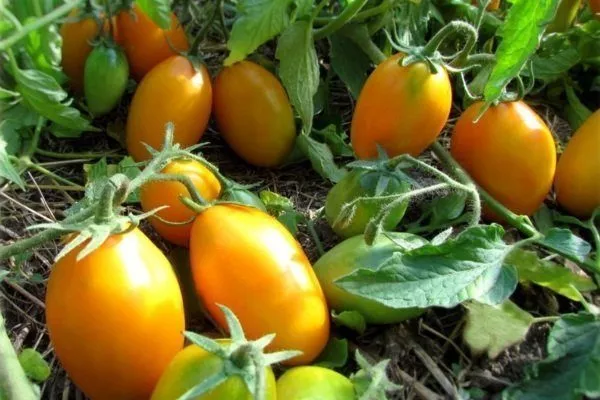
The Zolotoy Potok tomato is an ultra-early, low-growing, and productive variety that produces bright orange fruits. They fall in clusters from the top of the bush to the ground, reminiscent of a "golden stream." This variety boasts excellent flavor, resistance to adverse weather, and many diseases, making it a favorite among gardeners.
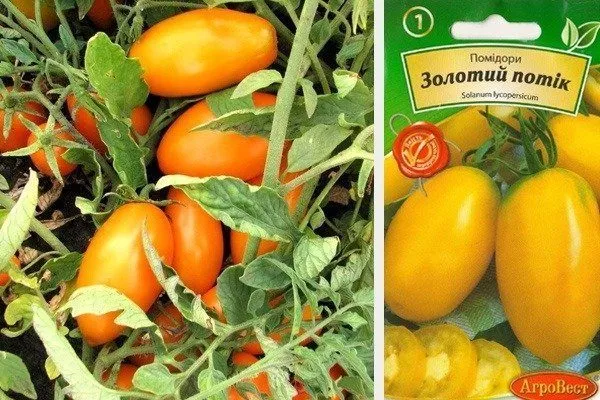
Tomato seeds Golden Stream
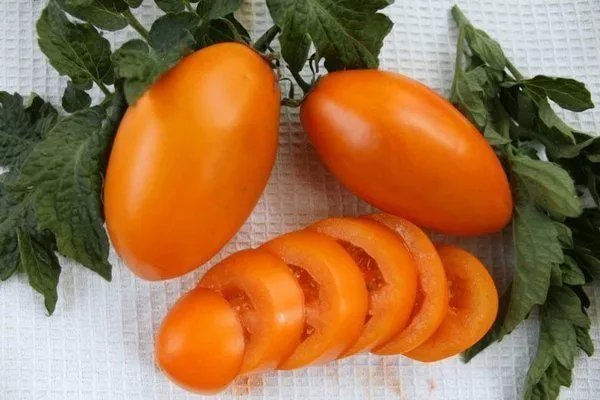
Zolotoy Stream tomatoes in section
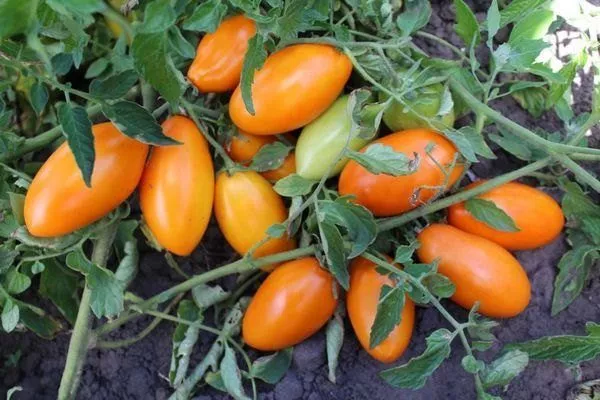
Golden Stream tomatoes on a branch
Description of the variety
Zolotoy Potok is an ultra-early hybrid that produces its first harvest 85-90 days after germination. Therefore, you can harvest bright orange tomatoes with excellent flavor just three months after sowing.
This variety was developed in Kharkiv, Ukraine, by breeders from the Institute of Vegetable and Melon Growing. It is recommended for cultivation in private gardens in open ground. Initially popular in Moldova and Ukraine, the hybrid soon attracted the attention of Russian gardeners, and has held a leading position for over a decade. To find out what makes this tomato so appealing, let's take a closer look at its characteristics.
Bushes
This early-ripening hybrid is determinate in growth habit. Spreading bushes reach 50-70 cm in height and stop growing after 5-7 clusters have formed. From this point on, the plant no longer expends energy and nutrients on growing its own foliage, focusing entirely on fruit formation and development. This allows the variety to produce a very early and abundant harvest, without wasting energy on excessive bush development or additional support.
The bushes have medium foliage, and the few leaves are dark green, slightly rough, and medium in size. The first set of clusters (branches) appears above the sixth leaf, and each cluster produces an average of 6-8 tomatoes.
Fruit
Zolotoy Potok is a wonderful addition to any garden, as its rows of amber-yellow tomatoes immediately catch the eye among the greenery. Their characteristics are as follows:
- FormThe plum-shaped fruits are even and can be oval or ellipsoid in shape.
- WeightOn average, each tomato weighs 65-70 g, but there are fruits weighing up to 80 g.
- SkinSmooth, does not crack when the fruits ripen evenly and after heat treatment.
- PulpJuicy and dense, with slightly defined chambers, of which there can be 4-6. The pulp contains approximately 4.5-5% sugar and an increased amount of carotene, which is converted into B vitamins in the body. The dry matter content of the juice is over 6%.
- TasteTomatoes have a rich, sweet taste.
Tomatoes with thick skin easily withstand storage and transportation over long distances.
Table of characteristics
The main characteristics of the plant can be found below:
| Parameter | Description |
| General description | Ultra-early, determinate, low-growing variety |
| Ripening time | On average, the fruits ripen 90 days after germination. Thus, approximately 13 weeks after sowing the seeds, you can harvest yellow-orange fruits. |
| Features of cultivation | The bushes are low—up to 70 cm—so they don't need pinching or shaping. They can be tied to a support structure as needed. |
| Productivity | With proper agricultural practices, 8 to 10 kg of fruit can be harvested from 1 square meter of garden bed, and up to 35 tons from 1 hectare. A single plant can yield up to 2.5 kg of tomatoes. The yield of ripe fruit is approximately 95-100%. |
| Resistance to diseases and pests | The Hydride variety is an early-ripening variety, so it simply doesn't have time to become susceptible to late blight. It's resistant to various diseases, even in conditions of fluctuating temperatures. The only thing the tomato fears is the Colorado potato beetle, which can be controlled with biological agents. |
| Purpose | Zolotoy Potok is a versatile variety, so it's consumed fresh and used for whole-fruit canning, juice, and fruit drinks. Furthermore, these tomatoes store well and are easy to transport. |
Tomatoes of this variety have excellent appearance, good shelf life, and high tolerance to physical impacts, which is why they are often grown on an industrial scale for sale.
Agricultural technology
Gardeners rarely encounter problems growing this tomato variety, as the seeds generally germinate without exception, and the yield is 97-100%. However, to achieve these results, it's still important to consider a number of agricultural practices:
- Golden Stream tolerates short-term adverse weather conditions well, but requires constant warmth, so it is recommended to grow it in a greenhouse or in an open area, but with additional protection.
- Tomatoes should be grown from seedlings, as described in the variety description. Sow the seeds for seedlings 55-60 days before planting them in their permanent location. This period typically falls in late March or early April. The sooner you transplant them to their permanent location, the sooner you can harvest the first crop, but to protect the plants from possible frost, it's essential to use portable plastic covers.
- Transplant seedlings to their permanent location only after the soil warms to at least 14°C. The optimal daytime temperature is 24°C or higher, and at night, no lower than 15°C. Transplant seedlings at a rate of up to 3 plants per square meter. The optimal planting pattern for mature seedlings is 50x40 cm.
- When growing Zolotoy Potok in a greenhouse, it's important to avoid temperatures reaching 32°C or higher. This heat will cause the leaves to curl, and the flowers and ovaries to fall off. Therefore, it's important to ensure a balanced temperature regime for the plant, and ventilate the greenhouse when necessary.
- The plant doesn't require training, but it should be tied to a vertical or horizontal trellis. It needs regular and generous watering. During the growing season, it's best to fertilize the tomato plant 2-3 times, but avoid using fresh manure. Otherwise, the plant will become overweight—the side shoots will grow vigorously, very large leaves will appear, the stems will thicken, but the fruit itself will not set well and will grow slowly.
- ✓ The optimal soil temperature for planting seedlings should be no lower than +14°C, and the air temperature should be +24°C during the day and no lower than +15°C at night.
- ✓ The distance between bushes when planting should be 50 cm in a row and 40 cm between rows to ensure uniform lighting and ventilation.
Selecting seedlings for purchase
To save time growing seedlings, you can purchase them from a trusted gardener who specializes in this variety. Keep the following recommendations in mind:
- the best age for seedlings is 8-9 weeks;
- good specimens should be 26-30 cm tall and have 7-10 leaves of the correct characteristic shape;
- the optimal stem thickness is 0.6-0.8 mm;
- The tops should have a uniform green color, without any signs of dryness.
- The root system must be in a moistened soil ball, and the roots must not have any breaks or dry areas.
If your seedlings have overly brightly colored leaves that droop on weak petioles, it's likely that too much growth stimulant was used during cultivation. It's best to discard such plants.
How to grow seedlings yourself?
Seeds for seedlings should be sown 55-60 days before transplanting to a permanent location. Typically, this period falls between late March and early April. To accurately calculate the best time to plant in a specific region, determine when the soil warms up to 14°C, daytime temperatures reach 24°C or higher, and nighttime temperatures do not drop below 15°C. Subtract two months from this date to obtain the approximate time to sow seeds for seedlings.
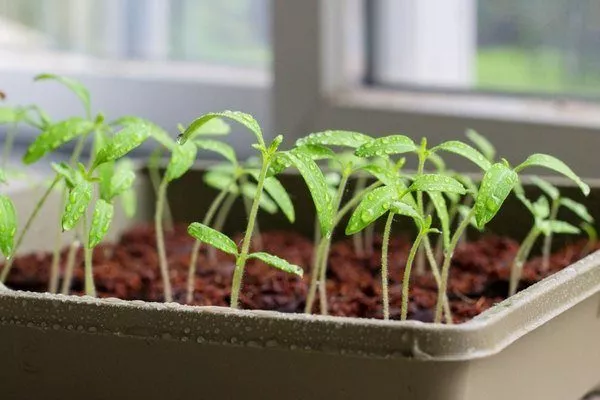
Of course, the earlier you plant, the sooner you can harvest. But let's look at how to grow strong seedlings step by step.
Seed treatment
If you buy seeds in packaging from a reliable manufacturer, you only need to germinate, without disinfection. Otherwise, the planting material should be processed in the following order:
- Sort the seeds, removing any damaged or unsightly specimens. Immerse the remaining ones in a 5% salt solution for several minutes. Seeds that float to the surface are sterile and will not germinate, so they should be discarded. Those that sink to the bottom can be used for further processing.
- Disinfect the selected planting material by soaking it in a 1% potassium permanganate solution and rinsing it with clean water after 15-20 minutes. You can also use a 0.5% sodium bicarbonate solution (soak for 20-22 hours) or Fitosporin-M, which also increases germination.
- Rinse the light golden seeds in clean water and dry thoroughly. If they retain moisture, they will rot in damp, moist soil.
For rapid germination, seeds can be additionally treated with a growth stimulant, such as NV-101, Epin, Novosil, and copper solution.
Substrate preparation
You can buy it at a garden store or make it yourself using one of these recipes:
- Mix equal parts turf, peat, and sand. Water the mixture with a solution made from 20 g of superphosphate, 10 g of potassium sulfate, and 10 g of urea per 10 liters of warm water.
- Mix 1/3 each of humus, peat, and turf. Add 20 g of superphosphate and 2 cups of turf ash per 10 liters of the mixture.
In any case, the soil must be disinfected in the following order:
- Spread the substrate onto a baking sheet in a 2-3 cm layer and bake in the oven at 190-200°C for 20 minutes. Then microwave on high for 3 minutes.
- Water the soil with a solution of potassium permanganate (1 heaped teaspoon per 10 liters of boiling water). You can use 5-6 liter plastic containers with holes in the bottom to drain excess liquid.
- A week before sowing the seeds, pour the substrate into containers prepared for seedlings (wide boxes, containers) and leave for several days to settle.
At the time of sowing, the substrate should be slightly moist.
Sowing seeds
It is produced in the following order:
- On the surface of the soil, make holes 1 cm deep and at a distance of 2-2.5 cm from each other.
- Place the seeds in the prepared furrows and sprinkle them with soil on top.
- Cover the seedlings with plastic wrap or cellophane to create a favorable microclimate. Place the containers in a bright, warm location (at least 24°C). Avoid drafts, especially if the seedlings are on a windowsill.
The film cover should be opened every day for 5-7 minutes to allow fresh air in, and when the first shoots appear, it should be removed completely.
Care seedlings
To ensure that seedlings grow strong, they need proper care, which includes the following measures:
- WateringThe plant is sensitive to soil moisture, so make sure it doesn't dry out. If a crust forms on the surface, moisten it with a spray bottle. Of course, don't overwater the soil. If this happens, the seedlings should be moved to a warmer location to allow the soil to dry out quickly. For example, you can temporarily keep them near a radiator or phytolamps.
- PickingWhen 2-3 true leaves appear, transplant the seedlings, leaving the strongest ones.
- HardeningThis should be done 7-10 days before planting the seedlings in their permanent location. For this purpose, the seedlings should be placed on a balcony or outside, gradually increasing the hardening time; otherwise, the seedlings may get sunburned and will not recover. When the weather is sunny and windless, a window can be opened for 6-8 minutes. In any case, remember that drafts are strictly contraindicated for the plant.
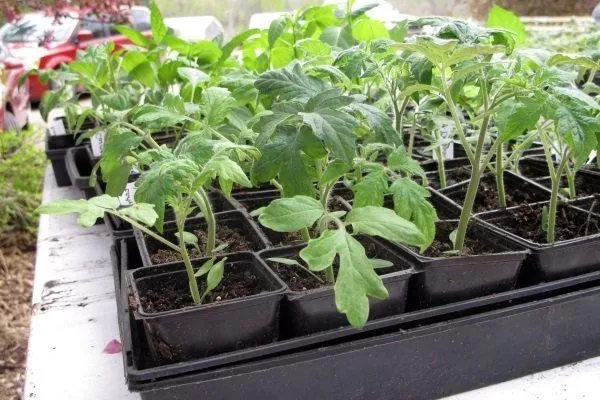
The seedlings can be transplanted to their permanent location at 55-60 days old. By this time, they should reach 26-30 cm in height and have 10 leaves.
Site preparation
While the seedlings are growing, it's time to prepare the soil. Tomatoes should be grown in loose, light, and highly fertile soils with a neutral pH (pH between 6.0 and 7.0). The best options are plots with light loamy or sandy loam soils where the following crops were previously grown:
- cucumbers;
- all types of cabbage;
- corn;
- carrot;
- onion;
- beet;
- radish.
Poor predecessors for tomatoes include all legumes, cucurbits (except cucumbers), and nightshade crops. Tomatoes should be planted at least 2-3 years after these crops.
A suitable plot should be prepared in the fall. To do this, the beds should be dug over, weeded, and fertilized, adding 6 kg of humus and 50 g of superphosphate per square meter. If the pH remains below 6.0, add slaked lime to the soil during digging at a rate of 3 kg per 5 square meters.
If previous crops were fertilized with fresh manure, when preparing a plot for tomatoes, it is imperative to add superphosphate and potassium chloride to the soil, and then carry out deep digging.
In the spring, before planting seedlings in the ground, you need to add (per 1 sq. m):
- chicken or pigeon droppings (1 kg);
- sifted wood ash (1 kg);
- ammonium sulfate (25 g).
The area also needs to be harrowed, and the furrows or holes fertilized with compost, ash or garden mixture.
Planting seedlings in a permanent location
Seedlings are planted in their permanent location when they are two months old, after the danger of frost has passed. This is typically between May 15 and 20. If it's still cool outside, it's a good idea to create a shelter – create a frame out of ordinary wire, cover it with gardening plastic, and then cover it with thick fabric.
Golden Stream refers to low-growing varieties, which especially need warmth, so in case of a cloudy summer, the cover may not be removed at all until the harvest.
Planting of seedlings is carried out according to the following rules:
- Plant the bushes in two rows, preparing a separate hole for each. Arrange the beds in a staggered pattern: space the seedlings 50 cm apart in a row and 40 cm apart between rows. Therefore, the optimal planting pattern is 50 x 40 cm. This arrangement ensures that the bushes receive equal amounts of light and ventilation. Furthermore, the soil pressure is even, ensuring all plants receive the necessary nutrients.
- Prepare holes at the designated locations 2-3 days before planting the seedlings. They should be deep enough to accommodate the seedling and its root ball. Moisten the holes with a solution of potassium permanganate (1 teaspoon per 10 liters of boiling water), then water with warm water and cover with plastic wrap.
- Plant the seedlings in moist soil. Carefully remove the seedlings from their containers and place them in the holes. If they are too elongated, they can be planted at an angle. Do not bury the roots too deeply, ensuring the root collar remains above ground level. The soil can be cold at depth, which can damage the tomato's underdeveloped root system.
- After planting, water the seedlings generously (at the roots), sprinkle with dry soil and compact lightly.
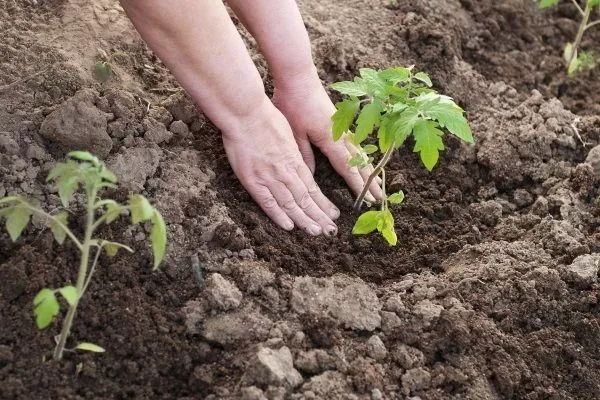
After planting, the seedlings require proper care. This isn't a labor-intensive process, as Zolotoy Potok is a low-growing variety and doesn't require pinching.
Tomato care
To obtain a good yield, it is necessary to properly carry out all agricultural practices.
Watering and loosening
Watering should be abundant and regular to prevent fruit cracking. The seedlings should be watered for the first time 14 days after planting in their permanent location, using warm, settled water. Subsequently, the soil should be moistened every three days, morning or evening. Apply water directly to the roots.
On rainy days, watering the plant is completely unnecessary, as over-watering the soil can lead to stem rot. However, the bed should also be kept from drying out.
To prevent tomatoes from getting sick less often and to help them develop better, add 2 pinches of wood ash to a bucket of water.
After watering, the soil should be loosened as follows: to a depth of 10 cm during the first three weeks, and then to a depth of 5-7 cm. This is because the roots will develop gradually, and excessively deep loosening of the soil can damage them. After this procedure, the bushes can be hilled to create a favorable microclimate for the roots.
Ventilation
The greenhouse climate must be constantly monitored to prevent excessive moisture and temperature increases. While it's cool outside, the covering material should not be removed. During the day, its edges should be turned to face the leeward side, and then tightly covered again at night. The wickerwork can be removed only when stable warm weather sets in.
Top dressing
To ensure that tomatoes grow and bear fruit properly, they need to be fertilized at least 3 times:
- First feeding Apply 14-15 days after planting the seedlings in the ground. Fertilize the plant with ammonium nitrate (30 g per 20 liters of water) at a rate of 0.5 liter per plant.
- Apply the second fertilizer when the ovaries begin to form, using superphosphate (15 g) and potassium chloride (7 g). To apply the fertilizer, dig 5 cm deep trenches along the beds, between rows, 25 cm from the bushes. Spread the fertilizer evenly in the trenches, then cover with moist soil.
To ensure better fruit set, spray the plant with a 0.2% boric acid solution (2 g per 10 liters for 100 square meters of planting). In poor weather, repeat the spraying after 2-3 days.
- The third feeding should be done during the fruit ripening period. You can use ammonium nitrate in the same way as the first feeding. Another option is rotted mullein. Soak it in water at a ratio of 5 kg to 25 liters of water and leave it for two days, then top up with water at a ratio of 1:20. Water the bushes with the solution at a rate of 1 liter per plant.
- The first feeding is 14-15 days after planting: ammonium nitrate (30 g per 20 l of water) 0.5 l per bush.
- Second feeding during the formation of ovaries: superphosphate (15 g) and potassium chloride (7 g) in trenches along the beds.
- The third feeding during the fruit ripening period: ammonium nitrate or rotted mullein (5 kg per 25 l of water, diluted 1:20).
When fertilizing tomatoes, avoid using too much nitrogen, as this will negatively impact the plant's immunity and increase the ripening time of the fruit.
Tying up to the support
This variety's bushes are low, but each one should still be tied to an individual stake. A trellis can also be used for this purpose. This will help the plant support the weight of the fruit during heavy fruiting. This will prevent the branches from falling to the ground in winds or rain.
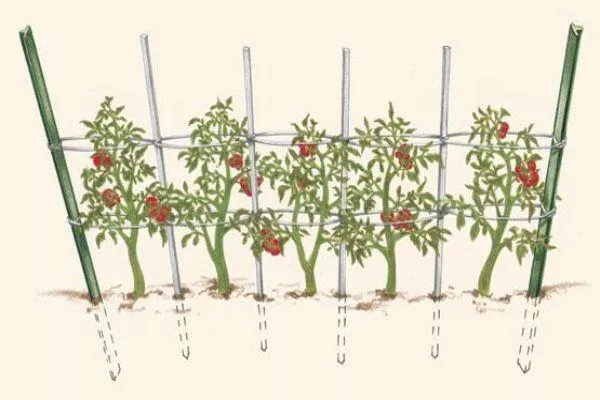
If the branches lie on the ground, the plant may be affected by a fungal disease.
Breaking off leaves
To ensure good ventilation under the bush, the lower leaves should be carefully removed. Keep in mind that during plant growth, the leaf blades provide essential nutrients to the fruit, so they should only be removed if they are infected or yellowing. Once the fruit on the first lower cluster has fully matured, the leaves underneath can be removed.
As the fruits ripen, the leaves should be removed from under each ripe cluster, but no more than 2-3 pieces per week from one plant.
Protection from diseases and pests
Zolotoy Potok has a strong immune system and is therefore rarely affected by diseases. However, its main threat is the Colorado potato beetle, which destroys the plant's foliage and fruit buds. When this occurs, the bushes should be treated with an insecticide, following the instructions. Bankol, Bombardir, and Typhoon are considered the most effective. For a small number of pests, folk remedies can be used, such as spraying the plants with an infusion of ash and wormwood (against adult beetles) and dusting with birch ash (during flowering).
To prevent fungal and viral diseases, the plant needs to be watered and fertilized regularly. It's equally important to disinfect the seeds and soil before planting.
Harvesting and storage
The first amber-yellow tomatoes can be harvested in late June – early July. Fruiting occurs uniformly and simultaneously. To prolong the formation and ripening of ovaries, the fruits should be picked at the technical ripeness stage. This will free the bush from excess weight—it won't waste its energy on ripening the fruit, and will instead direct its energy toward the formation of new ovaries.
Many people believe that unripe tomatoes are inferior in quality to those ripened in the garden. This is a misconception, as unripe tomatoes will ripen quickly in the sun without losing their flavor or marketability.
By the end of August, as temperatures drop, the tomatoes' metabolism slows, causing them to gradually die. At this time, all tomatoes on the vines must be harvested; otherwise, they will spoil or die in the cold.
Harvested crops of any maturity can be stored on the greenhouse floor. Place a layer of garden film underneath and cover it with hay. The optimal temperature is 16 to 23°C, and the humidity is 70-80%.
Pros and cons
The strengths of the Golden Stream are as follows:
- high yield (up to 10 kg per 1 sq. m);
- ultra-early variety;
- low-growing, so it does not require pinching or shaping (the bushes stop growing upwards when they reach their optimal size);
- has strong immunity to diseases and pests;
- tolerates temperature changes well (bears fruit even in unfavorable weather conditions);
- easily tolerates storage and transportation over long distances.
The variety does not have any particular disadvantages, however, some gardeners note that it is often attacked by Colorado beetles.
Zolotoy Potok is a hybrid tomato variety that produces plum-shaped, golden-yellow fruits. They are distinguished not only by their unique appearance but also by their excellent taste. This variety tolerates temperature fluctuations, grows compactly, and produces fruit abundantly.