
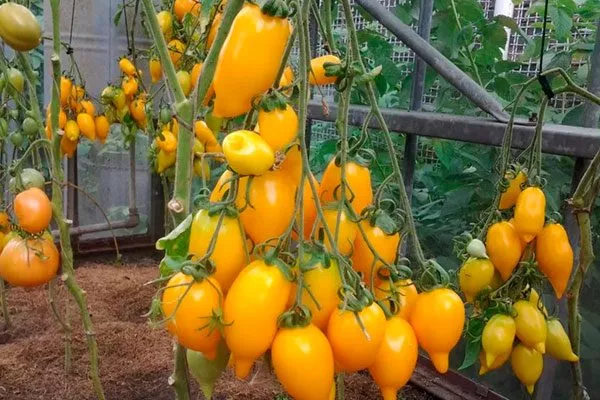
The Golden Canary F1 tomato is a hybrid variety with yellowish-orange fruits borne in large clusters. This variety is highly productive and suitable for growing in any soil type.
The history of the Golden Canary variety
The Golden Canary hybrid tomato was developed by Russian breeders V.I. Blokin-Mechtalin and K.K. Kulikov. This hybrid was approved for cultivation in 2019. It is recommended for use in all regions of Russia.
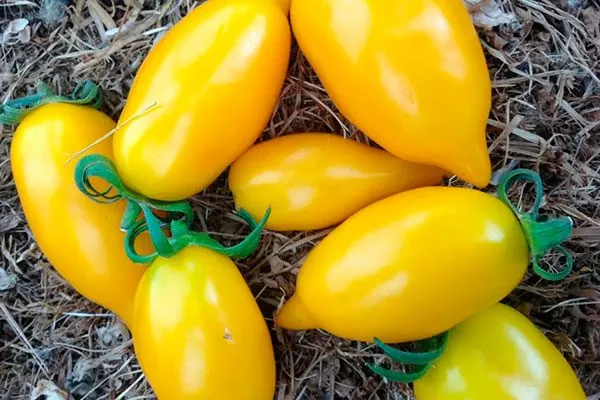
There's also a variety with the same name on the market, which can cause confusion. It differs from the Golden Canary hybrid primarily in its fruit. The Golden Canary (Akmore Treasure) variety's fruit is not round, but elongated, resembling cream. Its color is bright yellow, and its tip is long and pointed.
Description of the plant and fruits
The tall bushes, up to 2 m in height, are indeterminate. The leaves are medium-sized and green. The inflorescences are simple, with the first occurring above the 7th or 8th leaf, and subsequent inflorescences occurring 2 or 3 leaves apart.
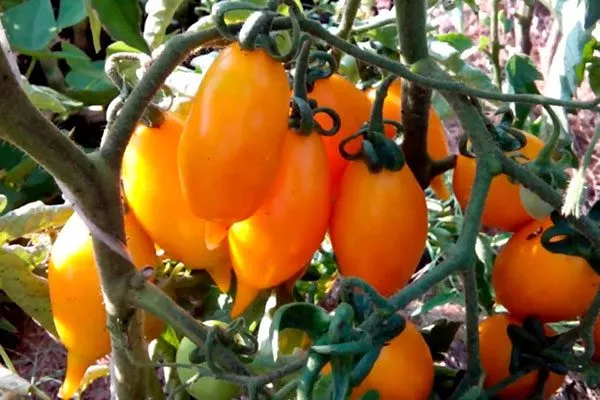
The Golden Canary F1 tomato produces medium-sized, thick-walled fruits with medium-sized seed chambers. The medium-sized tomatoes are clustered in clusters of 30 tomatoes each. The stalks are articulated.
Brief description of fruits:
- Unripe fruit color: light green.
- Color of ripe fruit: golden orange.
- Form: rounded, slightly ribbed, with a small "nose".
- Weight: 100-130 g
Taste and purpose
The Golden Canary tomato's flesh is similar in consistency to kiwi. Its flavor is sweet with a pleasant tartness. The fruits are versatile, ideal for fresh eating and whole-fruit canning.
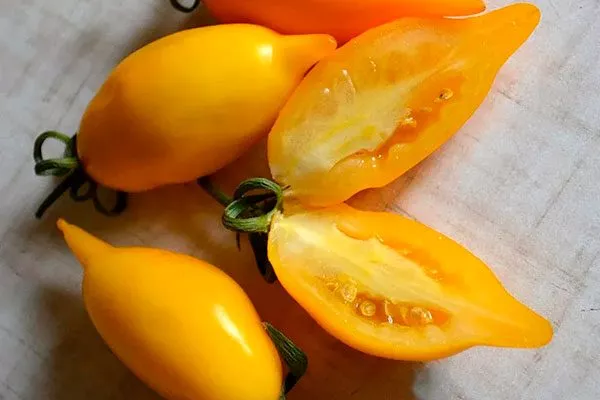
Golden tomatoes can also be used in salads, juices, various dishes, and other preserves. The fruits of this variety have an almost dessert-like taste and are also suitable for those allergic to red tomatoes.
Characteristics
The Golden Canary tomato is an early-ripening variety. It takes 95-100 days from germination to the first fruits ripening.
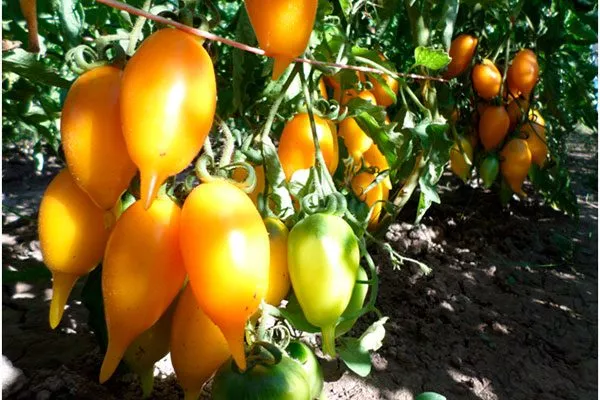
The hybrid yield is approximately 16 kg/sq. m. A single bush yields 4-7 kg of tomatoes. The hybrid exhibits increased resistance to Alternaria, Verticillium wilt, and Fusarium wilt.
Pros and cons
The Golden Canary tomato has many advantages that are valuable to gardeners and tomato lovers. But before planting this hybrid in your garden, it's helpful to familiarize yourself with all its advantages and disadvantages.
Landing features
The Golden Canary hybrid can be grown outdoors and in plastic greenhouses. This tomato is grown using seedlings.
Selecting a site
The Golden Canary hybrid is grown in well-lit areas, with full sun throughout the day and no shade. Even slight shade can encourage the development of fungal diseases.
If planting outdoors, it's especially important to ensure the area is free of drafts. A barrier on the north side is also desirable—this will protect the tomato plants from gusty, cold winds. However, air circulation is essential, as a lack of it leads to the development of fungal diseases.
Tomatoes don't thrive in low-lying, swampy, or flooded areas, nor do they thrive in areas with high groundwater levels. Also unsuitable are areas where nightshade crops such as tomatoes, potatoes, peppers, and eggplants were grown, as well as their best predecessors, cabbage. Onions, garlic, pumpkins, and legumes are also unsuitable.
Soil preparation
Tomatoes require well-drained, loose, and fertile soil with a pH of 6.0 to 7.0. In the fall, clear the area of plant debris and dig it over, adding organic matter such as humus or compost (10 liters per square meter).
If the soil is highly acidic, it is necessary to add deacidifying agents, such as slaked lime (500 g per square meter). It is also recommended to disinfect the soil by adding fungicidal biological preparations, such as Fitosporin.
Seed preparation
The Golden Canary tomato is a hybrid, so you need to purchase seeds; home-grown ones are not suitable for planting. The seed is usually completely ready for planting: calibrated, disinfected, and treated with stimulants; all that remains is to germinate it.
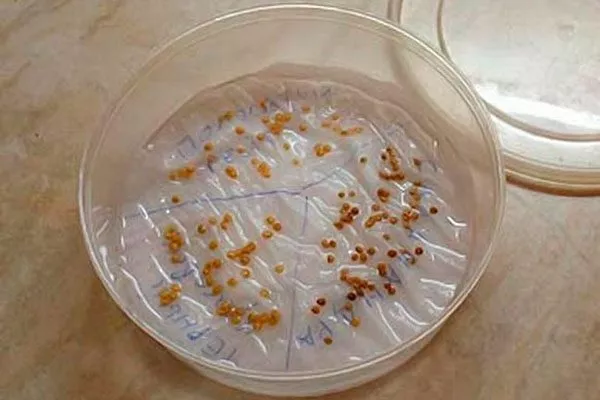
The seeds are placed on damp gauze, wrapped in it, and left for 1-2 days until the sprouts emerge.
Growing seedlings
You can buy seedlings or grow them yourself. The latter option is more reliable, allowing you to obtain healthy seedlings with varietal characteristics by the right time.
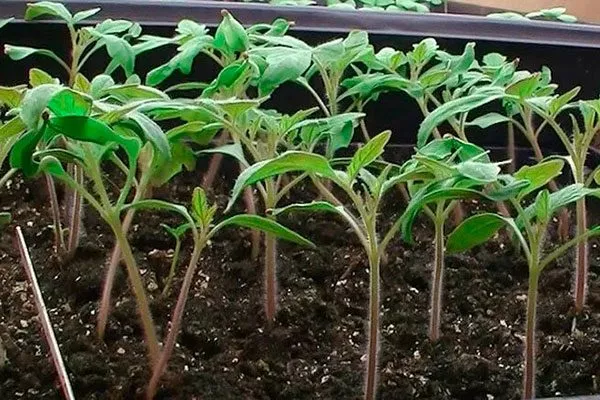
Features of growing Golden Canary tomato seedlings:
- For planting, use containers, cassettes, or other containers with drainage holes to allow excess water to drain. Tomatoes can be sown in either shared or individual containers. However, in the former case, transplanting the seedlings into individual pots or cups with a capacity of 350-500 ml is essential.
- If you plan to use empty containers rather than peat pots, you will need to purchase nutrient-rich soil or prepare it yourself, for example, by mixing sand, peat, and humus in equal parts.
- Fill the pots 2/3 full with the substrate, moisten it, level it, and sow the seeds. Instead of planting one seed at a time, plant 2-3 seeds per pot to ensure germination and select the strongest and healthiest seedlings.
- Seeds are sown in containers in rows, keeping intervals of 4 cm between them and 2-3 cm between adjacent seeds.
- The seeds are covered with plastic film and kept in a warm room, but not near a window. They are moved there only after the seedlings emerge. The mini-greenhouse is opened daily to ventilate and, if necessary, to moisten the seeds.
How to properly care for seedlings?
Maintaining the correct temperature is crucial when growing seedlings. It's essential to raise and lower the temperature regularly—maintain it at 25°C to 28°C until the seedlings emerge, and then lower it to 14°C to 16°C once the tomatoes emerge. This cooling prevents the seedlings from becoming elongated.
Features of seedling care:
- After 5-7 days of "cold mode," the temperature is raised to +22...+25 °C. Nighttime temperatures should be 4-5 degrees lower.
- Immediately after germination, tomato seedlings require 24-hour light. After a couple of weeks, daylight hours are reduced to 18-20 hours, and after another two weeks of growth, to 11-12 hours.
- Water the seedlings carefully, being careful not to splash them, as this can cause fungal diseases. Use only warm, settled water.
- Before transplanting, water the plants sparingly—once a week; after transplanting, water 2-3 times a week. Also after transplanting (two weeks later), begin applying fertilizer—complex mineral compounds. Two to three applications are sufficient.
- Seedlings are pricked out at two weeks of age. When transplanting, the central root is pinched back by 1/3 of its length. The optimal humidity for growing tomato seedlings is 60-70%.
- Two weeks before transplanting the seedlings into the ground, they begin hardening them off. The seedlings are taken outside to acclimate them to their new environment. Gradually, the time spent outdoors is increased.
Transplanting
Tomatoes are planted outdoors only after the threat of frost has passed. In most regions of Russia, this period is late May to early June; in the south, planting occurs a couple of weeks earlier. Tomato seedlings are planted indoors in April or May, depending on the regional climate.
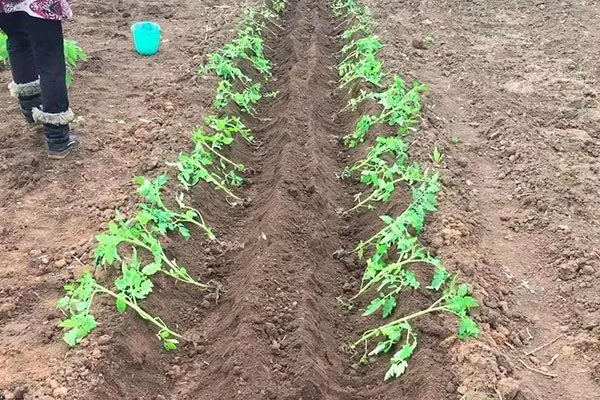
Features of planting Golden Canary tomato seedlings:
- Dig holes for planting, either in rows or in a checkerboard pattern. The holes should be approximately 15-20 cm deep.
- Fertilizer is added to the holes—a couple of handfuls of humus or compost and 1-2 tablespoons of wood ash. Gardeners also often add onion skins or eggshells. Fresh manure, however, is not recommended—it can burn the roots.
- Mix the fertilizer with the soil and add 1 liter of warm water. After an hour, when the soil has settled slightly, plant the seedlings, burying them down to the first leaves. If the seedlings are stretched, plant them at an angle, burying part of the stem. The tops of the plants should face north.
- It is important to water the seedlings beforehand, then they can be easily removed from the planting containers.
- The roots of the seedlings are covered with soil and carefully compacted, forming a depression around the stem for easy watering. In greenhouses, it is recommended to install drip irrigation hoses, and in open ground, such a system will also simplify watering.
- Once the water has been absorbed, the tree trunk area is mulched with straw, mown grass, peat, etc.
The recommended planting pattern for the Golden Canary tomato is 25-30 cm x 50-65 cm. No more than 4 plants are planted per square meter.
Care Features
The Golden Canary hybrid is quite demanding in terms of care, but it doesn't require anything beyond standard agricultural practices. It's important to water the bushes regularly, loosen the soil, fertilize, spray for therapeutic and preventative purposes, and perform other actions aimed at ensuring the growth and development of the bushes, as well as their abundant fruiting.
Watering
The Golden Canary tomato requires infrequent but generous watering. Water should be applied to the roots; overhead irrigation is not required. The seedlings are watered for the first time 10 days after planting—the lack of moisture forces the plant to seek water, which stimulates intensive root growth, which facilitates establishment.
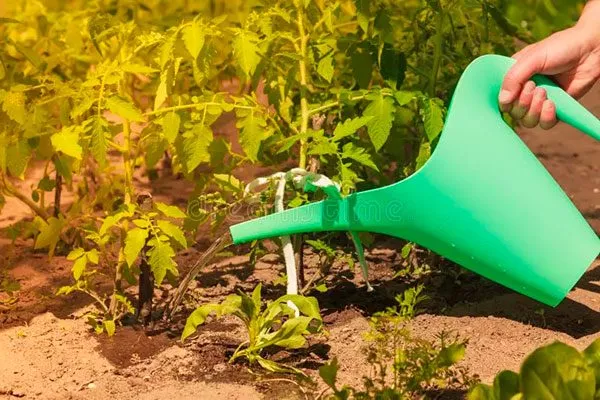
Tomato plants require especially high amounts of water during fruiting. At least 10 liters of water are poured under each plant. To slow moisture evaporation, the soil is mulched. Watering is reduced during fruiting.
Loosening
To ensure the soil is saturated with oxygen, it must be loosened regularly. This is best done the day after watering. Initially, the soil is loosened to a depth of 10 cm; later, once the roots have developed, the loosening becomes shallower—3-4 cm.
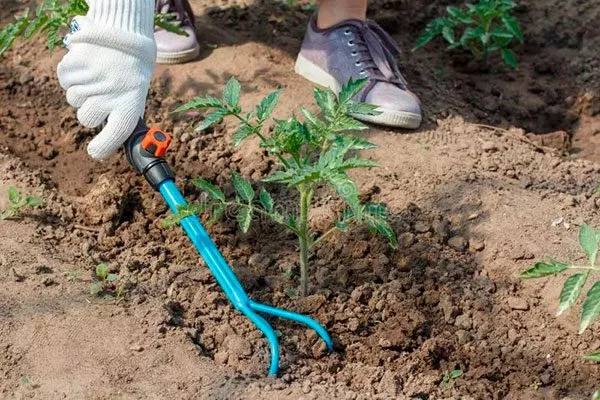
Two to three weeks after planting, the seedlings are earthed up. Tomato plants should be earthed up twice more during the season. At the same time, mineral fertilizers can be applied to the underside of the plants.
Top dressing
The variety's yield depends largely on the nutrient content of the soil, so it requires regular fertilization. When planting seedlings, you can add Borofoska, which has a beneficial effect on the plant's immune system, root development, growth, and fruiting.
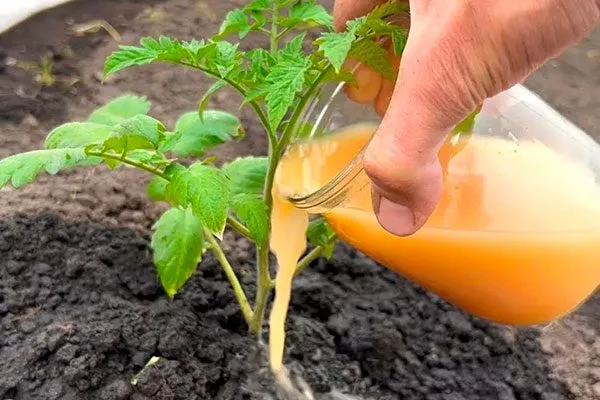
Immediately after planting, apply mineral fertilizers that are quickly absorbed by the roots. It is also recommended to mulch the soil with organic matter, such as straw or sawdust. During flowering, apply potassium, which improves flower quality and fruit set, and phosphorus, which stimulates root development.
During the fruiting stage, complex potassium-phosphorus fertilizers with added calcium are applied, which prevents blossom-end rot and improves fruit structure. Urea, magnesium sulfate, nitrate, monopotassium phosphate, and other fertilizers are also used for fertilizing tomato plants.
Shaping and garter
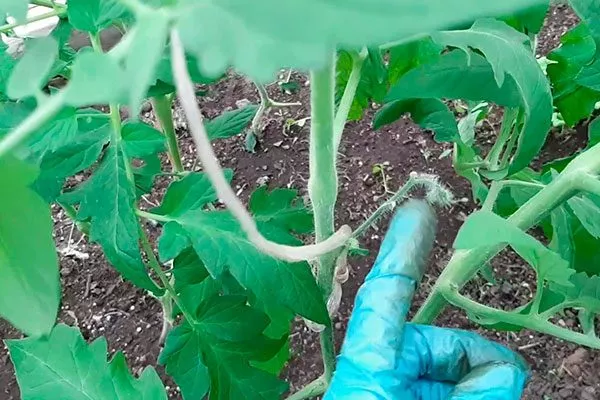
The Golden Canary tomato requires staking, pinching, and shaping. When grown in low greenhouses, the bushes are trained into two stems; if planted in tall (over 2 m) structures, they are trained into a single stem. In the latter case, the fruits grow larger.
Diseases and pests
The Golden Canary tomato is fairly resistant to Alternaria and Fusarium wilt, but under unfavorable circumstances it can be affected by fungal or bacterial diseases.
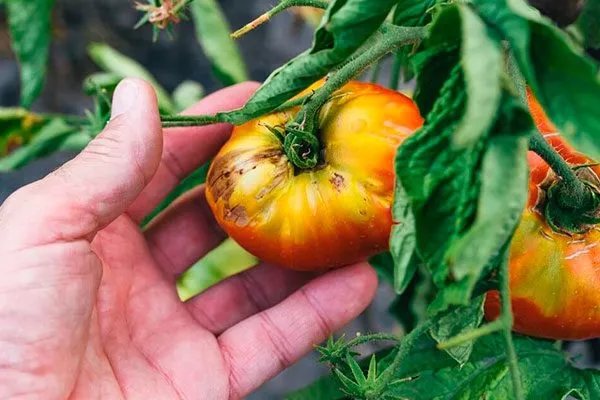
At the beginning of the season, it is recommended to spray the bushes for prevention with Fitosporin-M and copper sulfate; in mid-summer, copper-containing preparations are also used, for example, a 1% solution of Bordeaux mixture, OxyHOM, and others.
The Golden Canary tomato is most often attacked by aphids, thrips, and whiteflies. To treat tomato plants against pests, you can use both folk remedies (garlic infusion, soap solution, etc.) and biological products such as Fitoverm, Actovit, etc.
Harvesting and storage
The Golden Canary tomato harvest begins in July. The best time to pick is early morning, before the heat sets in. Tomatoes are picked when slightly unripe, when they have developed a light blush. The tomatoes are placed in single-layer cardboard boxes. Ripening takes 5-6 days at room temperature.
Only whole fruits, free of damage, dents, cracks, or other defects, are stored. At a temperature of 15°C, Golden Canary hybrid tomatoes can be stored for approximately 7-8 days.
Reviews
The Golden Canary tomato is an excellent choice for those looking for a versatile and productive tomato. This remarkable hybrid successfully combines the excellent flavor of fruits suitable for any purpose—from salads to whole-fruit canning.