
The Juggler tomato is an early-ripening hybrid variety developed by Russian breeders for cultivation in the Siberian and Far Eastern districts. The plant tolerates slight temperature drops and drought well and can produce fruit both in open ground and under plastic shelters. These tomatoes, weighing over 250 grams, have excellent flavor and are suitable for all-purpose use.
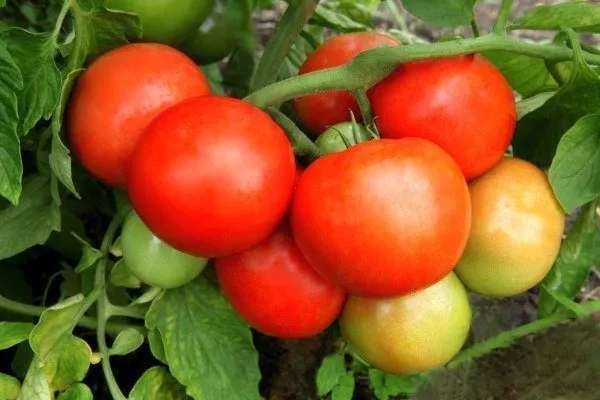
Tomatoes of the "Juggler" variety
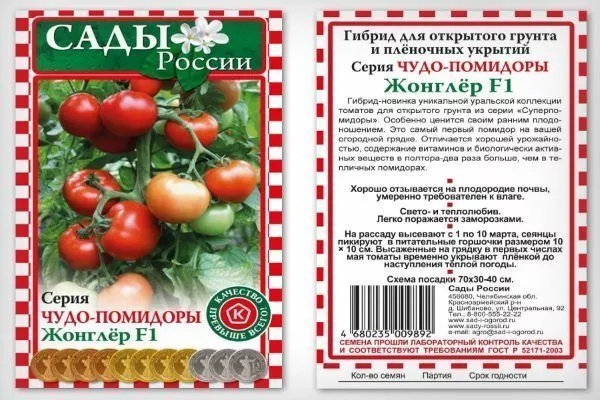
Tomato seeds of the "Juggler" variety
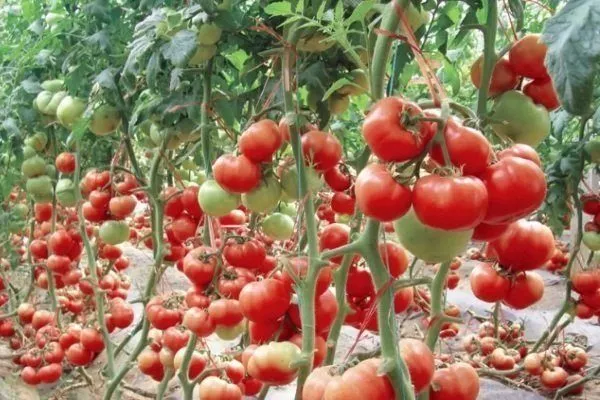
The Juggler variety was developed by Russian breeders for cultivation in the Siberian and Far Eastern regions.
Description of the variety
Juggler F1 is an early-ripening, high-yielding first-generation hybrid, with the first fruits ready to harvest 90-95 days after mass germination. This variety was developed by Russian breeders and was added to the State Register in 2008. It can be grown outdoors even in the Far East and Siberia. The key characteristics of the plant and its fruits will be discussed separately.
Bushes
This low-leafed plant is determinate in growth habit. When grown outdoors, the bushes reach 60-70 cm in height, and in a greenhouse, 100-110 cm. The leaves are ordinary, dark green, medium-dissected, and slightly corrugated.
The inflorescence is of the standard type. The first appears above the 5th or 6th leaf, and subsequent ones appear 1-2 leaves later. A single cluster can produce approximately 5-8 fruits at a time. Typically, a single plant produces approximately 30 tomatoes, with ripening occurring simultaneously.
Fruit
They have the following characteristics:
- WeightOn average, it weighs 250 g, but when grown in open ground it can reach 300 g, and in a greenhouse – 400 g.
- FormThick-skinned tomatoes have a round, flat shape with slight ribbing near the stem.
- ColorAs the fruit ripens, it turns from green to a rich red, without spots.
- Pulp. Moderately dense, fleshy and juicy pulp with 4-5 seed chambers, dry matter content up to 4% and sugars up to 2.3%.
- TasteSweetish taste with a slight sourness, without wateriness.
Tomatoes of the hybrid variety Juggler are heat-resistant, have good shelf life and are easy to transport.
Table of characteristics
The Juggler F1 tomato is very popular among other hybrids due to its characteristics. These are listed in the table below:
| Parameter | Description |
| General description | Hybrid, early-ripening, determinate variety |
| Originator | Russia |
| Ripening period | 90-95 days after emergence |
| Productivity | In open ground – 13-16 kg per 1 sq. m, and in a greenhouse – 22-24 kg per 1 sq. m |
| Disease resistance | It's tall, but requires preventative treatment. It's resistant to late blight because it's an early-ripening variety. |
| Purpose | A versatile variety. The fruits can be eaten fresh, preserved, and processed, as they do not crack under high temperatures. However, the tomatoes are sometimes unsuitable for whole canning due to their large size. They can also be grown commercially. |
The following video shows what Juggler's bushes look like with their powerful, unripe fruits:
Agricultural technology
To get a good harvest of Juggler, you should remember a few basic rules:
- Sow seeds for seedlings no earlier than the second half of April, or 55-60 days before planting in a permanent location. Typically, seedlings are transplanted into open ground after June 10. The planting pattern is 50 x 30 (40) cm.
- Tomatoes should not be grown in clay, heavy loam, or acidic soils with a pH below 5. A suitable option is loose, light soil rich in humus.
- The selected substrate should not contain an excess of manure, as it will provoke increased growth of green mass, which will cause the ovaries and future fruits to lag in development.
- Regardless of how you grow tomatoes (from seedlings or direct sowing into open ground), it's not recommended to use soil that was previously used to grow other varieties of tomatoes, potatoes, peppers, or peas. This is because such soil often harbors pathogens that can also pose a risk to Juggler.
- In temperate or cold climates, it's best to grow tomatoes from seedlings, as this will speed up the harvest. While the young seedlings are growing and establishing themselves indoors, the soil in the garden will have time to warm up.
- After planting, proper care of the seedlings is required, which includes timely watering, fertilizing with mineral fertilizers, pinching out side shoots, and preventative treatment against pests and diseases.
- ✓ The optimal soil pH level should be between 5.5-6.5 to prevent chlorosis.
- ✓ The soil must contain at least 3% organic matter to ensure sufficient water-holding capacity.
Compliance with all agricultural practices will allow you to obtain the maximum yield – up to 16-24 kg of fruit per 1 square meter of planting area.
Planting through seedlings
In this case, you can use one of two methods: purchasing ready-made seedlings or growing them yourself. Each method requires separate consideration.
You can get useful tips on how to grow tomato seedlings in next article.
Purchase
If you lack experience or don't want to grow seedlings yourself, you can purchase them from reputable sources. However, pay attention to the following parameters:
- State of green massSeedlings shouldn't have overly thick trunks or huge leaves. Although they may look attractive, they won't produce good fruit sets, and the diseased foliage will spread throughout the garden. Such seedlings are typically overfed with nitrogen fertilizers. Of course, the stems also shouldn't be too long and thin, and the lower leaves shouldn't be yellowed. Such seedlings simply won't thrive in the garden.
- Number of leavesA healthy and strong specimen should have at least seven leaves. The lower ones should be intact, without any yellowing or brown spots.
- Barrel sizeIdeally, it should resemble a pencil, but it can be a little thicker.
- Root systemIt should not be dry or show signs of putrefactive damage.
- PlacementIf the seller has literally crammed boxes full of seedlings, their root system is likely already damaged, so you should refrain from purchasing them. Roots may regrow, but this will take at least 1-2 weeks.
When purchasing seedlings, special care must be taken, as even a few saplings with rot or viral diseases can ruin your entire supply.
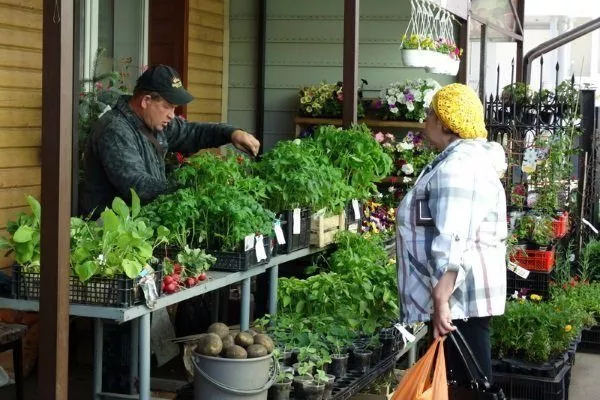
Do-it-yourself preparation
Seeds should be planted for seedlings in early March. This process consists of the following steps:
- Selecting containers. It should be spacious and have drainage holes in the bottom. Boxes meet these requirements. Meanwhile, plant tomato seedlings It can be done in separate small containers, which will allow you to avoid picking the plant.
- Seed preparation. For seed germinationThe seedlings should be soaked in slightly salted water, removed after 30 minutes, rinsed with clean water, and dried. During soaking, a few seeds may float to the surface. These should be removed, as they are unsuitable. Another method is to place the seeds in a damp paper towel the day before planting, which will ensure rapid germination.
- Substrate preparationYou can purchase it at a gardening store or prepare it yourself by mixing equal parts humus, peat, turf soil, and rotted tree leaves. Add a cup of wood ash, 3 tablespoons of superphosphate, and 1 tablespoon of potassium sulfate to the mixture, then mix thoroughly. In either case, the substrate must be disinfected by placing it in the oven and heating it for 20 minutes at a high temperature.
- Planting seedsThe prepared soil should be poured into containers and lightly moistened with warm water. The seeds should be planted 1 cm deep, leaving 2 cm between them, and covered with fertile soil or peat, but no more than 1 cm thick. If the seedlings are being grown in small containers, two seeds can be placed in each to ensure that only the strongest seedlings are retained.
- Placement of seedlingsAfter planting, cover the soil with plastic wrap and place the containers in a warm place. When the first shoots appear, remove the plastic wrap and place the containers on a windowsill. Keep in mind that the room temperature should be maintained between 23 and 25°C during the day and no lower than 15°C at night. Allow the seedlings to warm up in bright, indirect light for 12-14 hours. If the light is insufficient, supplemental lighting will be necessary.
- WateringSeedlings need to be watered as the top layer of soil dries out. It's best to use a spray bottle and warm, settled water.
- Top dressingFor active development top dressing should begin with seedlingsSeedlings can be sprayed with a solution of 1 g of ammonium nitrate and 1 g of superphosphate per 1 liter of clean water.
- PickingWith the appearance of 2-3 true leaves the seedlings need to be pricked outIf the seeds were planted in a single container rather than in individual cups, be sure to leave only strong, healthy seedlings when transplanting.
- HardeningThis is done 2-3 weeks before planting in a permanent location. The pots should be taken out onto the balcony or outside every day, initially for 1 hour, and then for 1.5-2 hours. At the same time, reduce the frequency of watering and ensure the seedlings have sufficient fresh air.
Once the seedlings have become accustomed to a little coolness, they can be transplanted into an open area.
Transplantation into the ground
After 50-55 days from the first emergence, the seedlings can be transplanted to their permanent location at a rate of 4 seedlings per square meter of plot. Follow this schedule:
- Three days before planting, trim the bottom three leaves from the stems, leaving only small stumps. This will improve ventilation, protect against disease, and strengthen the fruiting cluster. After this, water the seedlings generously.
- The day before transplanting, dig holes in the bed slightly larger than the seedling containers. Add 1 tablespoon of superphosphate to each hole, then fill to the brim with water. Once the water is completely absorbed, repeat this process three more times.
- When planting, remove the seedlings, place them in separate holes and cover with the remaining soil, then water generously.
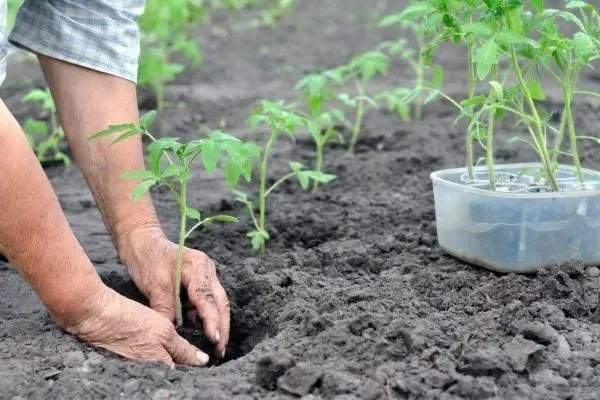
The second watering after planting should be done a week later, and until then it is better to leave the seedlings alone.
Planting seeds in open ground
When growing tomatoes in temperate climates with fairly hot summers, seeds should be planted in the ground in early May, when the soil is well warmed up and the likelihood of sudden frosts is minimized.
To ensure a good harvest, the soil should be prepared in the fall. It should be dug over and rotted manure or compost added. In a greenhouse, it's recommended to replace the top 12 cm of soil. The new substrate should be fertilized with potassium salt and superphosphate at a rate of 40 g per square meter.
The landing scheme looks like this:
- Soak the seeds in a special growth stimulator for 24 hours or until small sprouts appear. Alternatively, wrap them in a damp, soft cloth for 24 hours.
- Prepare shallow furrows for seeding in the area. The optimal depth is about 3 cm.
- Sow seeds 5 cm apart. Weak and undeveloped seedlings will be removed later, leaving at least 40 cm between mature and established plants.
- Cover the holes with seeds and water them generously.
- Cover the bed with film, which is especially important for regions with a cool spring season.
To prevent mold from appearing, plants need to be regularly ventilated, especially in areas with slightly acidic or acidic soil.
Maintenance and care
To obtain a good harvest, growing seedlings require proper care. We'll discuss the necessary agricultural practices below.
Watering
Juggler's rhododendron tolerates short-term drought well, but seedlings should still be watered generously in the morning or evening, using sun-settled water. However, the watering intensity should be adjusted depending on the seedlings' developmental stage. A rough watering schedule is as follows:
- After planting seeds or seedlings, water the soil generously.
- The second watering should be carried out on the 7-10th day.
- During the flowering period, water the plant every 4 days at the rate of 3 liters of water per 1 bush.
- During the period of inflorescence and ovary formation, water the plant once a week at the rate of 4 liters of water per 1 bush.
- When the fruits appear, water the plant 2 times a week at the rate of 2 liters of water per 1 bush.
When watering tomatoes, keep in mind that excess moisture is unacceptable, as it creates a favorable environment for the spread of harmful fungi. However, it should also be avoided if it dries out, as this will cause fruit drop, yellowing, and curling of the tops. Therefore, moderation is essential, while taking into account the condition of the topsoil.
Loosening, weeding
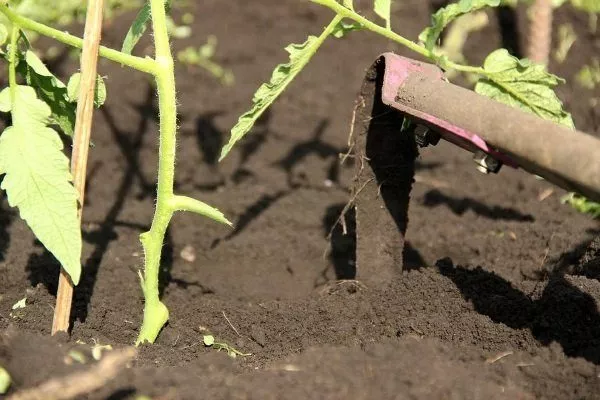
To ensure the bushes develop fully, the soil must be regularly loosened and weeded. These two procedures are best performed in combination and after watering. When doing so, be extremely careful not to damage the plant's root system.
In the case of young plants planted directly into the soil from seeds, weak and excess shoots should be removed along with the weeds.
Top dressing
Tomatoes are fed with organic and complex mineral fertilizers, which include the following preparations:
- Sudarushka;
- Master;
- Kemira;
- AgroMaster;
- Plantafol.
The interval between applications should be at least 15-20 days, so about five applications can be carried out in a single season. The approximate schedule is as follows:
- If the seedlings haven't been fertilized at home, 15 days after planting them in their permanent location, the soil should be fertilized with a mullein solution at a ratio of 1:10. Apply 1 liter of this solution under each bush.
- For the next feeding, use superphosphate and potassium salt. Take 15 grams of each and dissolve it in water, which is then poured under the plant roots. Phosphorus will stimulate metabolic processes and strengthen the root system, while potassium will improve the flavor of the fruit.
- During the next feeding, instead of traditional mineral fertilizers, you can use wood ash, incorporating it into the soil while loosening. Another option is to dissolve the substance in water at a rate of 200 g per 10 liters of water, let it sit for 24 hours, and then pour it under the plant roots.
When fertilizing tomatoes, avoid excess nitrogen, as this will lead to excessive growth of green mass and underdevelopment of fruits.
Pinching out side shoots and garter
The plant requires partial side-shooting, although the seed packet may indicate that the hybrid variety does not require side-shooting. To obtain a bountiful harvest, train the bush into three stems and remove any side-shoots that crowd the planting. This procedure should be performed as needed, otherwise the sprouts will steal nutrients from the main shoots.
As for staking, it's also worth remembering, even though this variety is low-growing. The bushes can be tied with soft fabric tape to stakes driven into the ground, but it's better to install a trellis made of several support beams and wire stretched between them.
Protection from diseases and pests
Juggler F1 is a hybrid variety, so it's resistant to many diseases that pose a threat to nightshade crops. However, preventative measures shouldn't be neglected. They involve a few simple steps:
- pre-treat the area with copper sulfate and potassium permanganate;
- During the growth of tomatoes, regularly loosen the soil and remove weeds to ensure filtration and prevent the development of root rot;
- To prevent late blight, treat the plant with Ordan and Fitosporin, but the latter should be used 20 days before the expected harvest.
- ✓ The appearance of a purple tint on the underside of the leaves indicates a phosphorus deficiency.
- ✓ Upward curling of leaves can be a sign of excess nitrogen or a lack of potassium.
At growing tomatoes in open ground It's also important to remember that it can be attacked by various insects. Industrial insecticides can be used against them, applying them several times at intervals of 2-3 days. If slugs are attracted to the seedlings, they can be repelled with ammonia.
Fungicides and insecticides must be used strictly according to the instructions on the packaging to avoid burning the tops or simply losing a harvest.
Harvesting and storage
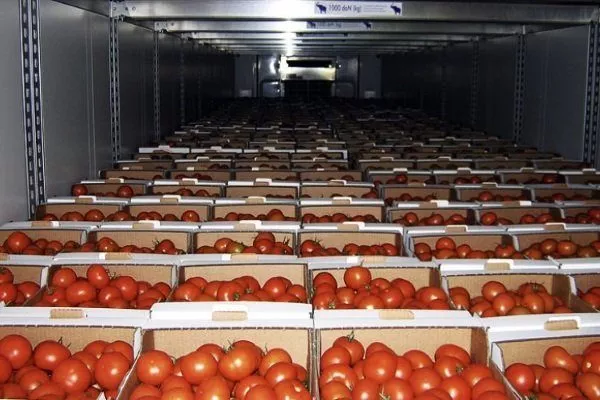
When grown from seedlings, the first harvest can be collected as early as mid-July, and from seeds – in late summer or early September. The harvested fruits should be stored in empty boxes, immediately identifying and discarding any rotten or cracked specimens.
Tomatoes can be stored in a dry basement at a temperature of +6°C. This way, they can be stored all autumn and into winter.
Pros and cons
The juggler attracts gardeners with the following advantages:
- high yield with minimal maintenance;
- good transportability and long shelf life;
- excellent taste;
- resistance to many diseases and insects;
- versatility in application;
- the possibility of growing in regions with cool climates;
- the ability to withstand sudden changes in temperature.
No shortcomings of the hybrid have been identified, but errors in growing and caring for the plant can lead to a decrease in both yield and taste of the fruit.
The Juggler tomato is an early-ripening variety that tolerates sudden temperature fluctuations and weather changes. It produces a good harvest when grown in a sunny location. These versatile tomatoes can be eaten fresh, canned, or processed into tomato products.