
The Green Secret of the Larva tomato is an exotic variety developed by Australian breeders. It has unique fruits and requires very simple cultivation techniques; any gardener can grow sweet green tomatoes in their own garden.
Who and when developed the Green Secret of the Larva tomato?
The Green Mystery of the Larva variety was developed by Australian breeders in 2005. Its other name is "Grub's Mystery Green." The tomato was named after the Australian breeder, Grubs.
Description of the bush
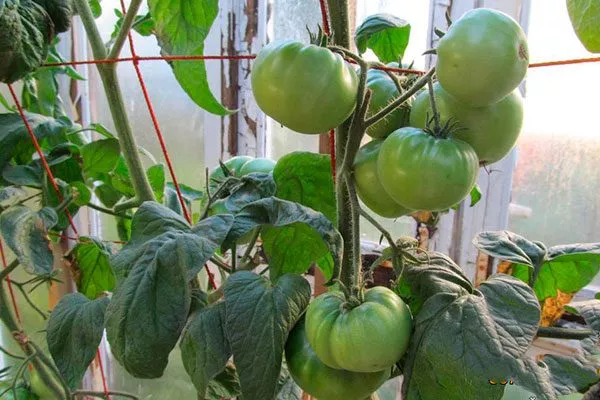
Grub's Mystery Green tomato plants are tall and spreading, and are indeterminate. Plants reach a height of 1.5-1.8 m.
Description of fruits
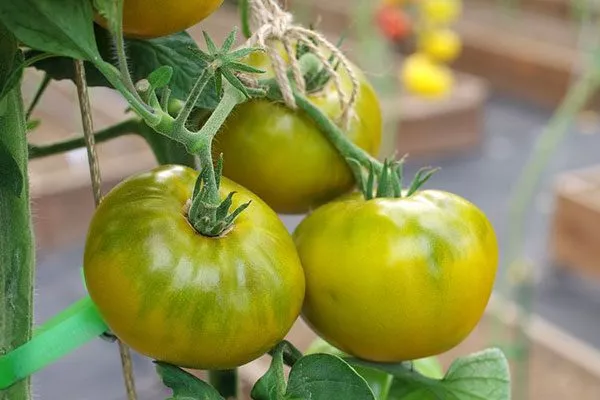
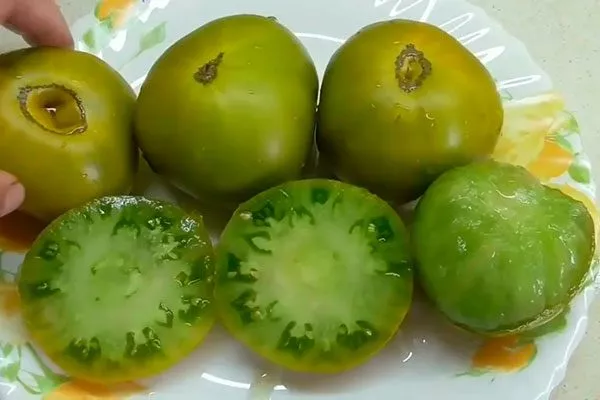
Green tomatoes produce large fruits. Each cluster contains 4-7 tomatoes. When overripe, the fruits take on an orange hue.
Brief description of fruits:
- Unripe fruit color: light green, without a spot near the stalk.
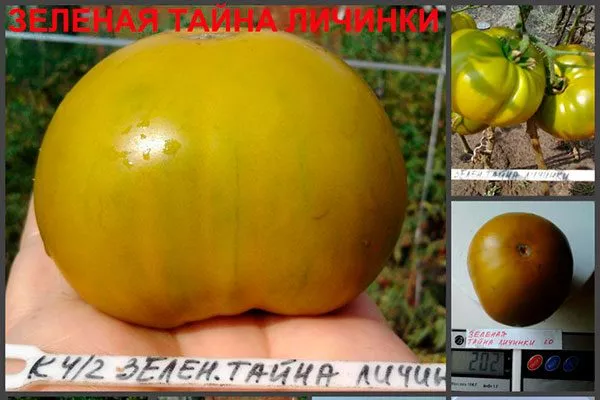
- Color of ripe fruit: green-amber
- Form: flat-round.
- Pulp: dense, fleshy.
- Skin: dense, glossy.
- Weight: 200-400 g
The taste of fruits and their purpose
Green tomatoes are very sweet, with only a hint of tartness and a fruity aftertaste. The flesh is juicy and aromatic, with a delicate texture.
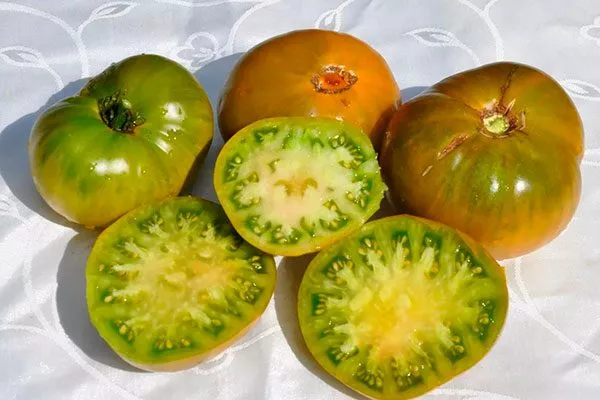
The fruits are eaten fresh and used to make salads.
Characteristics
The Mr. Grabs' Green Riddle tomato is a mid-early variety. It takes 90-95 days from germination to the first tomatoes ripening.
This variety is considered high-yielding, yielding 20 kg or more of fruit per square meter. It has good immunity and is resistant to viral diseases.
Pros and cons
The Green Secret of the Larva tomato not only has a long name but also a list of advantages. However, this variety also has its drawbacks, and it's recommended to learn about all the pros and cons in advance.
Landing
Grub's Mystery Green tomatoes are recommended for growing from seedlings. The seedlings are grown in greenhouses or other heated, well-lit areas. The finished seedlings are then transplanted into open ground or greenhouses.
Preparing containers
Planting containers must be clean and disinfected. First, they are washed with warm water and laundry soap or any other detergent, rinsed, and dried. The next step is disinfection, which is used for used containers.
For planting, you can use a variety of containers - large containers, plastic cups, cassettes, peat pots.
Soil mixture
The prepared container should be filled with a nutrient-rich substrate. The easiest and most convenient option is to purchase a ready-made potting mix specifically designed for nightshade seedlings. For example, KEVA BIOTERRA and Bogatyr potting soils, or Biomaster soil briquettes.
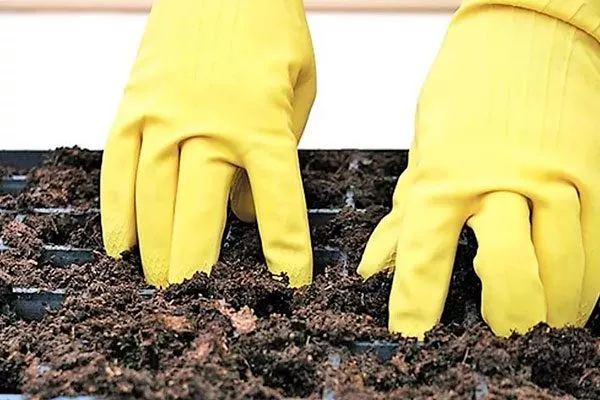
If you don't want to buy expensive potting soil, you can make your own. There are many recipes, but here's one: mix 10 liters each of peat, sand, and humus (or compost), adding 1 liter each of wood ash and wood shavings. Add hot boiled water to the mixture and let it sit for 24 hours to cool and settle.
Seeds
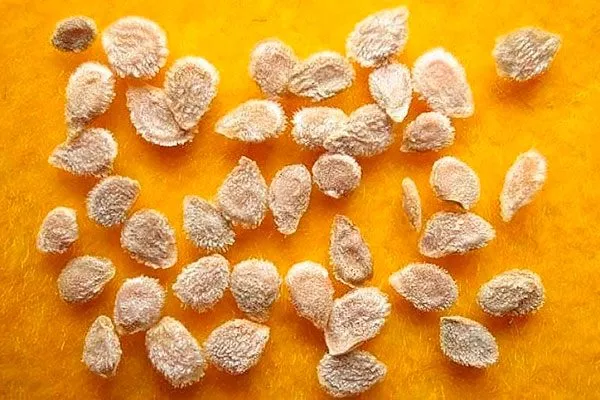
Before planting, it's recommended to test seeds for germination by immersing them in a salt solution (1 tablespoon per 250 ml of water). Non-germinating seeds will float to the surface and should be discarded. Seeds can also be soaked in an Epin solution to increase germination.
If you're using homemade picking, be sure to disinfect them. You can use a deep pink solution of potassium permanganate or 3% hydrogen peroxide for disinfection.
Soak the seeds for half an hour, then rinse under running water and dry. It's also recommended to harden the seeds in the refrigerator and germinate.
Site selection and soil preparation
Green tomatoes are grown in warm, sunny locations. The optimal daylight hours for this variety are 11-12 hours. The site should be free of drafts, strong north winds, shade, and waterlogging. Lowlands are not recommended for tomatoes.
Australian tomatoes grow best in light loam or sandy soils. The optimal soil pH is 6-6.5. The planting site is prepared in the standard manner: digging in the fall, adding all necessary fertilizers, as well as any components that may be needed to improve the soil structure or adjust its acidity.
When digging in the fall, it's recommended to add humus or compost, mineral fertilizers, or sand if the soil is clayey. Soil acidity is determined using litmus strips. If it's too high, add lime (slaked lime); if it's too low, add manure or peat.
Growing seedlings
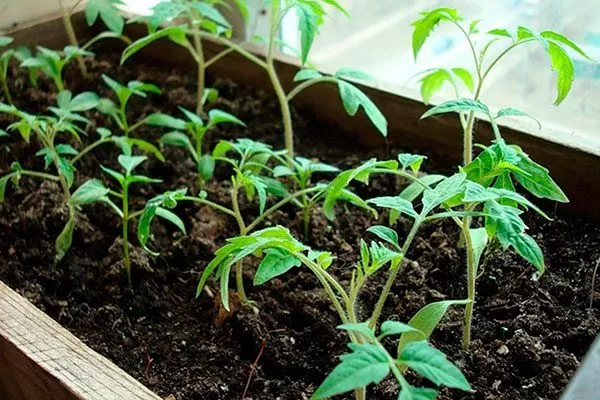
Grub's Mystery Green tomato seedlings are sown 50-60 days before planting in the ground or greenhouse. Sow seeds in March-April. The exact sowing dates depend on regional climate conditions.
Features of growing seedlings:
- Sow seeds in leveled, moist soil. They are planted 1 cm deep, leaving 2 cm between adjacent plants. When sowing seeds in containers, make furrows 3-4 cm apart. Cover the tomato seeds with a thin layer of soil and cover with plastic wrap.
- The greenhouse containing the crops is kept in a warm room with diffused light. It is ventilated daily to prevent condensation from forming inside.
- Once the seedlings emerge, the plastic covering is removed. At this point, there's a risk of the seedlings becoming elongated, which will leave them weak and unviable. To prevent this, the temperature is sharply reduced—from 22 to 25°C to 14 to 16°C. This temperature is maintained for a week. The seedlings themselves are then moved closer to the light.
- At this stage, seedlings require 24-hour lighting. For this purpose, phytolamps are turned on. After 5 days, daylight hours are reduced to 18-20 hours, then to 11-12 hours.
- Proper watering is crucial for seedlings. Avoid overwatering the soil, as this stage is highly susceptible to fungal infections, especially blackleg. Before transplanting, water tomatoes once a week, and after transplanting, water them 2-3 times a week.
- Seedlings are pricked out after two true (non-cotyledon) leaves have formed. When transplanting, pinch back 1/3 of the central root. From containers, seedlings are transplanted into individual containers. If they were initially grown in cups, they are transplanted into larger containers.
- After picking, apply approximately three additional fertilizers. The first is two weeks after transplanting the seedlings, and subsequent ones are applied at 10-14 day intervals. The first application is a high-nitrogen fertilizer; subsequent applications require potassium-phosphorus fertilizers.
- Hardening off seedlings begins 1-2 weeks before transplanting them outdoors. This helps them establish themselves and adapt to the new conditions. Start with half an hour, then gradually increase the time spent outdoors to several hours.
Transplanting
Tomato seedlings are usually planted in the second half of May. The exact planting time depends on the climate and current weather conditions.
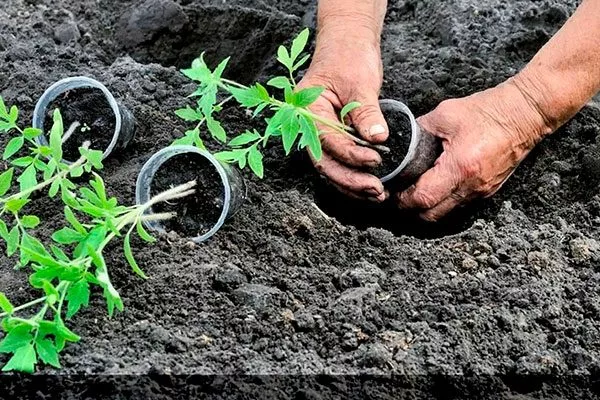
Planting in open ground is carried out only after warm, stable weather has set in and the soil has warmed to 12–14°C. Planting in a greenhouse is done a couple of weeks earlier.
Features of planting seedlings:
- Seedlings planted in potting soil or commercially prepared substrate are watered generously the day before planting. Peat pots can be watered moderately or not at all before planting—they are still planted in the holes along with the seedlings.
- Dig spacious holes for planting, at least 15 cm deep. There should be 3-4 plants per square meter.
- Add a handful of humus and wood ash to the holes, add mineral fertilizer, top with soil, and then water. 3-5 liters of water is sufficient.
- After about an hour, when the soil has settled, the seedlings are planted in the holes, the roots are covered with soil, which is carefully compacted, forming a small depression around the stem.
- Planted tomatoes are watered with warm, settled water. Once the moisture has been absorbed, the soil can be mulched with humus, peat, straw, hay, etc. Do not water the planted tomatoes for 10 days, unless extreme heat occurs.
Care Features
Grub's Mystery Green, an Australian tomato, requires standard care. Growing it is no different from other varieties.
Watering and loosening
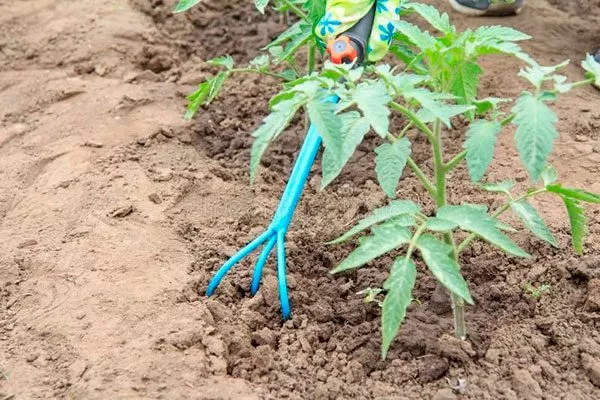
Water the green variety infrequently but generously. Watering the bushes once or twice a week is sufficient, or two or three times in hot weather. Water should be applied directly to the roots, avoiding drips on the stems and leaves. After watering and heavy rains, loosen the soil to a depth of 5-7 cm, and remove any emerging weeds.
Top dressing
After transplanting into the ground, young tomatoes are fed with complex mineral fertilizers to speed up their establishment. During flowering and fruit formation, potassium and phosphorus supplements are added. You can also feed tomatoes with a 10% mullein solution.
Shaping and garter
The larvae form the Green Mystery tomato bushes into 2-3 stems. If larger fruits are desired, the number of fruits per cluster is reduced to 3.
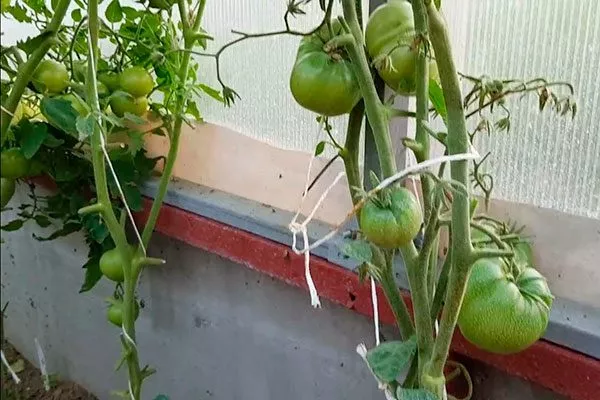
The bushes of this variety are tall, so they need to be tied to sturdy supports. The plants also need occasional side shoots.
Diseases and pests
This green tomato variety is resistant to major fungal, viral, and bacterial diseases. However, under adverse weather conditions and poor care, the risk of infection increases. For prevention, it is recommended to spray the bushes with copper-containing preparations, as well as biofungicides such as Trichodermin and Ampelomycin.
Grub's Mystery Green tomato is susceptible to various nightshade pests. Systemic insecticides are used to control them, while safe biological products or folk remedies, such as tobacco decoction, wormwood infusion, and saline solution, are used if the plants are already bearing fruit.
Harvesting
The fruits are harvested from August to October, preferably in dry weather, in the morning, when there is no dew. Ripeness is determined by their color—the skin should take on a yellowish tint.
The ripeness of tomatoes is also judged by their elasticity: if they dent or give way when pressed, then they are ready to harvest.
Reviews
The Green Secret of the Larva tomato is one of the most unusual and original varieties. But gardeners plant it not only for its unusual color; this variety has excellent agronomic characteristics, and its fruits have a wonderful flavor. It's an excellent choice for lovers of delicious and unusual tomatoes.