
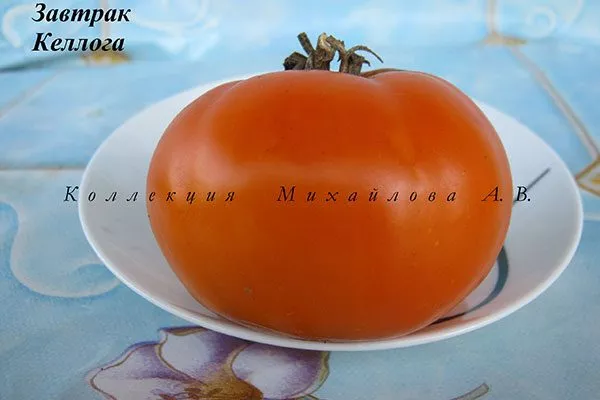
The Kellogg's Breakfast tomato is an unusual American variety with large, juicy, yellowish fruits. This tomato will appeal to those who believe red isn't the only color for this crop.
Who and when developed the Kellogg's Breakfast tomato?
The Kellogg Breakfast tomato (Darrell Kellogg) was bred in the United States by amateur gardener Darrell Kellogg. The variety was first introduced in 1993 at the American seed bank Seed Savers Exchange. It is also known as Kellogg's Breakfast.
Description of the plant and fruits
Kellogg's Breakfast tomato plants are tall and indeterminate, reaching a height of 1.8 m. They have dark green, potato-like leaves.
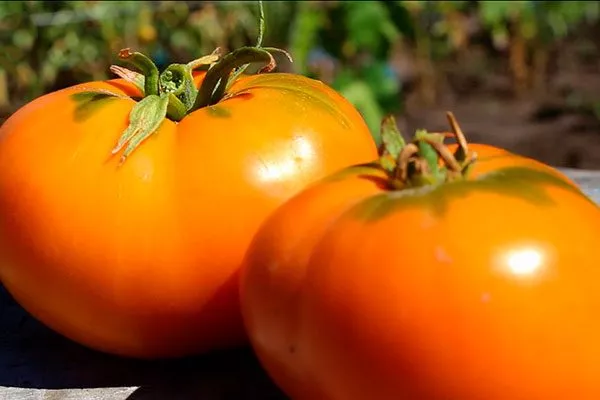
Brief description of fruits:
- Color of unripe fruits:green.
- Color of ripe fruits:yellow-orange.
- Weight of one fruit:200-500 g
- Form:flat-round.
- Pulp:juicy, fleshy.
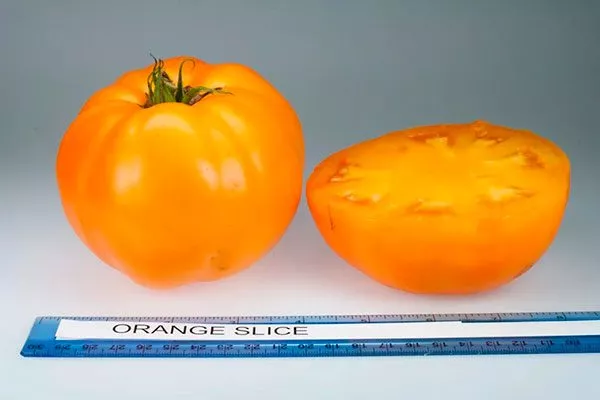
Individual specimens can reach a weight of up to 1 kg.
The taste of fruits and their purpose
The Kellogg's Breakfast variety has a sweet and very pleasant flavor, with a slight tartness. The fruit's flesh is juicy, meaty, and delicate. This variety is ideal for eating fresh and is especially delicious in salads.
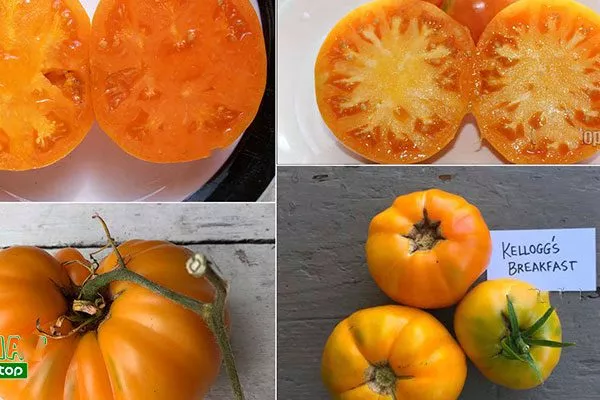
The yellow fruits are versatile. They retain their flavor after cooking, so they can be used in a variety of dishes, juices, ketchups, and tomato pastes.
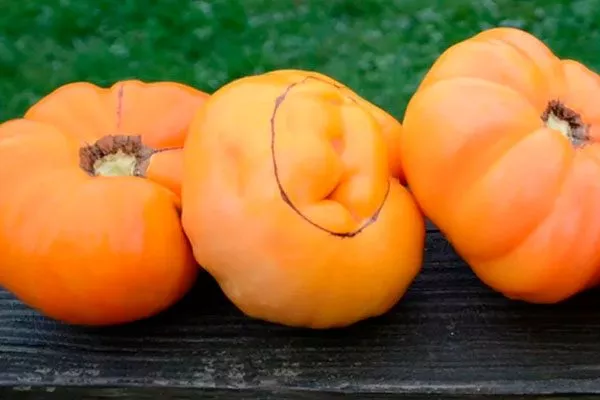
This tomato is an unusual American variety with large, juicy, yellowish fruits. This tomato will appeal to those who believe red isn't the only color for this crop.
This yellow-fruited variety boasts good yields and disease resistance, and it also tolerates prolonged drought well. A single bush yields 5-6 kg of fruit.
Pros and cons
This American variety with giant yellow fruits is sure to attract the interest of gardeners, but before planting this variety in your garden, it is useful to learn about all its advantages and disadvantages.
Landing features
The Kellogg's Breakfast tomato is grown using seedlings. The growing process takes approximately 55-60 days. This variety can be grown outdoors or indoors. The former is suitable for southern regions, while greenhouses and plastic structures are preferable for other regions.
Planting container
To grow healthy and strong seedlings, it's important to avoid mistakes at any stage. The growing process begins with choosing the right planting container. Tomatoes can be grown in any container, as long as it's disinfected and has drainage holes.
For planting containers, you can use, for example, cassettes, containers, plastic cups, peat pots, wooden boxes, homemade film rolls, etc. Empty containers are first washed with hot water and soap or a neutral detergent.
Washed containers are disinfected. This is especially important if the containers have already been used for growing seedlings. Disinfection agents that can be used include hydrogen peroxide, potassium permanganate, vinegar, a salt and soda solution, formalin, bleach, and copper sulfate.
Seeds
To ensure that seeds germinate well and produce strong, viable, and healthy sprouts, they must be properly prepared for planting.
Features of pre-sowing seed preparation:
- Germination is tested in a salt solution: 10 g is dissolved in 200 ml of water. Seeds that sink to the bottom are used for sowing; those that float are discarded.
- Soaking in Zircon and Cytovit. Zircon is a growth regulator derived from purple coneflower. It improves seed germination, seedling survival, and disease resistance, and also has anti-stress properties. Cytovit is a universal chelated micronutrient fertilizer containing a complex of macro- and microelements that stimulate plant growth, development, and resistance to adverse conditions.
- If the seeds are self-harvested, they need to be disinfected. Seeds from the manufacturer are usually already disinfected when they arrive at the market. Garlic infusion or aloe juice can be used for disinfection.
It's also recommended to harden the seeds by keeping them in the refrigerator for 4-5 days and then germinating them, wrapped in damp gauze. Seeds can also be sprouted on cotton pads.
Soil mixture
You can use commercial soil for growing seedlings. When choosing it, pay attention to its composition. The best option for ready-made substrates is low-lying peat with granulated mineral fertilizers containing microelements. To improve the composition of commercial soil, you can add humus or fine river sand (for looseness).
Growing seedlings
Seedlings are sown from mid-March to mid-April, depending on climate conditions. In the south, tomatoes are sown earlier, in late February.
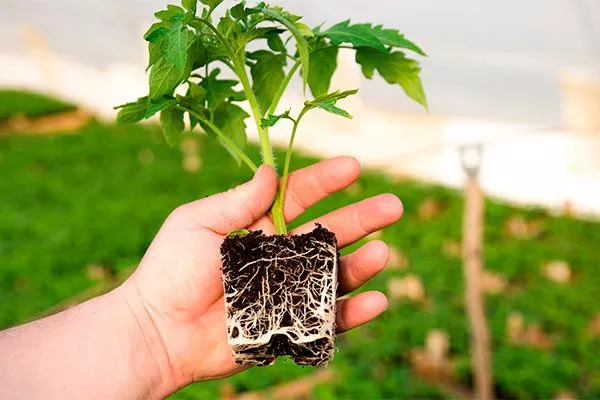
Features of sowing Kellogg's Breakfast tomato seedlings:
- It is recommended to sow tomatoes during the waning moon, as the root system of plants develops especially well during this period.
- Sow seeds in large containers or individual cups. Pre-moisten the soil with warm, settled water. Space adjacent seeds 2 cm apart. Space rows in containers 3-4 cm apart.
- The seeds are planted 1-1.5 cm deep and covered with a thin layer of soil. Cover the seeds with a transparent material and move them to a warm room with diffused light.
- ✓ Optimum temperature for seed germination: +25 °C.
- ✓ The need to use phytolamps to provide round-the-clock lighting during the first week after germination.
The cover is lifted daily to ventilate the crops and prevent condensation. When seedling rings appear on the soil, the film is immediately removed, and the temperature is lowered from 25°C to 15°C to prevent the seedlings from stretching.
Features of caring for Kellogg's Breakfast tomato seedlings:
- During the first week, seedlings require 24-hour light. To provide the seedlings with uninterrupted light, grow lights are turned on. After a week, daylight hours are reduced to 18 hours, gradually decreasing to 11-12 hours. The seedlings grow under this regime until they are planted in the ground.
- The seedlings are pricked out when two true leaves appear. They are then repotted into 300-500 ml containers. When repotting, the central root is pinched to encourage the formation of lateral roots.
- Water the seedlings with warm, settled water from a spray bottle or a watering can with a thin spout. Avoid pouring water on the leaves. Sprinkling is not recommended, as it can encourage fungal diseases. Before transplanting, water the seedlings once a week, and after transplanting, water them 3-4 times a week.
- Fertilize only after transplanting—approximately two weeks later. You can use organic fertilizer or special fertilizers for tomato seedlings, such as Malyshok, Signor Pomidor, Fertika Lux, etc.
- To acclimate the plants to natural light and temperature fluctuations, they are brought outside, and the lights are turned off at night. They are kept outdoors for 1.5 hours at first, then the time spent "outdoors" is gradually increased, reaching 8-12 hours.
How to choose a site?
When choosing a site for Kellogg's Breakfast tomatoes, it's important to consider the size of the plants—they require plenty of space and light. Drafts and cold winds are undesirable. The variety prefers loose, fertile soil that is breathable, light, and well-drained.
It's not recommended to grow tomatoes outdoors in the same location for at least three years. Also, tomatoes shouldn't be grown after nightshade crops such as eggplant, peppers, and potatoes. Good predecessors for the Kellogg's Breakfast tomato include carrots, turnips, radishes, daikon, beets, cucumbers, cabbage, herbs, and salads.
Soil preparation
The Kellogg's Breakfast tomato prefers fertile, well-drained soil with a pH of 6.0–6.8. Therefore, add organic matter to the soil to increase fertility (this is done in the fall), sand to loosen the soil, and components to adjust the acidity (wood ash, slaked lime, etc.).
All fertilizers are applied in the fall, during digging. The soil is dug to the depth of a spade. In the spring, it is also recommended to dig the soil or at least loosen it deeply. During this period, mineral fertilizers can be added to the soil (to a depth of 15-20 cm), for example, 20 g each of saltpeter and potassium chloride, and 50 g of superphosphate.
Transplanting
Seedlings are planted when the saplings have 7-8 leaves. They are only planted outdoors once the weather has warmed up and the risk of frost has passed. However, there's no complete protection against sudden drops in spring, so keep plastic wrap handy for use at night.
Features of planting Kellogg's Breakfast seedlings:
- It's recommended to water the seedlings an hour before planting. This will help remove the plants from their containers without damaging the roots, along with the root ball.
- Dig holes at least 15 x 15 cm in size for planting. The holes should be large enough to accommodate the root system of the plants along with the soil. A planting pattern for tall varieties is 70-80 x 100 cm. In a greenhouse, plants can be planted more compactly: 50-60 x 70-90 cm. A staggered planting pattern is optimal.
- It is recommended to add a handful of wood ash and crushed eggshells to each hole; you can also add a little onion peel, vermicompost, and 1 teaspoon of superphosphate.
- The seedlings are planted by transshipment, leaving at least 4-6 leaves above the surface. It is recommended to plant the seedlings deeper in the soil than they were growing in the pots, as this will encourage the plants to develop additional roots.
- The empty space in the holes is filled with loose soil and compacted, creating a depression near the stem for watering. After planting, the seedlings are watered with warm, settled water. Once the moisture has been absorbed, the soil is mulched with compost or simply dry soil.
Care Features
The American tomato, like the crop in general, is responsive to care. To achieve a truly abundant and high-quality harvest, with juicy, large fruits, certain care is necessary.
Watering
In open ground, tomatoes are watered on average 1-2 times a week. The frequency of watering depends on the weather and soil conditions. In a greenhouse, however, it is primarily influenced by the growth stage. Regardless of soil type—open or closed—watering is especially important during flowering and fruiting.
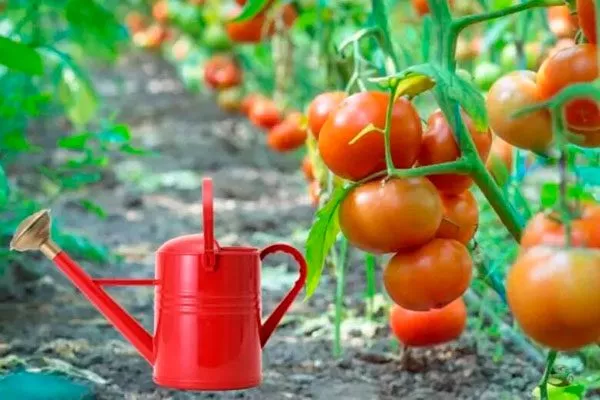
The watering requirement depends on the plant's age; one mature plant requires approximately 5 liters of warm, settled water. The soil in tomato beds should remain moist at all times, with the main goal being to avoid stagnant water.
Loosening
Loosen the soil in tomato beds the day after watering. If there has been heavy rain (if growing outdoors), the soil should also be loosened. This prevents the formation of a dense crust that impedes air and water exchange.
The depth of loosening depends on the development of the plant's root system. Initially, loosening is deep—13-15 cm—but as the roots develop, the depth is reduced to 4-5 cm.
Top dressing
Tomatoes are fed 5-8 times per season. Both root and foliar feeding are performed every two weeks. Organic and mineral fertilizers are added to the underside of the bushes. At the beginning of the growing season, nitrogen-based fertilizers are used, including urea, ammonium nitrate, ammonium sulfate, and urea.
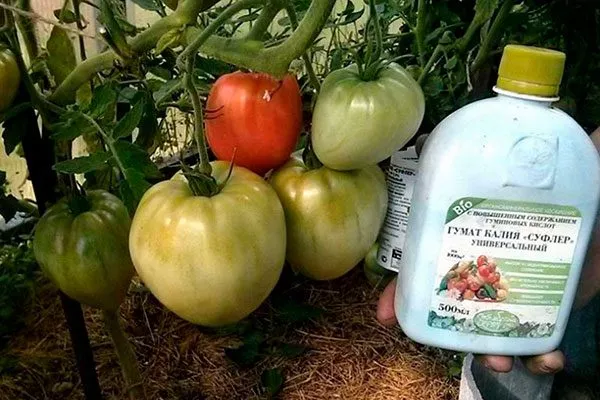
After flowering, as well as during the formation of ovaries and fruits, apply potassium and phosphorus fertilizers. Yeast and ash solutions, humate, and iodine can also be used as supplementary fertilizers.
Shaping and garter
Kellogg's Breakfast tomato plants are trained into single or double stems. The first method produces large tomatoes weighing 800-900 g, while the second produces tomatoes weighing 300-700 g, but in larger quantities.
Staking is essential for this variety; it can be either a classic staking or a sliding loop. If the tomatoes are grown in two or even three trunks, each trunk is tied separately.
Diseases and pests
The variety has excellent immunity, but high humidity and poor agricultural practices can pose a risk of late blight, cladosporiosis, and brown rot. For prevention, spray the bushes with Fitosporin M or its equivalent.
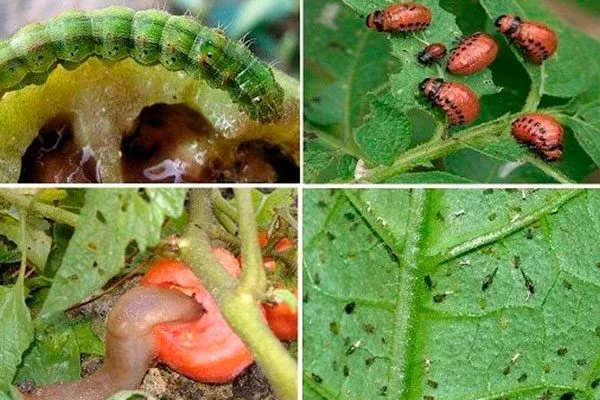
Kellogg's Breakfast tomato plants can be attacked by cutworm larvae (caterpillars), which eat the stems, leaves, fruits, and roots. Snails, which inhabit dense plantings, are also a threat to the plants.
Harvesting and storage
The fruits ripen evenly. There are few of them, but they are all large, from the lower clusters to the top. They should be picked in dry, warm weather, in the morning before the dew falls or after it has completely dried. According to reviews, the fruits are very shelf-stable and retain their flavor for a long time.
Reviews
The Kellogg's Breakfast tomato is an excellent choice for lovers of varieties with unusual colors. If you prefer huge, even gigantic, tomatoes, plant this yellow-fruited American tomato in your garden, and it will surely surprise you with its taste and size.