
The Zapunyaka tomato is a new Russian-bred variety that thrives in a wide range of conditions and is suitable for cultivation in all regions of the country. It requires minimal maintenance yet is delicious, productive, and weather-resistant.
The history of the Zapunyak tomato
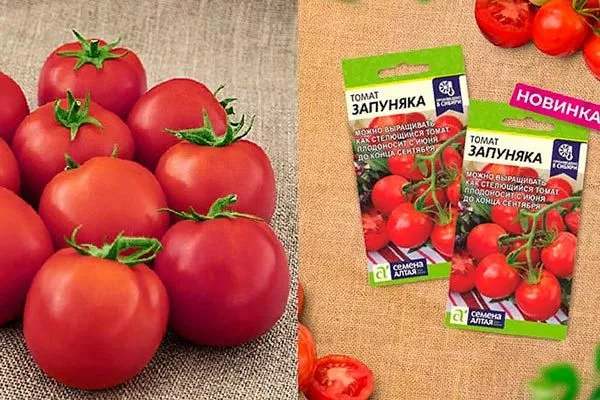
The Zapunyak variety was developed by breeders from the Semena Altaya agricultural firm. In creating the new variety, they aimed to create a tomato that would grow in a wide variety of conditions and would not pose problems for gardeners.
During the development of the new variety, the plants were exposed to severe frosts that struck in July. However, despite the complete freezing of the above-ground portions of the bushes, the seedlings recovered—they grew from the roots and produced a harvest in August. This incident was the first confirmation that the new variety easily adapts to any climate.
Description of the variety
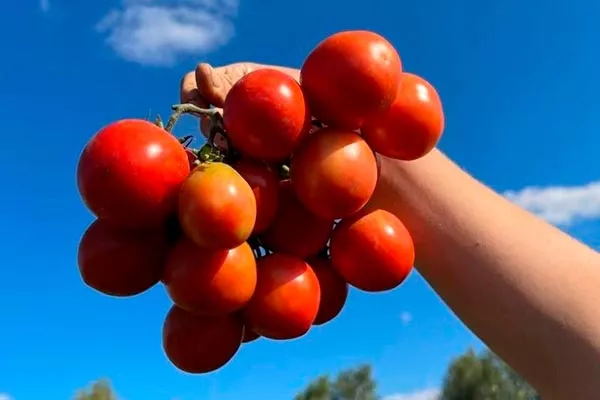
The bushes are semi-determinate, compact, and standard. They reach a height of 45 cm. The leaves are standard, slightly wrinkled. The number of fruits per cluster ranges from 12 to 17.
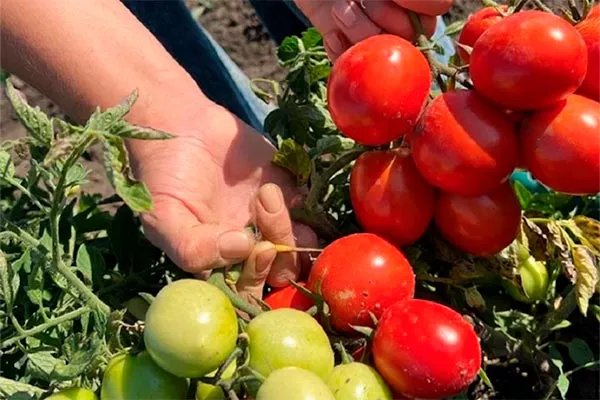
The Zapunyaka tomato has compound inflorescences and articulated peduncles. The first fruit clusters form on the bush above the fourth or fifth leaf, then every two leaves. The clusters are irregularly shaped, each bearing 12 to 17 ovaries.
Brief description of fruits:
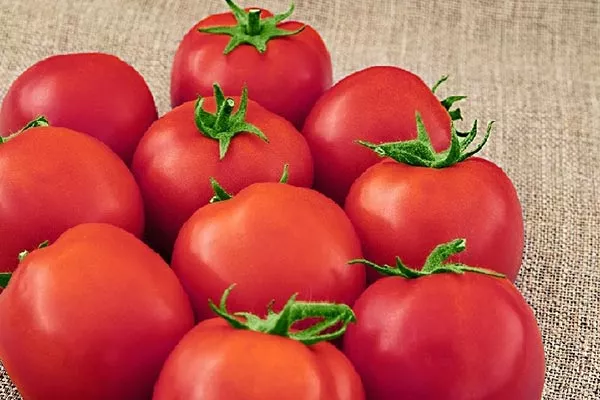
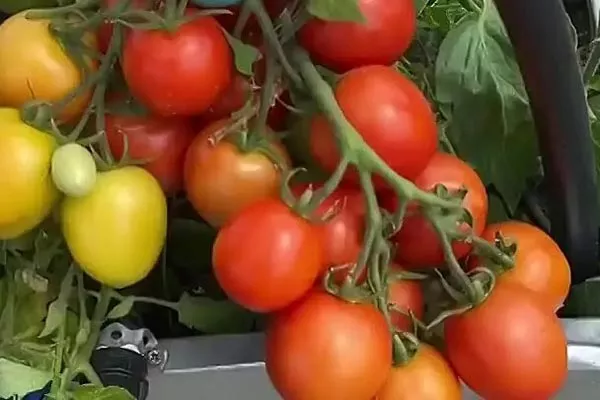
- Color: bright red (there is a small light spot near the stalk).
- Form: round-plum-shaped.
- Skin: smooth.
- Weight: 50-90 g.
Taste and purpose of fruits
The Zapunyaka tomato is sweet and sour, with a harmonious and balanced flavor featuring a slight tartness and subtle fruity notes. The flesh is juicy and has a rich tomato aroma.
The fruits of the Zapunyaka variety are versatile. They are eaten fresh, sliced, salted, preserved, dried, and used in a variety of dishes.
Characteristics
The Zapunyaka tomato has excellent agronomic characteristics. When breeders developed this variety, they focused on these characteristics—the tomatoes should not only be tasty but also adaptable to a wide range of growing conditions.
Productivity
The Zapunyaka tomato has a good and consistent yield, quite high for a semi-determinate variety. This variety produces fruit under virtually any conditions. A single bush can yield 3 to 5 kg of tomatoes. This high productivity is achieved through a long fruiting period.
Ripening time
The Zapunyaka tomato is an early-ripening variety, with 95-98 days from germination to ripening of the first fruits. Fruiting begins in late June and continues until the second half of September.
Drought resistance
This variety tolerates a wide range of conditions well—it's resistant to drought, high humidity, cold, and extreme temperature fluctuations. This tomato tolerates cold without any problems and recovers fairly quickly from severe cold spells.
Immunity to diseases
This variety is fairly resistant to most common nightshade diseases. The Zapunyaka tomato, in particular, is resistant to fungal, bacterial, and viral diseases. However, in rainy weather, the variety can be susceptible to late blight.
Pros and cons
The Zapunyaka variety has its advantages and disadvantages, and it's best to familiarize yourself with them before planting. This will help you determine whether this variety is truly suitable for your garden and your intended purposes.
Landing features
The originator recommends growing the Zapunyaka variety from seedlings to speed up fruiting. Planting is done in open ground, greenhouses, or hotbeds.
- ✓ Optimum soil temperature for planting seedlings: +15 °C.
- ✓ Recommended seeding depth: 0.5-1 cm.
Seed preparation
To ensure good seed germination and strong, healthy plants, it's important to properly prepare the seeds. Seeds are tested for germination in a saline solution and disinfected in a 1% potassium permanganate solution for 15 minutes. Hydrogen peroxide or baking soda can also be used for this purpose.
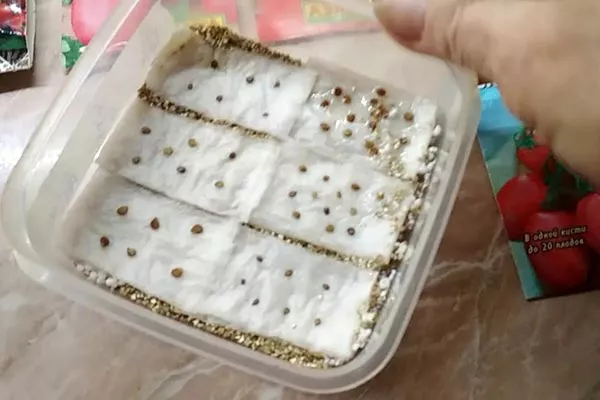
The seeds are placed in a damp cheesecloth, which is formed into a bag. This bag is then alternately dipped in cold and then hot water. The temperature difference causes the seed coat to crack, resulting in rapid germination.
How to choose a site?
This variety grows best in sunny, warm locations. Shade negatively impacts the growth and development of the bushes, especially their fruiting. Drafts and stagnant water are also undesirable for tomatoes.
The best predecessors for tomatoes are green manure and cabbage. They also grow well after carrots, radishes, cucumbers, pumpkins, mustard, zucchini, and horseradish. Poor predecessors include potatoes, peppers, eggplants, corn, and tomatoes themselves.
- Check the acidity of your soil with a pH meter.
- Add dolomite flour at a rate of 500 g per 1 m² to reduce acidity.
- Add rotted manure or compost at a rate of 5 kg per 1 m².
Soil preparation
The Zapunyaka tomato requires loose, light, fertile, and well-drained soil with a neutral or slightly acidic pH of 6-7. The Zapunyaka variety grows best in light loam. Adding sand to the soil is recommended to loosen the soil.
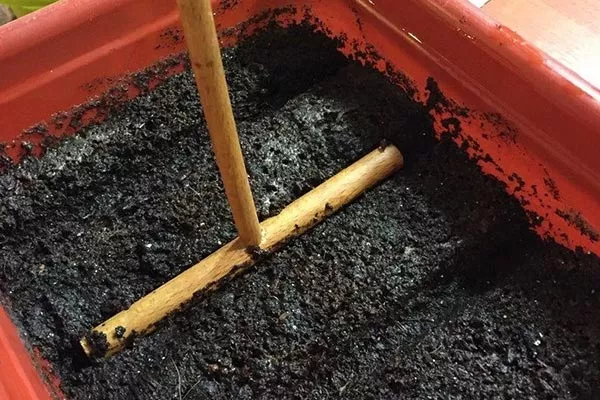
If the soil is acidic, you can add chalk, wood ash, or dolomite flour. Also, add well-rotted manure or compost, as well as a complex fertilizer labeled "fall."
Growing seedlings
Seedlings are grown until they are 60-65 days old. To obtain seedlings of the desired size by the deadline, tomatoes should be sown in early or mid-March—the exact timing depends on various factors (soil type, climate conditions, etc.).
Features of growing seedlings:
- Seedlings are grown in wide containers 10-15 cm high. They must have drainage holes. The planting containers are filled with commercially available substrate or a soil mixture made from turf, leaf mold, sand, and humus (2:1:1:1).
- Sow seeds at a depth of 0.5-1 cm, spacing them 1 cm apart. Cover the containers, trays, or other containers containing the tomatoes with a transparent material and place them in a warm, bright room. Optimum temperature: +22…+23 °C. Seedlings appear in 5-7 days.
- The containers with seedlings are moved closer to the light, and the room temperature is reduced to 15…16°C to prevent the seedlings from stretching and to promote root development. After a week, the temperature is increased to 22°C.
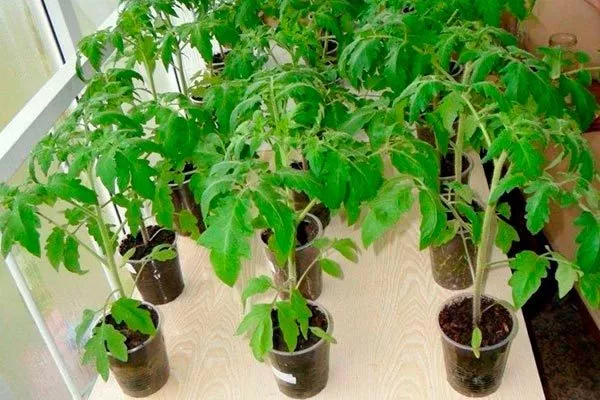
- When two true leaves appear, the seedlings are pricked out and transplanted from their containers into individual cups. If they were initially sown in individual containers, the seedlings are transplanted into larger cups or pots.
- On the 3-5th day after emergence, the supplementary lighting lamps are not turned off around the clock, then the daylight hours are reduced to 18-20 hours, by the 4-5th week, 11-12 hours of daylight are enough for the plants.
- For the first three weeks, water the seedlings 1-2 times a week, then double the frequency. Sprinkle the seedlings with a sprinkler 2-3 times a week.
- The seedlings are first fed 10 days after transplanting, using a special complex seedling fertilizer (available at any grocery store). The seedlings are fed 4-5 times during the growing season. Effective fertilizers for tomato seedlings include urea, ammonium nitrate, and boric acid.
If the seedlings are growing on a windowsill, the planting container is turned 2-3 times a week to ensure that the plants receive uniform lighting.
Planting in the ground
Seedlings are planted outdoors from mid-May to mid-June, depending on the climate. Tomatoes can be planted in a greenhouse in the last ten days of April. When choosing the time for planting in open ground, consider the air and soil temperatures; they should warm up to at least 18°C and 15°C, respectively.
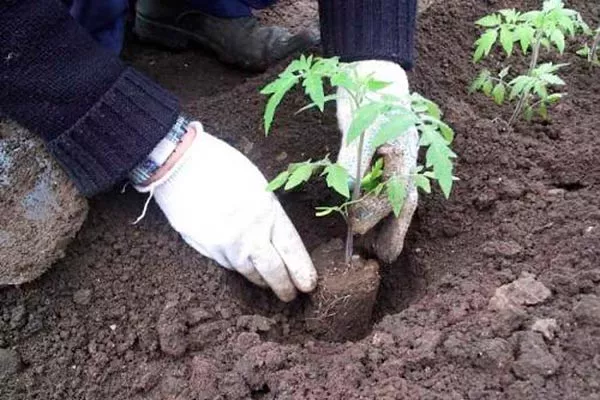
Features of planting seedlings of the Zapunyaka variety:
- For planting, prepare holes at least 20 cm deep. They should be large enough to accommodate the tomato root system and the root ball.
- It's recommended to disinfect the dug holes with a pale pink solution of potassium permanganate. Then, water is poured into the holes, and once the water has been absorbed, the tomatoes are planted.
- When planting seedlings in the ground, they are planted deep, up to the first pair of leaves—this promotes root growth. The roots are covered with soil. The soil is compacted, watered, and mulched with sawdust, straw, or another suitable material.
- If the seedlings have outgrown their roots, they are placed in the holes at an angle, leaving no more than 20 cm of the seedlings above the ground. Then the roots are dug in, the soil is compacted, and the plants are hilled up to a depth of 3-4 cm.
- The optimal planting pattern for the Zapunyaka variety is 40 x 40 cm. 3-4 bushes are planted per 1 square meter.
It is best to plant tomato seedlings in the evening, when the sun is less active.
Care
The Zapunyaka tomato is very low-maintenance and requires minimal care. All the usual maintenance procedures are necessary: watering, fertilizing, monitoring the tomato plants, and spraying them when necessary.
Watering mode
Watering should be infrequent and abundant. One to two waterings per week are sufficient to maintain moderately moist soil; in hot weather, water more frequently. When watering, apply water at the roots to avoid contact with leaves, stems, and fruit.
Fertilizer
The Zapunyaka tomato is fertilized according to the standard agricultural practices for this crop. When growing this variety in greenhouses, magnesium fertilizers are also recommended—applying them at the beginning of the growing season, followed by potassium fertilizers during the fruit ripening stage.
Loosening and weeding
To ensure a good harvest, you need to regularly loosen the beds. This process prevents the formation of a hard soil crust, which impedes oxygen supply to the roots. Weeds are removed simultaneously with loosening.
Shaping and garter
Zapunyaka tomato bushes don't require staking. Moreover, the cultivar's creators claim it can be grown as a trailing plant. The bushes can be trained into 1-2 stems, or they can be grown without shaping.
Diseases and pests
This variety doesn't suffer from calcium deficiency, so it's resistant to blossom-end rot. It's also resistant to Cladosporiosis when grown outdoors, but there's a risk of infection when grown in greenhouses.
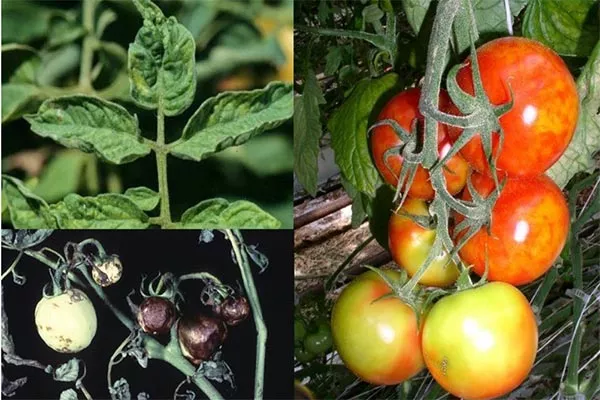
Various fungicidal preparations are used to combat diseases, including copper sulfate, Abiga-Pit, Skor, Topaz, Polihom, HOM, Quadris, etc. Boric acid and iodine solution are also used to treat bushes.
Among the most dangerous pests of the Zapunyak variety are aphids and whiteflies. They particularly often attack greenhouse and hothouse tomatoes. To combat these and other insects, appropriate insecticides, such as Teppeki, are used. Biotlin, Kleschevit, Batrider, and other insecticides are also used.
Harvesting and storage
The fruits on the Zapunyaka tomato plant ripen unevenly. The tomatoes on the lower trusses ripen first, followed by those on the middle trusses, and the fruits at the top of the vine ripen last. The tomatoes should be fully harvested before the cold weather sets in—at temperatures below 7°C, the fruits stop ripening.
If tomatoes are to be stored for a while, it's recommended to pick them unripe. At room temperature, they can be safely stored for about a month. At temperatures of 5 to 7°C, tomatoes retain their shelf life for up to two months.
Reviews
The Zapunyaka tomato is a real find for those who can't spend much time tending their vegetable garden. This variety requires minimal care and is very easy to grow, yet boasts excellent flavor and nutritional qualities.