
Yuzhny Zagar is a yellow-fruited tomato variety. The tomatoes are large, have excellent flavor, and juicy flesh. They are used in salads and for winter preserves. This variety is characterized by good productivity, strong immunity, and adaptability to various conditions. With proper care, it will reward you with abundant harvests.
Origin of the variety, description of the bush and fruits
Domestic breeders V. I. Dederko and O. V. Postnikova worked on developing the crop. In 2007, Yuzhny Zagar was added to the State Register of Breeding Achievements and approved for cultivation.
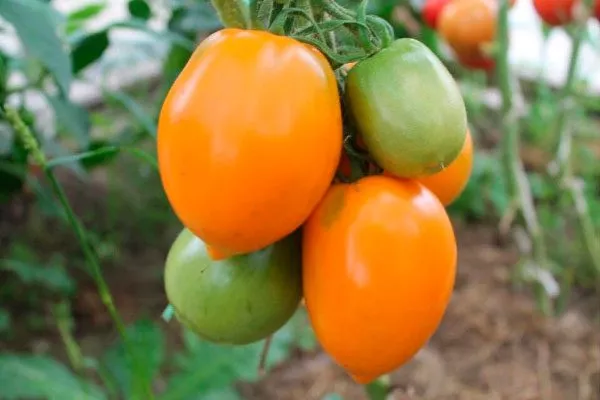
Distinctive features:
- The height of the tomato plants depends on where you grow them. When planted in beds, the bushes don't exceed 120 cm, and in greenhouses, 170 cm. They are considered indeterminate.
- The leaves are large, dark green, and borne sparingly on the stem. The inflorescence is simple, with up to five tomatoes forming on a single cluster, and the peduncles are unjointed.
- Unripe tomatoes are greenish, while ripe ones take on a rich orange color. Although the color is uniform, small "tan" spots may appear on the surface.
- The vegetables have a cylindrical shape, a pointed tip, and their weight varies from 180 to 200 g, but larger specimens are also found.
The pulp is dense and fleshy, containing at least four seed chambers. The skin is smooth and strong, and the seeds are very small.
Main characteristics
This variety has an attractive appearance and rich orange skin, which attracts the attention of many agronomists. But that's not all the Southern Tan's virtues.
Ripening time and yield
A mid-season crop. The full ripening cycle takes 110 to 115 days, and the first full-bodied fruits appear approximately four months after seed germination.
Fruiting begins in July and continues until the end of August. This is a productive variety, yielding approximately 14 kg of juicy and sweet tomatoes per square meter.
Scope of application of fruits
Tomatoes have a distinct fruity flavor, are low in sugar, and have virtually no acidity. They are rich in vitamins and nutrients.
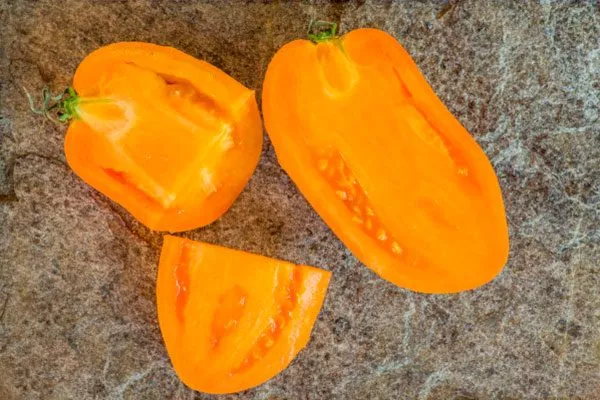
These vegetables are mostly eaten fresh. They're great for salads, frozen in chunks, and canned whole. Due to their unique composition, they're often recommended for baby food.
Immunity, resistance to adverse weather conditions, regions
Southern tan varieties are often susceptible to disease due to improper agricultural practices. However, their early fruiting period allows for harvesting before fungal infections occur. The most common problem with this variety is blossom-end rot.
- ✓ Tendency to blossom-end rot if care conditions are not met.
- ✓ Highly adaptable to temperature changes and lack of sunlight.
Tomatoes are weather-resistant. They tolerate temperature fluctuations, drought, and low sunlight, making them suitable for a variety of climates.
The variety is successfully grown in both southern and cooler regions. In greenhouses, it demonstrates stability even in areas with short summers, and in open ground, it yields best in the Central and Southern districts and the Central Black Earth Region of Russia. It is also cultivated in Ukraine and Belarus.
Obtaining seedlings
It's best to grow the crop using seedlings. Direct sowing into open ground is only possible in the Black Sea regions. However, even in warm climates, vegetable growers often prefer seedlings, as this allows for an earlier and more abundant harvest.
Planting seeds
Yuzhny Zagar is a selective variety, not a hybrid, so its ripe fruits can be harvested for seed. Planting material harvested independently retains the characteristics of its parent. It remains viable for up to four years, but germination rates decline somewhat after two seasons.
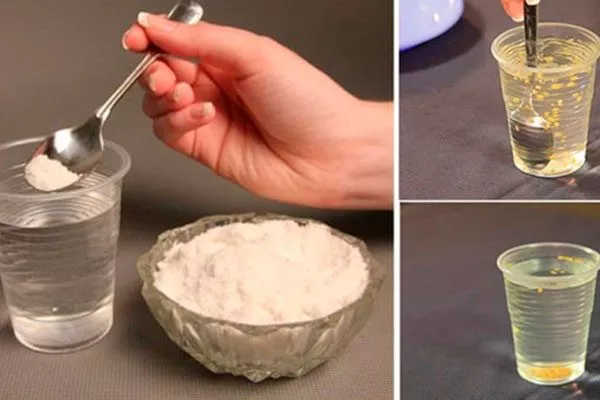
Preparing the seeds:
- Sorting. Cover with salted water, stir, and let sit for 20 minutes. Any light, floating specimens are not suitable for further use.
- Disinfection. Carry out the treatment using biofungicides or a weak solution of potassium permanganate.
- Stimulation of germination. Use Baikal-M solution, aloe juice or honey diluted in water.
Helpful tips:
- Before planting, you can pre-germinate the seeds by placing them between layers of damp cloth. However, it's more common to sow them without sprouting, as high-quality seeds will sprout in as little as 5 days.
- Sow seeds for seedlings at the end of February. Communal seed trays are suitable for this, but individual containers such as peat pots or pellets are ideal. The seedlings are delicate and do not tolerate transplanting well, so transplanting without damage is only possible using individual containers.
- Before sowing, be sure to condition the containers and soil mixture. Planting cups and trays should have holes to allow excess moisture to drain. Use loose, nutritious soil with a neutral pH.
Plant the seeds 1.5 cm deep, leaving at least 3 cm between sprouts. After this, thoroughly moisten the soil with warm water and cover with plastic wrap.
- ✓ Optimum temperature for seed germination: +25°C, after emergence reduce to +16…+18°C.
- ✓ Seedlings should be illuminated for at least 10 hours a day.
Growing seedlings
Provide daily ventilation for the seedlings. The room temperature should be around 25°C until germination. Once sprouts appear, remove the cover and reduce the temperature to 16–18°C. When sowing in a common container, transplant the seedlings at the 4–5 true leaf stage.
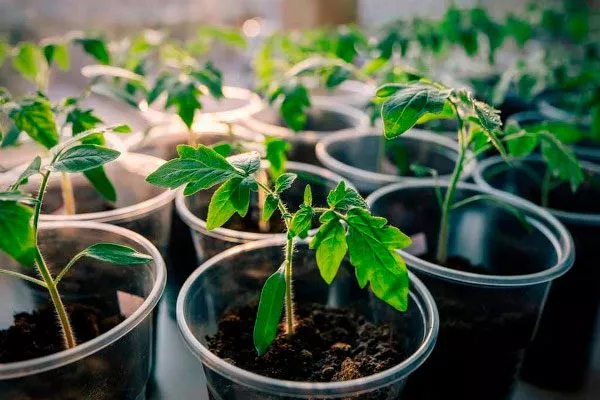
The Southern Tan tomato requires regular ventilation, moderate watering, and good light (at least 10 hours per day). If the stems are strong and the leaves are uniformly colored, do not fertilize.
The seedlings may appear drooping and slightly weakened—this is a normal varietal characteristic and does not require correction. If growth is slow, you can apply a weak solution of Agricola or a complex plant food supplement.
Transplantation into the ground
Prepare the area in advance: dig over the soil and enrich it with fertilizer. For heavy soils, add sand, peat, and humus; for sandy soils, add well-rotted organic matter and mineral fertilizers. To neutralize acidity, use dolomite flour.
In spring, level the soil and install reliable supports: multi-tiered trellises or tall stakes. Tomatoes are ready for planting 50 days after germination. Before this, gradually harden them off outdoors or in a greenhouse.
A few days before repotting, stop watering the plant to ensure the roots remain intact. Next, follow these steps:
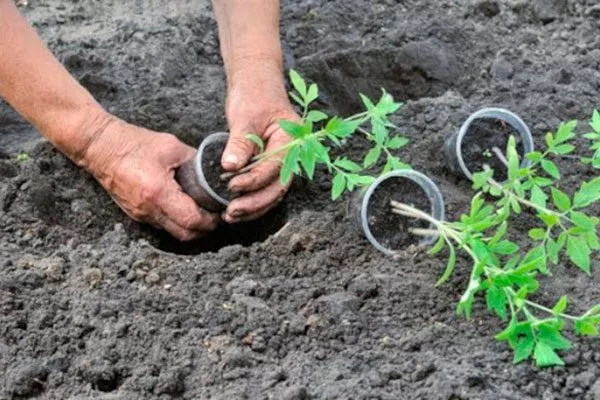
- Dig holes slightly deeper than the root ball and water well.
- Maintain a distance of 50 cm between bushes (no more than 3 plants per 1 sq. m).
- Carefully remove the seedlings from the containers along with the soil and plant them deep down to the first leaves.
- Water generously and mulch the soil to retain moisture and protect the root system from temperature fluctuations.
Caring for the variety
Southern tan is a heat-loving plant. It doesn't tolerate drafts or cold nights well. Caring for it requires minimal effort, but it's important to follow a few basic rules.
Watering tomatoes
Bushes require not only warm conditions but also regular moisture. However, overwatering is just as dangerous for this crop as drought. In wet areas, tomatoes lose their resistance to disease.
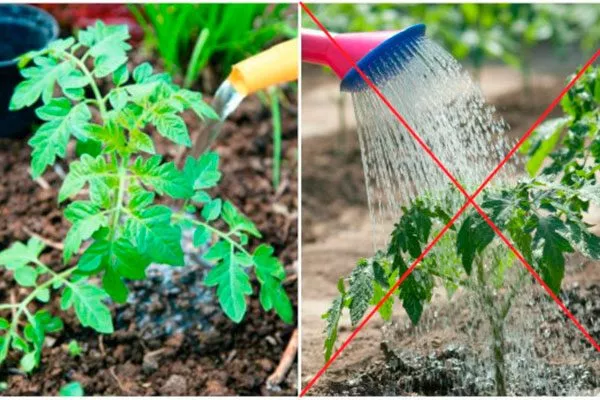
Water the plants as needed, avoiding contact with the leaves. Increase the frequency and amount when the buds begin to form, and reduce the amount as the vegetables begin to color. Apply water only at the roots.
Top dressing
Fertilize the variety with mineral fertilizers that are best suited for nightshades. Specialized mixtures designed for tomatoes have proven effective:
- Agricola;
- Kristalon;
- Mr. Tomato;
- Potassium humate.
Wood ash and herbal infusions are recommended organic fertilizers. Fertilize 15-20 days after planting. A boric acid solution is effective for spraying flowers. When fruit set, fertilizers high in potassium and phosphorus are suitable.
Bush formation, pinching out side shoots
Southern Tan is an indeterminate variety, so the plants continue to grow and bear fruit until frost sets in. Follow these guidelines:
- Experienced vegetable growers recommend training them into two stems for optimal yield. In greenhouses, with dense planting, leave only one main stem.
- To speed up the ripening of the last fruits at the end of the season, pinch the tops.
- Remove the leaves below the first cluster and gradually remove excess greenery from the plants as the vegetables color.
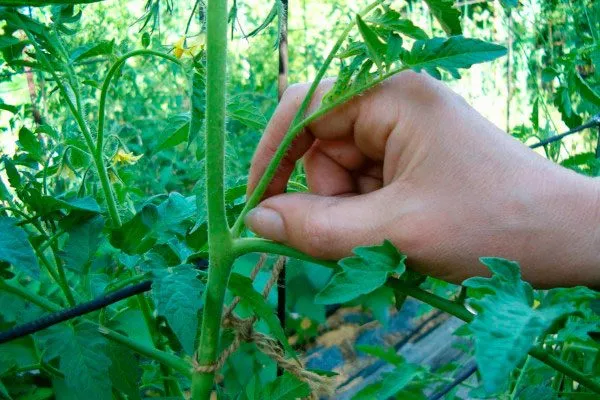
- Unscrew the side shoots completely, but only until they grow to 5 cm.
Pest and disease control
The crop is characterized by good immunity, but under unfavorable conditions it can face various problems. The variety is susceptible to late blight, especially in greenhouses. Fungal disease prevention is an important part of care.
Use fungicides, such as Fitoverm. Apply Bordeaux mixture in the early stages of the growing season, and treat the soil with copper-containing preparations in the fall, after harvest.
This variety is susceptible to Alternaria blight, also known as blossom-end rot, which is more often caused by improper care than by infection. To prevent the disease, follow these recommendations:
- enrich the soil with dolomite flour during autumn digging;
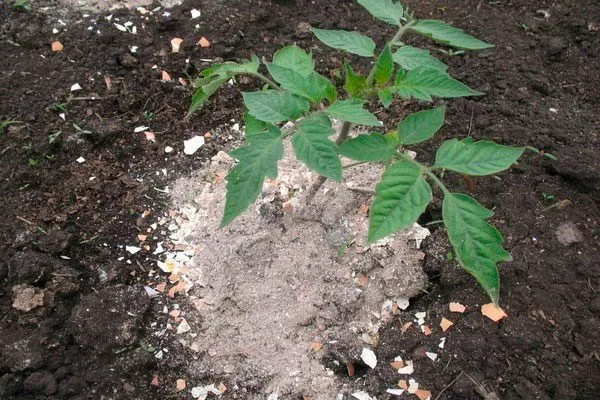
- pollinate the bushes and the ground during the growth process with wood ash;
- apply fertilizers containing microelements: potassium, magnesium, calcium, boron, phosphorus and manganese;
- At the first signs of tomato spoilage, treat the bushes with a calcium nitrate solution.
These measures not only prevent blossom-end rot but also promote good plant nutrition, repelling pests including aphids, slugs, and spider mites. If signs of pest activity (cutworms, whiteflies) appear on the bushes, insecticides such as Strela or Actellic can help.
Similar varieties
| Name | Growth type | Fruit color | Fruit weight |
|---|---|---|---|
| Southern tan | Indeterminate | Orange | 180-200 g |
| Anna Banana Russian | Determinant | Yellow | 150-170 g |
| Bull's heart is orange | Indeterminate | Orange | 300-600 g |
| True | Determinant | Red | 80-100 g |
| Golden Königsberg | Indeterminate | Yellow | 200-300 g |
| Minusinsk orange glasses | Indeterminate | Orange | 200-400 g |
Several varieties of the Southern Tan tomato produce large, oblong, yellow or orange fruits with an excellent flavor. They share similar characteristics not only in appearance but also in varietal qualities.
Popular analogues:
- Anna Banana Russian;
- Bull's heart is orange;
- True;
- Golden Königsberg;
- Minusinsk glasses are orange.
Pros and cons
The Yuzhny Zagar tomato has long been known to farmers and has gained popularity due to its many advantages. Gardeners note the following advantages of this variety:
Among the disadvantages, gardeners note susceptibility to blossom-end rot and other problems associated with high or low temperatures and humidity.
Reviews
The Yuzhny Zagar tomato is a productive and sought-after variety with a striking appearance and excellent flavor. It's versatile, delighting with its rich aroma and juiciness. With proper cultivation and care, this variety will yield an excellent harvest and will be a beautiful addition to any garden.