
The Yetina Mat tomato is a promising variety that has already earned attention. It stands out for its tolerance to growing conditions, impeccable fertility, and excellent flavor. It produces high yields even in unfavorable weather conditions. Achieving such results requires strict adherence to agricultural practices.
Tomato Yetina mother – features
This variety resembles the Mongolian Dwarf variety in characteristics, but boasts denser, more abundant bushes. Fruit sizes are considered uneven, and their flavor is consistently excellent, regardless of growing conditions. As they ripen, the tomatoes become soft and juicy.
Brief history
The tomato was introduced to the market in 2022 and developed by Semena Altaya, a company that develops vegetable varieties adapted to Siberian conditions.
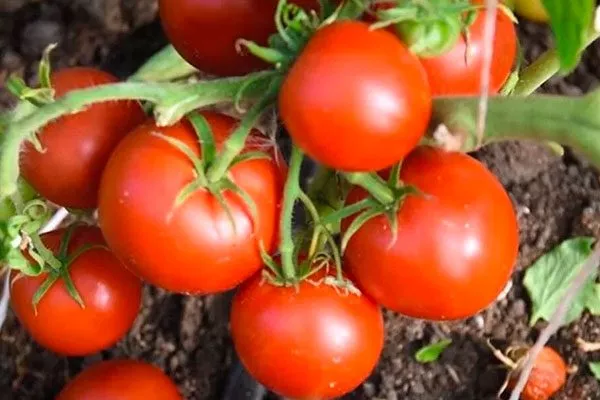
Yetina's mother is not included in the State Register of Breeding Achievements. However, her unique name has an interesting history:
- Through the process of selection, the tomato bushes acquired a grounded and wavy appearance, reminiscent of the legendary northern creature – the Yeti.
- One day, a tit made a nest in these bushes, which was later scared away by researchers.
- When the bird flew away, the tomato bushes seemed to protect its clutch with their branches, like a caring mother.
This incident led to the variety being given a double name.
Appearance of the bush and fruits
The Etina Mater tomato (as it is commonly known) is a determinate variety, meaning that its main stem ends in a flower cluster, which stops the plant from growing.
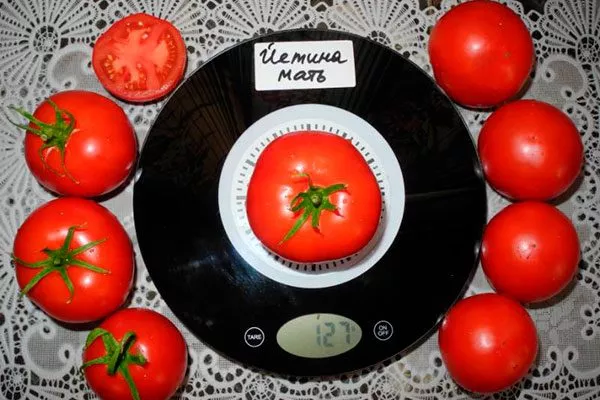
Other varietal characteristics:
- The height of the bush can reach 60-90 cm, while in greenhouse conditions it can stretch up to 120 cm.
- It is distinguished by its compact shoots and well-developed foliage, making it stand out among other tomatoes. Pinching is not necessary. Tomatoes can be grown by tying them to a support or as climbing plants.
- The leaves are medium-sized, dark green in colour and have a matte surface.
- The inflorescence is simple, the peduncle small. The first fruit cluster forms above the 6th or 7th leaf, and subsequent clusters form 1 or 2 leaves later. Each cluster produces 5 to 7 fruits of varying sizes.
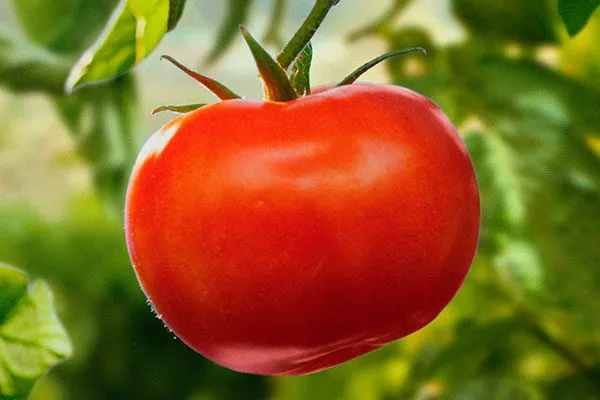
- The vegetables are round in shape and weigh between 130 and 220 g. The skin of the fruit is thin and at the same time dense, so it does not crack.
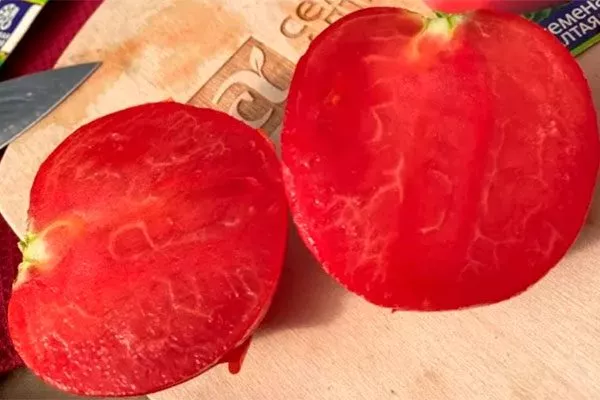
- The pulp is sweet and not watery, without tough fibers, and has a strong tomato flavor and aroma.
- The seed chambers of the fruits are small, and when cut, the juice does not flow out.
- As they ripen, tomatoes acquire a uniform reddish hue without a white spot near the stem.
Taste and use of fruits
Yetina Mata berries have a refined tomato aroma and a distinctive sweet, slightly tart flavor. These tomatoes are excellent for fresh-picked consumption, as well as for a variety of culinary applications:
- The favorable fruit structure of tomatoes makes them an ideal choice for whole-fruit canning, due to the fact that the skin remains intact during heat treatment.
- The sweet flavor of the crop makes it ideal for creating summer salads with greens.
Other ways to use the crop may include:
- juice;
- paste;
- pickled tomatoes;
- sun-dried tomatoes;
- frozen vegetables.
Productivity and fruiting
This variety has high potential for commercial cultivation. At first glance, it appears to bear few fruits, but in reality, the branches are covered with ovaries, most of which are hidden by foliage.
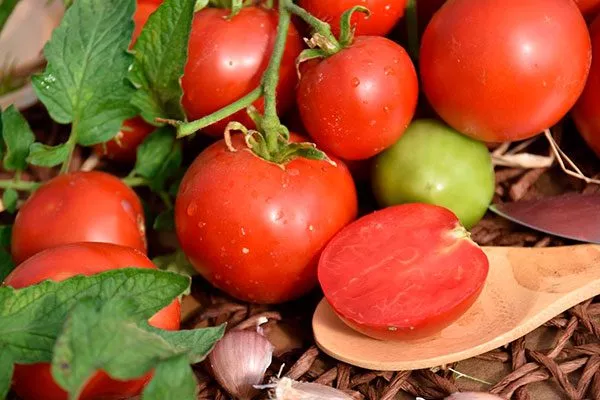
The bush produces 8 to 10 flower clusters. Each cluster produces 5 to 12 tomatoes, with each cluster weighing between 500 g and 1 kg. Therefore, the average yield per bush is around 6 kg, but in greenhouse conditions, it can reach 8-9 kg.
The variety is classified as mid-season. Tomatoes begin to ripen between 100 and 115 days after sowing. In greenhouses, the first tomatoes reach consumer maturity by the end of July, and in open ground, around August 1-10.
Resistance to diseases, pests and weather conditions
This variety is characterized by increased resistance to common diseases such as fusarium wilt, verticillium wilt, and blossom-end rot. It also has low susceptibility to late blight, but the risk of infection remains during wet and cool summer periods.
In this regard, to prevent diseases, it is recommended to regularly treat plants with fungicides.
The Yetina Mat variety requires little care and adapts easily to conditions, even less than ideal. These tomatoes are resistant to excess moisture, drought, and high temperatures. The leaves effectively protect the flowers and fruits from adverse weather conditions and direct sunlight.
Timing and technology for sowing tomato seeds for seedlings
Seeds are planted only after the weather has warmed up completely. In Russia, tomato seeds are sown in garden beds approximately 60-65 days before transplanting the plants outdoors.
- ✓ Optimum soil temperature for sowing seeds: +15°C.
- ✓ Seed planting depth: no more than 1 cm.
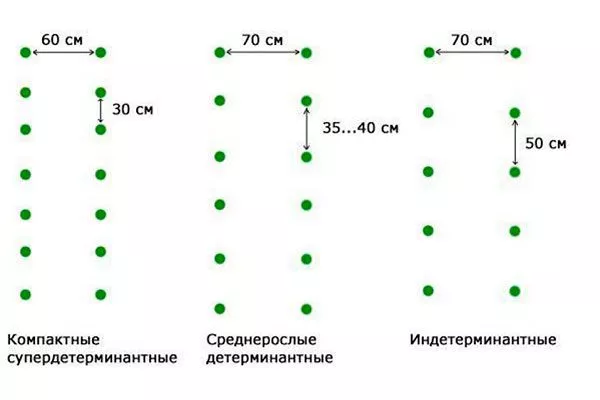
- ✓ Distance between plants when planting: 50-60 cm.
Time for sowing seeds
For tomatoes destined for greenhouse transplantation, the sowing time is shifted two weeks ahead of the standard time. Tomato seeds are sown when the soil warms to 15 degrees Celsius and the danger of frost has passed.
Sowing times vary in different regions of Russia:
- Siberia - from March 20 to 27;
- Far East – from March 15 to 30;
- Ural – from March 22 to 28;
- North – from March 25 to 30;
- Central part of the country (Middle Belt) – from March 15 to 22;
- South – from February 15 to 25.
Seed preparation, substrate selection
Store-bought seeds have already been treated. For home-collected seeds, soaking them in a solution of potassium sulfate (1 g of powder per 100 ml of water) for 10 minutes is recommended.
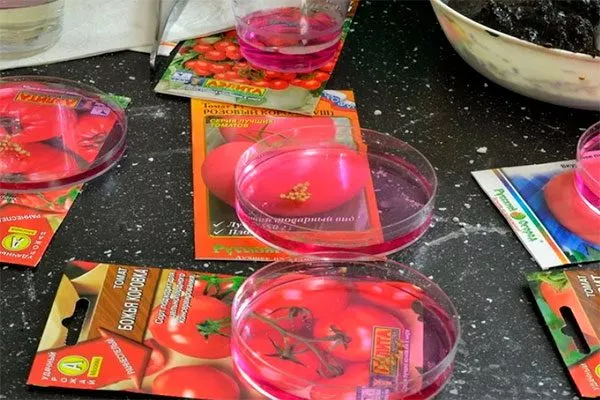
If the seeds are not treated with special preparations by the manufacturer, then at home they can be soaked in a solution of Heterocin or honey (1 teaspoon per 200 ml of water).
A standard universal substrate is suitable for growing seedlings. However, for best results, it is recommended to prepare a soil mixture specifically for this crop, using fertilizers from reputable manufacturers such as Bolsheben, Agricole, or Faco.
You can create your own soil by mixing:
- humus or other organic matter;
- peat;
- sand;
- garden soil.
To protect plants from fungal infections, the soil is placed on a 5 cm thick baking sheet and heated in the oven at a high temperature of +90-120°C for 30 minutes.
Planting seeds for seedlings
For commercial cultivation, mass sowing in specialized containers is most convenient. When seed quantities are limited, cassettes, disposable cups, or peat cups are preferable. A thorough drainage system must be installed, with holes drilled to drain excess moisture.
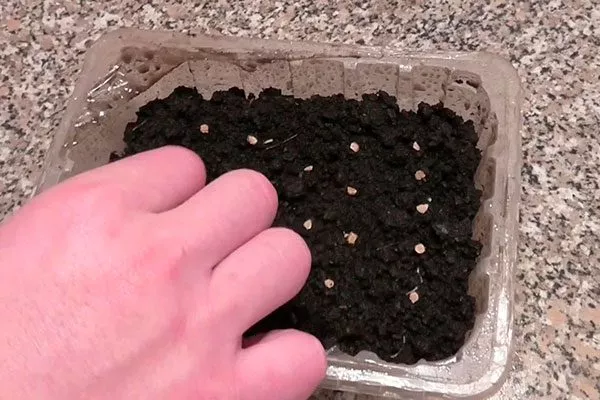
The seeding process in detail:
- Prepare the soil by providing moderate moisture.
- Place into containers and level the surface.
- Tamp it down and make sure it is dense.
- Place one seed in each individual cup. For containers, use a 3x3 hexagonal pattern. Plant the seeds no more than 1 cm deep.
- Tamp the soil down again, but lightly, and if possible, sprinkle it with a thin layer of fine-grained perlite.
- Wet the surface with a spray bottle.
- Cover the plantings with plastic film (glass can be used instead).
- Place in a dark and warm place.
Caring for seedlings
For the first five days after sowing, the seedlings should be covered with plastic and kept at a temperature of +25°C. Once the first shoots appear, the cover should be removed. The air temperature should be lowered to +12–15°C, with a nighttime drop to +10°C permitted. Lighting should be bright and diffused.
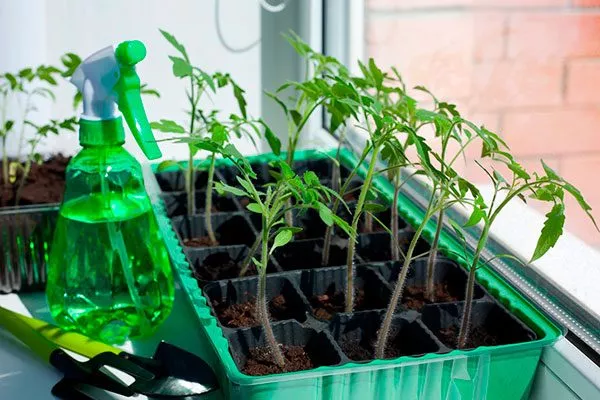
Important aspects:
- After a week, return the air temperature to normal – +20…25°C.
- If necessary, install additional lighting using a phytolamp.
- It is important to maintain moderate soil moisture.
- Apply the first fertilizer two weeks after sowing, then repeat every ten days. The ideal fertilizer composition for tomatoes is NPK 13:40:13. Apply it in the morning, after the soil has been lightly moistened.
Rules for picking seedlings and hardening
Tomato seedlings with two to four leaves are used for transplanting. Each seedling is planted in the soil to a depth of half the stem's length. For two to four days after transplanting, the seedlings should not be exposed to direct sunlight. They should also avoid watering.
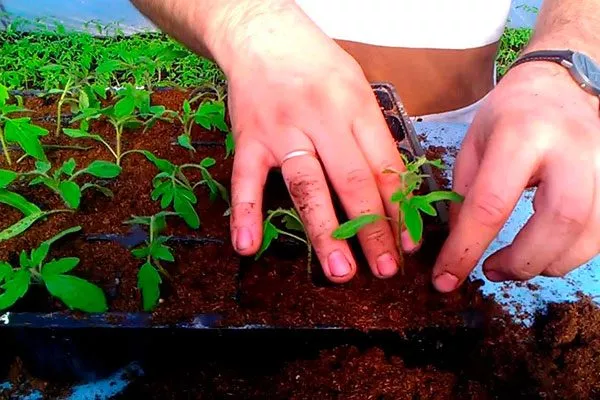
The seedlings can be transferred to their permanent location after they have developed six to seven true leaves and undergone hardening off. This process involves placing the plants outside on a balcony or a balcony one to two weeks beforehand, gradually acclimating them to the conditions of the open ground. Before moving them to the garden or greenhouse, the seedlings should be left outdoors overnight.
Agricultural technology for growing tomatoes Yetina mother
For the Etina Mater bush to bloom and develop fully, it's important for 8-10 leaves to form and flower buds to begin forming. The average air temperature should be between 12 and 15 degrees Celsius.
Preparing the soil at a permanent location
It's important to carefully select a replanting site. It's best to choose fertile sites with deep groundwater to avoid the risk of root rot. Keep soil pH in mind as well—ideally, neutral soil is ideal, but if it's not, you can use alkaline fertilizers to correct the pH.
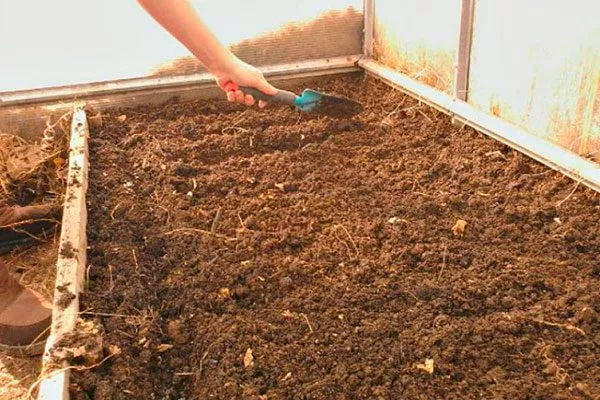
Before planting, dig the soil, adding 4-6 kg of compost or humus per square meter, up to 2.5-3 kg of sand in heavy soil, and 200-400 g of ash or coconut flour if the soil is acidic. Suitable planting companions include peas, cucumbers, pumpkins, squash, and greens.
Scheme and technique for planting seedlings
The Yetina Mat tomatoes we grow have stems that are approximately 40-100 cm long, and the distance between plants is 50-60 cm. The following are the sequential steps for transplanting:
- Two days before planting, fertilize the area. Add potassium sulfate (10-12 g per square meter) during tillage, and add superphosphate solution at a rate of 3 liters per square meter.
- Dig holes in a checkerboard pattern.
- Water the soil in the pots to ensure moisture, remove the bushes without breaking the root ball.
- Fill with soil up to the level of the first pair of true leaves and compact thoroughly.
- Pour warm water over it.
- For each young bush, install a support to which you will tie the tomato stems.
Watering and fertilizing
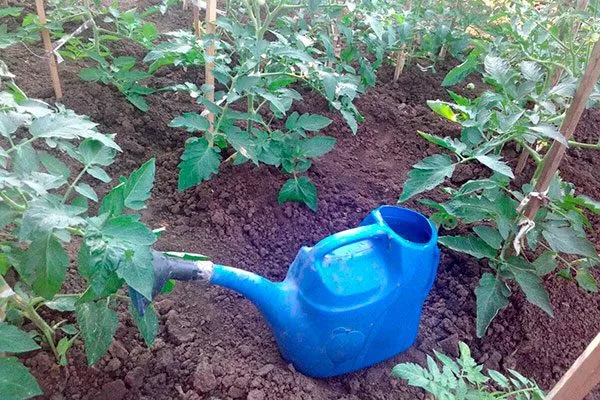
This variety tends to form a creeping shrub, so a drip irrigation system is recommended for watering. If this is not possible, use hand watering. Make sure the water is not too cold, and the volume of water per plant is approximately 5-7 liters.
The feeding schedule is standard, but there are some subtleties:
- When the bushes begin to bear fruit in large quantities, it is necessary to provide additional fertilizing with potassium compounds.
- It is recommended to add additional magnesium to greenhouse soil, especially during the growth phase and subsequently as needed. To do this, add 1 teaspoon of magnesium sulfate to 5 liters of water and mix thoroughly (until the particles are completely dissolved). Apply 2.5-3 liters of the working solution per plant, injecting it directly at the plant's roots.
Loosening, weeding and mulching the soil
These procedures are essential for preventing the spread of diseases and pests in the garden. It is recommended to perform them after every watering or natural rainfall. Each time, gently loosen the soil between plants to a depth of 3 to 5 cm.

Create a mulch layer under your plants using organic materials such as sawdust, wood chips, medicinal herbs (nettles, etc.), or weeds. This will not only reduce the amount of weeding required but also eliminate the need for frequent tilling.
Pinching out tomato stepsons and shaping the bush
The Yetina Mater tomato variety's bushes naturally shape themselves. However, if you choose to grow this variety in a greenhouse, pruning is essential. This will help achieve a more compact plant size. The key is to cultivate the bush with two or three stems and regularly remove any emerging side shoots.
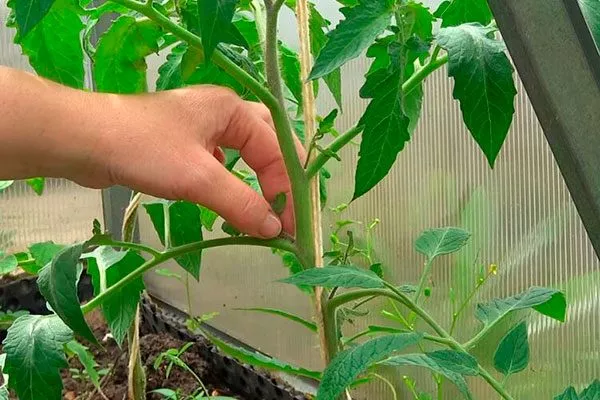
When growing the Yetina Matera tomato outdoors, no formative pruning is required. The usual pinching and staking procedures are also unnecessary.
Harvesting and storage
To ensure that your tomatoes stay juicy for as long as possible, harvest and store them according to generally accepted guidelines:
- Remove vegetables from the bushes carefully to prevent the tomatoes from cracking or getting bruised.
- Try to pick them off together with the stalk.
- Carefully place the selected, clean and dry tomatoes in boxes, lining them with paper or straw.
- Place the fruits in a storage facility where the temperature is maintained between +3 and +8 degrees Celsius. Under these conditions, they can be stored for up to 45 days.
Pests and diseases
Throughout the growing season, tomatoes should be regularly treated with fungicides to prevent late blight and other pathogens. These include Ridomil Gold, Cuprozan, Quadris, Shavit, and Tattu. The optimal interval between treatments is 10-14 days, and the products used should be rotated each cycle.
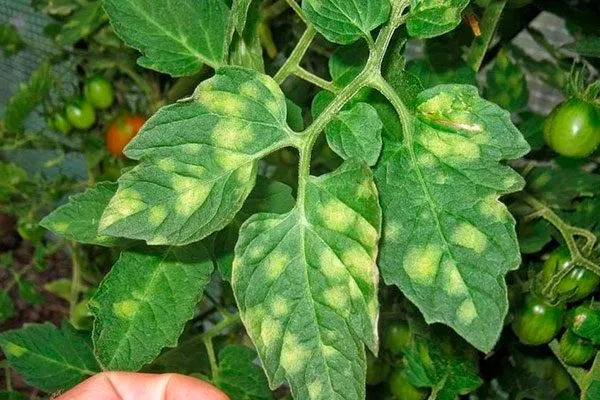
Tomatoes can be susceptible to aphids and whiteflies. If you detect the presence of these pests, spray the plants with Teppeki, etc.
Varieties with similar characteristics to the description of the Yetina Mat tomato
| Name | Disease resistance | Ripening period | Bush type |
|---|---|---|---|
| Baby Mammoth | High | Mid-season | Determinant |
| Love | High | Mid-season | Indeterminate |
| Kulema | Average | Late-ripening | Determinant |
| Gina | High | Mid-season | Determinant |
If you were unable to obtain tomato planting material from Yetina Mater, you should try planting identical varieties. For example:
- Baby Mammoth - This low-growing variety for Siberia produces large, firm, and productive fruits. They are characterized by their round shape and aromatic flavor, weighing between 170 and 250 g. It is resistant to the main tomato diseases.
- Love - A hybrid that forms vigorous bushes up to 110-120 cm tall. Four months after sowing, the bushes bear large, elongated fruits weighing up to 200 g, possessing excellent flavor and versatility. It is also disease-resistant and can tolerate temperature fluctuations.
- Kulema – This variety produces bushes ranging from 60 to 100 cm tall. The fruits are large, elongated, fleshy, and coarse-grained. The first tomatoes can weigh over 300 grams, while the rest are slightly smaller.
- Gina - A variety characterized by a mid-season ripening period. The bushes reach a height of 60 to 90 cm. The fruits are large and round, weighing 200 to 260 g, with a mild and sweet flavor. This variety is resistant to rot, verticillium wilt, fusarium wilt, and other pathogenic fungi that attack fruit.
Pros and cons
Tomatoes have their pros and cons, so it's worth carefully studying them to avoid problems in the future.
Reviews
The Yetina Mat tomato variety is an excellent choice for gardeners due to its resilience, good productivity, and versatility. These qualities make it popular among both amateur and large-scale growers. Although the variety has not yet been included in the State Register, positive reviews are already available.