
The Yablonka Rossii tomato is very popular among gardeners, being one of the most easy-to-grow varieties and even nicknamed the "lazy tomato." This plant is a type with a long fruiting season, producing a long and consistent harvest of small but numerous red fruits that are versatile. It can be grown throughout the country except in the far north.
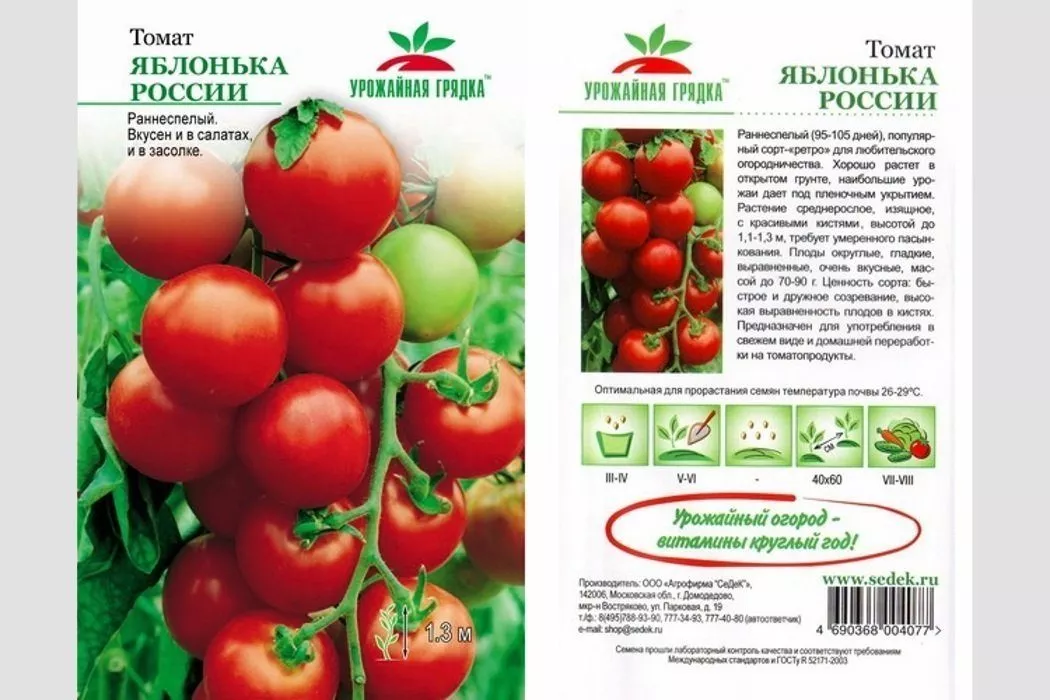
Tomato seeds "Yablonka Rossii"
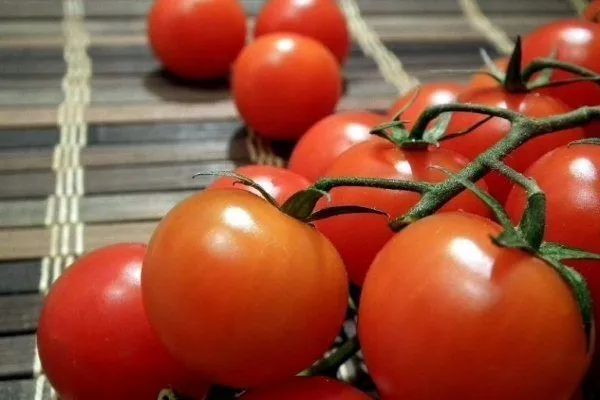
Tomatoes of the "Yablonka Rossii" variety
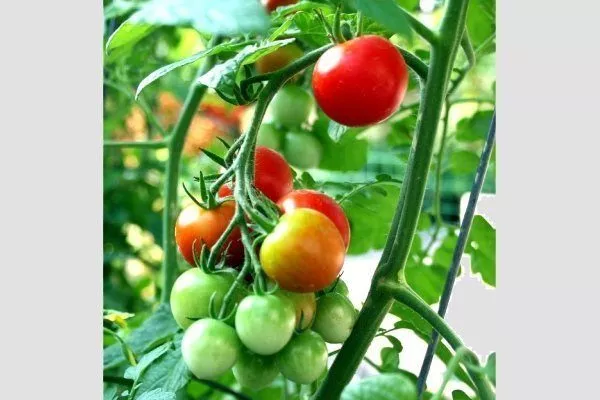
Yablochka is the most unpretentious tomato variety in Russia.
Breeding history
The variety was developed in 1998 by several Russian breeders, including Vladislav Korochkin, president of the Russian Garden company, and Viktor Vasilevsky, a representative of the All-Russian Research Institute of Vegetable Crops Selection and Seed Production.
Its variety testing was conducted in 1998 by the State Commission for Testing and Protection of Selection Achievements, and the applicant and originator was ZAO NPK NK LTD from the Moscow region city of Shchyolkovo, which is directly connected to the Russian Garden.
The Yablonka Rossii variety appeared in the State Register in 2000 and was recommended for cultivation in all regions of the country, with the exception of the far north.
In the 1990s, the Tamina tomato was very popular. Its external characteristics were very reminiscent of the Yablochka Rossii (Russian Apple Tree), but it is not mentioned anywhere in the Register.
Description of the variety
This variety is early maturing, so the first ripe fruits can be harvested as early as 100 days after germination. Let's take a closer look at the characteristics of its bushes and fruits.
Bushes
The plant is distinguished by the following characteristics:
- The bush is determinate, as its growth stops after several fruit clusters have formed, typically 4-5. The first cluster appears after 7-9 leaves, and subsequent clusters appear after 2 leaves. Bushes can reach a height of 1.3-1.5 m, but more commonly reach 0.8-1 m. No side shoots are required.
- Standard tomato varieties have a thicker, shorter main stem, similar in appearance to a potato. It's quite strong and can easily support numerous fruit-bearing vines, eliminating the need for staking. However, if the fruit cluster proves too heavy, it's still worth supporting the plant and lightening the load. To ensure a bountiful harvest, train the stem into 2-3 shoots.
- This variety has medium branching, and the leaves on young plants resemble those of an apple tree, hence the tomato's name. As it ages, the leaves become more potato-like, as both vegetables are nightshade vegetables.
Tomatoes are heat-loving, but can easily tolerate drought or short-term temperature fluctuations, and the fruits do not crack as a result of uneven moisture supply.
Fruit
Under good growing conditions, a single bush can produce up to 100 tomatoes at a time, weighing up to 3-5 kg in total. Overall, 1 square meter can yield up to 6-6.5 kg of tomatoes. They have the following characteristics:
- The average weight is 70-90 g. All fruits weigh approximately the same and are of uniform size.
- The shape is perfectly round, reminiscent of a ball.
- As it ripens, the colour changes from light green to deep red.
- The flesh is juicy and meaty, yet firm, uniform, and does not split. A cross-section reveals two to five chambers and numerous seeds. The dry matter content is above average, and the flesh is sweet when cut.
- The taste is sweet with a slight sourness.
- The use is universal, so tomatoes can be served fresh, salted, pickled, canned and used to make juices, purees, adjika, and sauces.
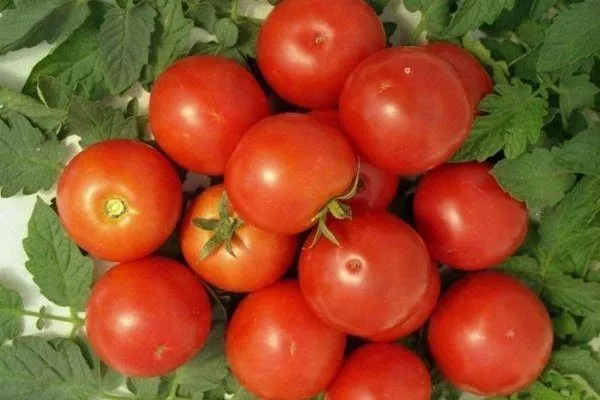
The fruits easily tolerate transportation and are stored for a long time at temperatures up to +10°C.
Table of characteristics
The main qualities of the Yablochka Rossii can be found in the table:
| Parameter | Description |
| General description | Early ripening, determinate, standard variety for open-ground cultivation, hotbeds, greenhouses, and under film. Suitable for planting in all regions of Russia, except the far north. Popular in Moldova and Ukraine. |
| Ripening period | From 90 to 120 days from emergence |
| Productivity | 3-5 kg from one bush |
| Features of cultivation | Does not require pinching or bush shaping |
| Disease resistance | The tomato is resistant to many diseases, including late blight. |
The following video explains the variety's characteristics in detail:
Agricultural technology
To obtain a good and abundant harvest when growing tomatoes, you need to consider the following rules:
- seedlings should be planted in open ground at the end of May or the beginning of June, and the seedlings should be prepared approximately 2 months before the expected planting in the ground;
- The variety prefers sunny places protected from drafts, so it should be planted at a large distance from fences and other structures that cast a shadow;
- For tomatoes, it is worth choosing fertile soils rich in organic matter, in which cucumbers, legumes, pumpkin, cabbage, onions, carrots, dill and garlic were previously grown.
Potatoes, eggplants, peppers, and other nightshade crops are the worst predecessors, as the soil retains insect eggs and pathogens that are dangerous to tomatoes.
- the plant has long shoots, so it requires garter;
- When grown in open ground, seedlings require additional feeding, the first of which should be administered 14 days after transplanting the seedlings to a permanent location.
You can grow an apple tree in a greenhouse all year round if you provide it with optimal temperature and lighting.
Growing seedlings
This variety is grown exclusively from seedlings. This stage requires special attention, as it determines the plant's yield. Seedlings should be prepared in the first half of March so that they are ready for transplanting to their permanent location within two months. This process consists of several phases, each requiring special attention.
Substrate preparation
You can buy it at a gardening store or prepare it yourself in the fall. A fertile soil mixture consists of the following components:
- garden or turf soil – 1 part;
- peat with a pH of 6.5 – 2 parts;
- humus or mature sifted compost – 1 part;
- river or well-washed sand – 1/2 part;
- superphosphate – 30-40 g;
- potassium sulfate or other potassium fertilizer – 10-15 g;
- urea – 10 g.
- ✓ The optimal pH level for the substrate should be within 6.5-7.0, which ensures better availability of nutrients.
- ✓ To prevent fungal diseases, the soil must be disinfected at a temperature of at least 70°C for 30 minutes.
If necessary, the acidity of the peat can be reduced by adding 3-4 tablespoons of dolomite flour or a glass of sifted wood ash to a bucket of soil mixture.
To ensure good air access to the roots of future seedlings and improve their development, up to 20% of a rooting agent can be added to the substrate. These include:
- crushed dry sphagnum moss;
- coconut crumbs;
- vermiculite;
- perlite;
- fine sawdust of deciduous trees.
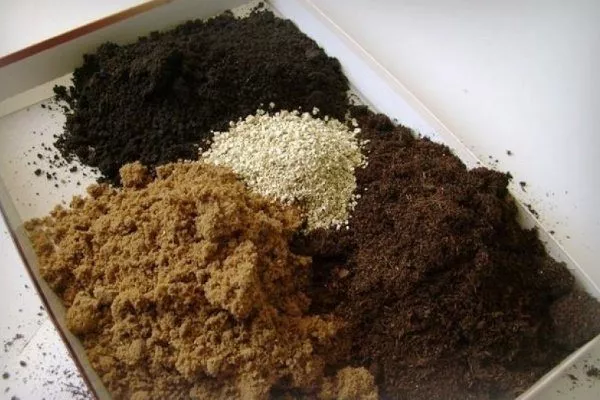
The substrate should be sifted and disinfected 1-1.5 weeks before sowing to kill fungal spores, pathogenic bacteria, and weed seeds. This can be accomplished in the following ways:
- keep for 10-15 minutes in an oven preheated to 200ºC;
- Heat for 1-2 minutes in a microwave oven at 850 W;
- Place in a container with drainage holes and pour in boiling water or a strong solution of potassium permanganate in small portions.
Preparing and planting seeds
For disinfection purposes the seed material needs to be prepared Thus:
- Soak for several hours in warm water.
- Those seeds that float to the surface should be caught and discarded.
- Disinfect the remaining material with a weak solution of potassium permanganate or a growth stimulant, for example, an Ecosil solution.
After preparation, the seeds need to be planted in the substrate, following these instructions:
- Moisten the soil in the boxes or cups.
- Spread the seeds evenly over the surface and cover with soil to a depth of 1 cm.
- Spray the soil with water from a spray bottle.
- Cover the planting with transparent film to retain moisture, and transfer the container to a warm place (optimal temperature is +24…+26ºC).
It should be noted that seed treatment and planting can be accomplished using an alternative method. The procedure is as follows:
- Prepare a polyethylene tape 20 cm wide and 1-2 m long.
- Place three-layer toilet paper on top of the tape.
- Dissolve 3-4 drops of root growth stimulator in a cup and moisten toilet paper with this solution using a rubber bulb.
- Starting 10 cm from the beginning of the tape and 1 cm from its edge, lay out the seeds in a row, spaced 5-7 cm apart. Gradually roll the tape into a roll, but loosely. Attach a rubber band to secure it. Prepare several such rolls.
- Place the ingredients in a convenient container, cover with a bag and put in a warm place.
- When the seeds sprout (this usually takes a few days), take the rolls, carefully unroll them and simultaneously cover all the toilet paper with seeds with soil to a thickness of 1-1.5 cm, and then roll them up again.
- Place the soil rolls in a box or crate, filling the bottom with sawdust. This will absorb excess moisture, which it will then release to the plant. Sprinkle the top generously with soil to ensure each seedling receives it.
- Cover the seedlings with a plastic bag and place them in a warm place. They will need to be watered periodically. Otherwise, care for the seedlings is standard.
Caring for seedlings
Growing seedlings consists of several agricultural techniques:
- When the seedlings appear, move the seedlings to a well-lit place and remove the film.
- As the top layer of soil dries out, moisten it with settled water. In addition It is recommended to feed the seedlings(2 times with liquid complex fertilizer intended for vegetable crops).
- After 1-1.5 weeks, when several leaves appear, perform pickingThe seedlings need to be watered generously, and after a while, transplanted along with the root ball into individual containers, such as peat or plastic cups.
- At the end of April, two weeks before planting, harden off the seedlings to ensure the most vigorous and abundant fruiting bushes. This involves placing the seedlings outside or on a balcony for 1.5-2 hours, or lowering the room temperature to 8°C.
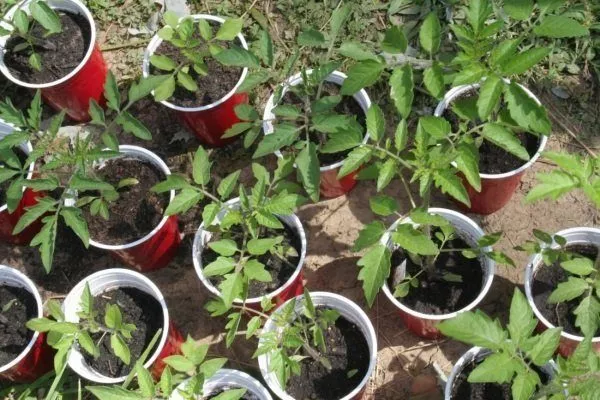
Hardening off seedlings should not be neglected, as it allows the plant to adapt more quickly to temperature changes.
Planting in open ground
Seedlings should be transplanted into open ground after the last spring frost, in the second half of May, when they are approximately 55-60 days old. Planting is carried out in the following order:
- Add humus (1 bucket per 1 sq. m) and ash (1/2 l per sq. m) to the soil. Dig up the area.
- Dig holes in the bed 65-70 cm apart. The bushes, although small, need space to grow. The optimal distance between rows is 40 cm. Generally, planting patterns vary, but they all fall within the range of 60-70 x 30-40 cm.
- Add a little superphosphate, borofoska or other fertilizer containing phosphorus and potassium to the prepared holes.
- Transplant the seedlings with the root ball into the holes and cover with soil. Then, deepen the roots a little and water thoroughly.
- ✓ The distance between bushes should be at least 70 cm to ensure sufficient lighting and ventilation.
- ✓ The first feeding after planting should be carried out no earlier than 14 days later, using complex fertilizers with a predominance of phosphorus and potassium.
Young seedlings can be covered with plastic or spunbond for the first 10 days to help them acclimate to the garden bed. The cover can be removed in the morning and replaced at night.
Planting care
It consists of carrying out the following agrotechnical measures:
- WateringWatering should be regular, but not excessive, as the soil should not be overwatered. It's advisable to set up drip irrigation by burying one plastic bottle with holes per two plants. This way, the soil will always receive moisture. The gardener will only need to refill the bottles after the water is used up.
- Mulchingand hillingDuring the period of active seedling growth, the soil around the bushes should be mulched with hay, sawdust, or chopped weeds. This will reduce the need for weeding. Mulch will create the necessary microclimate and retain moisture in the soil, so that when temperatures rise, nutrients will flow directly to the plant's root system. Hilling should be done several times per season. This procedure will stimulate the formation of additional roots, which will strengthen and enhance the plant's growth.
- Loosening, weedingLoosen the soil after rain, watering, or applying liquid fertilizer to allow fresh air to reach the root system. Weed the soil to prevent weeds from becoming overgrown.
- Garter. This is generally not necessary, but during the period of active growth, the bushes can be tied to a stake using soft fabric or light rope if desired.
- Top dressingDuring the growing season, 3-4 additional feedings are performed. Two weeks after planting, apply mineral fertilizer—superphosphate, potassium chloride, or ammonium nitrate. Two weeks after this, the plant can be fertilized with one of the following:
- Infusion of mullein (bird droppings)Dilute the mullein with water in a ratio of 1:4, leave for at least 7 days, dilute with water at a rate of 0.5 liters of liquid per 10 liters of water and use to water the bushes, but in such a way that water does not get on the stems and leaves.
- Vegetable mashFill the container 2/3 full with dandelion, nettle, celandine, or sow thistle, then add mint or valerian if desired. The herbs should be harvested before they begin to form seeds, otherwise the beds will quickly become overgrown with weeds. Then, cover the herbs with water and leave for 1-2 weeks. Dilute the prepared infusion with water at a ratio of 1 liter per 1.5 buckets of water and water the roots.
After 14 days from planting, seedlings should be fed with wood ash once every 2 weeks.
- Protection from diseases and insectsPrevention of plant diseases involves proper pre-sowing seed treatment with a potassium permanganate solution. To prevent the development of macrosporiosis, remove excess shoots from the base of the stems promptly.
Harvesting and storage
The Russian apple tree is characterized by its simultaneous ripening of fruits, which can be picked either ripe or green, having filled out to the desired size. Removing some of the fruit from the bush stimulates the formation of new ovaries.
Green tomatoes store well and ripen gradually, with a flavor similar to tomatoes picked at a ripe stage. It's best to store tomatoes in plastic containers with drainage holes, as they're less likely to spoil and ripen quickly.
The following video shows how the fruits, picked green, ripen and turn bright red:
Pros and cons
Among the advantages of the variety it is necessary to point out:
The Yablonka Rossii tomato is a "lazy" variety; its basic care consists of regular watering and fertilizing. No side-shooting is required. The harvested fruits can be eaten fresh or cooked.