
Recently, a Russian breeding enthusiast named Vova Putin introduced the tomato variety, "Vova Putin," which is not yet included in the State Register and has not become widely popular among Russian vegetable growers. It is recommended for greenhouse cultivation in the central and northern regions of the country, but in the southern regions, it performs well in open soil.
Appearance of bushes
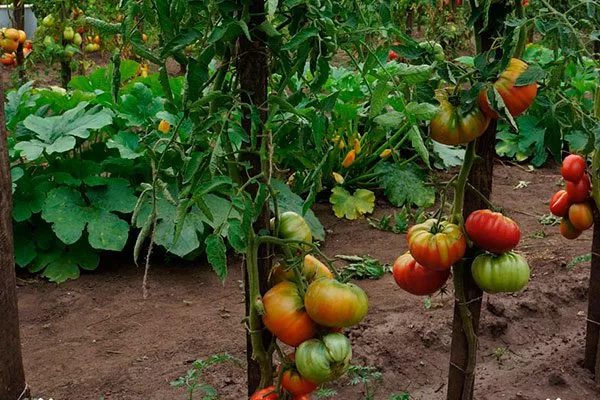
Vova Putin tomato plants are characterized by a robust structure and belong to the indeterminate group, reaching a height of approximately 150 cm. However, in some cases, plants can reach 200 cm or more. To control growth, the top of the central stem is pruned when the desired height is reached.
Other varietal characteristics:
- The shoots are straight and quite strong, but they require support during ripening, as they can bend or even break under the weight of the harvest. Sturdy poles or nets are used to secure the bushes.
- Each bush can produce 30 to 35 fruits. To achieve large sizes, it's best to leave no more than 5 ovaries in each cluster, and for even larger tomatoes, leave no more than 2 flowers.
- The optimal bush structure is one or two stems. In a single-stem system, all side shoots are removed, while in a double-stem system, one side shoot is left under the first flower cluster, from which a second side shoot develops.
- Tomato leaves are of medium density and have typical tomato parameters; they are narrow, elongated, slightly corrugated and have slightly curved edges, and are colored dark green.
- Inflorescences form on bushes, where the first cluster typically emerges under the seventh or eighth true leaf, with each subsequent cluster emerging a couple of leaves later. Each cluster can contain up to 5 or 6 ovaries.
Description of the Vova Putin tomato fruit
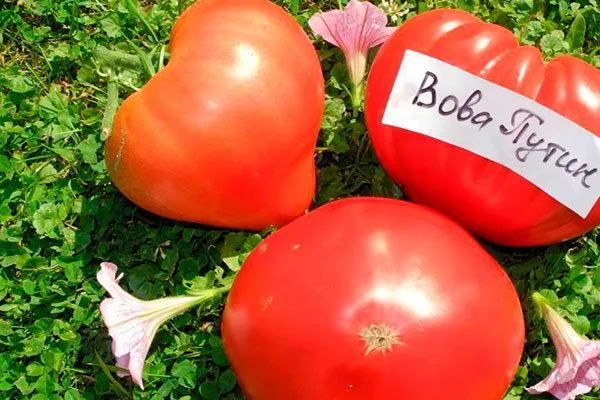
Vova Putin, the creator of this tomato variety, claims that with single-stem cultivation, you can expect fruit weights of 300-400 g, with individual specimens reaching 1 kg. However, experienced vegetable growers who have been cultivating this variety for several seasons claim that with a double-stem approach, the tomato weight remains significant.
Other characteristics:
- Tomatoes come in a variety of shapes, from heart-shaped to flat-round, and their diameter can reach 10-15 cm. Larger fruits form on higher shoots than on lower ones.
- The color of tomatoes is deep red, sometimes with yellowish veins, which may indicate a lack of nutrients.
- The pulp of the fruit is fleshy, elastic and juicy, with a sugary-sweet taste.
- Inside there are 3-4 seed chambers with a small number of seeds, which are not felt when eaten.
- The surface ribbing is slight, the skin is shiny and smooth.
- This variety is not a hybrid, which allows you to collect seeds from ripe fruits for further planting.
Main characteristics and history
This tomato variety has a number of advantageous characteristics: it can tolerate fluctuations in air temperature both during its growth period and during fruit ripening, and it also produces large fruits.
Subtleties of origin
In 2002, N. A. Alexandrov, a native of Chelyabinsk, contributed to the development of this crop. Despite his contributions, this variety has not yet been included in the State Register of Agricultural Achievements of the Russian Federation. Nevertheless, thanks to information channels, in 2015, gardeners across the country learned of this tomato variety.
The holdings do not distribute Vova Putin, but seeds are easily purchased through the postal service. This variety differs from hybrids in that it is a varietal variety, allowing gardeners to share seeds with each other, thus promoting its popularity.
Ripening and fruiting, productivity
The Vova Putin tomato is characterized by its mid-early maturity: from seed germination to harvesting of the ripe fruits, it takes 105 to 110 days. Typically, harvesting from these bushes:
- in the greenhouse it starts on June 25 or in the first days of July;
- in open ground it occurs a little later;
- The fruits growing at the tops of the shoots reach maturity in August.
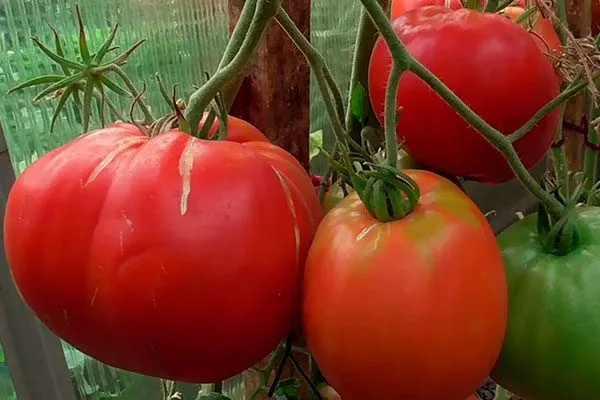
The variety promises a bountiful harvest: one bush can yield up to 3.5-4 kg of ripe fruit, although sometimes productivity can reach 7-8 kg.
Scope of application
Vova Putin tomatoes have a distinctive, typical tomato flavor, with a moderate acidity and sweetness, making them an ideal ingredient for a variety of culinary masterpieces. These fruits are used in a wide variety of recipes: from fresh salads and ketchups to sauces and lecho.
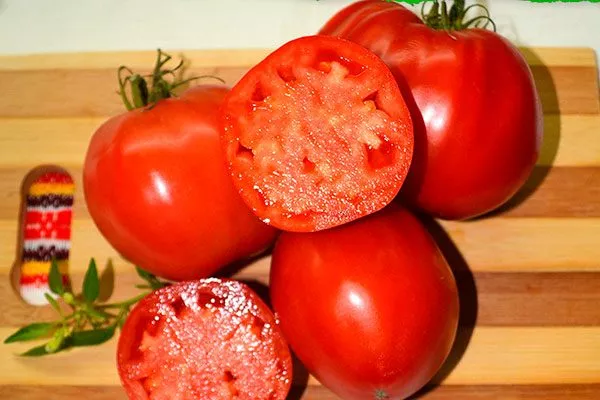
They are used for making casseroles, pizzas and broth dressings, including for preserving in the form of salads/additives or freezing for the winter.
Due to their large size, these vegetables are not suitable for canning. Housewives find other ways to use them: they salt or marinate tomatoes in barrels, which retain their shape thanks to their dense flesh.
Resistance to diseases, pests and adverse conditions
The variety exhibits good resistance to drought, adverse weather conditions, and temperature fluctuations. Vova Putin does not thrive in southern regions with high summer temperatures exceeding 28°C.
It is resistant to many fungal diseases, including gray mold. However, it has low resistance to brown spot, so preventative measures are necessary, including spraying the soil with a Fitosporin solution before planting and regularly treating the plant with this product throughout the summer.
Features of cultivation
Despite the fact that this variety is famous for its ease of cultivation, there are certain details that every gardener planning to grow this variety should keep in mind.
Planting seeds for seedlings
To grow Vova Putin, use the seedling method. Seeds are sown in the soil 50-75 days before the planned transplanting date to the greenhouse or garden beds.
- ✓ The optimal soil temperature for planting seeds for seedlings should not be below +18°C.
- ✓ To prevent seedlings from stretching, it is necessary to provide additional lighting for 12-14 hours a day.
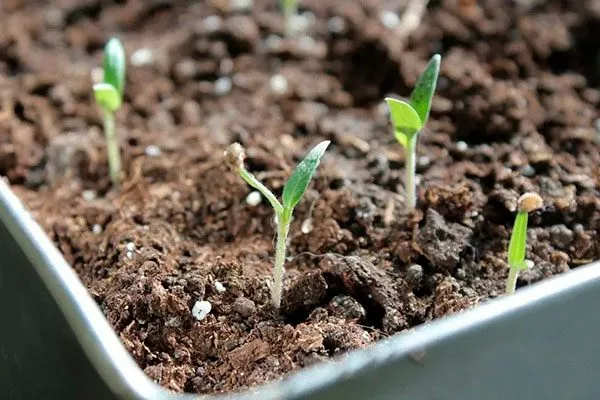
For sowing seeds, you can buy a specialized nutrient substrate at a gardening store. However, many gardeners prefer to create their own soil mix, combining garden soil, high-moor peat, and river sand in a 1:1:0.5 ratio, with a reserve stocked up in the fall.
Before spreading the mixture into seedling pots, it must be processed:
- steam over boiling water;
- soak in a weak solution of potassium permanganate for disinfection.
Basics of sowing and growing:
- Distribute the soil evenly over the pots and make holes in them 1.5-2 cm deep.
- Seeds collected from personal garden beds should first be soaked in a weak solution of potassium permanganate for half an hour, then rinsed thoroughly with water.
- Place into the slots, then carefully fill with substrate.
- Spray the surface with a spray bottle.
- Cover with glass or film to create greenhouse conditions.
- Place in a warm place until seedlings emerge. Typically, the first shoots appear within a week of sowing the seeds.
- Once the seedlings have sprouted, remove the glass or plastic wrap and move the pots to windowsills to provide the plants with sufficient light. If natural light is insufficient, illuminate the plants with special lamps. Water regularly to maintain constant soil moisture.
- When the plants have two true leaves, carry out the picking procedure, placing each seedling in a separate cup with a volume of about 500 ml.
- Two weeks after transplanting, fertilize with a urea solution to stimulate growth.
Two weeks before transplanting the plants to their permanent location, it is recommended to acclimate them to the surrounding conditions by first opening the windows to allow air in and gradually increasing the time spent outdoors.
Transplanting seedlings into a greenhouse and open ground
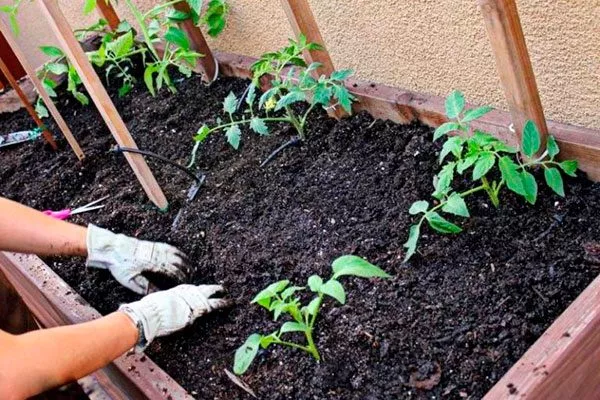
The optimal time for transplanting tomatoes to their permanent location is between May 15 and June 10, depending on the climate of the specific region. When transplanting, it's important to use the transshipment method, which involves transferring the plants, complete with soil, into new holes. To do this, water the soil in the seedling containers first, and then carefully transship.
Peculiarities:
- It is recommended to plant no more than 4 plants per 1 square meter of area to provide them with sufficient light and nutrients.
- To better acclimatize seedlings in a new location and prevent diseases, add 30 g of ammonium nitrate to each hole when planting seedlings.
- Before planting seedlings in the garden bed, it is necessary to add organic fertilizers and thoroughly dig up the soil.
- Dig holes 8-10 cm deep. When planting, it's important to leave the bottom two leaves of the tomato plants above the soil surface. The distance between each plant should be approximately 20-25 cm, and when planting in rows, 25-35 cm.
- After planting the tomatoes, the bed should be covered with plastic film, which can be temporarily removed during the day to prevent the green mass of the plants from overheating. The cover is removed completely in July.
- To protect plants from adverse weather conditions and late blight, treat the bushes every two weeks. This will help prevent plant death and ensure healthy tomato growth.
Further care of tomatoes
Care procedures are standard: plants need to be watered, fed, and supported. Be sure to consider all aspects of cultivation based on the variety's requirements.
Watering and fertilizing
To ensure healthy growth and abundant fruit production, Vova Putin tomatoes require careful watering. The recommended water should be preheated and cooled to a comfortable temperature.
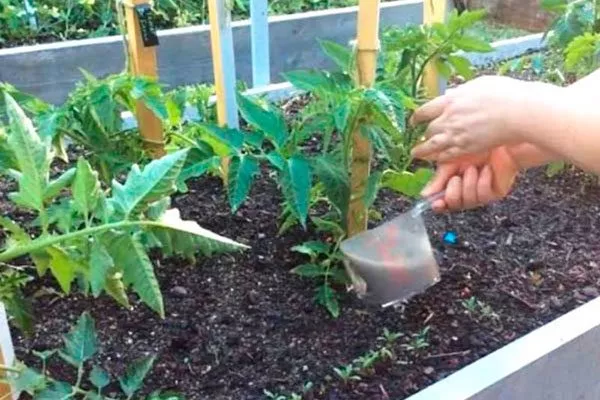
When caring for tomatoes, it is necessary to also fertilize them, which includes the use of a complex of mineral mixtures at least three to four times during the growing season:
- the first one is at the stage of setting the first flowers, when the tomatoes are still in the seedling stage;
- the second one is a week after transplanting the plant into open ground or a greenhouse;
- the third one – during the period of intensive flowering and bud formation;
- fourth - when the period of mass harvesting begins.
Pinching out and tying up
Caring for tomato bushes includes regularly tying them to trellises or support posts as they grow. After planting the seedlings in the ground, it's important to monitor the formation of lateral shoots in the axils of the 6th to 8th leaves. These side shoots are removed when they reach a length of 5-7 cm.
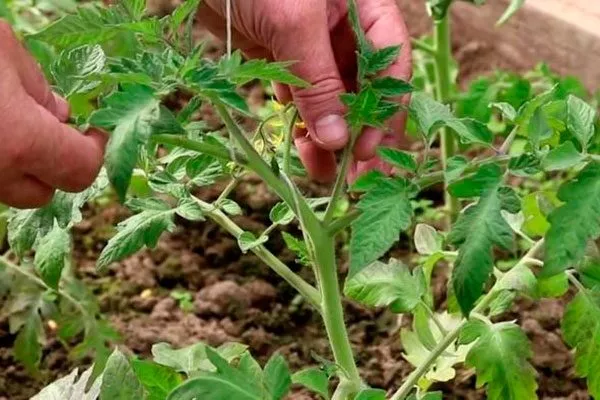
Inspect the plants and repeat the side-sonning procedure every couple of weeks throughout the growing season. At the same time, support the growing bushes.
Formation and standardization
Vova Putin tomatoes should be shaped into one or two stems, based on the variety's description and characteristics:
- bushes created in one stem can be planted at a density of up to 4 pieces per 1 sq. m;
- Plants with two stems require more space, so no more than 3 can be placed per 1 sq. m.
To ensure larger fruits, it's recommended to remove some of the ovaries if there are too many on a single plant. The more fruit-bearing flowers, the smaller the tomato size will be.
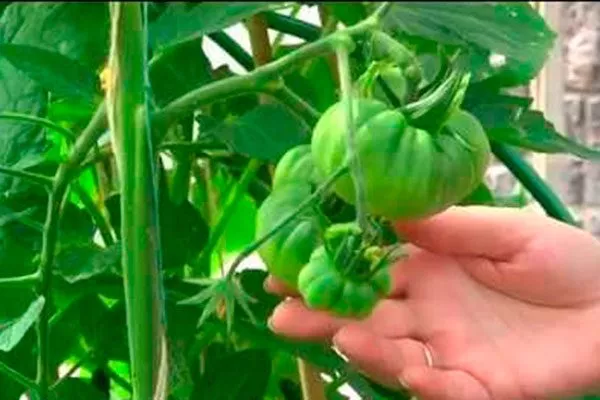
To stimulate fruit ripening and increase the number of ovaries, it is recommended to remove the first inflorescences. Regularly thinning the lower leaves improves planting ventilation and reduces the risk of pests.
Pest and disease control, prevention
In the early stages of garden crop development, the use of chemicals is acceptable, but when the time comes for budding and fruit formation, preference should be given to environmentally friendly methods that provide effective protection against diseases and pests.
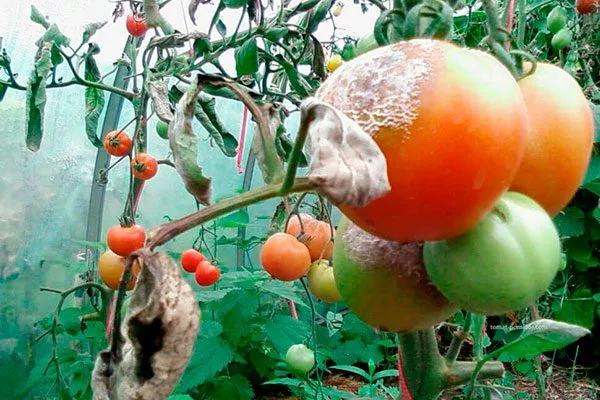
What to do:
- If signs of late blight appear, prune the affected plants and treat nearby bushes with Ridomil Gold, Fitosporin-M, or Quadris. Tomatoes can be protected from late blight by spraying them with a furacilin solution (10 tablets per 10 liters of water).
- To repel whiteflies, use garlic, yarrow, or tobacco, and to combat aphids, use baking soda or soap. These ingredients are used to prepare mixtures and tinctures.
- A week after planting the plants in the ground, they can be treated with any of the following fungicides: Bordeaux mixture, Skor, Fitosporin, Topaz or Tattu.
- Carry out the next spraying only if signs of disease appear.
- If pests are detected, they can be removed manually or destroyed using pesticides such as Biotlin, Decis, Actellik, Iskra, or Aktara. Tobacco or sulfur candles are effective in greenhouses.
Any spraying should be done in the evening to avoid leaf burn. If growing outdoors, spray only when there is no wind or rain.
Harvesting and storage
Harvest the vegetables from the bushes once they reach the desired ripeness and immediately place them in crates for transport. For long-term storage, place them in a cool place, where they will remain fresh for 7-10 days.
Pros and cons
This variety is easy to grow and produces a consistent harvest each season. It is ideal for cool climates.
Despite its drawbacks, the Vova Putin variety's advantages are significant, making it popular among Russian vegetable growers, especially in regions where farming is challenging.
The use of complete fertilizers is considered a key factor in obtaining particularly large fruits.
Reviews
The Vova Putin tomato variety has become popular among gardeners and homesteaders thanks to its versatile resistance and delicious fruit. Growing it doesn't require any special knowledge or experience—basic care techniques are sufficient to yield a bountiful harvest of this healthy homegrown vegetable.