
Ox ears are a determinate variety with fleshy, oblong fruits, a sweet flavor, and a firm texture. They are grown both in open ground and in greenhouses, where yields are higher. The crop is resistant to temperature fluctuations but requires regular watering and shaping. These versatile vegetables are suitable for fresh consumption, sauces, and juices.
Description of the bush and fruits
Volov'i Ushi (Ox Ears) is the result of years of work by Russian breeders from the Semena Altaya agricultural holding. The variety's creators are M. A. Kotelnikova and S. N. Kondakov. Genetic research was completed in 2007, and in 2010, the variety was officially registered and received worldwide recognition.
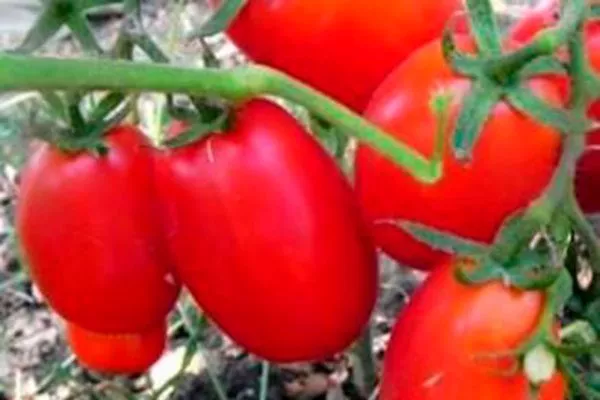
The crop is adapted to a variety of climatic conditions, making it suitable for cultivation in various regions. Despite its average yield, it is prized for its juicy and meaty flesh, making it popular among home gardeners and small farms.
Volov'i Ushi is a determinate variety. Distinguishing features:
- plant - in open ground it reaches 80 cm in height, and in greenhouses it can grow up to 100 cm;
- leaves - medium size, rich green color;
- inflorescences – simple;
- peduncle – articulated.
A single bush produces 5-6 clusters. Ripe tomatoes have an elongated, cylindrical shape with slight ribbing and a distinctive pointed tip. In the garden, tomatoes weigh no more than 110 g, but in greenhouses, they can weigh around 200 g.
At the biological ripening stage, tomatoes are light green with a whitish spot near the stem, and at technical ripeness, they acquire a rich red hue. The dense, glossy skin gives the tomatoes an attractive appearance.
Characteristics of the Ox Ears tomato
This variety has many positive qualities, making it a popular choice among gardeners. It can be grown in greenhouses and open beds—in both cases, with proper care, it yields large quantities of delicious vegetables.
Yield and ripening time of the Ox Ears tomato
The fruiting period is extended. This mid-season variety is ready for harvesting 110-115 days after germination and continues to delight with juicy tomatoes until the end of September.
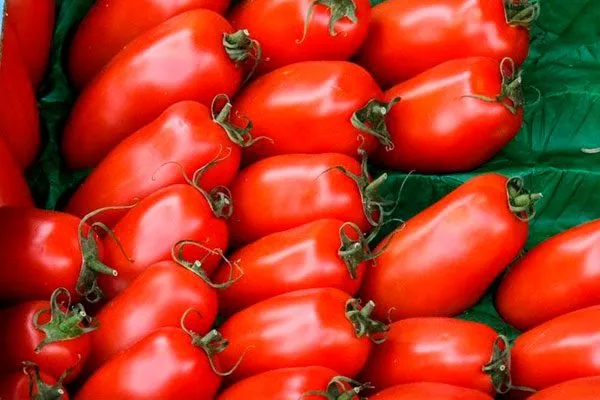
Productivity depends on growing conditions and averages 6.3 kg per square meter. However, with proper agricultural practices, this figure can be significantly higher.
Sustainability
The crop has good immunity to common diseases, but the risk of late blight and various types of rot cannot be completely eliminated. Therefore, after transplanting seedlings into the ground or greenhouse, preventative treatment with fungicides is recommended.
It is equally important to regularly inspect plants and, if pests appear, use insecticides or folk remedies.
Thanks to improved varietal qualities, tomatoes are successfully grown in regions with different climatic conditions – they withstand short cold spells and dry periods.
Methods of use
Ox-ear tomatoes are most often eaten fresh—they're perfect for salads and appetizers. They're also often added to soups, hot dishes, and homemade preserves, such as juice, puree, caviar, and more.
Growing tomatoes
Cultivating this variety requires adherence to proper agricultural practices to ensure healthy bushes and a bountiful harvest. It's important to prepare for the process and then provide the plants with proper care. The taste and size of the fruit depend on the quality of the planting material and growing conditions.
How to prepare seeds, soil, containers?
To grow strong seedlings, you'll need nutritious, loose, and moisture-retentive soil. You can use store-bought soil or make your own.
Optimal composition:
- turf or garden soil – 50%;
- humus or compost – 30%;
- peat or coconut substrate – 15%;
- sand or vermiculite – 5%.
Disinfect the soil before use:
- steam it – heat in the oven at 100-120°C for 30 minutes;
- pour potassium permanganate - dark pink solution destroys pathogens;
- treat with Fitosporin – an effective remedy against fungi and bacteria.
Suitable for seedlings:
- containers with lids (mini-greenhouses);
- peat tablets or pots;
- cell cassettes;
- plastic cups or cut-off milk cartons.
The most important thing is to have drainage holes to remove excess moisture. Before planting, disinfect the containers with potassium permanganate or boil them.
Prepare the seeds in several stages:
- selection – soak in a saline solution (5 g of salt per 200 ml of water), remove the floating specimens, and rinse the settled ones with clean water;
- disinfection – immerse for 15-20 minutes in a weak solution of potassium permanganate or for 12 hours in Fitosporin;
- growth stimulation – soak for 10-12 hours in Epin, Zircon or aloe juice;
- hardening – After the grains have swollen, place them in the refrigerator for 12 hours (+2…+5°C), then leave them for the same time at room temperature, repeat 2-3 times;
- germination – Wrap the seeds in a damp cloth and keep at +25…+28°C until sprouts appear.
After preparation, the grains are ready for further activities.
Sowing seeds, cultivation
Sow seeds 50-60 days before you plan to plant seedlings in the soil. The optimal time for Average stripes of Russia – end of February-beginning of March.
Step-by-step algorithm:
- Fill the prepared containers with moistened soil, leaving 1-2 cm to the edge.
- Make grooves 1 cm deep at a distance of 3-4 cm from each other.
- Place the seeds at intervals of 2 cm and cover with a thin layer of soil.
- Carefully moisten the plantings with warm water from a spray bottle.
- Cover the containers with film or a lid to create a greenhouse effect.
Germination conditions:
- temperature - +24…+26 °С before emergence;
- lighting – not required until sprouts emerge;
- humidity - moderate.
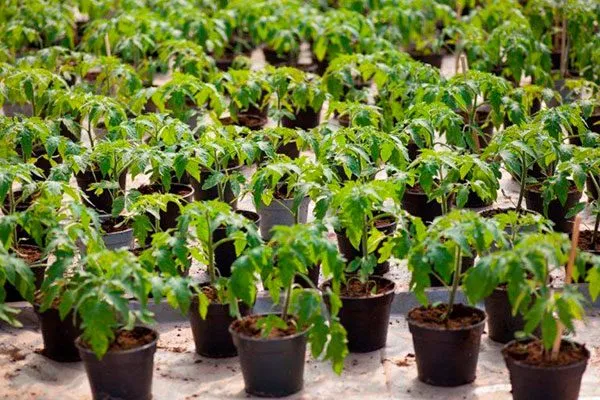
Seedlings will appear in 5-7 days. After this, remove the covering and provide the seedlings with proper care:
- The plant should receive 12-14 hours of light per day. If this is insufficient, use phytolamps.
- The first 5-7 days after germination set the temperature to Indoor temperatures should be between 16 and 18°C during the day and 12 and 14°C at night to prevent stretching. Then increase the temperature to 20 and 22°C during the day and 16 and 18°C at night.
- Moisten the sprouts with warm, settled water as the top layer of soil dries out.
- Prick out the seedlings when they have two true leaves (10-14 days after germination). Transplant them into individual 200-300 ml containers, planting them up to the cotyledons.
- Apply the first feeding 10-12 days after transplanting (a weak solution of complex fertilizer), and the second one 2 weeks later (with added potassium and phosphorus). Use organic and mineral fertilizers, alternating them.
- 10-14 days before planting, begin acclimating the seedlings to fresh air. Initially, place them in a cool place (15…18°C) for 1-2 hours, gradually increasing the time.
After hardening, the seedlings are ready to be moved to the beds.
Rules for planting seedlings
When the threat of frost has passed and the soil warms up to +12…+15°C (usually in late May-early June), transfer the plants to open ground or to a greenhouse when the seedlings reach a height of 20-25 cm and have 6-8 true leaves, usually from mid-April to early May.
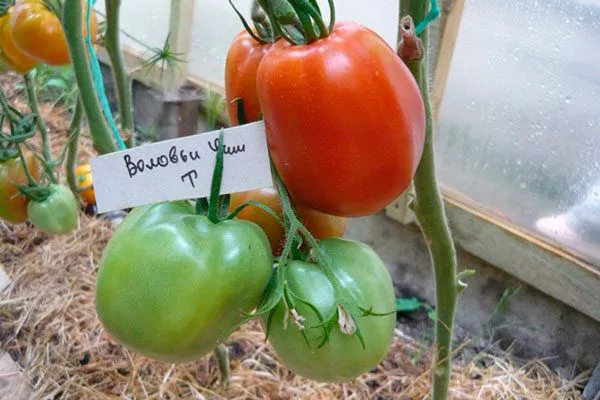
Follow these recommendations:
- The area should be well lit and protected from the wind.
- Do not plant tomatoes after potatoes, peppers, or eggplants.
- In autumn, add humus (4-5 kg per 1 sq. m) and ash (200 g per 1 sq. m) to the soil, and in spring – complex fertilizers.
- Dig up and loosen the beds a week before transplanting.
- The optimal planting pattern is 40x50 cm. Dig holes 15-20 cm deep.
Planting seedlings in beds step by step:
- Water the plants thoroughly 2 hours before replanting. Add 1 liter of water to each hole.
- Carefully remove the seedlings along with the lump of earth.
- Plant the seedlings in the holes, deepening them to the first true leaves.
- Cover with soil, compact lightly and water again.
- ✓ Optimum soil temperature for planting seedlings: +12…+15°С.
- ✓ Distance between plants when planting: 40x50 cm.
Post-planting care
To ensure a bountiful and abundant harvest, it's important to take care of your planted vegetables. Follow standard care measures to strengthen the plants' immunity and ensure only high-quality produce in the future.
Watering
Keep the plant moist regularly, but not excessively. Follow a specific regimen:
- before flowering – 1 time every 5-7 days, 2-3 liters;
- during the flowering and fruit setting period – 1 time every 3-4 days, 5-7 liters.
Avoid sudden changes in humidity. Use warm, settled water (22…25°C). Water in the morning or evening, directing the water at the roots—avoid getting wet on the leaves and stems. In hot weather, increase the frequency slightly, but be careful not to overwater the soil.
Loosening and mulching
After each watering or rain, loosen the soil or cover it with straw, humus, or grass. This will help retain moisture, prevent crusting, and improve oxygen availability. The depth depends on the age of the plants:
- young seedlings – no more than 5 cm;
- adult bushes – up to 8-10 cm.
Regularly remove weeds, which drain moisture and nutrients. Weed immediately after tilling, while the weeds are still small.
Mulch helps retain moisture in the soil, reduces weed growth, and protects roots from overheating. Cover the beds with a 5-7 cm layer. Renew the material as it decomposes, being careful not to bury the plant stems.
Top dressing
Ox ears require regular fertilization to produce large, fleshy fruits. Apply the following fertilizer schedule:
- 10-14 days after planting the seedlings in the ground. Use An infusion of mullein (1:10) or chicken manure (1:20), adding 20 g of superphosphate per 10 liters of solution. Pour 500 ml of the mixture under each bush.
- During flowering and formation of ovaries Tomatoes need phosphorus and potassium. Every 2-3 weeks, feed them with wood ash (200 g per plant) or a superphosphate solution (30 g per 10 liters of water). An herbal infusion or yeast fertilizer is effective for stimulating growth.
- During the period of fruit filling Reduce nitrogen, focusing on potassium. A potassium sulfate mixture (20 g per 10 liters of water) or a complex formulation with microelements works well.
If the plants appear weak, provide additional foliar feeding by spraying with a boric acid solution (1 g per 1 liter of water) or a magnesium-calcium fertilizer. Apply the final fertilizer 2-3 weeks before harvest.
Bush formation
Structuring allows for larger fruit and prevents overcrowding. Helpful tips:
- Grow in 2-3 stems, removing side shoots once a week;
- trim the lower leaves to improve ventilation;
- Tie tall bushes to supports or trellises.
With proper care, Ox Ears tomatoes produce a stable harvest and delight with excellent taste.
Pest and disease control
The crop is susceptible to late blight, which manifests itself as brown spots on the stems and leaves, as well as tomato rot. To protect use fungicides:
- Quadris;
- Infinito;
- copper sulfate;
- Bordeaux mixture.
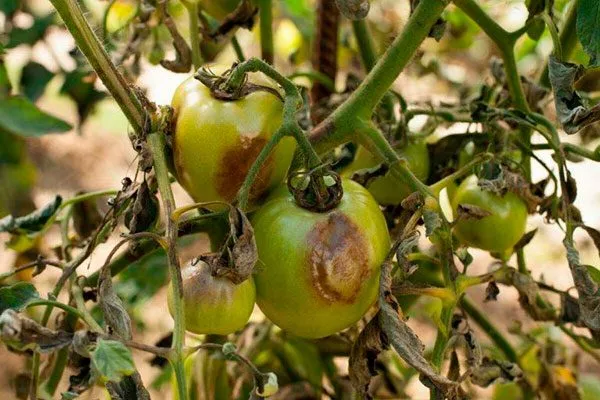
The variety is susceptible to whitefly infestation. These insects leave yellow spots on the leaves, causing them to wilt. Sooty mold develops in areas where the pests congregate, causing the surface to turn black. To combat these pests, apply chemicals:
- Confidor;
- Aktara;
- Verticillin.
Sticky traps and folk remedies such as infusions of garlic and wood ash are effective against insects.
Pros and cons
Like any variety, the Ox Ears tomato has its pros and cons. Among the main advantages, gardeners highlight:
Disadvantages include the need to shape and tie up the bushes, increased requirements for regular watering, and average productivity.
Reviews
Ox Ears is the ideal tomato variety for gardeners who value flavor and quality. These medium-sized tomatoes are perfect for salads and processing, and their thick skin ensures excellent shelf life. With proper care, these tomatoes produce consistent results. Strengthening your immune system is also possible with important agricultural practices.