
The Vishenka tomato is the perfect variety for cherry tomato lovers. It's not only delicious but also beautiful, with ripe cherry tomatoes borne in clusters that resemble large bunches. These tomatoes are grown primarily in plastic greenhouses.
The history of the Cherry tomato
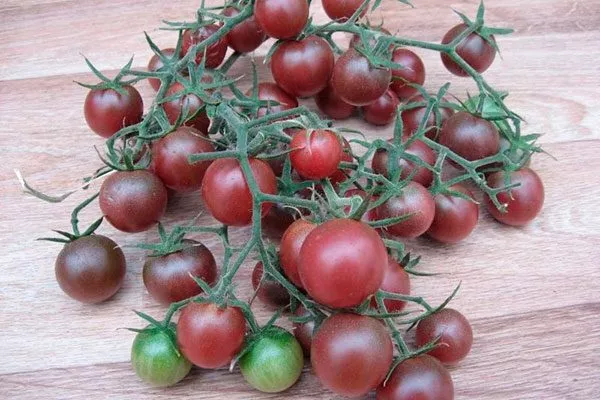
The Vishenka variety was developed by Russian breeders in 2008. The authors were E.N. Andreeva, S.L. Nazina, M.I. Ushakova, and A.N. Andreeva. The Vishenka tomato is represented by a series of varieties, including two versions—Black Vishenka and Pink Vishenka—which differ in fruit color.
The Vishenka variety is recommended for cultivation in the Northern, Northwestern, Central, Volga-Vyatka, Central Black Earth, North Caucasus and Middle Volga regions.
Description of the variety
The Vishenka tomato plant grows tall and is an indeterminate variety, reaching a height of 1.6-1.8 m. The leaves are medium-sized and dark green.
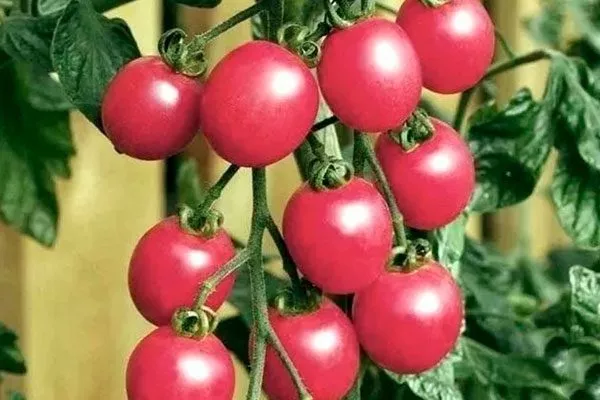
The fruits are small, as is typical for cherry tomatoes. Each tomato contains 2-3 seed chambers. The skin is smooth, thin, and glossy. A single cluster produces 12-20 fruits.
Brief description of fruits:
- Unripe fruit color: light green with a dark green spot near the stalk.
- Color of ripe fruit: pink or purple-brown (respectively, in the Pink Cherry and the Black Cherry).
- Form: rounded.
- Weight: 20-25 years
Taste and purpose of fruits
The Cherry tomato has a slightly sweet flavor. The flesh is juicy and tender. This variety is versatile and can be eaten fresh, pickled, and canned whole. These small tomatoes are also suitable for salads and various dishes.
Characteristics
The Vishenka tomato is a mid-season variety. It takes 110-112 days from germination to ripening of the first fruits. The average marketable yield of this tomato is 3.3 kg of ripe tomatoes per square meter.
Pros and cons
Before planting the Vishenka cherry tomato in your garden, evaluate its full range of advantages and find out if this variety has any disadvantages that might prevent it from growing in your current conditions.
Landing features
The Cherry tomato is planted using seedlings, primarily in plastic greenhouses. You can buy ready-made seedlings, but it's much more reliable to grow them yourself.
Selecting a site
Cherry trees prefer well-lit areas with light, fertile soil. For good growth and fruiting, the bushes require long hours of daylight. Locations with even slight shade are not recommended.
When choosing a planting site, it's important to consider crop rotation rules—tomatoes shouldn't be planted in the same spot before others. They're also not suitable for areas where nightshades like potatoes, peppers, and eggplants were grown. They should be planted after 3-4 years. They can be planted after onions, garlic, cabbage, legumes, and pumpkins.
Soil preparation
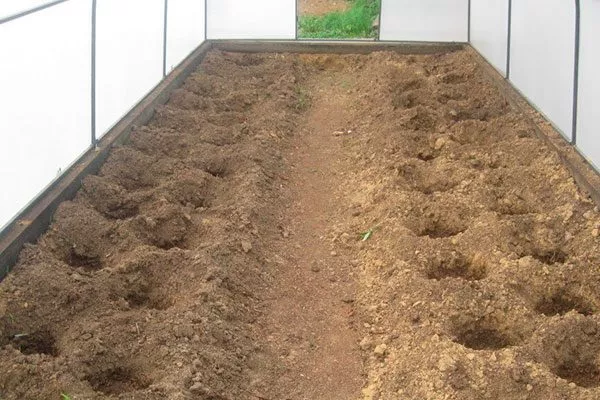
The planting site is prepared in the fall. This process follows a standard pattern: fertilizers and other soil-improving components are evenly distributed over the site, and the soil is dug to the depth of a spade. In the spring, the soil is deeply loosened, preparing the beds for planting.
It's recommended to test the soil for acidity; the pH should be neutral or slightly acidic. The recommended range is 5.5–7.0. The optimal range is 6.0–6.5. If the soil is highly acidic, add slaked lime, or you can also add dolomite flour or wood ash.
Dense and heavy soils with a clay structure are loosened by adding 10 liters of coarse-grained river sand per square meter of the plot.
Organic fertilizers such as compost, rotted manure, and humus are used, as well as mineral complexes high in phosphorus and potassium. To prevent diseases, it is recommended to water the soil with a weak solution of potassium permanganate.
If the Cherry tomato is to be grown in a greenhouse, the soil in it is also prepared in advance:
- In the greenhouse, first remove all plant debris, then disinfect everything that was previously used as supports for tomatoes. The greenhouse structures are washed with a hot solution of laundry soap (200 g of shavings diluted in 10 liters of water).
- The soil in the greenhouse is dug over, adding organic matter and a complex mineral fertilizer. Afterwards, the soil is watered with a solution of copper sulfate (1 tablespoon per 10 liters of water) or Fitosporin.
Seed preparation
Before preparing seeds for sowing, check their expiration date. The fresher the seeds, the higher the germination rate. The maximum shelf life of tomato seeds is 4-5 years.
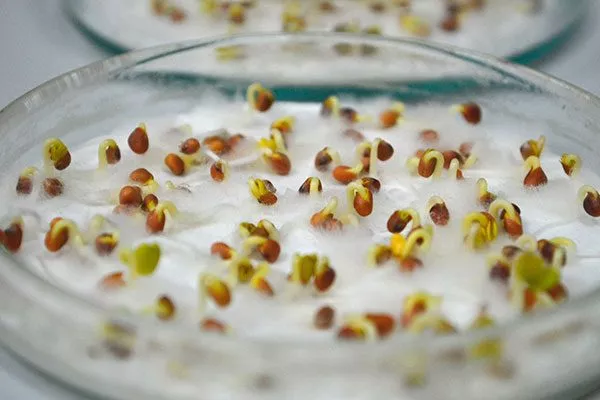
If you buy seeds from a reputable producer, you may not need to prepare them—this is usually stated on the packaging. Seeds in a seed coat are usually already completely ready for planting—treated with a growth stimulant and disinfected.
If the seeds are untreated, they must at least be germinated. They can also be calibrated by size, tested for germination in a saline solution, disinfected, and treated with a growth stimulator. There's no need to collect the seeds yourself—the Cherry tomato is a hybrid variety, so seeds taken from the fruit don't retain the varietal qualities of the parent plant.
Preparing the planting container
Any container used for growing Cherry tomato seedlings should be washed with hot, soapy water. If it has already been used, it should be disinfected, for example, by soaking it in a dechlorinating solution for 24 hours. Seedling containers should have drainage holes in the bottom.
You can grow seedlings without transplanting. In this case, sow the seeds directly into large cups (350-500 ml) or peat pots. If you choose the second option—growing seedlings with transplanting—then sow them in large containers or trays, from which the seedlings are then transplanted into individual containers.
The planting containers are filled with a ready-made seedling substrate, which can be purchased at any agricultural store. You can also prepare your own soil, for example, from peat, humus, and sand, but in this case, the soil mixture must be disinfected, baked in the oven, or treated with potassium permanganate.
Growing seedlings
Cherry tomato seedlings are sown in late March or early April. They take approximately 60-65 days to grow.
Features of growing seedlings:
- The soil mixture in the planting container is leveled and thoroughly watered. The seeds are planted approximately 1 cm deep, with 2-3 cm intervals between adjacent seeds. In larger containers, you can make rows for sowing, spaced 4 cm apart. A mesh seeding grid can also be used for sowing.
- The seeds must be covered with plastic film; containers can also be covered with glass. The mini-greenhouse is ventilated daily by opening the cover. The optimal temperature for seed development and germination is 22 to 25°C.
- As soon as the tomatoes sprout, the cover is removed immediately, and the room temperature is lowered to 14…16°C to slow the seedlings' growth. Otherwise, the seedlings will stretch and weaken. Nighttime temperatures should be a couple of degrees lower than daytime temperatures.
- After 5-7 days, the temperature is raised to 22-23°C. The seedlings are provided with 24-hour light for the first week. Over time, daylight hours are reduced to 18-20 hours; when the seedlings reach one month of age, daylight hours should be 11-12 hours.
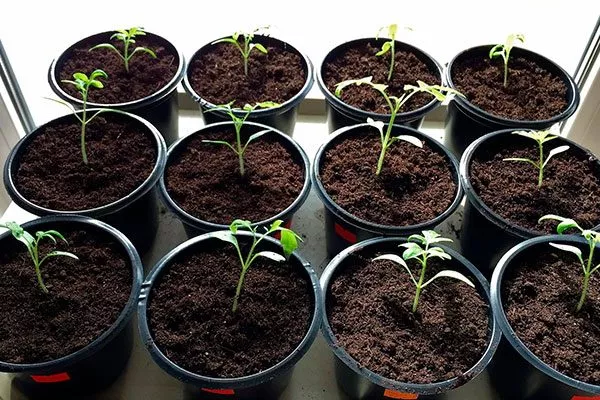
Features of seedling care:
- Before transplanting, water the seedlings once a week. At this stage, overwatering is especially dangerous for seedlings, as they can become infected with a dangerous fungal disease called blackleg. After transplanting, water more frequently—2-3 times a week. Use only warm, settled water. Sprinkler irrigation is not recommended.
- Two-week-old seedlings are pricked out and transplanted into individual containers. When transplanting, the central root of the seedlings is pinched back by 1/3 of its length.
- At least a week before planting the seedlings outdoors, they begin hardening them off. The planting containers with young tomatoes are taken outside daily.
- Seedlings are fed two weeks after transplanting. A total of 2-3 feedings are performed. Complex mineral fertilizers designed specifically for seedlings are primarily used.
Transplanting
Seedlings are planted in open ground around early to mid-May (the exact timing depends on climate conditions and soil type). Greenhouses are planted 2-3 weeks earlier. By the time of planting, the threat of frost should have passed, and the air should have warmed to 18–20°C, and the soil should have warmed to 14°C.
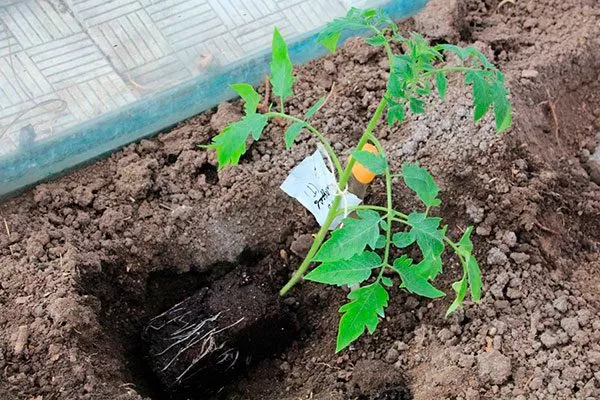
Features of planting seedlings:
- Cherry tomatoes are planted in rows or in a staggered pattern. Dig holes for planting and add fertilizer—wood ash, humus, and superphosphate—to the holes. The holes are 15 cm deep and 20 cm in diameter.
- The optimal planting pattern for the Vishenka variety is 40×60 cm.
- Before planting, water the seedlings generously to ensure easy removal from their containers. It's important to minimize root disturbance during transplanting.
- The seedlings are placed vertically in the holes. If the seedlings have become elongated, a portion of the stem is placed horizontally in the hole. The roots and the remaining space are covered with soil, compacted slightly, and then watered.
Care Features
The Cherry tomato is quite demanding in terms of care, so to get a good harvest you need to provide it with the appropriate conditions.
Watering
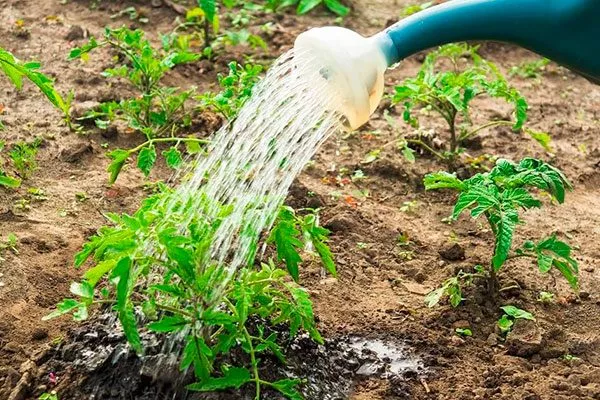
After planting, do not water the seedlings for 7-10 days. The lack of moisture forces the roots to grow rapidly in depth and width. Subsequently, water the plants 1-2 times a week. The frequency of watering depends on weather conditions and soil conditions.
Loosening
To ensure the soil is saturated with oxygen, it is regularly loosened. This is done the day after watering to prevent the soil from drying out and subsequently forming a hard crust. Weeding is carried out simultaneously with loosening.
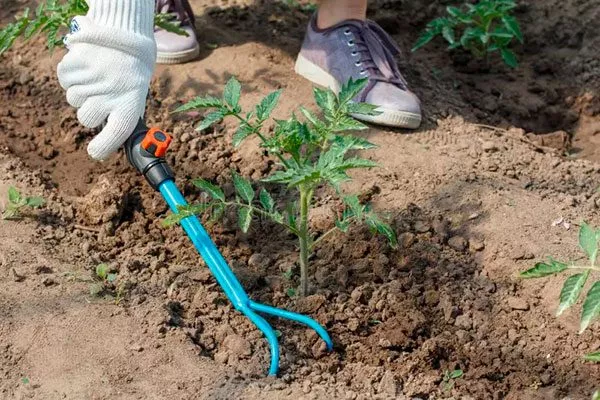
Initially, the soil is loosened deeply—to a depth of 8-10 cm. As the roots grow, the loosening depth is reduced to 3-4 cm. At least 3-4 loosening sessions are carried out per season until the bushes have grown; once the bushes have formed, loosening can cause damage.
Top dressing
The first feeding is done approximately a couple of weeks after transplanting the seedlings into the soil. The fertilizer used is a nitrogen-rich mineral complex, which stimulates the growth of green mass. Foliar feeding with magnesium sulfate is also beneficial.
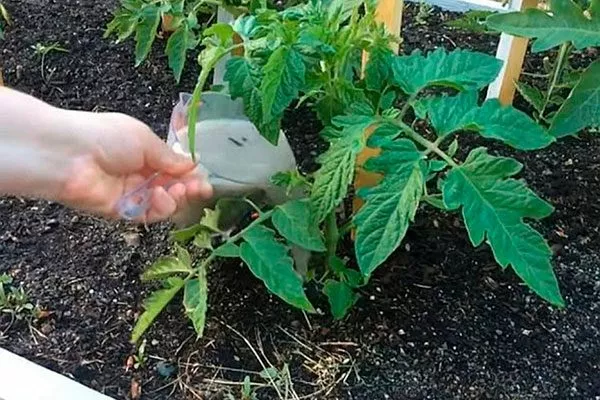
Later, during the flowering and fruit set stages, fertilizers containing potassium and phosphorus, such as superphosphate, are applied. Magnesium will also be beneficial during the period of intensive growth, and boron during the flowering stage.
Shaping and garter
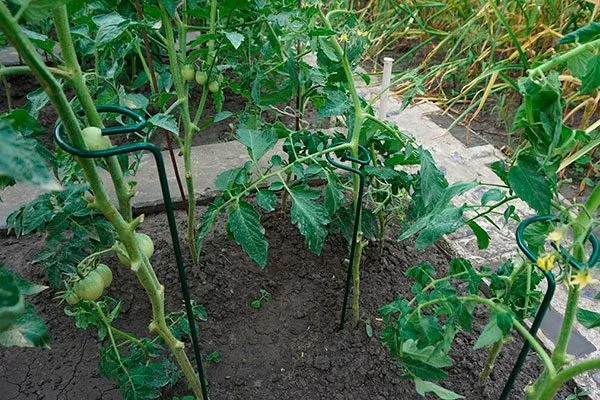
The Cherry tomato bushes are tall and require support. They also require shaping, leaving one or two stems. The hybrid also requires pinching. In the south, bushes can be trained to two or three stems, and pinching is not necessary.
Diseases and pests
The variety has a certain immunity, but under unfavourable conditions it can be affected by late blight, powdery mildew, blossom end rot, cladosporiosis, grey mould and tobacco mosaic virus.
To prevent and treat tomatoes, you can use insecticides such as Skor, Hom, copper sulfate, Bordeaux mixture, Abiga Peak, etc. You can also use folk remedies, such as whey, soda solution, or ash infusion.
The most dangerous insects for the Cherry hybrid are moths, thrips, whiteflies, aphids, and spider mites. To combat them, use biological products such as Biotlin and Fitoverm. Chemicals should be used with extreme caution, considering their duration of action and the risk to humans.
Harvesting and storage
Harvesting begins in July. The clusters are harvested when 80-100% of the tomatoes are ripe. The fruits can be stored for about a month. However, to achieve this, they need to be provided with suitable storage conditions: the tomatoes are placed in a single layer in low crates or cardboard boxes lined with paper.
Reviews
The Vishenka tomato is an excellent choice for cherry tomato lovers. This variety possesses all the qualities that gardeners value in tomatoes. By caring for its tall bushes, you can grow flawless cherry tomatoes that are beautiful, tasty, and easy to store. This hybrid is not suitable for commercial cultivation due to its poor transportability, but it is ideal for a private garden.