
The Vesuvius tomato, or Vesuvio, a top-ranked tomato variety worldwide, is characterized by its small fruit and vibrant flavor, good productivity, and resistance to various diseases. It's no coincidence that the name of this variety evokes the famous Mount Vesuvius volcano, which rises near Naples.
Selection and growing regions
Vesuvius was developed by the distinguished breeder Vladimir Ivanovich Blokin-Mechtalin and received cultivation approval in 2021 after successful trials. However, there are other versions that cannot be considered official:
- Legend has it that its origins lie in the long-term breeding experiments of Professor Alexander Voitovich, a renowned expert in tomato breeding. His mission was to create a variety that would bear fruit early and abundantly, produce soft, sweet fruits, be disease-resistant, and boast a distinctive orange-red hue.
The volcanic soil and unique climate of Naples are said to have provided the breeder with an ideal environment for development. - Many believe that the Vesuvius variety was created in Italy in the late 20th century by the breeder Giuseppe Lucarelli. He sought to create a variety that would not only have an exquisite flavor but also produce a high yield.
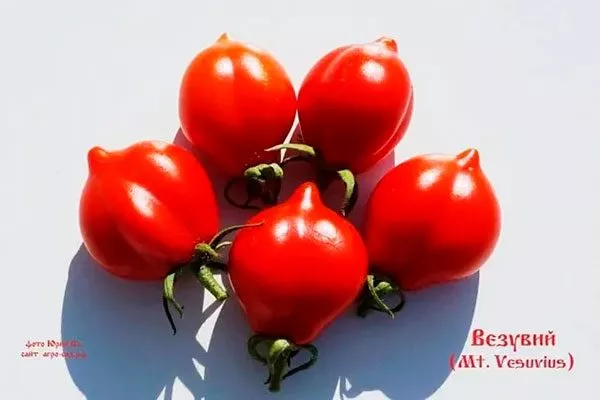
The hybrid is considered versatile, as it can be grown both indoors and outdoors. It is currently cultivated worldwide, despite varying climatic conditions.
The variety is recommended for cultivation in:
- Central Black Earth District;
- in the territory of the northern and northwestern regions of Russia;
- in the regions and republics of the North Caucasus;
- in the Central and Lower Volga region;
- in the Kurgan, Sverdlovsk, Chelyabinsk regions and other areas of the Urals;
- in almost all corners of Siberia and the Far East, with the exception of the regions of the Far North and places equivalent to them.
Description of the bush and fruits
Vesuvius is not a tall plant, with bushes reaching only 90-100 cm in height. This determinate variety has a fairly compact structure and medium foliage.
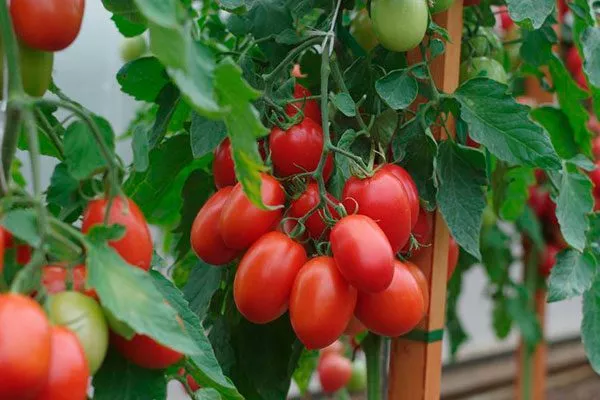
Other characteristics of the hybrid:
- The leaves of this tomato, like those of most of its relatives, are not particularly long and are colored a regular green.
- The tomatoes are small in size, weighing about 90-110 g, and have an egg-shaped form with a small nose.
- Unripe fruits are green without markings at the base, while ripe ones are bright red. The flesh is of medium consistency.
- Tomato inflorescences are intermediate, with the first appearing above the seventh or eighth leaf, and subsequent inflorescences forming on one or two leaves ahead. Each cluster can contain from 7 to 13 fruits.
- The skin is dense, smooth and thick enough, which helps preserve their marketable appearance and increases their shelf life.
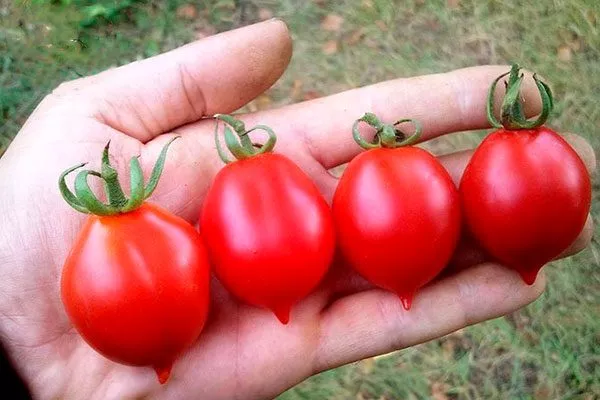
Main characteristics
Vesuvius, being the result of hybridization, is known to be quite resistant to many diseases and pests. However, this hybridization prevents gardeners from collecting their own planting material, as the seeds do not retain all the characteristics of the parent line.
Ripening and fruiting, productivity
Vesuvius is one of the first tomato varieties that is ready for harvesting 95-100 days after germination. This variety is characterized by synchronous ripening of the fruits, making it particularly attractive to many vegetable growers, allowing them to precisely plan their harvest.
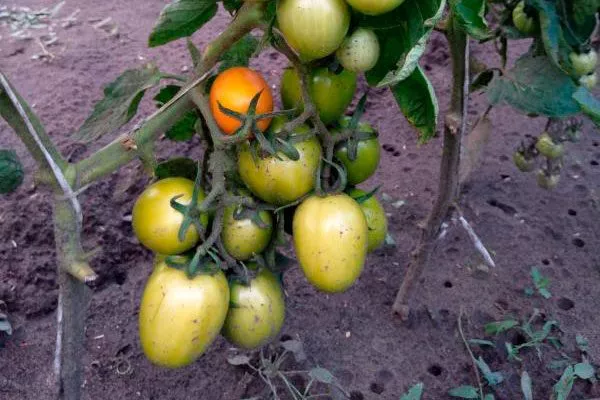
Vesuvius's efficiency can reach 13.5-14.5 kg per square meter. However, achieving such results will require a certain amount of labor investment.
How is it applied?
Vesuvius tomato is the perfect ingredient for creating rich and flavorful salads. It's added to traditional Greek salads and caprese. It's an essential ingredient for sauces and pastas.
The main ways to use the fruits:
- pizza;
- fresh salads with cucumbers, etc.;
- sauces;
- whole fruit canning;
- lecho;
- eggplant caviar;
- marinating in barrels.
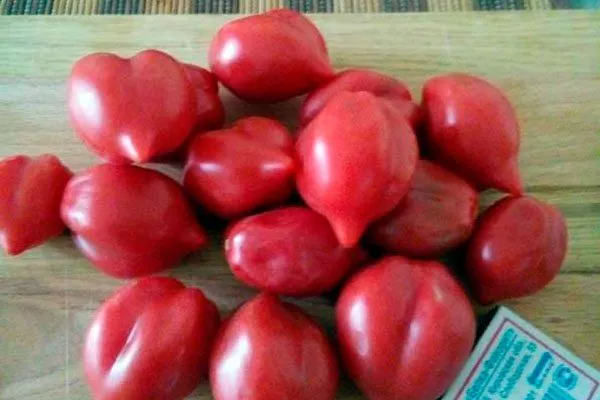
No matter how you use the Vesuvius tomato, it will always add a unique flavor note and a bright red accent to your dishes.
Useful properties and nutritional value
Vesuvius tomato is rich in antioxidant components, including lycopene, beta-carotene and vitamin C, which have a protective effect on cells, preventing damage from free radicals and strengthening the immune system.
Other useful properties:
- Lycopene, which is responsible for the bright red color of tomatoes, has been associated with a reduced risk of developing certain types of cancer, particularly prostate cancer.
- Tomato is a valuable source of vitamins A and K, which are important for maintaining healthy skin, vision and bone tissue.
- Rich in minerals, including potassium and magnesium. The former is essential for maintaining healthy cardiovascular health and stable blood pressure, while the latter is critical for proper muscle and nervous system function.
- The nutritional value in terms of calories is insignificant, as the vegetable is rich in fiber, which helps regulate digestion and prevent constipation.
Tomato Vesuvius is a wonderful addition to a healthy diet and helps maintain overall body tone.
Features of growing in open and closed ground
Vesuvius F1 is suitable for both outdoor and greenhouse cultivation, making it an ideal choice for growers in all climates and weather conditions.
There are some nuances that are important to know:
- Outdoor cultivation. Under these conditions, Vesuvius F1 forms a strong bush with a developed root system, which ensures its stability against winds and the ability to withstand heavy rains without damage.
The hybrid is highly adaptable to low temperatures and adverse weather conditions, ensuring a regular harvest even during the cold months. - Cultivation in a greenhouse. In greenhouse settings, the Vesuvius F1 tomato demonstrates impressive results. It quickly gains strength and begins to grow vigorously, forming strong stems and abundant foliage (in the garden, foliage is average).
Greenhouse conditions protect the plant from adverse environmental influences, such as strong winds, heavy rains, or sudden temperature fluctuations. This allows the tomato to form large, ripe fruits faster, ensuring a bountiful harvest.
Landing features
The timing of sowing depends on individual conditions, but it's important to remember that the plant should be transplanted to its permanent location no later than the first half of June. Vesuvius, as a hybrid, requires purchasing fresh seeds each season. Even though they are sold pre-treated and ready for planting, it's still advisable to soak them in a solution of potassium permanganate for a few minutes.
- ✓ Optimum soil temperature for seed germination: +23…+25°C.
- ✓ It is necessary to reduce the temperature to +18°C after emergence to prevent seedlings from stretching.
Peculiarities:
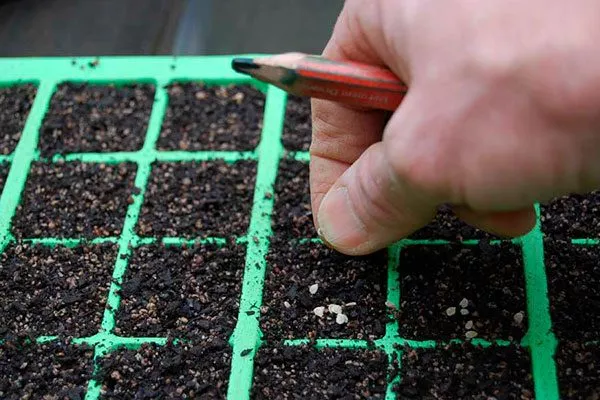
- For sowing, use containers filled with fertile, slightly moistened soil. Sowing is done in a 2x3 cm pattern, with the seeding depth not exceeding 1 cm. The seeds are distributed evenly, planted deep into the soil, and covered, followed by additional irrigation.
Containers with seeds are placed in a room with an air temperature of at least +23…+25 degrees Celsius. - The first shoots will appear in a week or ten days, so the gardener should reduce the temperature to 18 degrees Celsius. Watering should be continued. When the seedlings have two leaves, they are transplanted into individual pots, and when the plant has 4-6 leaves, it is ready for transplanting to its permanent location.
- To create favorable conditions for the growth of young plants, it's important to carefully prepare the selected site. First, remove weeds, dig the soil, and enrich it with organic matter, such as compost or chicken manure, as well as superphosphate.
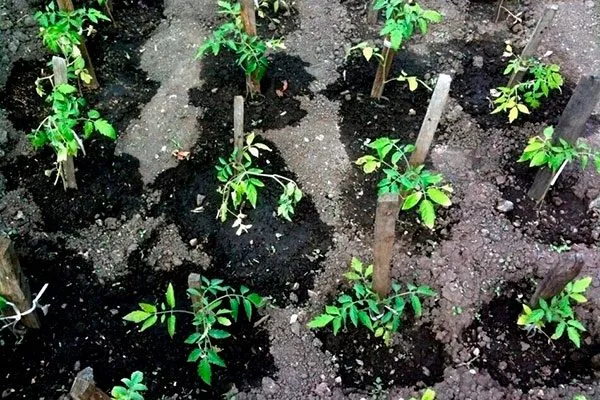
If the soil was fertilized in the fall, you can mix organic matter and the preparation with the soil directly in the holes. - Since this tomato variety doesn't grow particularly large or tall, you can plant about 3-4 plants per square meter. Stake the plants near each hole to secure them. Finish the planting process with a thorough watering with warm water.
Subtleties of agricultural technology
Care procedures are also standard, but take into account some varietal subtleties regarding requirements:
- Watering. Ideally, water the plant 2-3 times a week, although young plants require more frequent watering. In hot weather, the plant requires more intensive watering.
It's important to monitor the top layer of soil: if it dries out, it's time to water it. Water in the morning or evening, using water warmed during the day and poured directly near the roots. - Nutrition of bushes. Both complex fertilizers and organic matter are used to feed tomatoes. Complex fertilizers ensure that plants receive all the necessary nutrients for optimal growth and fruit formation:
- At the stage of rooting and development of tomatoes, nitrogen compounds are important, the first application of which should be carried out 15 days after transplanting the plant into open ground;
- during budding, apply a second top dressing using organic matter with microelements;
- When the time comes for the fruits to ripen, tomatoes require purchased preparations.
- Formation of tomatoes. This is a mandatory process that is usually done by leaving three stems, although sometimes a two-stem system is used.
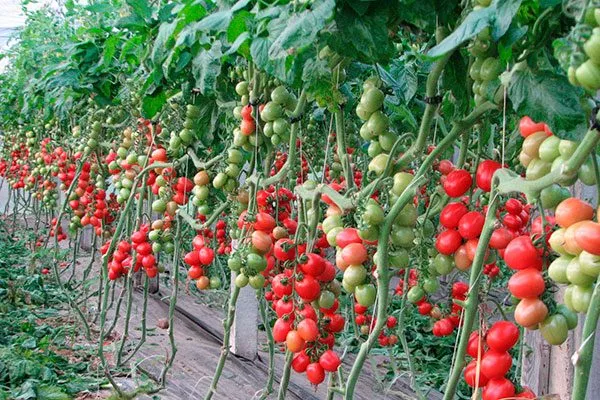
- Harvesting. Once the tomatoes reach the desired size and color, it's time to harvest. Since ripening doesn't happen all at once, it's important to inspect the plants daily and pick ripe tomatoes. This helps prevent them from drying out and maintain a good yield.
Pest and disease control
The variety exhibits good resistance to diseases such as cladosporiosis, fusarium wilt, and tobacco mosaic. Anthracnose and nematode infestations are relatively rare problems, although special preventative measures are required for these. Leaf spot is also not a serious threat, but still requires attention.
Periodic insecticide spraying is recommended. In cases of minor pest infestations, folk remedies may be sufficient, but in cases of widespread insect infestations, specialized chemicals are required.
Pros and cons
Among the advantages of Vesuvius F1, it's worth noting its good resistance to disease and adverse weather. This variety is resistant to fungi and pests, guaranteeing a bountiful harvest even in less-than-ideal conditions.
- ✓ Resistance to cladosporiosis, fusarium wilt and tobacco mosaic.
- ✓ Ability to maintain freshness and withstand long-term transportation.
Vesuvius F1 stands out for its ability to retain freshness and withstand long-distance transport, which is a key aspect when choosing a variety for agricultural production.
Reviews
Vesuvius F1 is the ideal choice for those seeking a reliable hybrid with excellent properties. It's suitable for both experienced and novice gardeners, providing a constant source of fresh and delicious tomatoes. By following the proper care instructions, you can achieve maximum productivity and flavor.