
Vesyoliy Gnome is a compact and productive tomato variety, ideal for small plots and urban areas. These tomatoes have a decorative appearance, with an unusual, elongated shape. This variety produces juicy, tasty vegetables suitable for all-purpose use, and the plants are rarely affected by disease.
Description of the tomato variety 'Merry Gnome'
This variety is successfully grown on windowsills, balconies, open beds, and greenhouses. It is characterized by excellent productivity and low maintenance, making it an ideal choice for gardening novices.
Appearance of the bush
The plant is compact and low-growing – its central stem grows no higher than 50 cm. Distinguishing characteristics:
- crown – dense, neat, does not require pinching;
- leaves - have a classic shape, weakly cover the bush, and are colored in a rich green hue;
- inflorescences – simple;
- peduncle – articulated.
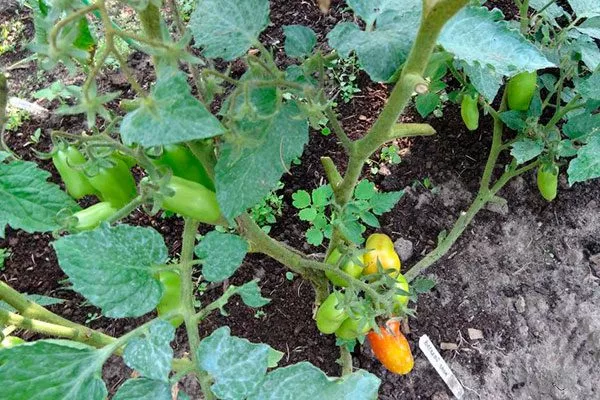
The leaf blade displays a characteristic central cross-section and ribbed edges. During periods of drought or extreme heat, the leaves may curl into a tube.
Fruit
The unusual tomatoes of this variety deserve special attention. Key characteristics of these vegetables include:
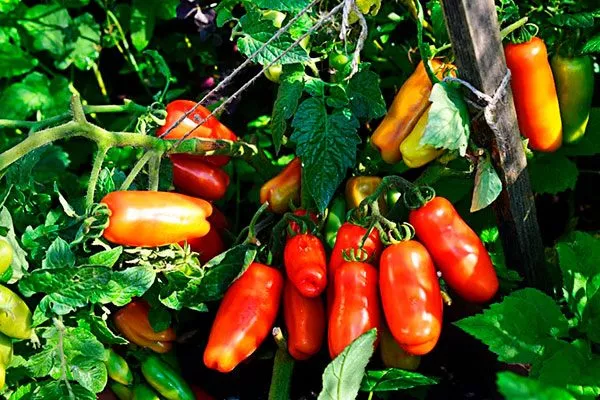
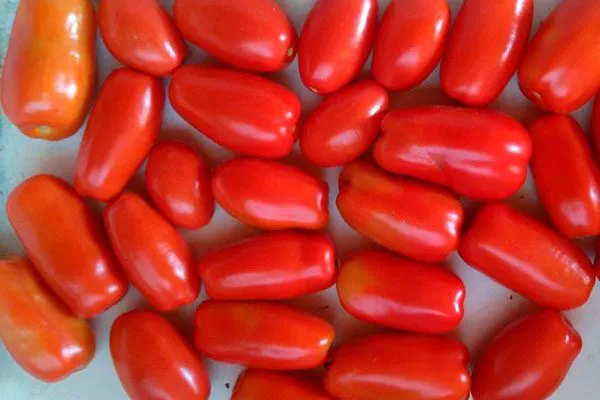
- they are small, elongated, cylindrical in shape;
- the maximum weight reaches 90 g with an average diameter of 1.5 cm and a length of up to 10 cm;
- at the stage of technical maturity, the vegetables are colored in a soft green hue, and when fully ripe, they acquire a deep red color;
- The dense skin protects against damage and prevents cracking.
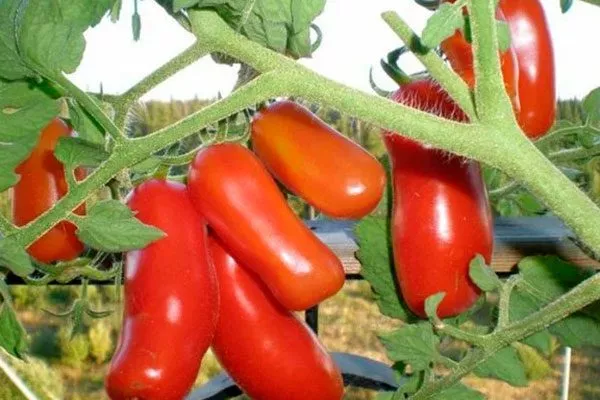
Despite the plant's decorative appeal, tomatoes have juicy flesh with a sweet flavor characteristic of this crop. The fruit's structure is dense, with thick, fleshy walls, although some may contain small internal cavities.
Main characteristics and history
The "Merry Gnome" is the result of meticulous breeding by renowned specialist L. A. Myazina. In 2009, the variety was officially registered and received widespread recognition.
Its popularity is due to improved varietal characteristics, which make the crop in demand among summer residents.
Ripening and fruiting, productivity
This compact, ornamental variety is an early-ripening variety—the tomatoes are ready for harvest approximately 100 days after germination. The ripening process is spread out over time, allowing you to enjoy the harvest for a long time.
Despite its small size, this variety is characterized by good productivity. Up to 5.4 kg can be harvested from 1 square meter, and a single healthy plant yields up to 2 kg of juicy and unique fruits.
How to use?
Tomatoes of this variety are excellent for eating fresh. Because they can be grown on a balcony, they can be picked straight from the bush and added to salads, appetizers, and vegetable platters.
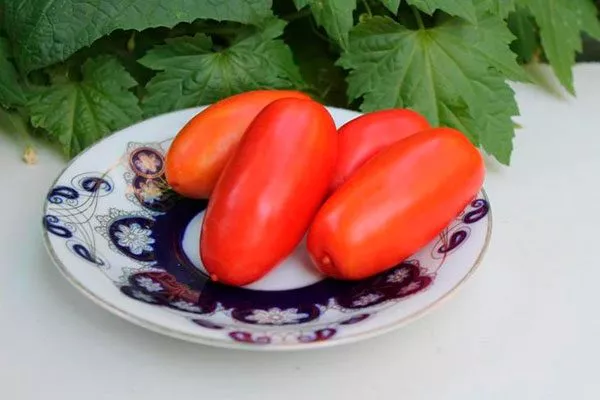
They are suitable for various workpieces:
- tomato paste;
- ketchup;
- juice.
Many gardeners use their harvest for whole-fruit canning, pickling, and marinating. Tomatoes are suitable for drying or freezing, where they retain their flavor and nutritional value for several months.
Planting the Happy Gnome tomato
The crop is grown from seedlings, most often in greenhouses. In southern regions, seedlings can be planted in open ground using temporary shelters. This variety also thrives in flowerpots, making it convenient for indoor cultivation.
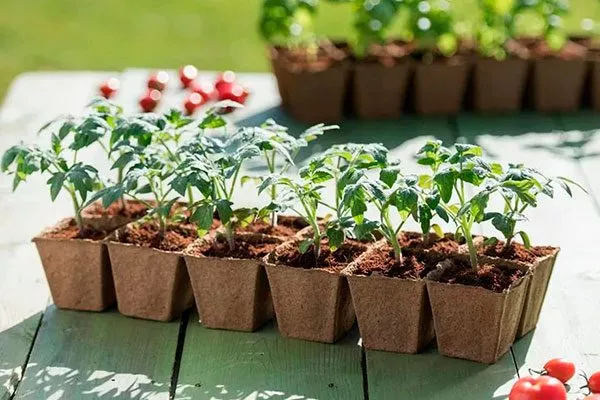
Growing seedlings
Sow seeds 60 days before planting seedlings; the optimal time is March-April. To ensure strong and healthy seedlings, sow them yourself.
- ✓ Check the seeds for germination: use only those that sink to the bottom in the salt solution.
- ✓ Size calibration: larger seeds usually produce stronger seedlings.
Stages of preparing tomato planting material:
- Selection. Select large, fresh seeds. If necessary, test their germination by placing them in a salt solution and leaving them for 5-10 minutes. Use the seeds that sink to the bottom, and discard any that float.
- Calibration. Sort the seeds by size. Heat treat them by placing them in hot water (50-55°C) for 15-20 minutes, then quickly cool them in cold water.
- Hardening. To increase tomato resistance to temperature fluctuations and disease, be sure to complete this step. Soak the seeds in warm water (30-35°C) for 24 hours, then in cold water (92-5°C) for several hours.
- Treatment for diseases. Use a fungicide or potassium permanganate solution to prevent fungal diseases. Soak the seeds for 20-30 minutes, then rinse with clean water.
- Germination. To speed up germination, germinate the seeds: wrap them in a damp cloth or place them on damp filter paper and leave at a temperature of +20-25°C until they sprout.
Light, loose soil is ideal for planting. Mix garden soil with compost and ash. Follow these instructions:
- Moisten the soil, sow the seeds in rows, sprinkle in a thin layer and compact lightly.
- Cover the container with film, and after a few days, when the seedlings appear, remove the cover.
- Move the container with seedlings to a well-lit place so that the seedlings do not stretch out.
- ✓ Maintain soil temperature at least +15°C to prevent plant stress.
- ✓ Provide sufficient lighting to prevent seedlings from becoming elongated.
During the first two weeks, harden the plants by maintaining the temperature at +15-16°C and watering moderately.
Transfer
By the second half of May, the seedlings will have 5-6 true leaves, ready to be moved to the greenhouse. Due to the compact size of the bushes, plant them 30 cm apart, leaving 50 cm between rows.

Carefully place the young plants in the holes, water the roots with warm water, then cover with soil and compact lightly. The small size and standard shape of the bushes make them suitable for growing on balconies and loggias with good sunlight.
Tomato care Cheerful gnome
The crop doesn't require frequent attention. Seedlings and mature plants develop in the same way as other varieties. Care involves standard agricultural practices.
Watering and fertilizing
Seedlings planted in the ground need watering every 10 days. Follow these recommendations:
- During fruit set, increase watering frequency to once a week. The liquid should be settled and warm.
- The optimal irrigation option is a drip irrigation system.
- Feed the crop once every 1-2 weeks, alternating mineral substances with organic compounds.
Before flowering, apply fertilizers with nitrogen and phosphorus, and after flowering, apply fertilizers with phosphorus and potassium.
Care tips
Remove weeds regularly—they rob tomatoes of nutrients and water. Hand weeding is best to avoid damaging the root system. Do this before the weeds begin to drain the plants too much energy.
Other important techniques:
- Loosening. Loosening the soil in the beds improves airflow to the roots and prevents surface crusting. Loosen the soil to a shallow depth (2-3 cm) to avoid damaging the roots. Do this after watering or rain, when the soil is sufficiently moist.
- Mulching. This procedure helps retain soil moisture, improves its structure, and slows weed growth. Use organic materials: straw, grass clippings, compost, or peat. Apply mulch in a 5-7 cm layer, avoiding contact with plant stems to prevent rot.
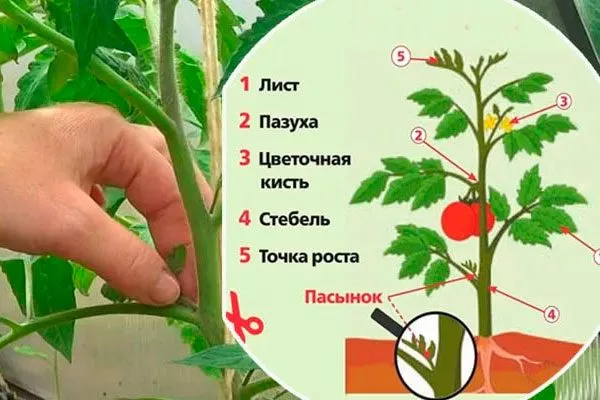
- Pinching out stepsons. This procedure is necessary to form strong and healthy bushes. Pinch off lateral shoots that appear in the leaf axils. This will ensure the plant devotes its energy to the main stems and fruits.
Remove side shoots when they reach 5-10 cm in length, carefully pinching or trimming them. Leave a few to maintain overall growth and health. - Garter. This helps tomato plants maintain an upright position, improving light and ventilation, and also prevents the fruit from coming into contact with the ground, reducing the risk of disease. Durable materials such as twine or special netting are suitable.
Secure the stems to vertical supports (trellises, pegs) so that they are not too tightly secured, giving the bush enough space.
Train the plant into 2-3 stems to maximize the number of large tomatoes. Training is important, as it promotes better ventilation and faster ripening.
Pest and disease control
The Merry Dwarf has good resistance to most diseases, but, like many other varieties, can be affected by fungal and viral infections, including alternaria, late blight and mosaic.
To protect plants from diseases, disinfect the soil and seeds with special solutions and additionally carry out preventative spraying during the growing season.
To prevent fungal diseases in May, before planting in a greenhouse, treat the bushes once with fungicides:
- Bordeaux mixture;
- Fitosporin;
- Maxim;
- Tattoo;
- Topaz;
- Fundazol.
If insects appear on your bushes, use folk remedies, such as homemade infusions of onion peels, garlic, citrus zest, chili peppers, and baking soda. The following insecticides are equally effective:
- Fufanon;
- Actellic;
- Karate;
- Fitoverm;
- Aktara;
- Biotlin.
Apply the products late in the evening, in calm weather, and when there is no rain (especially when growing in greenhouses). Harvest vegetables no sooner than 5-10 days after application.
Pros and cons
Tomatoes have a number of clear advantages. But it's important to also understand their shortcomings to prevent potential problems early.
Among the disadvantages of this variety, some gardeners note the possibility of damage from viral and fungal infections, the need for a one-time treatment against late blight, and securing the shoots to a support to prevent breakage from the weight of the vegetables.
Reviews
The Vesyoliy Gnome tomato is the best solution for vegetable growers looking for an easy-to-grow, decorative variety that produces delicious tomatoes. This variety is suitable for both beginners and experienced gardeners, fits perfectly into limited spaces, and requires little maintenance. It guarantees a stable harvest without any hassle.