
The Velmozha tomato is a Siberian variety that thrives in Siberia, the Urals, and other regions with short summers and unstable weather. This tomato attracts gardeners with its large, tasty, and attractive fruits, as well as its strong, resilient bushes.
Description of the variety
The Velmozha tomato plant grows to a height of 54-62 cm, with low, spreading, determinate stems. The leaves are medium-sized and light green. The inflorescences are compound, with the first occurring above the 7th or 8th leaf, and subsequent inflorescences occurring 1-2 leaves apart. The fruits are large, uniform, and smooth-skinned. The stalks are articulated.
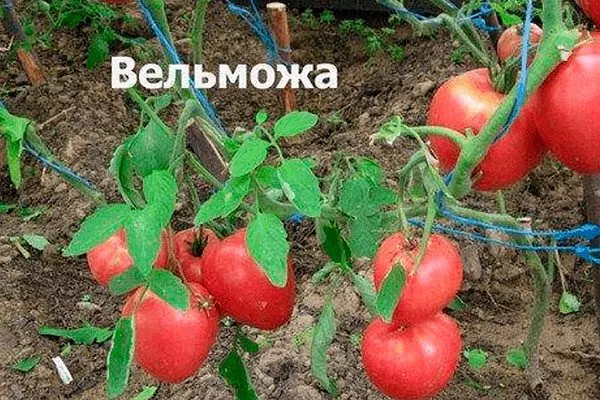
Brief description of fruits:
- Colour of unripe fruits: green, with a dark spot near the stalk.
- Colour of ripe fruits: raspberry.
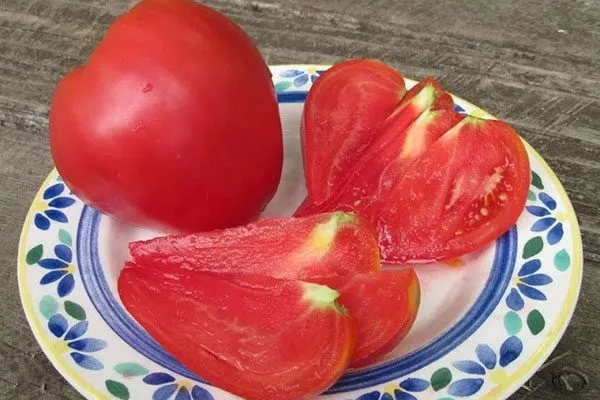
- Shape: heart-shaped, with medium ribbing.
- Weight: 130-250 g.
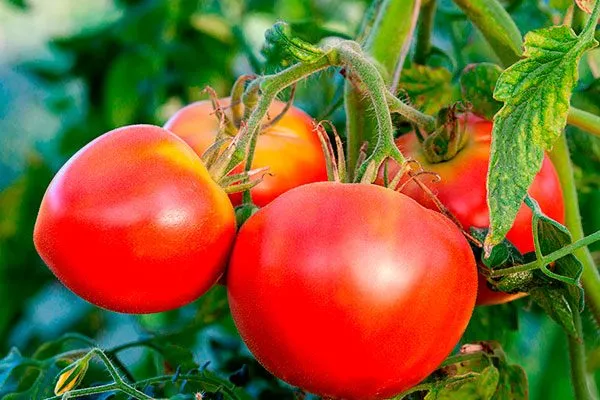
Individual specimens reach 500-600 g in weight, with a maximum weight of 1 kg. Tasters rate the Velmozha tomato's flavor at 5 out of 5.
- ✓ The maximum weight of fruits can reach 1 kg.
- ✓ Taste assessment by tasters: 5 points on a five-point scale.
Who and when developed the Velmozha tomato?
The Velmozha variety was developed by breeders from the Siberian Research Institute of Plant Growing and Selection. Authors: V. N. Gubko, V. F. Zalivakina, and A. A. Kamanin. The variety was approved for cultivation in 2005. It is recommended for the Ural, West Siberian, Far Eastern, and East Siberian regions. Another name for the variety is Budyonovka.
Taste and purpose of fruits
The fruit's flesh is dense, meaty, juicy, and rich in sugar. Dry matter content ranges from 4.1% to 6%. The fruit has a versatile use: it can be eaten fresh, pickled, preserved, and used to make juices, ketchups, tomato pastes, and borscht dressings.
Characteristics
This variety is suitable for both open and closed-field cultivation. It has a medium ripening period, with the time from germination to the first fruit ripening taking 100-115 days.
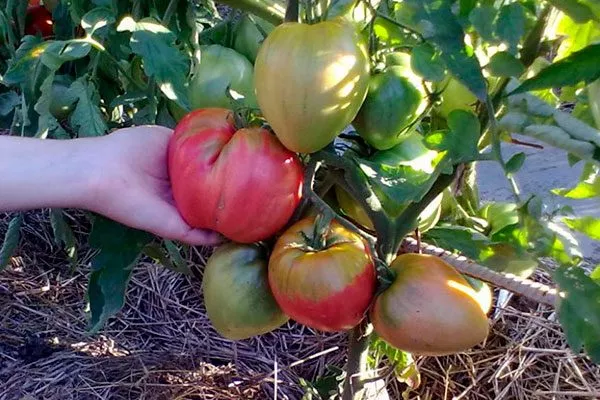
The Velmozha tomato is characterized by high yields. These yields vary by region and growing conditions, ranging from 107 to 780 centners per hectare in commercial cultivation. Approximately 7-8 kg of tomatoes are harvested per square meter. The marketable yield is 95%.
Pros and cons
The Velmozha tomato is attractive to gardeners not only for its huge, heart-shaped fruits; this variety also has other advantages. Before planting this variety in your garden, it's recommended to learn about all its pros and cons.
Landing
The Velmozha tomato is grown primarily from seedlings. In regions with short summers, this is the only way to harvest before the cold weather sets in. To get seedlings on time, they are sown in March-April and planted in May-June.
- ✓ Optimum soil temperature for planting seedlings: not lower than +14°C at a depth of 20 cm.
- ✓ Recommended air humidity for seedlings: 70%.
Seed preparation
It is recommended to prepare seeds collected independently for planting: sort them, check for germination, disinfect and harden them – do everything to improve the quality of the planting material and ensure optimal plant development.
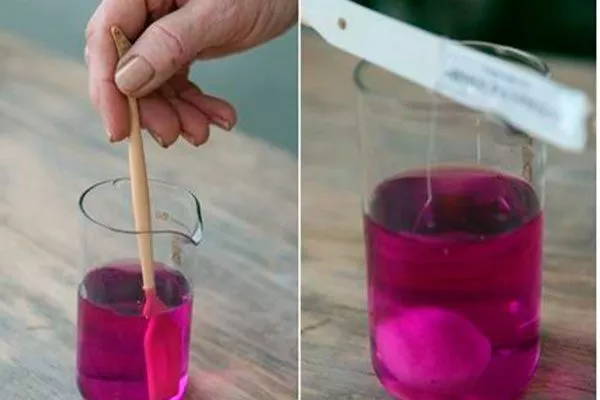
To disinfect seeds, you can use a weak solution of potassium permanganate or hydrogen peroxide. To harden the seeds, place them in the freezer overnight, then keep them at room temperature for 24 hours, and then repeat the process several more times. It's also recommended to germinate the seeds by soaking them in cheesecloth before planting.
Selecting a site
If you're growing tomatoes outdoors, you need to choose the right site. It should be well-lit, draft-free, and ideally, a site on the leeward side. Lowlands are contraindicated, as is a high water table. If the site is too low, raised beds should be created.
When planting tomatoes, it's important to practice crop rotation. They shouldn't be grown in the same spot for more than three years in a row. The best predecessors for tomatoes are considered to be pumpkins, root vegetables, onions, and cabbage; poor predecessors include peppers, eggplants, and potatoes.
Growing seedlings
It takes gardeners 60-65 days to grow Velmozha tomato seedlings, so they should be sown at the end of March or in April, since planting occurs at the end of May or the beginning of June.
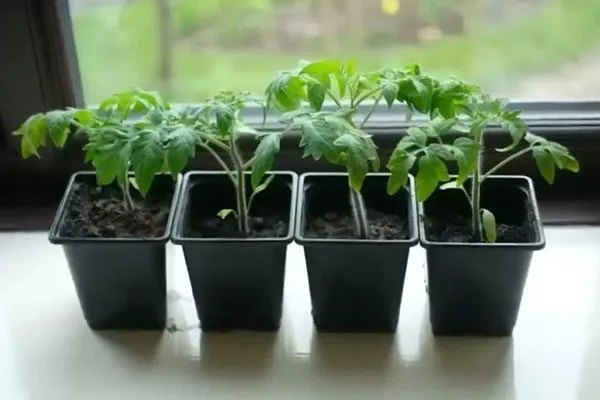
Features of growing seedlings of the Velmozha variety:
- Sow seeds to a depth of 1.5 cm, first moistening the soil with a spray bottle. Space adjacent seeds 1-2 cm apart, and rows 3-4 cm apart.
- Sowing is done in special containers or cassettes filled with a commercially available substrate or potting mix. The latter can be prepared, for example, from garden soil, non-acidic peat, coconut coir, and baking powder, in a ratio of 3:1:1:1.
- Seedlings are provided with supplemental lighting. After emergence, the light should be 24 hours a day for 3-5 days, then 18-20 hours a day, and by the time the seedlings reach one month of age, it should be reduced to 11-12 hours. The optimal daytime temperature is 25°C, nighttime temperatures should be at least 18°C, and the humidity should be 70%.
- Water seedlings 1-2 times a week until they are three weeks old, then 3-4 times a week. Fertilize periodically (according to the fertilizing schedule), and when two true leaves appear, transplant the seedlings into individual pots.
- Before planting in the ground - 2-3 weeks, the seedlings begin to harden off, gradually increasing the time they spend in the fresh air.
Soil preparation
The Velmozha variety prefers loose, fertile soil. If the soil is poorly fertile, add 15 kg of compost or humus per square meter and 50-60 g of superphosphate during tilling. Wood ash is also recommended at 500 g per square meter. For heavy clay soils, add 3 kg of sand for loosening.
The dug-up beds are watered with a hot solution of copper sulfate. Once the snow melts, the soil is immediately loosened and planting holes are prepared, adding 1 tablespoon of superphosphate or 1 teaspoon of monopotassium phosphate. Instead of mineral fertilizers, you can add organic matter such as humus, ash, bone meal, etc.
Peculiarities of planting seedlings in the ground
Velmozha tomatoes are planted in unprotected soil once the soil has warmed up sufficiently—to at least 14°C—to a depth of 20 cm. You can also pre-warm the soil by watering it with hot water and then covering it with plastic wrap or agrofibre.
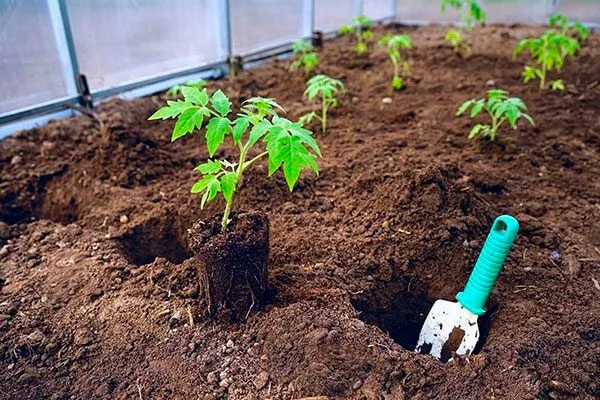
Landing features:
- The prepared holes with the nutrient solution are watered, and once the water has soaked in, the tomato seedlings are planted. They are dug deep to the cotyledons, covering the roots with soil.
- Before transplanting, seedlings are watered to make them easier to remove from their containers. The seedlings are moved into the planting holes along with the root ball.
- The recommended planting pattern is 40-50 cm between adjacent plants, and 50-60 cm between rows.
- A support is installed near each bush for tying. This should be done during planting, as installing it while the plant is growing can damage its roots.
Care
The Velmozha tomato requires standard care—watering, fertilizing, and loosening the soil. The key is to do all the work regularly and in a timely manner.
Watering mode
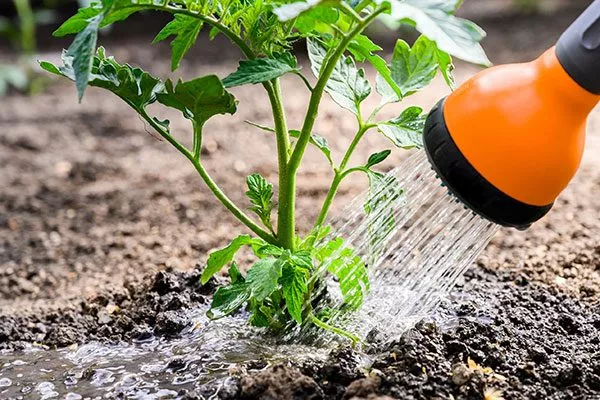
The Velmozha tomato requires balanced watering; the soil should always be slightly moist, but overwatering is strictly prohibited to prevent the development of fungal diseases and root rot.
Top dressing
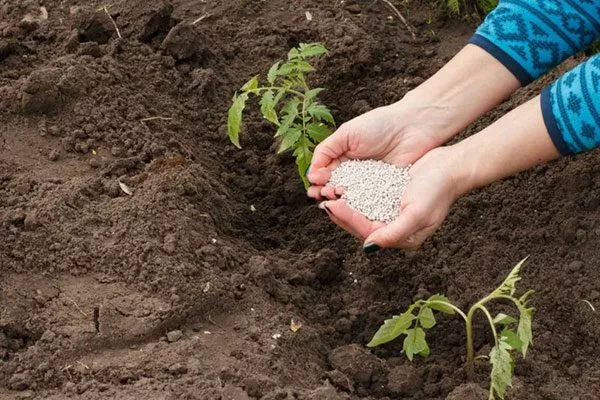
The Velmozha variety begins receiving fertilizer after the first fruit sets. Liquid mullein, superphosphate, and wood ash are applied to the roots. When the fruits begin to ripen, the tomatoes are fed with potassium-rich fertilizers.
Loosening
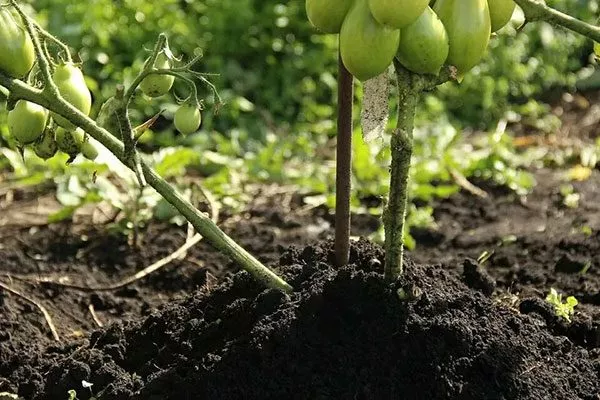
It's recommended to loosen the soil after each watering of the Velmozha tomato plant, otherwise a hard crust will form, which will impede oxygen supply to the roots and the growth of the tomato plants. Loosen the soil to a depth of 5-6 cm, while simultaneously removing weeds.
Mulching
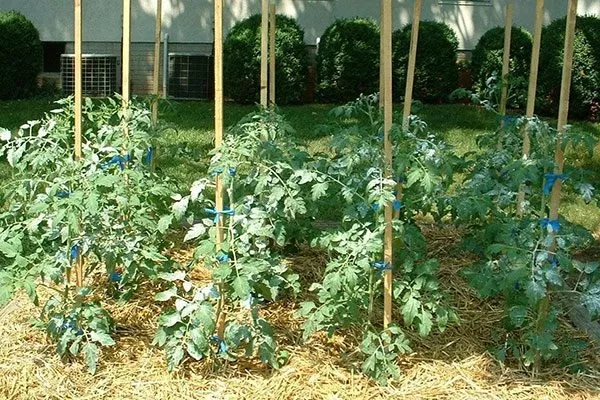
After watering, the soil in the beds is covered with peat, humus, straw, or grass clippings. Mulch helps retain moisture in the soil, reducing the need for weeding, loosening, and watering.
Garter and shaping
The Velmozha tomato requires regular pinching and staking. Lower shoots are removed completely. It's important to do this promptly to prevent buds from forming on them.
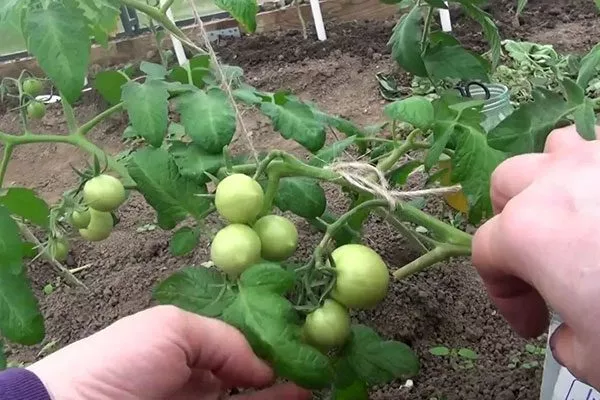
It is recommended to train bushes into two stems for greenhouses and one for open ground. As they grow, remove excess shoots to prevent the bushes from wasting energy on them. If numerous flowers are formed, the excess is removed.
Prevention of diseases and pests
The Velmozha variety is moderately susceptible to late blight. It can be affected by it due to unfavorable weather, widespread infection, and poor agricultural practices. When symptoms appear, spray the bushes immediately: before flowering, with a 1% Bordeaux mixture or Hom, and during fruiting, with Fitosporin, Fitobacterin, and Fitolavin.
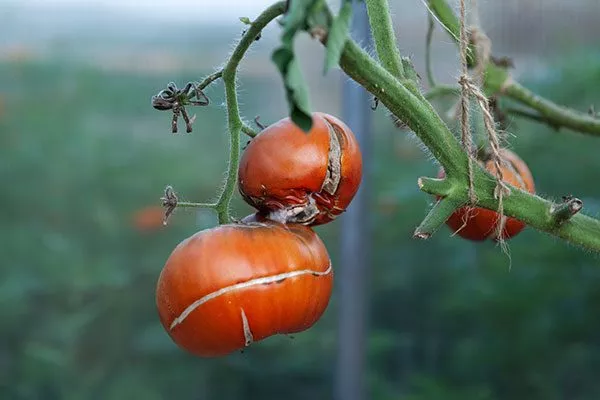
Pests that threaten the Velmozha tomato include spider mites, aphids, and thrips. To combat these, use a soap solution, acaricides, and insecticides. Before flowering, treat tomatoes with Aktara, Iskra, and Fufanon, and during fruiting, use Fitoverm, wormwood infusion, and other pesticides.
Harvesting
Tomatoes are harvested in the morning, before the dew appears or after it has dried. In cold weather accompanied by prolonged rain, it is recommended to pick the tomatoes while they are green. They are then stored indoors to ripen further. It is important to harvest all tomatoes before the onset of frost.
Reviews
The Velmozha variety is a worthy substitute for the famous Bull's Heart. This remarkable, productive and delicious variety will definitely appeal to lovers of large, juicy, and meaty tomatoes.