
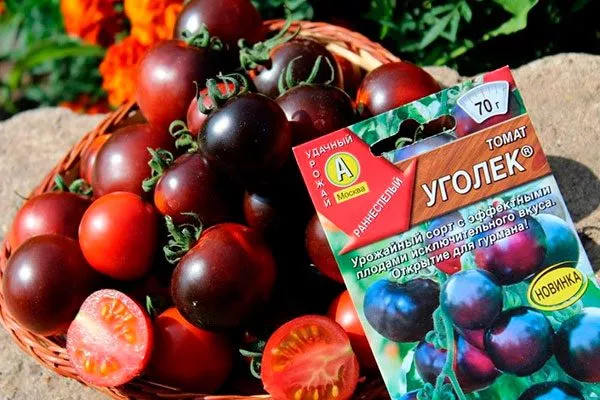
The Ugolyok tomato is a unique, domestically bred, anthocyanin-rich variety with very unusual fruits. They are purple, almost black, with a red blush, making each tomato unique.
Description of the plant and fruits
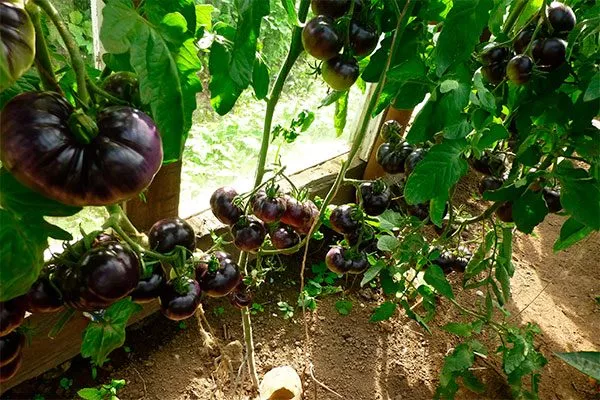
The Ugolyok tomato plant is an indeterminate variety. It has elongated, dark green leaves. A single cluster produces 9-12 fruits. The inflorescences are simple, and the stalks are articulated. The Ugolyok variety produces small fruits with 2-3 seed chambers containing a medium number of seeds.
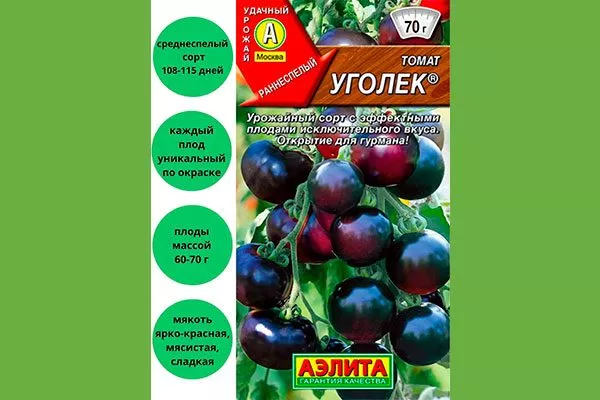
Main characteristics of fruits:
- Unripe fruit color: dark purple.
- Color of ripe fruit: purple-red.
- Weight: 60-80 g.
- Form: rounded, slightly ribbed.
- Pulp: fleshy, moderately dense, red in color
The first fruit cluster is formed after 6-8 leaves, and all subsequent ones after 2-3 leaves.
Who and when developed the Ugolyok variety?
The Ugolyok tomato was developed in 2017 by the domestic company Agrofirm Aelita LLC. The variety was added to the State Register of the Russian Federation in 2019.
This unusual variety was immediately hailed as a true breakthrough in the world of plant breeding. The authors of this variety were V. G. Kachainik, O. A. Karmanova, M. N. Gulkin, and S. V. Matyunina.
Characteristics
The coal is distinguished not only by its unique commercial qualities and appearance, but also by its excellent agronomic characteristics, allowing it to be grown in virtually all regions of the country—in open or closed ground.
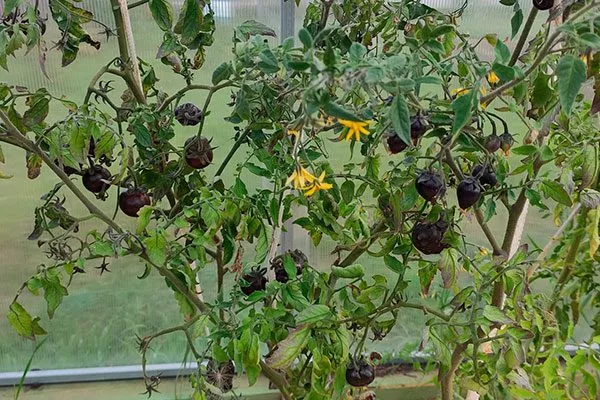
About the variety:
- Ripening periods. This is an early-ripening variety. Harvesting time is July–September, depending on regional climate conditions and planting time. It takes 110–115 days from sowing to harvest.
- ProductivityIt is characterized by high yields. One square meter can yield 6.4–6.7 kg of ripe fruit. Growing conditions and care largely influence the yield, its quality, and quantity.

- Drought resistance. It's a drought-resistant variety, easily tolerating short-term drought. However, regular watering is required for good yield and excellent flavor.
- Disease resistance. It has fairly good immunity, but under unfavorable conditions it can be affected by late blight and cladosporiosis.
Taste and application
The fruits of the Ugolyok tomato have a rich tomato flavor, moderately sweet, piquant and slightly spicy, with a slight sourness.
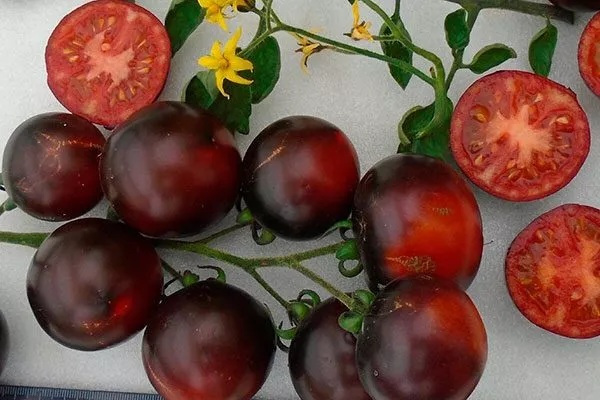
The variety is intended for fresh consumption, but can also be used to prepare a wide variety of preserves; the purple fruits can be canned, dried, and even cured.
Pros and cons
The Ugolyok tomato has many advantages—this variety's unique appearance doesn't come at the expense of any agronomic or consumer qualities.
Landing
The Ugolyok tomato can be grown using seedlings or direct sowing. It thrives in open ground and under plastic covers in glass and polycarbonate greenhouses.
Seed preparation
Seeds purchased from a reputable producer are usually completely ready for planting. Home-grown seeds, however, must be properly prepared for planting.
Features of seed preparation:
- To sort out non-viable tomato seeds, soak tomato seeds in a salt solution (1 teaspoon of salt dissolved in 250 ml of water). After 15 minutes, submerge the seeds in the solution; the poor-quality and empty ones float to the surface.
- To disinfect, soak the seeds in a 1% potassium permanganate solution heated to 40°C for 5 minutes. A 2-3% hydrogen peroxide solution can be used instead of potassium permanganate. Soak the seeds in it for 6-8 minutes. After disinfection, be sure to rinse them with running water.
- To improve the quality of seedlings, soak the seeds in a growth stimulant. You can use "Epin," "Energen," etc.
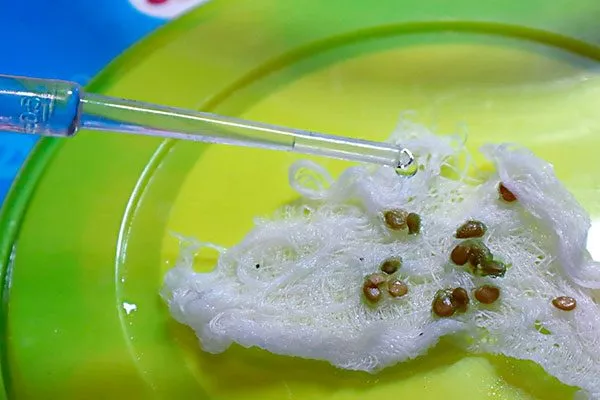
- Before sowing, soak the seeds in cheesecloth and place them in a saucer filled with water for about 12 hours. The cheesecloth should be regularly moistened to prevent drying out. Once the seeds sprout (usually within 3-5 days), they can be sown.
Selecting a site
The Ugolyok tomato can be planted after cucumbers, greens, green manure, and legumes. Avoid planting tomatoes after nightshades and melons. Ugolyok can be grown in the same spot every 2-3 years.
Soil preparation
The area where the Ugolyok tomato will be grown must be fertilized. Add organic matter—rotted manure or compost—at a rate of 10 kg per square meter during tillage. Remove all weed roots from the soil during tillage.
The optimal soil acidity for the Ugolyok tomato is between 6 and 6.5 pH. If the pH is below 5.5, the soil needs to be deacidified. To do this, add slaked lime or dolomite flour. High-moor peat is added to alkaline soils.
Growing seedlings
If the Ugolek tomato is grown using seedlings, then sowing takes place in March-April, depending on the climatic conditions in the region and the expected planting dates.
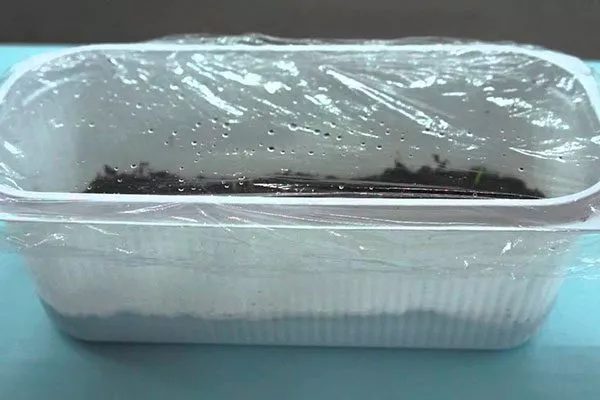
To sow seedlings, use planting containers—large containers or individual pots. They are filled with store-bought soil or a nutritious potting mix. This can be made from sand, turf, peat, and humus, mixed in equal parts.
Features of sowing and growing seedlings:
- Seedlings can be grown with or without transplanting. In the former case, seeding can be done in large containers, from which the seedlings are then transplanted into individual pots. In the latter case, seeding is done directly into individual containers.
- The planting container must have drainage holes to allow excess liquid to drain. Fill the container with potting soil to a depth of 1-1.5 cm.
- The soil is moistened with a spray bottle, and then grooves are made 1 cm deep. The seeds are sown at intervals of 2-3 cm and sprinkled with soil, after which they are lightly moistened again.
- Cover the crops with film or glass and place them in a room with diffused light. Air the crops daily and moisten them if necessary.
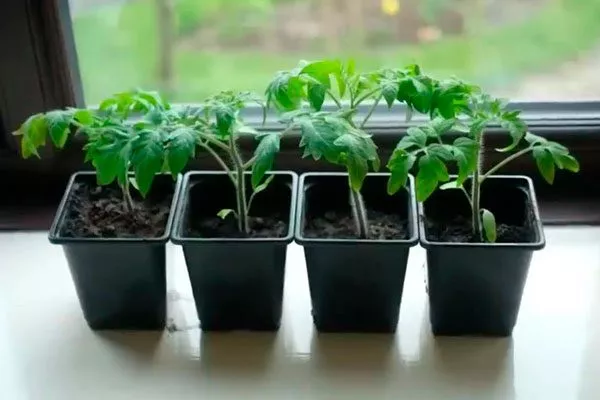
Once the seedlings emerge, the covering is removed and the seedlings are placed closer to the light. Careful care is required for the seedlings for 50-60 days—this is how long it takes to grow seedlings ready for transplanting.
Features of seedling care:
- For the first 3-5 days after seedling emergence, grow lights should be on, providing 24-hour supplemental lighting. Then, daylight hours are reduced to 18-20 hours, and after a month, to 12 hours.
- For the first three weeks, water the seedlings once a week. Then, increase the frequency to 3-4 times a week. Use only warm, settled water. Apply it carefully, avoiding drips on the leaves. Watering should be moderate, avoiding either drying out or overwatering the soil. The best time to water is morning.
- If picking is planned, it is carried out in the phase of 1-2 true leaves.
- The first seedling feeding is done 2-3 weeks after the first true leaves appear. Subsequently, the seedlings are fed every 2-3 weeks, gradually increasing the phosphorus and potassium content of the fertilizer.
Planting seedlings in the ground
Tomato seedlings Ugolek are planted in the ground approximately between May 15 and June 5.

Landing features:
- The optimal planting pattern is 60x50 cm.
- Dig rows or holes for planting. Water with warm, settled water. Add 3-5 liters. Allow the soil to settle for half an hour to an hour.
- The seedlings are watered so that they can be easily removed from the planting containers.
- The seedling is placed in the hole, the roots are covered with soil, and the soil is lightly compacted, forming a small depression around the stem. The planted seedlings are watered and then mulched, for example, with straw, grass clippings, or compost.
It's best to plant seedlings on a cloudy day or in the evening to avoid exposure to the sun's rays. It's also a good idea to shade the seedlings from the sun for the first 10 days, perhaps with a net.
Features of growing in a greenhouse
In the greenhouse, tomatoes are watered exclusively in the morning. Initially, the frequency is once a week, with 1-2 liters per plant. Over time, the frequency and volume of watering increase to 2-3 times a week and 3-4 liters per plant, respectively.
The optimal temperature range is 22 to 25°C during the day and 16 to 18°C at night. During hot weather, the greenhouse must be ventilated, and if there is a risk of frost, artificial heating or covering material should be used.
Care
To get a decent harvest of purple tomatoes, you need to regularly care for the bushes. Watering, fertilizing, spraying regularly, and loosening the soil—caring for these unusual tomatoes is no different from caring for regular varieties.
Watering
Outdoor tomatoes are watered approximately every other day if the weather is favorable; in hot weather, watering is needed daily. Adjust the watering amount based on the soil condition; it's important not to let it dry out.
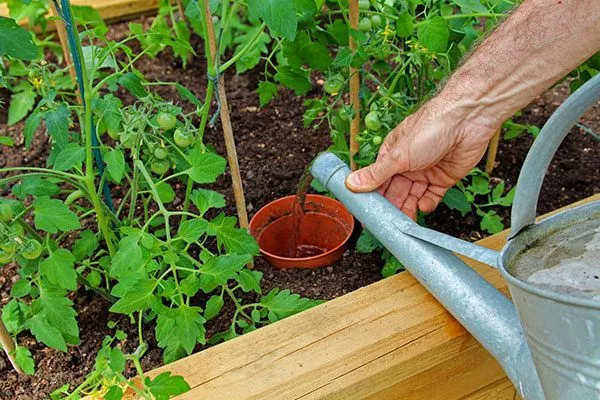
Water should be applied only to the roots; it should not come into contact with the leaves or stems. The best time to water in open ground is morning or evening, after sunset. Drip irrigation is the optimal method.
Fertilizing
Tomato Ugolyok requiresbalanced nutritionIt's advisable to combine root and foliar feeding, with primary elements applied directly to the roots and micronutrients sprayed onto the foliage. A few hours before applying root fertilizer, water the plants with clean water to avoid burning the roots.
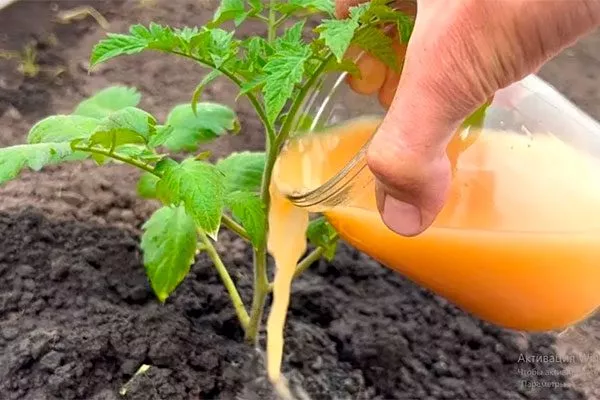
The Ugolyok tomato can be fed with mineral fertilizers, such as superphosphate, potassium sulfate, and urea. Organic fertilizers, such as mullein or bird droppings infusion or wood ash solution, are also suitable.
Approximate feeding regime:
- The first one— carried out 2-3 weeks after planting the seedlings, usually at the beginning of June.
- The second one — during the flowering period, when the formation of second flower clusters and ovaries begins — approximately in mid- to late June.
- The third one— carried out when the fruits begin to ripen, approximately at the end of June.
Typically, tomatoes are fertilized 3-4 times during the summer, but if certain nutrients are deficient, the frequency of fertilizing may increase. The exact timing and composition of fertilizing depend on the condition of the plants and the specific soil conditions.
Loosening
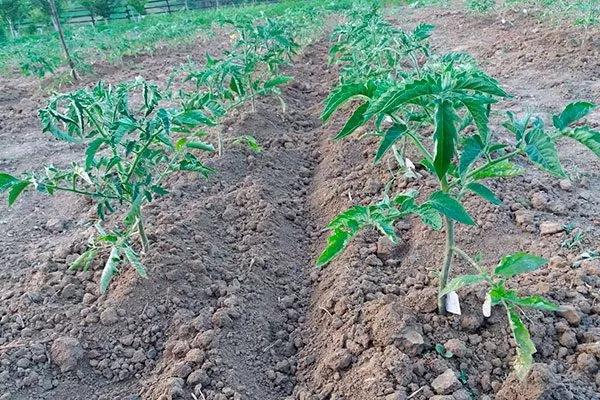
The Ugolyok tomato doesn't require loosening if grown in mulched soil. The soil is covered with humus mixed with straw. The layer should be 10–15 cm thick. No loosening is necessary.
Pest and disease control
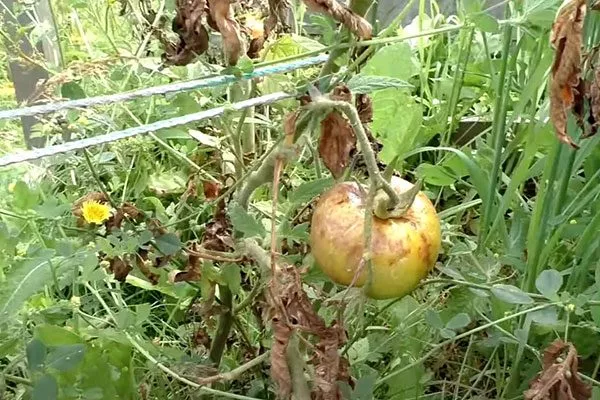
The Ugolyok tomato has good immunity, but requires disease prevention to significantly reduce the risk of infection. Plants are particularly susceptible to late blight and brown spot, which can be controlled with HOM, Fitosporin, or other similar fungicides.
The variety isn't particularly susceptible to pests, but attacks are possible if they become widespread. Aphids, thrips, and whiteflies pose the greatest threat. Biological insecticides such as Fitoverm and Bitoxibacillin are used to control these insect pests.
Harvesting and storage
Tomatoes are harvested when they acquire a dark purple color, since very unripe fruits are not set aside for ripening.
Store the tomatoes in a cool, dry place at a temperature of at least 7°C. Place them in shallow wooden crates or plastic containers. Do not wash the tomatoes before storing.
Reviews
The Ugolyok tomato is one of the most unusual varieties on the market. It's sure to appeal not only to lovers of exotic plants, but also to those simply looking for tasty and attractive tomatoes.