
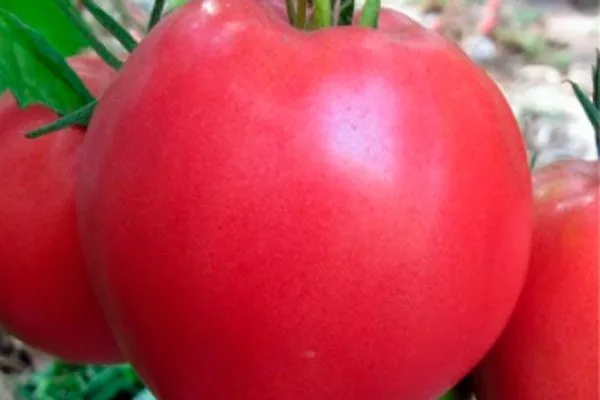
Siberian Heavyweight is a mid-early tomato variety distinguished by its cold hardiness, resistance to late blight, and other nightshade diseases. It is suitable for open ground and greenhouses. The main advantage of this variety, which attracts the attention of Russian gardeners, is its combination of large fruits and low-growing plants.
History and regions of cultivation
A variety of giant tomatoes was obtained thanks to the efforts of domestic breeders representing the Siberian Garden agricultural firm in 2007.
The authorship belongs to the scientists:
- O. V. Postnikov;
- A. A. Yabrov;
- V. N. Dederko.
A year later, after successfully passing variety testing, it was added to the Russian Federation State Register and approved for cultivation in the following regions of the country:
- Northern;
- North-West;
- Central;
- Volga-Vyatka;
- Central Black Earth;
- North Caucasian;
- Middle Volga;
- Lower Volga;
- Ural;
- West Siberian;
- East Siberian;
- Far Eastern.
Gardeners successfully grow heavy tomatoes in various climates, including in risky farming areas with short, cold summers. They are also popular outside of Russia, appreciated by gardeners in Belarus, Ukraine, and Moldova.
Description of the bush and fruits
Siberian Heavyweight plants are determinate. They are distinguished by a robust root system, yet their structure is quite delicate.
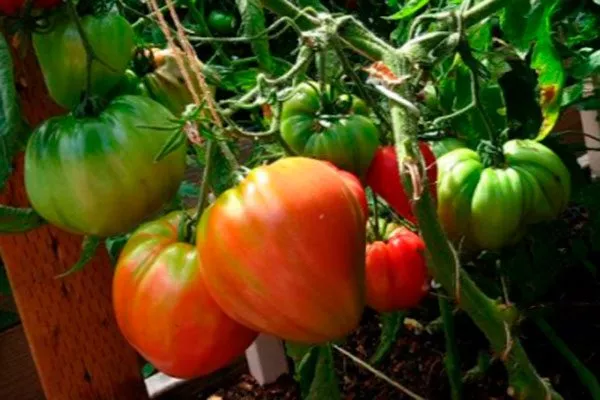
The description of the bushes' appearance includes the following characteristics:
- height - 0.4-0.6 m (in open areas of the garden), 0.8-1.2 m (in greenhouse conditions);
- thin stems with fragile branches, the surface of which is covered with light fluff;
- a small amount of foliage, medium in size and dark green in color;
- simple inflorescences;
- fruit clusters that form in quantities of several pieces and consist of 3-5 tomatoes.
Siberian giant tomatoes require double-stemming and moderate side-shoot pruning to ensure maximum productivity. Staking is also essential. Neglecting this precaution will result in complications:
- slender bushes, without support in the form of supports, fall over on their sides;
- fruit brushes break off before the tomatoes ripen;
- thin stems may break due to the impressive weight of the fruits.
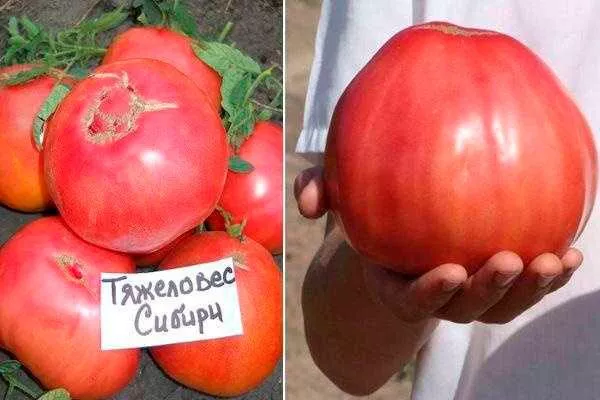
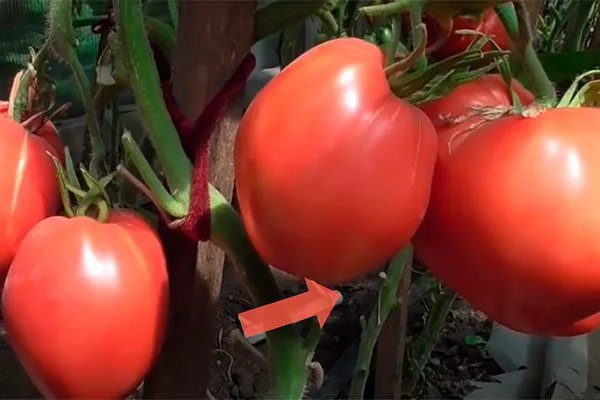
The fruits of the Siberian Heavyweight deserve special attention. They surprise gardeners with their large size, attractive shape, and color.
Tomatoes of this variety have the following characteristics:
- weight - 173-500 g (in greenhouses with intensive agricultural technology, the weight of fruits often reaches 700-800 g);
- heart-shaped;
- slightly pronounced ribbing;
- bright pinkish-crimson color;
- dense but not tough skin, smooth, with a beautiful shine, resistant to cracking;
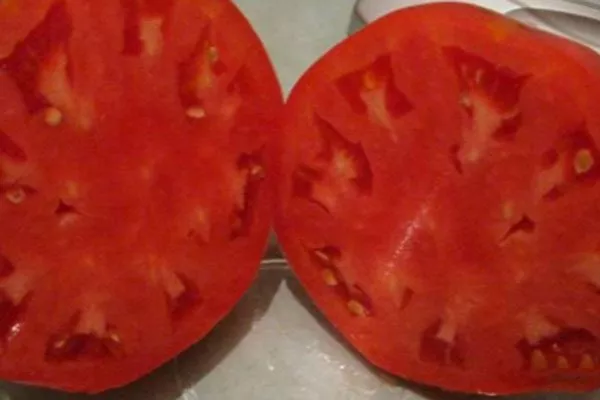
- pink flesh, distinguished by its meatiness, medium density, moderate juiciness, sugar content at the break, with 4 internal chambers and a small number of seeds in them.
Siberian tomatoes have excellent flavor. Their flesh is sweet with a slight tartness, providing a refreshing taste.
Experienced gardeners note that the largest and tastiest fruits grow on the clusters located closer to the top of the bush. Tomatoes from the lower tiers are inferior in size and sugar content.
Main characteristics
This cultivar is particularly well known to gardeners in Siberia, where it is best suited to the climate. There, the variety is popular due to its many excellent characteristics: hardiness, frost resistance, strong immunity, and good yield.
Ripening time and yield
The Siberian Heavyweight harvest ripens uniformly. The variety is considered mid-early: from sprouting to harvesting, it takes 80 to 100 days. Gardeners harvest the fruit in the second half of July. The bushes are quite productive:
- 2.8-3.5 kg is the average yield of 1 plant;
- 10-11 kg – maximum fertility of the planting (achieved with enhanced agricultural technology and the most favorable growing conditions).
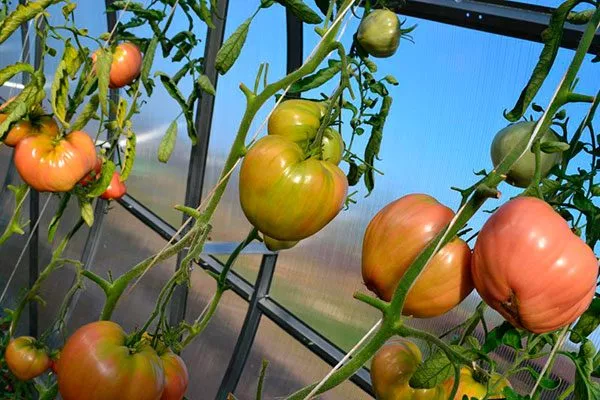
The Siberian giant tomato harvest is shelf-stable and transportable. It tolerates long-distance shipping well. This is especially true for tomatoes that have reached the technical maturity stage (not overripe).
Areas of application of fruits
The Siberian Heavyweight's harvest is versatile. These large pink tomatoes are most often eaten fresh (sliced, in summer salads). They've also found their way into home cooking:
- processing into juice (it turns out thick and tasty, but it does not have the rich scarlet color of juice made from red tomatoes);
- creation of sauces, ketchup, tomato paste;
- adding to side dishes, soups, casseroles, pizza;
- canning (large tomatoes are not suitable for whole-fruit preparations, but they make excellent adjika and lecho).
Giant tomatoes are not suitable for drying or curing due to their size and juiciness. They can be frozen diced or sliced, storing them in small portions in zip-lock bags or special food-safe containers.
Resistance to adverse weather conditions
This variety, developed by SibSad specialists, is stress-resistant and easy to maintain. It is well-adapted to growing in risky farming zones where adverse weather conditions are common.
Like all Siberian varieties, this heavyweight tomato pleases gardeners with its resistance to cold:
- he is not afraid of temperature drops;
- It can withstand its sudden changes.
It tolerates short dry periods well, but it does not tolerate hot weather. Temperatures above 30°C cause a decline in yield.
How to grow seedlings?
Grow this variety using seedlings. Sow seeds in March, 60-65 days before transplanting the seedlings to the garden. Transplant the tomatoes to a heated greenhouse in the second half of April, to a plastic shelter in mid-May, and to an open garden bed in the last days of spring or early June.
Seed preparation
If you purchased the "Tyazheloves Sibiri" seed from a reputable producer, there's no need to treat it before sowing. To speed up sprouting, you can soak it in warm water with a growth stimulant for 24 hours.
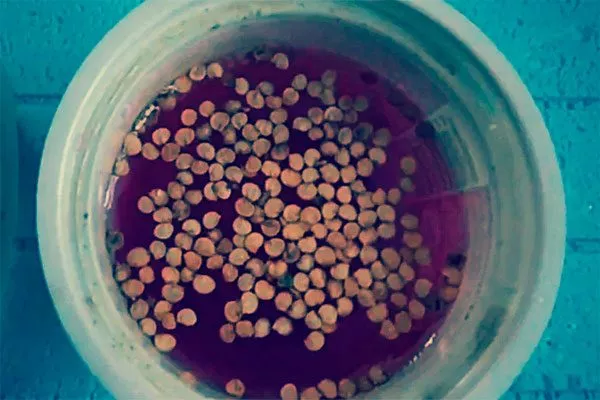
Home-collected seeds require more serious pre-sowing treatment:
- sort them out to discard empty and damaged ones;
- treat the seed material by keeping it in a solution of potassium permanganate for several hours;
- Treat with a growth stimulator such as Zircon or Epin.
Container and soil
Use reusable containers purchased at a flower shop to grow Siberian tomato seedlings. They come with a drainage tray and lid. These containers provide greenhouse-like conditions for the seedlings. Don't forget to wash them and treat them with a solution of potassium permanganate or alcohol.
Experienced gardeners buy peat pots or pellets for seedlings. These individual containers are suitable not only for transplanting grown seedlings but also for sowing seeds. In the latter case, transplanting plants from a common container is not necessary, which helps protect them from stress and injury.
If you want to save money on purchasing special containers and peat pots, grow tomatoes in these containers:
- a plastic or wooden box of suitable size (side height - 10 cm);
- cut-off boxes or bottles in which milk, yogurt, kefir, and juices are sold;
- disposable cups (plastic or cardboard).
Before sowing, make sure the containers you prepare for seedlings have drainage holes in the bottom. Otherwise, the seedlings will suffer from stagnant water, rot, and die.
To grow tomato seedlings, you will also need suitable soil:
- universal substrate or one intended for peppers and tomatoes (it can be purchased at a flower shop);
- a homemade mixture consisting of garden soil with humus (2:1), enriched with superphosphate (30 g per 10 l).
If you're making your own soil mix, be sure to disinfect it before sowing. Heat it in the oven or in a frying pan. Watering the soil with a potassium permanganate solution will also help disinfect it.
Sowing
Sow heavy tomato seeds following these step-by-step instructions:
- Place a 2 cm thick drainage layer of small pebbles or expanded clay at the bottom of the box.
- Sprinkle the substrate on top, warming it to room temperature beforehand. Level the soil.
- Place the seeds 1-1.5 cm deep into the soil, leaving a few centimeters between them.
- Water the crops. Cover them with glass or film to create a greenhouse effect.
Caring for seedlings
For the first week, keep the seed trays in a warm place. Maintain a temperature of 24-25°C and humidity of 40-50%. These conditions will ensure rapid seed germination.
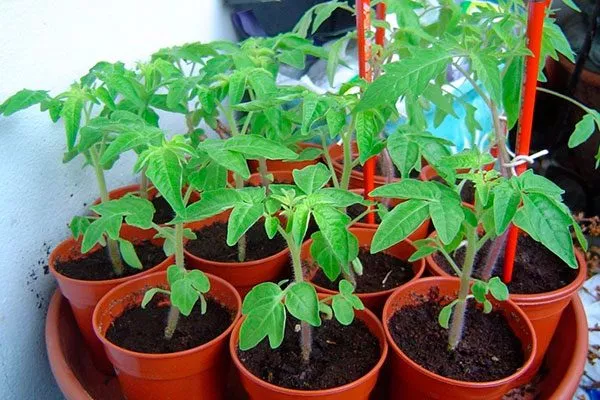
After 6-8 days, seedlings will appear. Remove the plastic wrap. Move the seedling tray to a sunny window in a room with a temperature of 21°C. Provide the following care:
- watering (water the seedlings moderately with warm, settled or rainwater 1-2 times a week);
- loosening (gently loosen the soil in the box to enrich it with oxygen);
- picking (after the plants have 2 true leaves, plant them in peat pots, using a stick or toothpick to help you);
- fertilization (half a month after picking, water the seedlings with a solution of complex fertilizer for tomatoes or Superphosphate, repeat the feeding after 14 days);
- supplementary lighting (keep the seedlings under a phytolamp to provide them with 12 hours of daylight and prevent them from stretching out).
Ten days before transplanting tomatoes to the garden, work on increasing their cold hardiness. Harden them off by gradually lowering the room temperature to 13-16°C or by moving them to the balcony. Keep the seedlings outdoors for three hours the first time. Then, add an hour to their outdoor time.
Caring for tomatoes further
After planting young tomatoes in their permanent location, provide them with quality care. To ensure they grow well and bear fruit, follow the watering and fertilizing guidelines, and don't neglect bush training. Don't be lazy in maintaining the soil in the garden bed.
Watering
When irrigating the Siberian variety, take into account the following nuances:
- Use water sparingly when watering crops, especially during flowering and harvest ripening;
- do not allow the soil to become over-watered, which will cause rot and cracking of the fruit;
- Consider the amount of precipitation, air temperature and age of the bushes when determining the optimal frequency of watering;
- On average, water your tomato bed every 3-4 days;
- use warm, settled water;
- Pour it under the roots, avoiding splashes on the stems and leaves.

Loosening and weeding
There are several mandatory maintenance procedures that need to be carried out every time the soil in the garden bed is moistened (by watering or rain):
- loosening the inter-row spaces (cultivate the soil to a depth of 5 cm, trying not to damage the roots of the tomatoes);
- weed removal (Weed as soon as harmful plants appear in the garden to prevent problems such as nutrient deficiency, stunted tomato plant growth, and infection.)
Top dressing
If you want to achieve the largest and highest quality harvest possible, use fertilizers wisely. Avoid overfeeding your vegetable crop to avoid overfeeding. Follow the fertilizing schedule:
- 14-20 days after transplanting the seedlings apply a nitrogen-rich composition to the garden bed (green infusion, mullein or bird droppings solution, ammonium nitrate, urea);
- at the beginning of the tomato flowering season water them with a nutrient liquid rich in phosphorus and potassium (to prepare it, dissolve 40 g of superphosphate and 15 g of potassium sulfate in 10 liters of water);
- during the period of intensive fruit growthWhen they reach the size of a walnut, apply humic fertilizer, a complex mineral preparation or ash infusion.
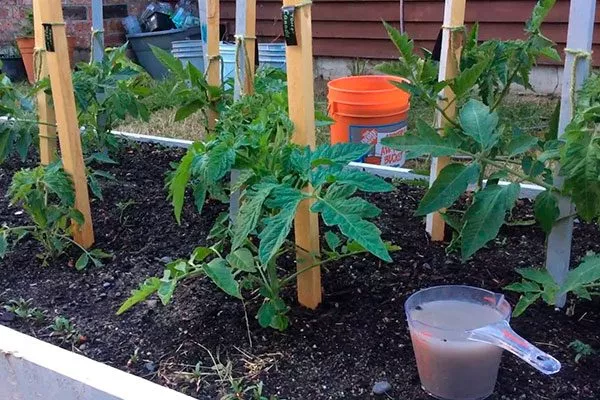
Thinning
To improve ventilation of tomato plants and prevent infection and rot, thin them out. This involves removing the lower leaves.
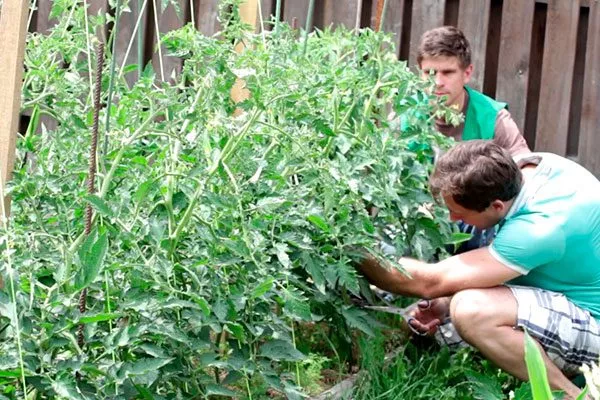
For determinate Siberian Heavyweight plants, pruning two old lower branches with foliage once per season is sufficient. If the plants don't appear overgrown, this procedure is not necessary.
Bush formation
To ensure large fruits are evenly distributed on the Siberian variety, train it into two trunks. This practice helps maintain the plant's health, increases its yield, and prevents shoot breakage.
To increase the size of the fruit, carry out other measures related to the design of heavy tomato bushes:
- pinching out stepsons (it is permissible to grow the variety without removing excess shoots, but by performing this manipulation you will get larger fruits and give the bush a well-groomed appearance);
- pinching of ovaries (this agrotechnical technique allows you to grow giant tomatoes weighing 700-800 g).
Peculiarities of care and possible difficulties
The Siberian Heavyweight tomato variety is easy to grow, hardy, and cold-resistant. However, its cultivation does have its own peculiarities. Consider these to avoid potential complications:
- Due to the weight of ripening giant tomatoes, there is a high risk of stem breakage.To avoid this problem, tying the plants to supports will help. This is necessary for both greenhouse plants and those growing in open beds.
Be sure to secure not only the stems but also the fruit clusters. Use special supports called staking. - The fruits do not grow very largeThe problem occurs when the gardener hasn't properly "unloaded" the bushes. Removing side shoots, thinning the plantings, and pinching off the ovaries can help to increase the size of the tomatoes.
Keep a small number of tomato clusters on each plant to harvest your dreams. - Stopping growth and formation of ovaries, decline in yield. This Siberian heavyweight doesn't respond well to heat. The problem often arises during prolonged summer heat (30°C and above). High temperatures can cause plants to wilt and even die. To help tomato plants survive in extreme conditions, provide shade and increase watering.
Water the plantings morning and evening. Apply water directly to the roots. Avoid watering during the day when sunlight is at its strongest. Avoid splashing water on the green foliage to prevent sunburn.
Nuances of cultivation in open ground and greenhouses
This variety is primarily intended for outdoor cultivation. It can also be grown in greenhouses. In both cases, gardeners need to consider several important points:
- When growing tomatoes in open garden areas, pay special attention to loosening the soil. This not only improves moisture and air flow to the roots but also prevents the growth of pathogenic microflora (especially fungi, which cause plant diseases).
- When growing vegetables outdoors, be sure to protect them from the scorching summer sun. Place Siberian tomatoes among tall varieties or near a hedge, using shade netting.
- In Siberian conditions, grow heavy tomatoes in a well-lit, open bed. Remember that a lack of sun will negatively impact crop yield and flavor.
- This variety, bred by SibSad, performs well when grown under cover. It yields well under plastic film, lutrasil, and other non-woven materials.
- Because giant tomatoes are intolerant of heat, greenhouses require frequent ventilation.
Pest and disease control
This large pink tomato variety is renowned for its robust immunity. Thanks to its early ripening, it's resistant to late blight, a dangerous nightshade disease. It also has good resistance to other infections.
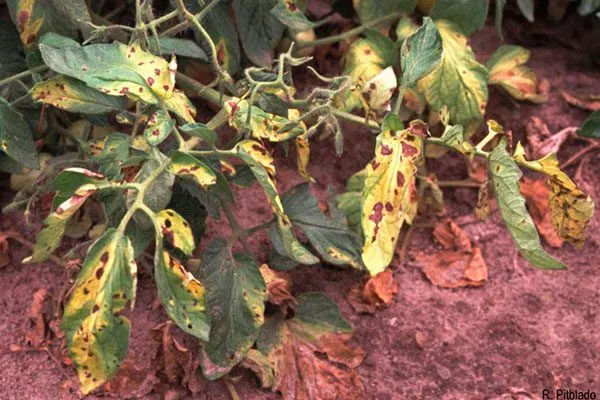
Under unfavorable growing conditions and with poor care, the risk of the Siberian Heavyweight being affected by root rot and pest attacks increases.
To prevent crop diseases, take the following measures:
- remove lower leaves from bushes in a timely manner;
- do not allow the planting to become too dense;
- water it moderately;
- loosen the soil after watering and rain;
- weed out the weeds;
- treat seeds before sowing;
- observe crop rotation (do not grow tomatoes after other nightshade crops, peas, or physalis);
- disinfect greenhouses annually;
- Maintain a favorable temperature and humidity level in them, and ventilate them regularly.
Remember that a fungal disease called root rot can reduce tomato yields by up to 40%. It weakens the plant, causing stunted growth and even death. If you notice wilted leaves and darkened stem bases, take immediate action to save your plant.
Once the first symptoms of rot are detected, begin treating the affected tomatoes:
- loosen the soil underneath them;
- stop watering them for a while;
- remove the lower tier of foliage;
- Treat the plantings with a fungicide (for example, Previcur Energy).
Planting giant pink tomatoes attracts pests. They are often plagued by pests such as:
- aphid;
- spider mite;
- scoop;
- whitefly;
- Colorado beetle;
- tomato moth, etc.
Inspect your Siberian Heavyweight plantings periodically to identify problems early. If pests attack your garden, use folk remedies:
- infusion of tobacco dust, onion peel;
- decoction of wormwood or celandine;
- garlic water;
- laundry or tar soap.
Collect insects and larvae by hand and set traps to catch them. Insecticides such as Decis, Vermitek, and Rapsolin can help prevent excessive pest infestations. Apply them before the bushes begin to bear fruit. During the ripening period, use biological products such as Fitoverm and Bitoxybacillin-BTU.
Collection and storage
The Siberian Heavyweight harvest ripens uniformly. Its peak harvest time is the second half of July. Pick the fruits from the bushes when they're ripe or slightly unripe. The latter have a longer shelf life and withstand transportation better. They can be ripened at home in a dark room.
Harvest giant tomatoes as they ripen. Follow these guidelines for harvesting vegetables:
- carry out collection in dry weather in the morning hours;
- cut the tomatoes with scissors along with the stem;
- try not to damage the skin covering the fruit;
- Sort the harvest: put damaged and overripe tomatoes aside (they require immediate processing or consumption).
Wrap whole tomatoes that are undamaged or diseased in paper towels for storage. Store them in conditions that ensure optimal shelf life:
- temperature range: +7-14°С;
- air humidity - no more than 80%;
- possibility of ventilation.
Pros and cons
Siberian Heavyweight is a variety favored by Russian gardeners, especially those living in risky farming zones. It is prized for its many qualities:
The Siberian variety also has some minor drawbacks. Its yield is not very high. The bushes do not tolerate heat well (when grown in the south, they require protection from the sun). Giant tomatoes are not suitable for whole-fruit canning; they are not suitable for drying or curing.
Reviews
Siberian Heavyweight is a mid-season variety producing large, heart-shaped tomatoes with pink, fleshy flesh. It is beloved by gardeners for its cold- and stress-resistant vines, strong immunity, good productivity, and suitability for both open and protected cultivation. Its harvest is consumed fresh, processed, and canned.