
"Chicken" is the name of a mid-early tomato variety characterized by stable yields and a long harvest period. Its distinctive feature is the appearance of the tomatoes, whose color and shape resemble the chicks of a laying hen. It grows in open ground, plastic and polycarbonate greenhouses, balconies, and terraces.
Features of selection
This vegetable variety was developed thanks to the efforts of domestic breeders representing the Gavrish agricultural firm:
- S. F. Gavrisha;
- V. V. Moreva;
- E. V. Amcheslavskaya;
- O. A. Voloka;
- T. V. Degovtsova;
- M. Yu. Vasilyeva.
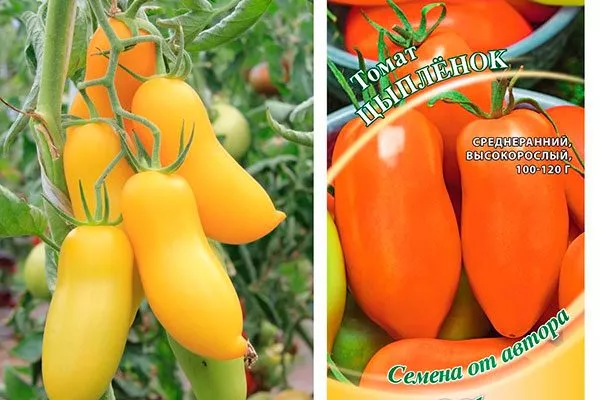
After successfully passing variety testing, the new variety was added to the Russian State Register in 2019 and approved for cultivation in all regions of the country:
- in open areas of the garden - in areas with a mild climate, preferably in the south;
- in protected ground (in a greenhouse, temporary film shelter, on a terrace or glazed balcony) - in other areas.
The tomato variety is suitable for both amateur and commercial cultivation. Farmers value it for its consistent productivity and suitability for mechanical harvesting. Thanks to its compact root system, it thrives indoors, in tubs, or containers.
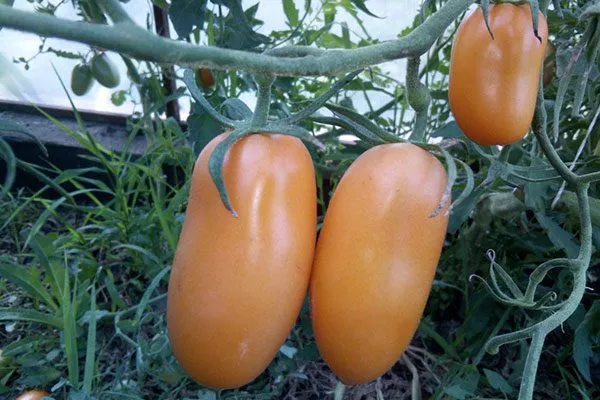
This new domestically bred variety is a mid-early variety characterized by good yields. Its key technical characteristics are as follows:
- the period from germination to fruit ripening is 110-115 days;
- flowering period: first weeks of June;
- harvest time - begins after July 10 and continues until the end of September (the peak occurs at the end of the second summer month);
- productivity of 1 bush is not less than 3.8 kg;
- average yield is 9-9.7 kg/sq.m (in greenhouses with enhanced agricultural technology, the figure increases significantly).
The variety's main advantage is its long fruiting period. Gardeners harvest ripe, chick-shaped tomatoes throughout the season.
This vegetable variety has a fairly strong immune system. With proper care and favorable growing conditions, it is not susceptible to diseases common to tomatoes.
Morphological features
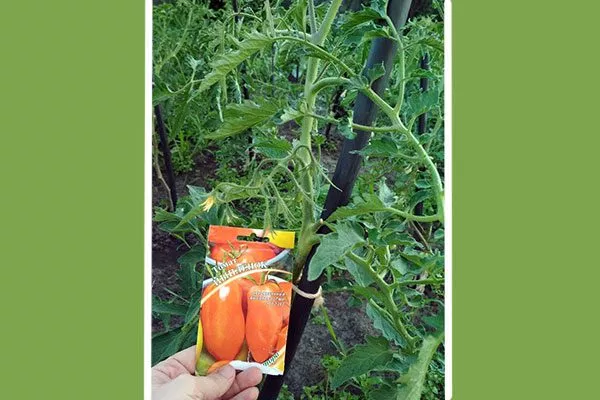
Plants of the Tsyplenok variety are indeterminate. Their appearance is described as follows:
- height - up to 1.5 m (in an open bed), 1.8-2 m (in greenhouses);
- semi-spreading bushes;
- average degree of branching and foliage;
- erect stem;
- foliage: green, standard shape, medium size;
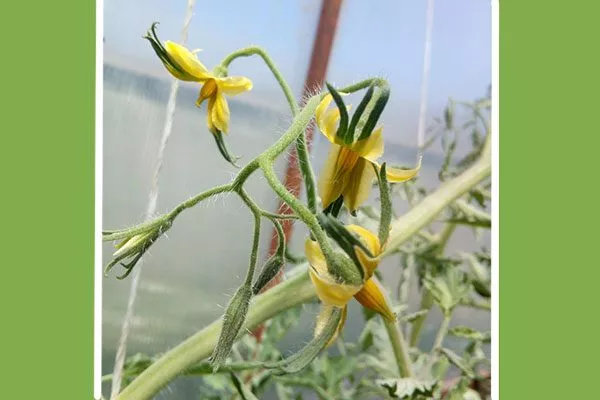
- inflorescences: simple type;
- fruit cluster, consisting of an average of 7-8 tomatoes (the quantity can vary from 6 to 17 pieces).
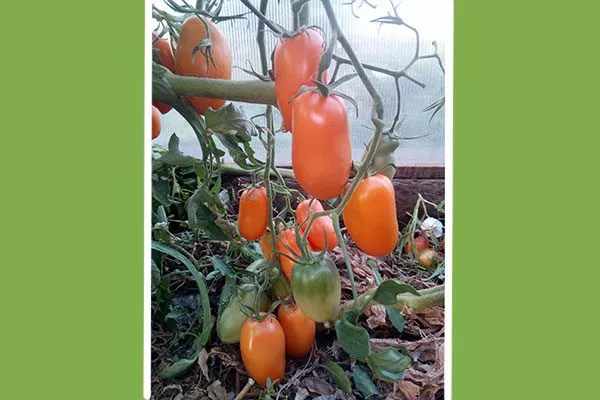
Tall bushes require staking, shaping, and pinching. To achieve maximum yield, gardeners train them into three trunks. At the end of the growing season, they pinch out the growing tip, leaving 7-8 clusters.
Fruits and their uses
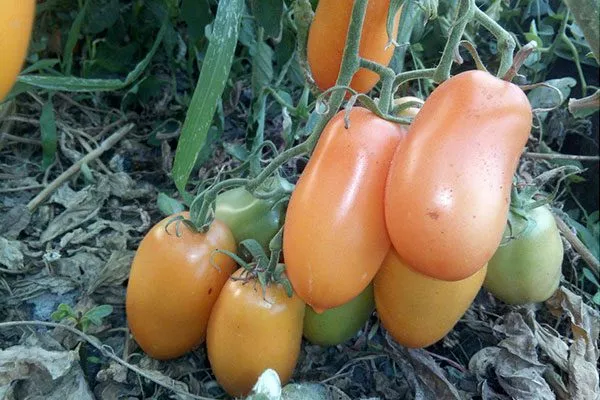
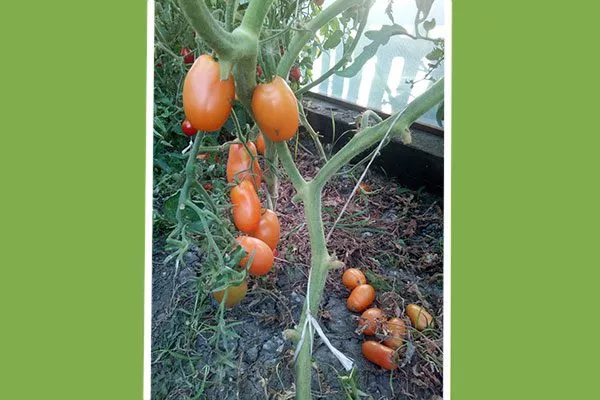
The harvest of this varietal variety is beautiful and delicious. The fruits are small, uniform, and do not shrink. They have high consumer qualities. Their characteristics are as follows:
- weight — 89-100 g (the maximum weight reaches 120 g);
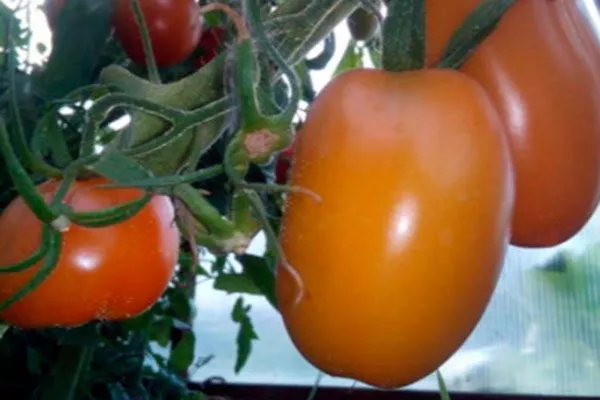
- form: elongated cream with a small beak, with slightly pronounced ribbing;
- coloring: rich, orange;
- skin: durable, not very thick, glossy;
- pulp: orange, dense, moderately juicy, with 3-4 seed chambers.
The Chicken's tasting qualities are excellent. The flavor is harmonious, rich, and vibrant. It combines sweetness with a moderate, pleasant acidity.
Orange tomatoes are used in salads. They are eaten primarily fresh, served sliced and combined with other vegetables, cheese, herbs, and vegetable oil. They are also suitable for pickling and whole-fruit canning. They are especially delicious in tomato juice.
Agricultural cultivation techniques
To grow strong and healthy plants that will reward you with abundant fruit in the future, follow these vegetable planting guidelines. Sow seeds for seedlings in late February or March, following these step-by-step instructions:
- Fill suitable containers with loose, nutritious soil. Choose a store-bought potting mix designed for growing tomatoes and peppers.
- Place the seeds 0.5 cm deep into the soil, keeping a sowing distance of 2-3 cm.
- Water the planting carefully. Use lukewarm, settled water. Cover the container with plastic wrap.
Maintain the temperature in the room where the seedlings are kept at 22-25°C. Once the sprouts appear, reduce it to 18-20°C. Move the seedlings to a sunny window.
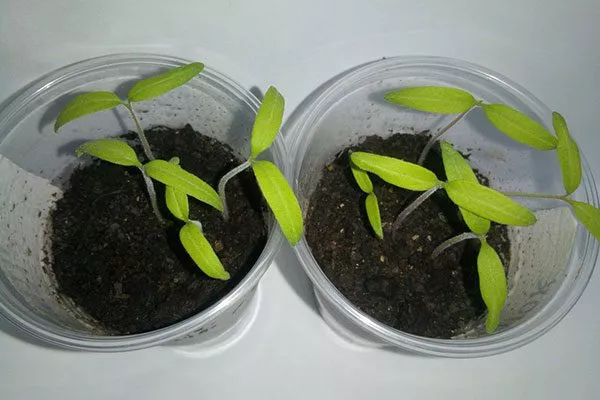
Water orange tomato seedlings moderately after the topsoil has dried out. Avoid overwatering. When two true leaves form, transplant. Harden off the plants outdoors 14-20 days beforehand if you plan to move them to an outdoor garden bed.
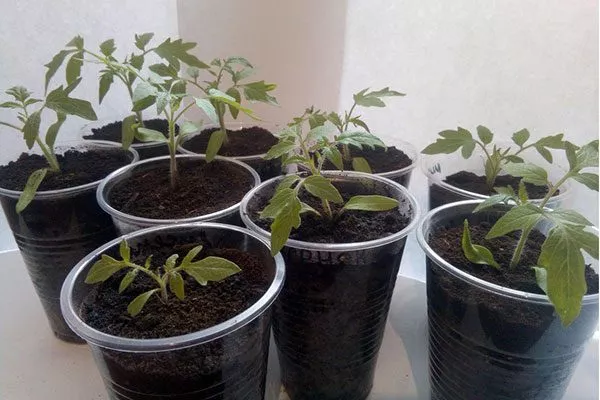
Plant 55-60-day-old Chicken seedlings in the garden as follows: indoors or under plastic in April-May, and outdoors in late May or June. Follow a 40-50 x 60-80 cm pattern. The site designated for growing the crop must meet the following requirements:
- be well lit;
- windless;
- protected from drafts;
- not flooded by groundwater;
- with fertile soil, loose and well-drained, loamy or sandy loam, with neutral acidity.
A few weeks before transplanting tomatoes to the garden, dig the selected plot to a depth of 60 cm, clearing it of weeds and plant debris. Enrich the soil with organic matter (rotted manure, compost, wood ash) and mineral fertilizers such as superphosphate, potassium monosulfate, and NPK complex.
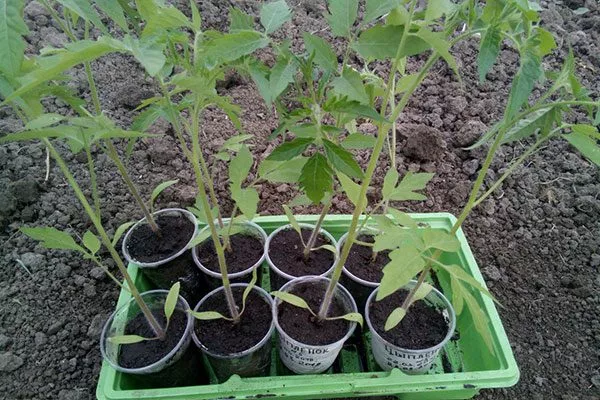
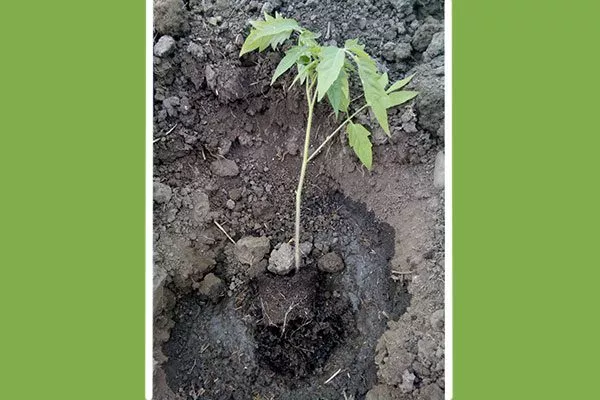
Transplant orange plum tomato seedlings to a permanent location by following these step-by-step instructions:
- Prepare the planting holes. The optimal depth is 8-10 cm.
- Add a handful of dry ash mixed with fertile soil to the holes.
- Carefully remove the plants from the containers along with the root ball, being careful not to damage it.
- Place the seedling in the hole. Cover it with soil, burying the stem down to the cotyledons.
- Water the tomato planting generously.
- Install supports to support the plants.
- Protect the Chicken seedlings from sudden temperature changes by covering them with film or agrofibre.
Care instructions
Throughout the growing season, carry out the following care for orange tomato plantings:
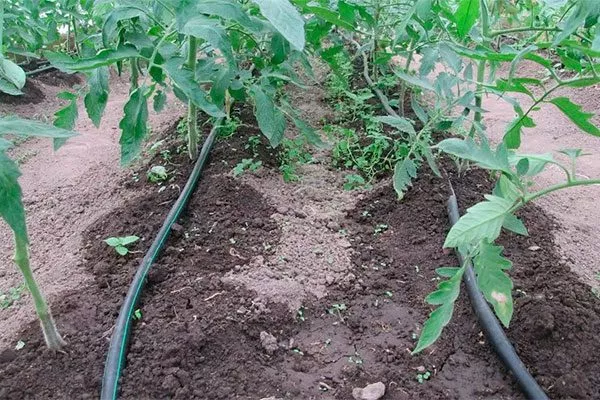
- WateringThis vegetable crop loves moisture. Due to a lack of water, the foliage on the bushes curls upward and turns yellow. Water the planting generously, using 1-2 liters of water per bush (it will need to be settled and warmed in the sun beforehand). Pour the water at the roots. Try to saturate the soil to a depth of 25 cm. Avoid splashing the green foliage.
Carry out this procedure after the top layer of soil has dried. Before flowering, water once a week; once every 3-4 days during fruit set; and once or twice every 7 days during tomato ripening. The best time to water is in the morning (the moisture will have time to be absorbed before the heat sets in).

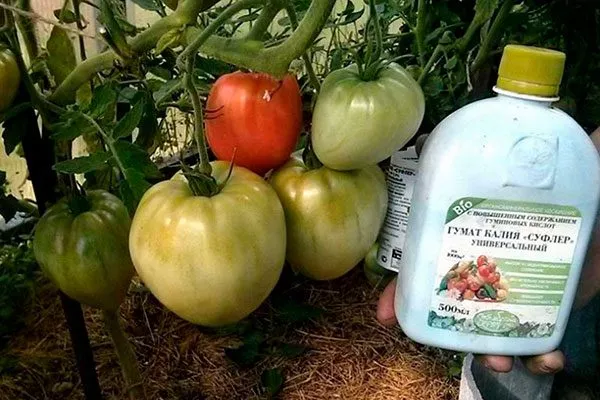
- Top dressingFertilize every 14-20 days. Use complex fertilizers high in potassium and phosphorus. At the beginning of the growing season, use organic matter (manure, compost, and humus) to improve soil fertility. Don't neglect foliar treatments with solutions rich in microelements during the ripening period.
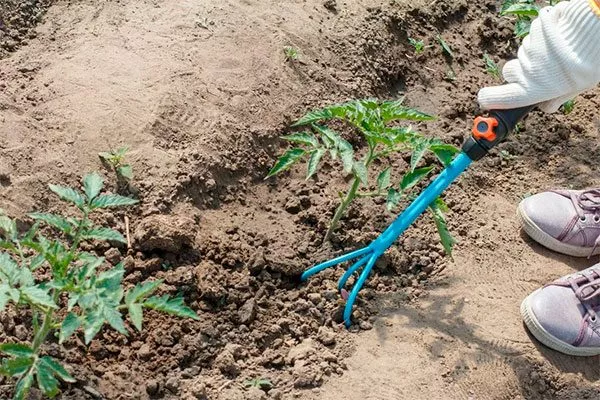
- Weeding and looseningAfter each watering or rain, loosen the soil to prevent the formation of a dense, air-impermeable crust. At the same time, remove weeds, which inhibit crop growth and increase the risk of infection.
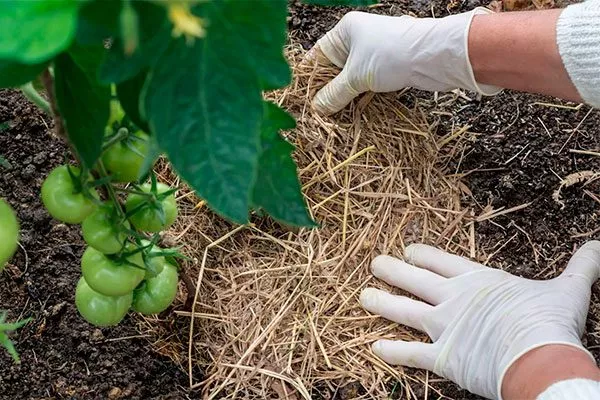
- MulchingTo better retain soil moisture and prevent harmful weeds, cover the root zone of tomato plants with organic matter (5 cm thick). Use compost or grass clippings.
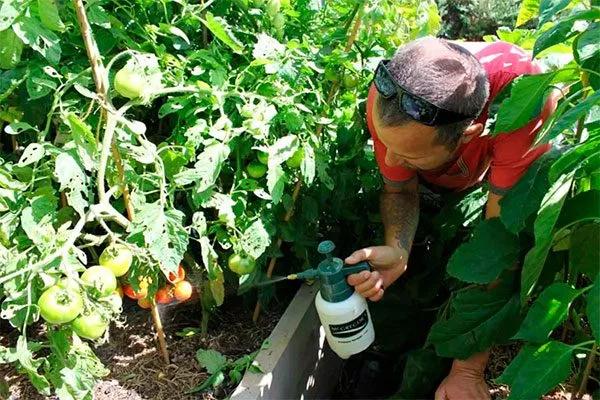
- Protection from diseases and pestsTo prevent this problem, treat your Tsyplenok plantings with biological preparations. Fungicides such as Quadris and Ridomil Gold will help against late blight. To protect the bushes from pest attacks, use insecticides (Fitoverm, Aktara, Match).
- Bush decorationTrain the plants to form 2-3 trunks, removing side shoots. Regularly remove side shoots, breaking off shoots 3-5 cm long before the first cluster.
Pluck the lower leaves to stimulate the flow of nutrients to the buds. Avoid removing more than three leaves at a time to prevent the plant from being severely stressed.
Avoid overcrowding, which can lead to disease. - GarterDue to their tall growth habit, orange tomatoes require support (stakes or trellises). This prevents stem breakage and makes care and harvesting easier.
Reviews
"Tsyplenok" is a newly developed variety that has been highly praised by gardeners and farmers. Vegetable growers appreciate it for its excellent marketability and taste, attractive appearance, good productivity, and disease resistance. It's an excellent choice for those who love plum tomatoes or grow them for whole-fruit canning.