
The Tsunami tomato is a standard tomato variety grown in various latitudes across the country. This variety is characterized by mid-early ripening, excellent flavor, large fruit, juiciness, and ease of care.
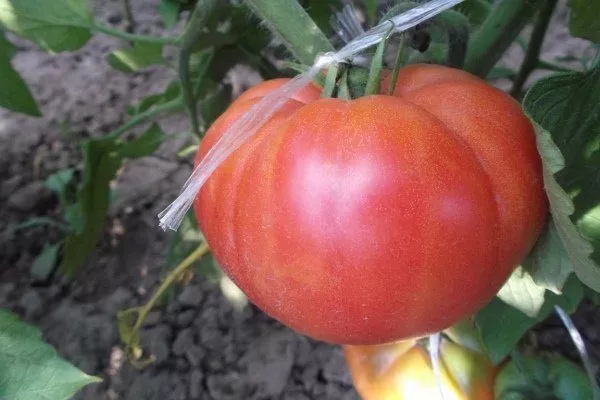
Tomato variety "Tsunami"
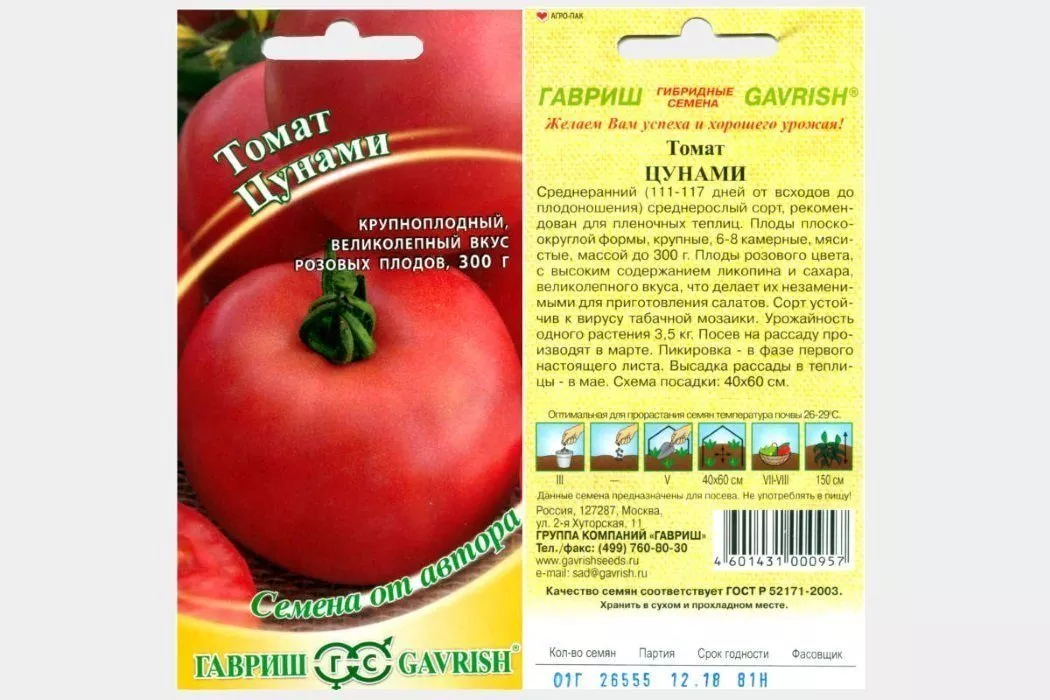
Tomato seeds "Tsunami"
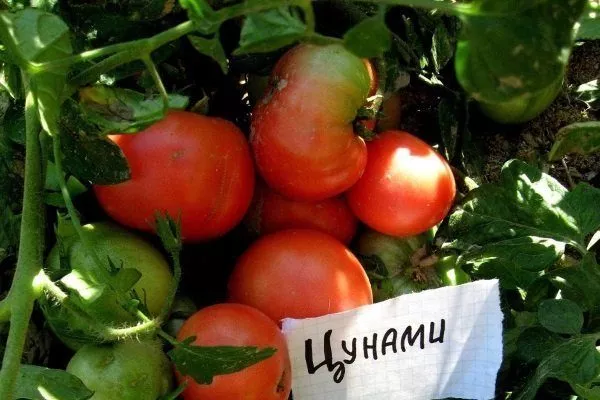
The Tsunami variety is characterized by mid-early ripening, large fruit and ease of care.
General characteristics of the variety
This is a medium-sized indeterminate variety. It matures in four months, reaching a height of one and a half meters. Its unique feature is that it requires no shaping or staking. It thrives in warm conditions and has fairly leafy growth with few branches. Therefore, it can be grown in greenhouses.
The leaf blades are light green and small, with slight ribbing and a corrugated shape. The bush is weakly branched, with 1-6 stems. The primary cluster is located approximately above the ninth leaf, with the remaining inflorescences spaced every three leaves. Each cluster contains 4-5 tomatoes.
Fruit characteristics:
- fruit color – dark pink;
- the amniotic peduncle has no spot;
- shape – flat-round;
- there is a slight ribbing at the area where it joins the stalk;
- the weight of one tomato grown in greenhouse conditions is a maximum of 300 grams;
- the weight of a tomato collected from open ground is no more than 180 grams.
Grown in various soil types, Tsunami takes 105 to 120 days from germination to harvest. In terms of average yield, Tsunami can produce up to 3.5 kilograms per bush. This is possible with the addition of mineral fertilizer, primarily in the growing season.
Growing seedlings
Growing is carried out in stages:
- Substrate. At growing seedlings A specialized soil with disinfected compost is used. It is fertilized with ash and minerals, so the soil should be loose and highly permeable. The soil is moistened with water.
- Sowing seeds. Tomato seeds are sown in the soil every 3 cm. A 6-7 cm layer of soil is added on top. The boxes are covered, but not too tightly, and stored in a warm place.
- Care. When the first shoots appear, the boxes are moved to a bright spot. A windowsill or lamps can be used for this purpose. For 14 days, the plants should receive half the daylight, with a temperature of 12 to 16 degrees Celsius. Then, the light and temperature periods are increased by 7 degrees Celsius. Watering is moderate.
- Preliminary transplant. Seedlings are planted early, as tomatoes are susceptible to infection. For this purpose, temporary plastic shelters or greenhouses are installed. The soil is fertilized with minerals, compost, and vermicompost. Planting distances should be at least 40 cm.
- ✓ Optimum soil temperature for sowing seeds: not lower than +15°C.
- ✓ Concentration of ash solution for fertilizer: 200 g per 10 l of water.
When 3 cotyledon leaves appear, picking seedlings Plant in half-liter cups. You can use containers, but in this case, maintain a certain distance between plants (at least 10-15 cm). The new substrate should be similar to the soil in which the seeds were planted, so it should be moistened and lightly fertilized with nitrogen.
Planting in a permanent location
Transplanting into the garden is done approximately two months after planting the seeds. However, if the plants are unhealthy, the time may be longer.
Hardening off the seedlings 10 days before planting is recommended to prevent tomato disease after planting outdoors. To do this, lower the air temperature in the room where the Tsunami plants are growing.
Transplant rules:
- Soil preparation. Fertilizer, compost, or humus are added. The soil must be moistened and loosened to allow oxygen to enter.
- The planting pattern is 40x60 cm. This means that there should be a distance of 60 cm between rows, and 40 cm between bushes in the same row.
- Next, the plants are watered and tied up using wooden pegs.
In very sunny conditions, tomatoes are covered with a breathable material (grass, tops, hay, etc.). This method prevents the plants from burning and helps maintain the required humidity level (maximum 80%, minimum 70%).
Caring for Tsunami tomatoes
Tsunami requires special care during the growing season, so the following requirements must be followed:
- Watering Watering is done in the morning or evening. The main rule is to avoid overwatering. This means the soil should remain loose. Tomatoes do not tolerate drought, so the soil should not be allowed to dry out.
- Mulching Mulch is used throughout the growing season. Mulch reduces watering and weeding, preventing tomato rot and preventing the substrate from drying out. You can use readily available materials for this purpose, such as pine needles, hay, sawdust, and straw.
- Bush formation: There should be a maximum of two shoots. Dried leaves and side shoots are removed in the morning. The main requirement is not to water the plants for 24 hours.
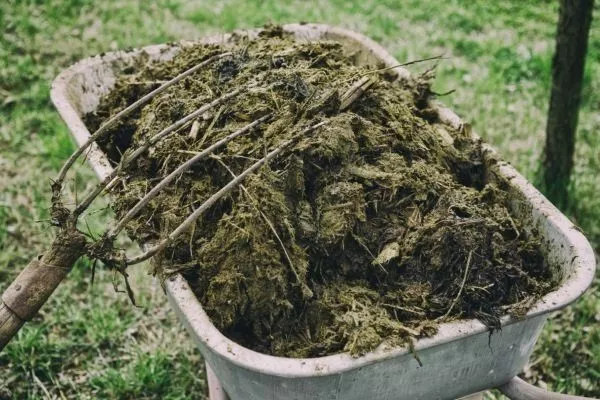
- Subcortexmka seedlings Fertilization is carried out every 10-11 days after transplanting to a permanent location. Fertilizers should be liquid. Before the fruit sets, a mixture of mullein and water is used (1 liter of solution per 10 liters of water). Subsequently, phosphorus and potassium-based minerals should be added. Nitrogen fertilizers are not recommended, as they reduce yield.
Features of growing in a greenhouse and in open ground
Growing Tsunami indoors and outdoors is different. In the former case, there's a risk of condensation, as the lack of free air circulation increases humidity in the greenhouse.
Peculiarities:
- Greenhouse conditions The soil must maintain a daytime temperature of 18 to 24 degrees Celsius and a nighttime temperature of 15 to 18 degrees Celsius. Temperature increases and decreases should be gradual. A ventilation system is required, and the soil must be thoroughly loosened after each watering.
- Outdoors Tomatoes are planted in favorable weather conditions (no frost). They are planted deeper in the Tsunami soil than in the greenhouse. To achieve this, the lower leaves are removed. Read about growing tomatoes outdoors in this article.
| Parameter | Greenhouse | Open ground |
|---|---|---|
| Temperature conditions | +18°C to +24°C during the day, +15°C to +18°C at night | Depends on weather conditions |
| Humidity | Controlled, risk of condensation | Depends on precipitation |
In both cases, it's important to promptly remove dead foliage and mound the stems from below. This accelerates gas exchange.
Diseases and pests
This tomato variety is not resistant to the following diseases:
- Late blight. This is a fungal disease that thrives in high humidity. It is easily transmitted from one nightshade plant to another and can live in the soil. It is characterized by drying and blackening of stems, leaves, and shoots. If left untreated, the fruit is also affected (black ulcers first form on the surface, followed by rot).
- Cladosporiosis This also applies to a fungal disease that manifests itself as spots on the leaves, which leads to their death.
To avoid infection and pest damage, and to carry out adequate treatment, you must do the following:
- As a preventative measure, it is not recommended to plant tomatoes and other nightshades in the same area every year.
- Before planting and any manipulations, all instruments must be treated with antiseptic agents.
- Before sowing, seeds are kept in a manganese solution.
- Since the late blight fungus appears in the fall, Tsunami should be planted early, which will allow the harvest to be collected before the air humidity increases.
- Plants are periodically treated with Fitosporin. Copper oxychloride or Bordeaux mixture can be used as an alternative.
- The greenhouse also needs to be disinfected – the walls and frame.
- Greenhouse soil is treated with Radiance-1.
- The soil should not be too acidic, so it is sprinkled with ash, lime or dolomite flour.
- It is advisable to plant Tsunami in the soil after growing pumpkins and cucumbers, since these plants are not susceptible to nightshade diseases.
- To repel pests, you can use solutions of brown laundry soap and ash or wormwood. Garlic infusion is also recommended. Apply to both the soil and the plant itself.
Harvesting and storage
The initial harvest of Tsunami begins in late July. During this period, the fruits acquire a reddish tint. This is necessary to increase the yield. The harvested unripe tomatoes are laid out in the sun, where they ripen successfully over a period of a couple of weeks.
The harvest should be stored as follows:
- Only dry, firm and undamaged fruits are selected for long-term storage.
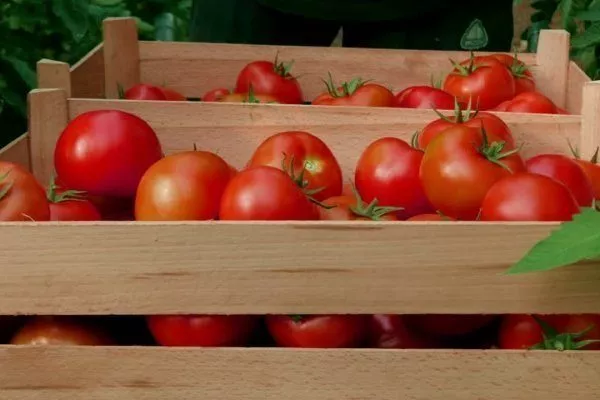
- Tsunami is placed in wooden boxes, the rows are tight, the containers are thoroughly dried.
- The room is equipped with ventilation.
- The shelf life is 2 months. To extend this period, it is recommended to harvest tomatoes when they are brown and wrap each one in dry, breathable paper. Polyurethane foam balls can be used instead of paper and placed in a crate.
- Straw can be placed at the bottom of the container to maintain normal humidity levels.
- Before consumption, it is necessary to bring Tsunami into a warm place for a couple of days, which will activate the ripening process.
Pros and cons of Tsunami tomatoes
Advantages of Tsunami:
- fairly large fruits;
- excellent taste qualities;
- storage duration;
- pink;
- a relatively small number of diseases;
- high level of productivity;
- easy to store and maintain.
Flaws:
- It is not advisable to preserve fruits;
- Due to the very delicate skin, it is not recommended to transport Tsunami.
Reviews
The Tsunami tomato has become a favorite among many gardeners because it's a versatile variety that easily adapts to both greenhouse and open-field conditions. By following all planting and care guidelines, you can prevent fungal infections, increase yield, and improve fruit quality.