
The Tsar's Temptation tomato is a hybrid tomato. This indeterminate variety is ideal for both greenhouse and open-air cultivation. It is renowned for its high yields, but requires careful care.
History and regionality
Tsarskoe temptation is a first-generation hybrid created in 2017. The agricultural firm "Partner" is responsible for this development, and the primary author and breeder was O. D. Kiramov.
The hybrid thrives particularly well in the south of the country and in the Central Black Earth region. In other regions, to achieve maximum yield, protective measures are recommended for the bushes during cold weather.
Description of the bush
The plant grows without height restrictions, a phenomenon known as indeterminate growth. In the wild, its height is limited to about 150 cm, while in greenhouses, the tomato can reach a height of 200 cm. With special care, the hybrid can grow up to 500 cm.
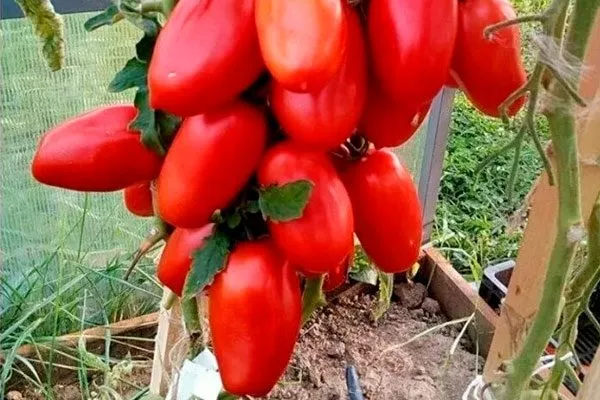
Key varietal characteristics:
- The leaves of the plant are medium-sized and have no special features compared to ordinary varieties: they are dark green, standard.
- Due to unlimited growth, plants have developed an extensive root system.
- Shortened internodes mean that the first inflorescence appears only after 7-8 leaves have formed. The inflorescences are simple, the peduncles are united, and the sepals are long and oblong.
- Tomatoes ripen in long clusters, each of which can contain up to 9-10 large fruits. The next cluster emerges three leaves apart, providing ample space for ripening.
Fruit characteristics
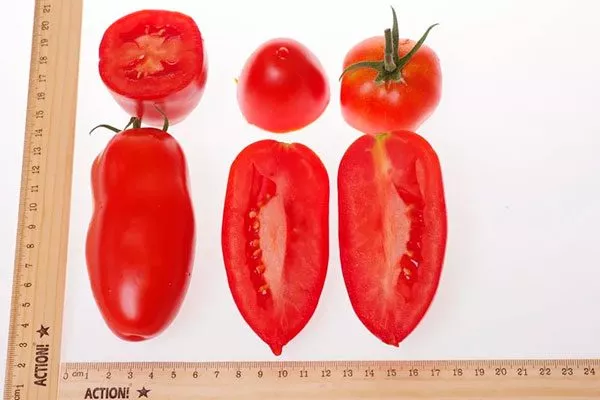
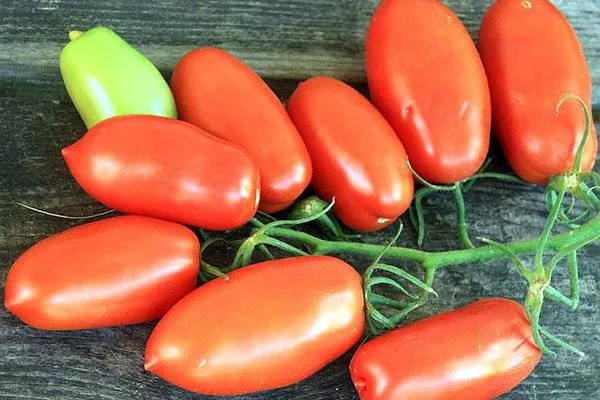
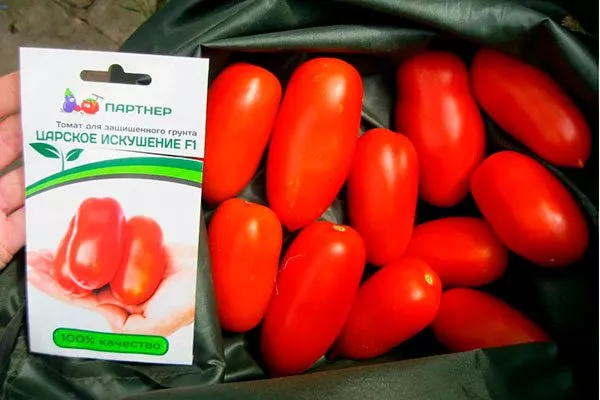
Hybrid tomatoes are distinguished by their attractive shape, with an elongated, pepper-shaped profile and a small beak at the rear where the stem attaches. Their length ranges from 9 to 10 cm.
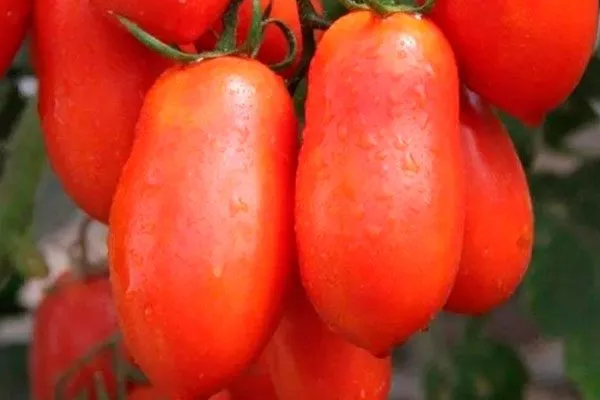
Other signs of vegetables:
- When unripe, they are light green, but when ripe, they acquire a rich red hue. A distinctive feature is the absence of a dark spot near the stem.
- These tomatoes have smooth, firm skin and weigh on average 120 to 130 g. They have the typical tomato flavor of hybrid varieties.
- The pulp is also very dense and contains a lot of sugar, while the seed chambers do not exceed two or three. The number of seeds in the fruit is also small.
- The shape of tomatoes may vary slightly, being more or less symmetrical, but their sizes remain relatively the same.
- Some fruits may have hollow parts inside, which is an advantage for many cooks, as these tomatoes are ideal for stuffed dishes.
- Tomatoes have high commercial quality and are resistant to long-distance transportation.
Main characteristics
The variety is a hybrid. Therefore, if you plant seeds extracted from its fruits, you shouldn't expect the new plants to have the exact same ripening parameters, yield, flavor, and other characteristics as the mother plant. Therefore, you'll have to purchase planting material annually.
Ripening and fruiting, productivity
Tsarskoe Iskoshchenie tomatoes are early-ripening. It takes about 100-110 days from the start of growth to the first ripe fruits. Fruiting occurs in several waves from July to September. In mild climates, it's possible to harvest not just once, but several times a season if the plants are properly maintained.
Productivity Subtleties:
- With proper greenhouse care, one bush can yield up to 5 kg of harvest, and up to 24 kg from an area of 1 square meter.
- In an open garden bed, the yield is approximately 3 kg per bush and 11 kg per square meter, provided that at least three bushes are planted per square meter.
Tomato yield depends on many factors, including proper bush formation through pruning and pinching, protection from sun and wind through hilling and mulching, and the correct selection and frequency of fertilization.
Taste, purpose and use
Experts highly praise the taste of these tomatoes, a rare trait for hybrids. They are characterized by sweetness and a virtually complete lack of acidity, as well as a high juice content.
They are an ideal choice for various canning methods, but are also used in salads and flavorful first and second courses. Their versatility is demonstrated by their suitability for boiling, drying, and even freezing.
Peculiarities:
- The flesh is particularly juicy, making them an excellent pickling ingredient, and their low dry matter content makes them ideal for cooking. The juicy juice produces a thick and sweet product.
- Ripe fruits can be sliced and frozen for later use in frying and cooking.
- The fruits are even suitable for making homemade jam, and thanks to the presence of internal cavities, they are excellent for stuffing.
Growing seedlings
Growing young seedlings is a key stage in the development of every plant. This is the period during which its health and potential for future harvests are established. Therefore, it is crucial to sow the seeds correctly and provide the plant with optimal growing conditions.
Selection of containers and substrate
Seedlings are usually grown in wooden boxes or peat pots. The latter allow the plant to be transplanted without disturbing the root system, as the pot and soil are completely submerged. Plastic cups are also suitable, as they can be carefully cut open before planting, keeping the root ball intact.
Wooden boxes are the most economical option, but require extra effort and patience when planting seedlings.
As for the composition of the soil, it is composed as follows:
- for two parts peat take one part soil;
- add one part sand and half a part humus;
- mix thoroughly.
After mixing, it is recommended to sift the soil mixture and treat it with a weak solution of potassium permanganate for disinfection. Perform all these procedures several weeks before sowing the seeds.
The key soil requirements are looseness and aeration. If the soil is poorly aerated, pathogenic bacteria can develop, leading to the death of young seedlings.
Seed preparation and germination
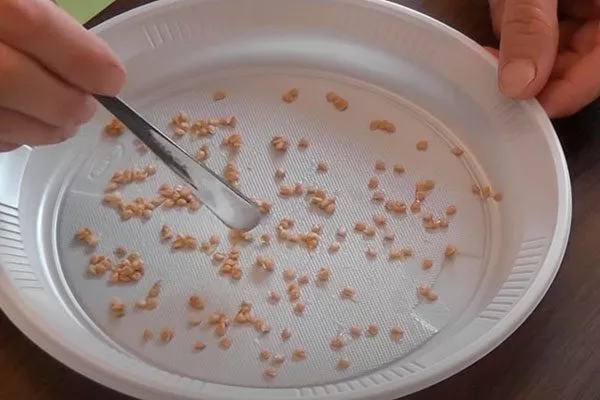
To obtain high-quality seedlings, seeds are pre-treated with a 1% potassium permanganate solution by placing them in glass containers for 20 minutes. The seeds should then be thoroughly rinsed and dried.
Other important events:
- To stimulate plant growth, use products such as Immunocytophyte and Epin. After treatment, the seeds must be dried. Rinsing the seeds after applying growth stimulants is not required.
- Since this variety is a hybrid, it doesn't require hardening or disinfection. If you decide to do these procedures, you risk reducing the seed germination rate. These measures are not necessary, as the seeds are already treated before packaging.
- You can select unsuitable seeds in a saline solution - those that float to the surface are removed, and those that sink to the bottom are planted.
Germinating seeds is the initial stage of preparation for future planting. A cotton pad, saucer, or small plastic container can be used for this purpose. Here's how:
- For a cotton pad: The first disk is lightly soaked in warm water, with the seeds spaced well apart. Then, cover with a second disk, also soaked in water.
- In the case of a saucer: The seeds are carefully placed on the bottom of the saucer and then covered with a damp cloth, previously soaked in warm water.
- Using a plastic container: The cheesecloth is folded in several layers and soaked in warm water. It is then placed on the bottom of the container, the seeds are evenly spread on it, and the lid is tightly closed.
On average, seed germination takes 2-4 days.
Sowing seeds
Planting seeds requires care and attention to detail. Failure to follow established guidelines may result in the absence of the first shoots. The planting process involves several key steps:
- Fill the planting containers with treated soil (which should be disinfected and calcined beforehand), leaving 3-5 cm of empty space around the edges. This is necessary to prevent young shoots from growing out of the container along with their roots.
- Moisten the substrate to the point of complete saturation with water.
- Make several depressions in the soil to serve as a place for the seeds.
- Plant the seeds at the prepared depth, spacing them at least 2 cm apart. Spacing them too small may result in insufficient space for seedling development.
- Cover the containers with plastic wrap or clear glass. This step is optional, but it promotes faster seed germination by creating conditions that stimulate germination due to the lack of air and moisture at elevated temperatures.
- Move the seedlings to a warm, dark place. Light will be needed only after the first shoots appear.
Caring for seedlings
For the first seven days after sowing, keep the seed containers covered with plastic, maintaining a room temperature of at least 25 degrees Celsius. When the first shoots appear, remove the plastic and reduce the temperature to 18 degrees Celsius.
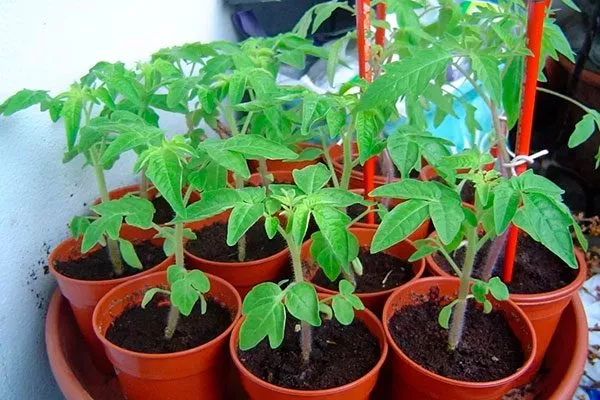
The containers are placed near a window to ensure sufficient sunlight, or fluorescent lamps can be used for additional lighting, as the seedlings need at least 12 hours of daylight.
Rules:
- At the initial stage, the soil is not poured, but only sprayed with a spray bottle.
- Once mature leaves appear, regular watering of the root system begins.
- Ten days later, add a light fertilizer consisting of a high-nitrogen complex to the water. The fertilizer is prepared from potassium salt (1.5 g), urea (0.5 g), and superphosphate (4 g), dissolved in 1 liter of water. Fertilize twice a week.
- Pricking out seedlings is a mandatory step. The recommended planting pattern for pricking out is 8x8 or 10x10 cm. Alternatively, plants can be transplanted into individual 500 ml cups.
Hardening off seedlings
To successfully acclimate seedlings to a new location, hardening them off is necessary. A week after germination, the air temperature should be lowered to 18°C during the day and 13°C at night. It's also important to ventilate the room to enhance hardening.
Transplantation into open ground
The time to transplant seedlings comes when the soil temperature exceeds 15 degrees, and the air warms up to at least 20 degrees:
- the seedlings are transferred to the greenhouses in mid-April;
- The exact time depends on the external condition of the plant: its height should be at least 20 cm, the leaves should be at least 6, and the trunk diameter should be at least 5-6 cm.
- ✓ The optimal soil temperature for transplanting seedlings should be at least 15°C, and the air temperature – 20°C.
- ✓ To prevent blossom end rot, add lime or calcium fertilizer when replanting.
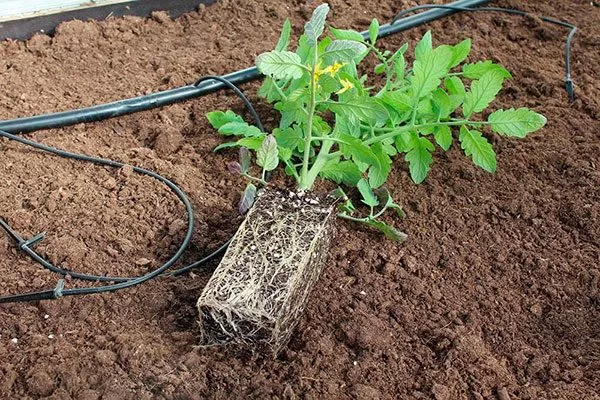
Before moving plants to their final location, several important steps must be taken: in the fall and spring, the soil should be prepared by digging to the depth of a shovel, adding the necessary fertilizers and disinfecting;
Plants should be planted according to a special scheme:
- Fill pre-dug and watered holes, spaced 60 cm apart, with substrate to half the depth.
- Form a mound.
- Place a seedling on it.
- Sprinkle with soil.
- Immediately after planting, water thoroughly and mulch.
It is better not to water the seedlings for the first two weeks after transplanting so that they learn to seek water on their own.
Care instructions
Caring for this crop will ensure high yields. The variety doesn't require any special growing conditions or complex care. However, without external support, it won't achieve full development on its own.
Watering and fertilizing
The plant requires regular watering, approximately once a week. It's important to avoid both dryness and overwatering to prevent root rot. During rainy periods, when the soil is already sufficiently moist, watering can be reduced to once every 2-3 weeks.
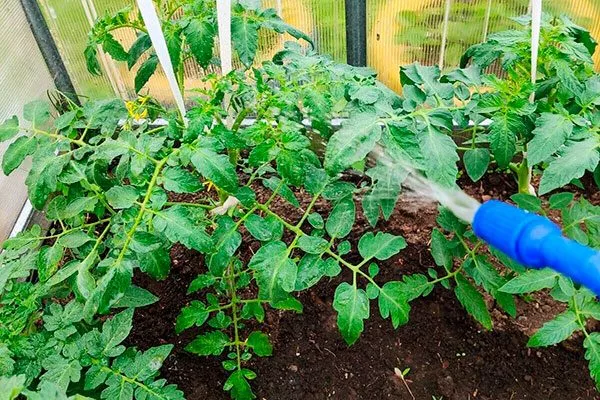
Use only warm water, and to maintain humidity, cover the soil surface with a layer of straw or peat no more than 3 cm thick.
Effective fertilizers have a positive effect on the development of fruit ovaries and on taste qualities:
- During periods of intensive growth, add potassium and phosphorus to strengthen the root system;
- during the formation of ovaries, spray with a solution of boric acid;
- Calcium nitrate, liquid cow manure, bird droppings, yeast mixture, and other organic compounds are especially effective in strengthening the immune system.
Soil care
To ensure optimal soil conditions, air circulation, freedom from weeds and moisture retention, two key steps must be taken:
- Loosening. This process allows the soil to become oxygenated and ensures its flow to the plant roots. To loosen the soil, disinfect your gardening tools first and gently loosen them, avoiding damage to the roots.
- Mulching. This method helps prevent weed growth near tomatoes and prolongs moisture retention. To mulch, create a 3-4 cm thick layer of a suitable material such as hay, straw, sawdust, fabric, or burlap.
Forming a bush, pinching out side shoots and tying up
In greenhouses and warm climates, it's recommended to grow bushes with two stems. In cold northern regions, it's common to leave a single stem on the bush. The remaining side shoots are removed completely, leaving only a small stump about 2.5 cm high to prevent new shoots from appearing.
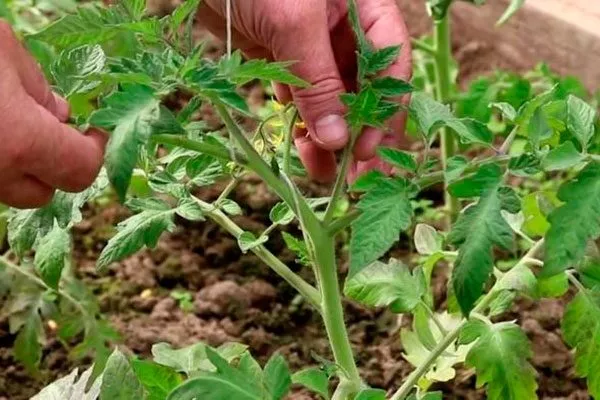
Supporting the bushes is essential for caring for this plant, as its growth pattern requires reliable support. Without it, the bush can break under its own weight.
The nuances of growing in open ground and greenhouses
Plant growth in a greenhouse and in the open field is not significantly different. However, in greenhouses, three key points are important to consider:
- the process of replanting plants in a greenhouse begins earlier than in open ground;
- It is necessary to regularly and thoroughly ventilate the room to ensure free air flow;
- It is important to use supplemental lighting through lamps to maintain optimal growth of tomatoes.
When picking the fruit, be careful not to damage the stem. It will dry out and fall off over time.
Pest and disease control, preventative treatments
The Tsar's Temptation variety exhibits good resistance to a variety of fungal diseases, including tobacco mosaic, verticillium wilt, and fusarium. However, the manufacturer warns that improper greenhouse cultivation can result in blossom-end rot, which can be caused by excess moisture.
As a preventative measure, it is recommended to treat the bushes with a fungicide 7-10 days after repotting. For this purpose, you can choose any of the following products: Bordeaux mixture, Ordan, Skor, Actellic, or Fitosporin.
If insects are found, they should be removed manually or washed off with a gentle stream of water. For more effective control, you can use ammonia solution, baking soda, soap mixture, onion peel infusion, Fitoverm, Iskra, Aktara, and Confidor.
Pros and cons
The Tsarskoe Iskushchenie f1 tomato variety has its strengths and weaknesses. Its advantages include:
Reviews
The Tsarskoe Iskoshchenie variety is noteworthy for many reasons: its productivity, excellent taste, and disease resistance make it competitive among other popular hybrids. It's ideal for both novice farmers and experienced gardeners. Its independence from weather conditions allows it to successfully adapt to a variety of climates.