
The Tretyakovsky tomato is a cultivar with a historic name and a number of advantages. Its attractive appearance makes it a focal point in any garden. This variety impresses with its abundant yields, high-quality fruit, and ease of cultivation. There are two varieties: the classic variety and the hybrid.
Peculiarities of origin and types
| Name | Ripening period | Disease resistance | Growth type |
|---|---|---|---|
| Tretyakov Classic | 105-110 days | High | Indeterminate |
| Tretyakov hybrid | 105-110 days | Very high | Indeterminate |
There are currently two varieties of tomatoes on the Russian market under the common name Tretyakovsky. Choose wisely, as both varieties are indeterminate. However, there are differences between them.
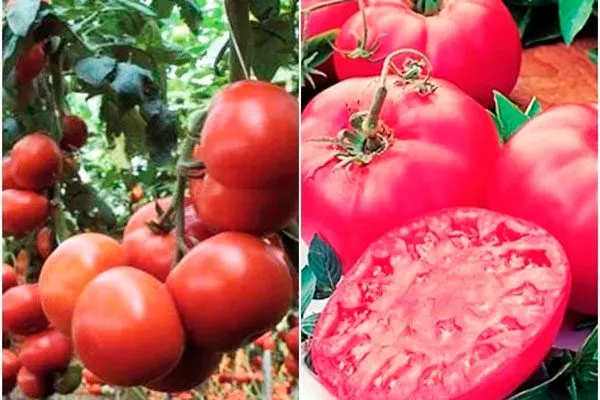
The first variety was created in 1998 in the Urals as a result of crossing several varieties in order to improve their properties and was immediately registered in the State Register.
The second is a hybrid developed by the company “Heterosine Selection” thanks to a number of scientists:
- T. V. Steinert;
- A. V. Aliluyeva;
- V. P. Fedyakov.
It was approved for cultivation in 2021 and can be grown in both polycarbonate greenhouses and under plastic canopies. There are no geographical restrictions for cultivation.
The Uralskiy Dachnik agricultural company offers planting material. The packaging always states that these are premium-class seeds. This hybrid is available only in specialized gardening stores and is considered a rather unusual and rare variety.
Description of the bush
The original Tretyakovsky F1 tomatoes are characterized as hybrids with a long growing season and unlimited bush growth. If left unchecked, the bush can grow up to 600 cm in one season.
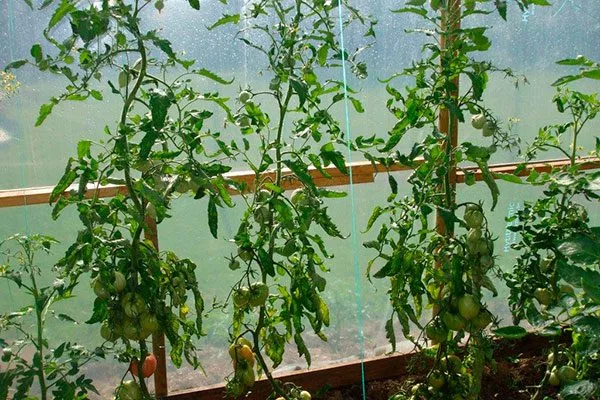
Other indicators:
- With proper training, the height can reach 150 to 180 cm. If the top of the bush is not pruned in time, this parameter can exceed 200-250 cm. The size of the bush should correspond to the height of the greenhouse.
The manufacturer recommends shaping the bush into two stems: the first is the main stem, and the second is the strongest of the remaining side shoots. This method is considered the most effective for several reasons, as it allows the bush to better distribute its weight and increase yield. - The main stem of the tomato plant is strong and woody, with a dark green or greenish-brown hue. It produces numerous side shoots, requiring pinching. Despite the stem's strength, it is unable to support the weight of all the fruits, so staking the plant to stakes or a trellis is necessary.
- The plant produces quite a profusion of foliage. The leaves are dark in color, elongated and slightly thickened, with jagged edges. The surface is covered with fine hairs. Gardeners recommend removing excess leaves, especially those on lower branches, as they are not beneficial.
- The root system is developed, but it spreads mainly along the surface of the soil - the roots spread more in width than in depth, which should be taken into account when planting young plants.
- The inflorescence is of an intermediate type. The petals are bright yellow, the buds are capable of self-pollination, and sterile flowers are virtually nonexistent.
- The first fruit sets at the sixth or seventh leaf, with subsequent fruits appearing every three leaves. A single cluster produces 7 to 9 tomatoes. The weight of the tomatoes in a cluster doesn't vary much. However, the berries on the lower branches may be slightly larger than those on the upper branches.
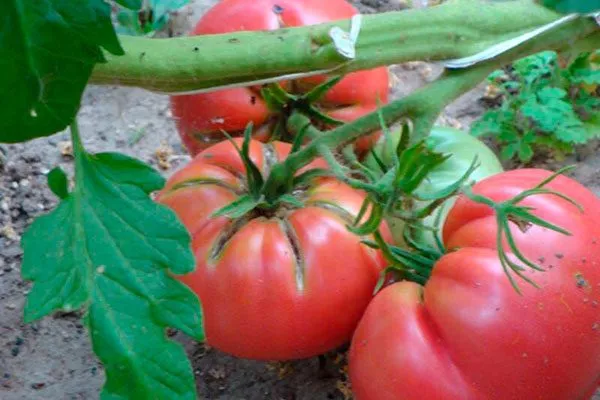
Appearance and characteristics of fruits
Tomato ripening occurs unevenly. At the end of the season, it's acceptable to harvest tomatoes at the technical or milky stage of ripeness. Unripe tomatoes develop their color best in a well-lit and ventilated room.
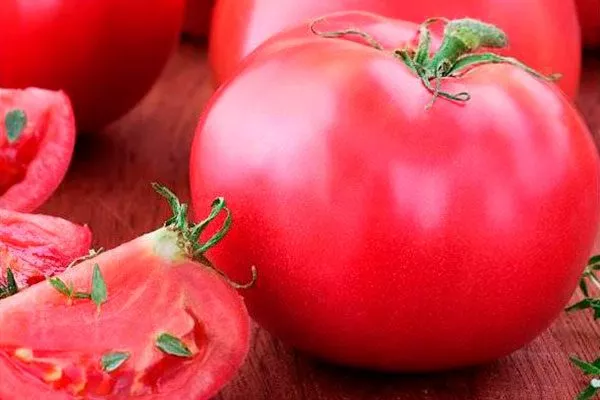
Fruit characteristics:
- form - flat-rounded;
- weight - 100-250 g (hybrid is smaller than the variety);
- color – raspberry-pink, and unripe tomatoes are colored dark green with a bright yellow spot near the stalk;
- skin – refined, but elastic, not prone to cracking, easily separated from the fruit;
- surface – smooth with gloss;
- ribbed structure – visible only at the stalk and barely discernible to the touch;
- pulp – juicy, raspberry-colored, with a dense structure;
- seeds – few in number, empty, located in three chambers (hybridization is to blame).
Main characteristics
The manufacturer claims this tomato hybrid is versatile, making it suitable for a variety of dishes and canning. Its elastic skin ensures its durability during transportation.
Ripening and fruiting, productivity
Tretyakovsky is characterized by a distinctive early ripening period: the fruits reach maturity in just 105-110 days from the moment the first shoots emerge from the seeds, and the harvest is ready for mass production 125-130 days after sowing, which corresponds to the end of July or the first days of August. Fruiting is not prolonged and can be completed within two weeks.
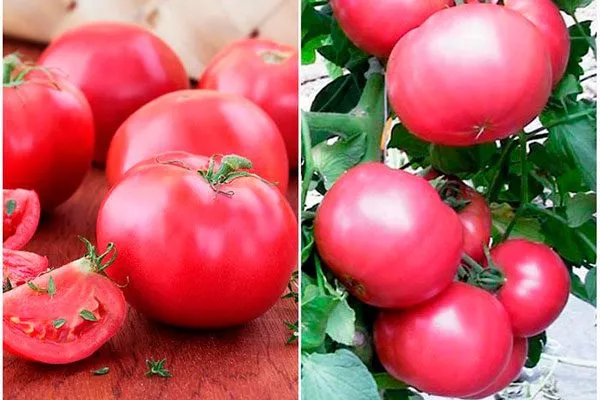
The hybrid is famous for its good productivity:
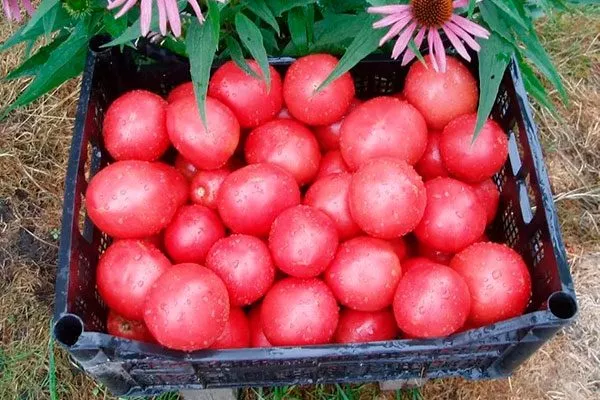
- From 1 sq. m you can get up to 20-25 kg of vegetables when forming a bush from two stems;
- with a single-stem bush, the yield decreases to 10-12 kg.
This variety thrives in open ground conditions, regardless of the amount of sunlight. Weather conditions, such as rainy summers or drought, do not affect productivity, but in open ground, the yield may be somewhat lower due to the greater height of the bush and planting density.
Taste, purpose and use
Tomatoes have a delicate, sweet flavor with a hint of acidity. These tomatoes are a versatile food. They can be eaten raw, added to dishes as a side dish, or preserved for the winter. The most common uses for the fruit are:
- as a base for soups;
- for preparing canned salads;
- in the production of tomato juice;
- for lecho;
- for barrel marinating and salting in whole form.
Where to grow?
Tretyakovsky can be grown both outdoors and indoors, with the choice of method depending on local climatic conditions:
- in the southern regions and the North Caucasus, film protective structures for bushes are not required;
- In the central part of Russia, Tretyakovsky plants are capable of bearing fruit only in greenhouse conditions.
Hybrid bushes are found in garden plots and on private farms. It is not grown commercially due to the high cost of planting material.
Resistance to diseases and pests
The Tretyakovsky tomato is a unique variety developed through extensive selection. It is distinguished by its resistance to various pests and diseases, including the following:
- fusarium;
- Cladosporiosis;
- late blight;
- tobacco mosaic virus.
During the warm season, smoke bombs and insecticide treatments or effective folk remedies are used to protect plants from insects.
How to properly grow tomatoes in a greenhouse and in open ground?
These fruits have a long shelf life—up to 1.5–2 months—and require storage in a dark place. The variety description notes that the bushes are able to withstand low temperatures and are not affected by short-term drought, making them suitable for growing in the shade.
Sowing and caring for seedlings
Tretyakovsky tomato varieties are grown exclusively using seed. Their hybrid nature requires gardeners to regularly purchase seeds from chain stores or specialized retailers. Growers often additionally treat the seeds with fungicides to protect them from fungal diseases.
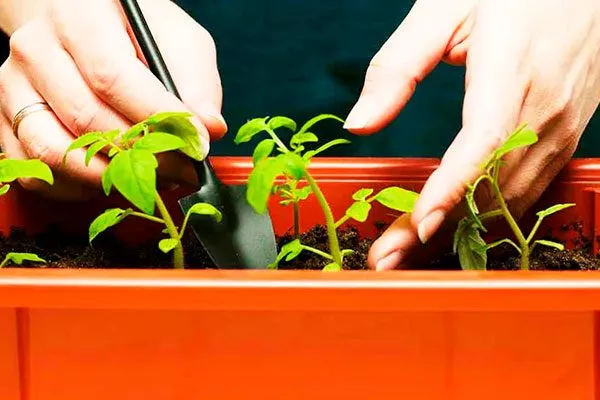
The start date for planting Tretyakovsky seeds for seedlings is 60-65 days before the expected date of transplanting to the permanent bed. This typically occurs between late February and early March.
For sowing, either use a ready-made substrate or create it yourself by mixing the following components in equal proportions:
- garden soil;
- river sand;
- compost or humus.
Before use, warm the substrate in the oven for 15-20 minutes, and treat the Tretyakovsky tomato seeds by soaking them in a mildly acidic solution of potassium permanganate for 10 minutes, then rinse with running water and dry.
The sowing process looks like this:
- Fill pre-prepared containers with substrate and moisten it slightly.
- Form furrows in the soil to a depth of 2 cm and distribute the seeds in them.
- Sprinkle with a thin layer of soil and peat on top.
- Pour warm water over it.
- Cover with film or glass to create a greenhouse effect.
- Place the containers with seedlings in a bright place with a temperature of at least +25-26°C.
- After the first leaves appear, remove the cover and feed the young plants with complex fertilizers.
Caring for young plants does not require much effort:
- Water the seedlings generously once a week when the soil layer begins to dry out;
- apply fertilizers to stimulate plant growth;
- Be sure to create conditions for lighting for at least 14 hours a day;
- When the first true leaves appear on the plants, move them into individual pots to allow the root system to develop.
With the arrival of April, the seedlings begin to adapt to external conditions. Follow these tips:
- acclimation to fresh air should be gradual - start with a short stay on the balcony or loggia - 20-30 minutes in the first days;
- Increase the amount of time the seedlings spend outdoors every day, and before planting in open ground, the seedlings should be left outside overnight;
- If the air temperature drops below +12-13°C, return the plants indoors.
- During acclimatization, seedlings should not be placed near heat sources;
- too rapid cooling or placing in a ventilated place with drafts is not desirable;
- During the initial adaptation period, protect tomato plants from direct sunlight using light curtains, sheets of paper or non-woven materials;
- You can leave the seedlings in the sun no earlier than after 3-4 days.
Transplanting into a greenhouse
This variety is best grown in greenhouses for vegetable growers living in the central and northern regions of the country. This is due to the unpredictable weather conditions in these areas, including extended periods without sun or heat, as well as high humidity.
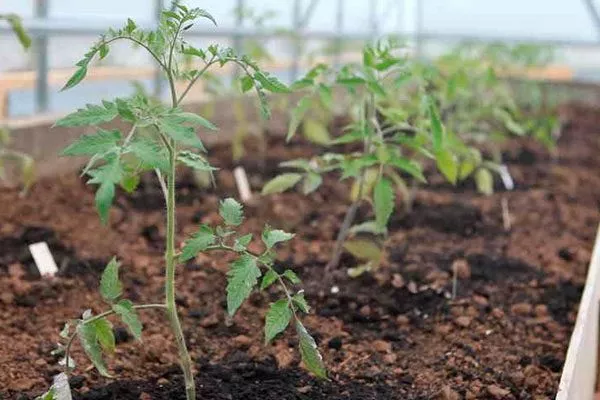
Before planting, be sure to disinfect the soil. This can be done using professional products or traditional methods. For example, treat the soil with a carbon dioxide solution—this will kill any remaining pathogens and prevent their further development.
Immediately after replanting, be sure to spray the area around the trunk with hot water. Be careful not to let the water touch the leaves, as this can lead to late blight. Considering the high humidity in greenhouses, be sure to regularly ventilate the room.
Transfer to open ground
To successfully transplant Tretyakovsky tomato bushes into the open garden, soil temperatures must reach at least 1518 degrees Celsius. If night frosts are likely, postpone transplanting the seedlings or protect them with additional protection such as plastic film.
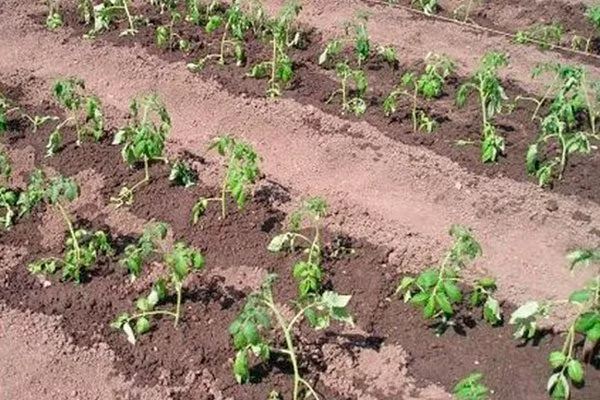
- ✓ The optimal soil temperature for transplanting seedlings into open ground should be at least +15°C.
- ✓ To prevent late blight, it is recommended to use Fitosporin and Bordeaux mixture, especially in conditions of high humidity.
The procedure for planting in the ground is no different from transplanting into a greenhouse. However, it's helpful to add fertilizer, such as compost or humus, to the soil to enrich it with the necessary elements for the future harvest.
Some subtleties:
- It is recommended to place 2-3 plants per 1 sq. m;
- the interval between them should be 50-60 cm;
- Pay special attention to the root system, which is characterized by lateral spread of roots rather than their penetration into the depths - this requires more space for nutrition;
- For ease of care and harvesting, it is better to arrange the plants in a checkerboard pattern.
Further care of tomatoes
After transplanting the seedlings into the soil, a critical stage begins: plant care. This involves a number of important steps:
- Bush support. This step begins when the bush reaches a height of 50-60 cm. At this point, a stake is driven into the ground next to the plant, after which the bush is secured with disinfected strips of fabric treated with potassium permanganate. Some gardeners choose an alternative method: they stretch wire along the rows and tie the bushes to it.
- Formation of a bush. This process continues throughout the growing season and includes:
- removal of dead and dried leaves;
- pruning of overgrown branches that lack ovaries and flowers;
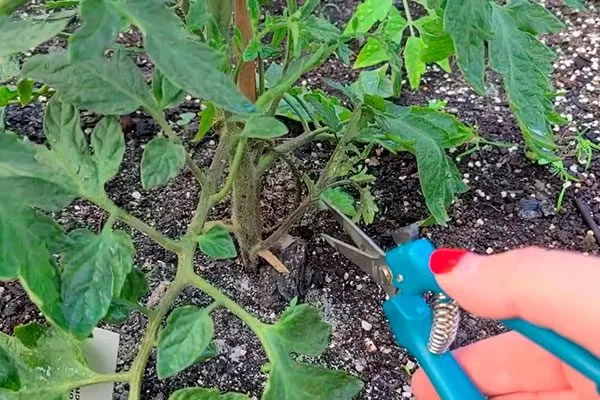
- removing the lateral shoots that begin to grow after the first flower cluster appears - it is necessary to leave only one stem, which is the strongest;
- tearing off leaves located below the first fruit cluster.

- Top dressing. Fertilizers should be applied strictly at the base of the plant. A mixture of ammonium nitrate, superphosphate, and potassium chloride is ideal for tall tomatoes. Mix the ingredients with water and apply them under each plant, after which the bed should be thoroughly watered.
During the season, the bushes are fed three times:- within ten days after their transfer to a permanent location;
- when the first ovary appears;
- during fruit ripening.
Tomato fertilizing plan- The first feeding is 10 days after transplantation: ammonium nitrate (10 g), superphosphate (20 g), potassium chloride (10 g) per 10 liters of water.
- Second feeding when the first ovary appears: increase the proportion of Superphosphate to 30 g per 10 liters of water.
- Third feeding during fruit ripening: reduce nitrogen fertilizers, increase potassium fertilizers.
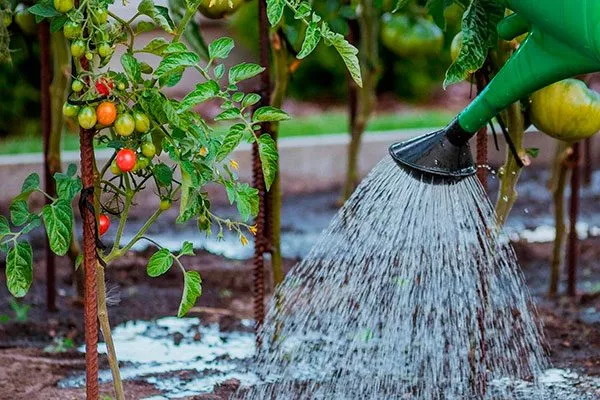
- Watering. It's important to maintain moderate soil moisture, focusing on dryness. Under normal weather conditions, water two to three times a week. During rainy periods or prolonged hot weather, the frequency may need to be adjusted. Basic irrigation recommendations include:
- using warm water, which can be heated in a large barrel in the sun;
- Greenhouse plants are watered during the day, while open beds are watered in the morning or evening hours;
- Avoid allowing water to come into contact with leaves and stems to avoid sunburn;
- It is forbidden to direct a direct stream of water - it will wash away the soil from the roots;
- It is not advisable to irrigate buds and ovaries; it is preferable to water tomatoes with a small watering can with a sprayer.
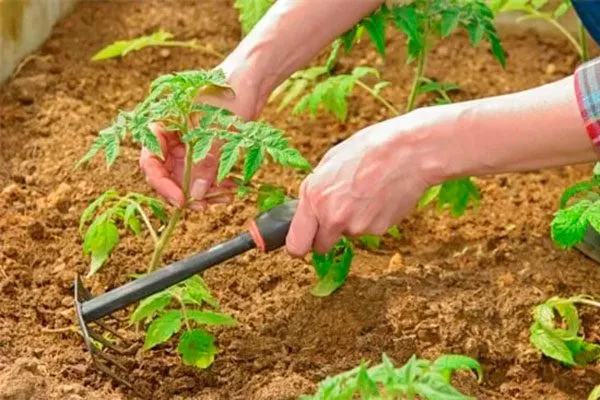
- Loosening. This is carried out immediately after watering to provide the root system with access to oxygen.
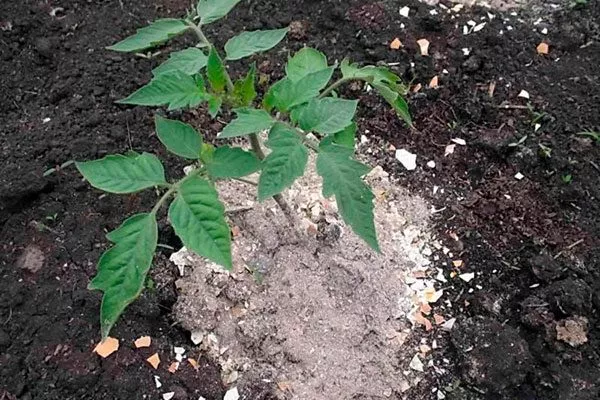
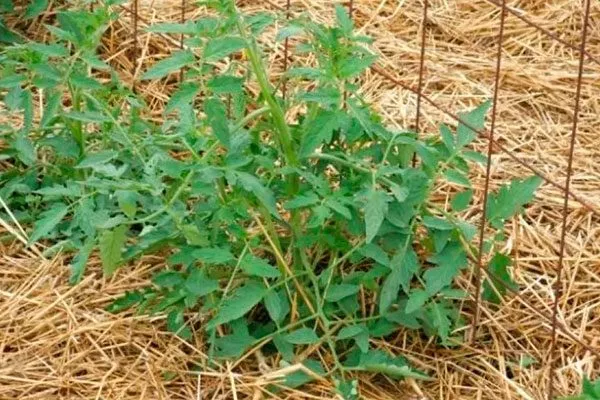
- Mulching. Covering the root zone helps retain moisture in the soil and prevents weed growth. Various materials are used as mulch, including fresh grass, dried straw, rotted compost, and wood shavings.
Pest and disease control, prevention
The hybrid is resistant to fungal infections and insects, meaning it doesn't require frequent treatment with fungicides or other pesticides. Tretyakovsky F1 is particularly resistant to fungal diseases. Despite this, it's important to ensure proper late blight prevention and pest control.
Late blight
This fungus attacks leaves and spreads quickly through bushes, leaving behind brown and russet spots on leaves and fruit. Each bush must be carefully treated to prevent fatal consequences for the entire crop.
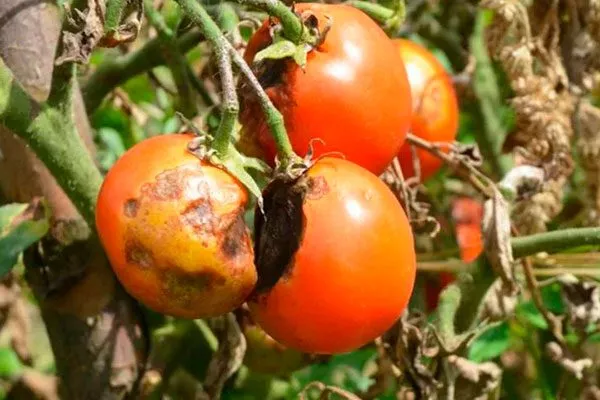
This fungus is especially active in damp and cool weather, so prevention is key in controlling it:
- when rain sets in, tomatoes should be treated with special agents such as Fitosporin, Ecosil and Bordeaux mixture;
- If the first signs of leaf damage are detected, they should be removed and destroyed by burning;
- When picking tomatoes, it is recommended to pick them when they are still green, wash them thoroughly and disinfect them by keeping them in water at a temperature of +55…+60°C for 2-3 minutes.
A real owl
This is a small butterfly whose larvae can cause damage to the Tretyakovsky F1 tomato variety. The pests not only eat the leaves but also damage both green and ripe tomatoes. The insect survives the winter well, hiding at a depth of about 20-25 cm.
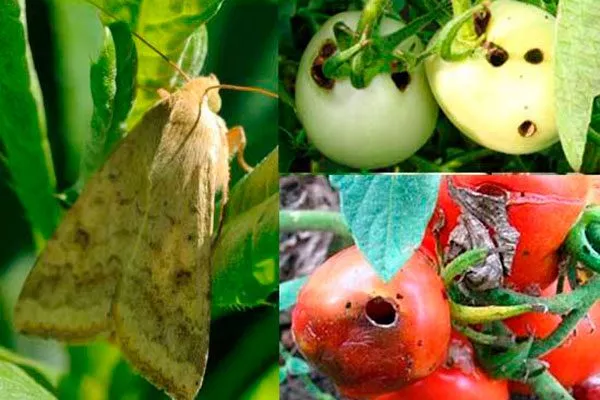
To protect plants from harmful insects, it is recommended to spray tomato bushes, carefully remove weeds, and thoroughly dig the soil after harvesting.
Colorado potato beetles
In southern regions, growing Tretyakovsky F1 tomatoes can be threatened by Colorado potato beetles, especially if potato fields are located nearby. Preparing the soil for planting in the fall and spring, as well as hardening the soil before planting, will help prevent the development of pathogens.
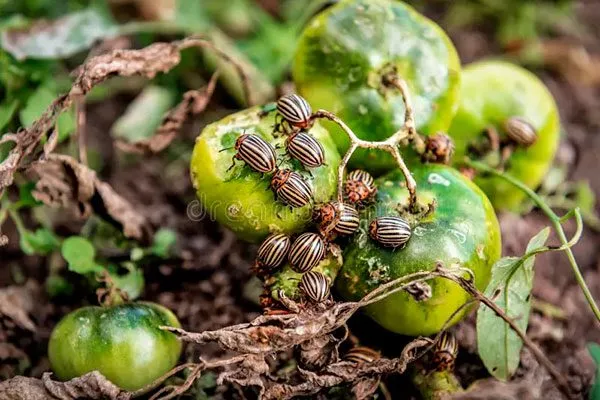
To control the Colorado potato beetle, it is recommended to use the insecticide Komandor. Larvae must be removed manually.
General rules of prevention
The following methods are used to prevent this:
- Spraying tobacco powder or ash between the rows to repel insects;
- irrigate the soil and leaves with a soap solution to prevent the development of pests;
- During the rainy season, to prevent the spread of fungal infections, plants are sprayed with Fitosporin or Bordeaux mixture;
- regular ventilation of the greenhouse to prevent slugs and snails from damaging leaves and stems;
- loosening to destroy pest larvae so that they do not reproduce near plants;
- removing unwanted weeds, where fungal spores often find refuge;
- maintaining optimal watering and fertilizing conditions for plant health;
- adherence to crop rotation rules to reduce the risk of disease - crops after which tomatoes can be planted include onions, radishes, horseradish, turnips, cucumbers, zucchini, and legumes;
- treating the greenhouse and agricultural tools with a copper solution, which can be used to spray tomatoes before they set fruit;
If a plant is infected, it must be removed immediately to prevent the infection from spreading to other plants. Afterward, treat the remaining plantings with Fitosporin.
Pros and cons
Each tomato variety has its own advantages and disadvantages. The advantages of the Tretyakovsky variety include:
A definite plus is their richness in vitamins and microelements. Tretyakovsky tomatoes contain vitamins B, A, and C, as well as potassium, calcium, and magnesium, which have beneficial effects on the human body. They increase resistance to stress, promote healthy heart and vascular function, strengthen the immune system, and are an excellent choice for dietary and baby food.
Among the disadvantages of the variety it is worth noting:
Reviews
Tretyakovsky is one of the best tomato hybrids. It boasts competitive yields, weather resistance, and excellent flavor. Growing it requires minimal effort: regular watering, fertilizing, weeding, and periodic soil loosening. Proper shaping is essential.