
Many gardeners and summer residents grow tomatoes, hoping for a bountiful fall harvest to preserve for the winter. However, sometimes tomatoes hanging on the vines have lost their appeal due to cracking. There are several causes for this, all of which can be avoided with the right approach.
Why do tomatoes crack on the bush?
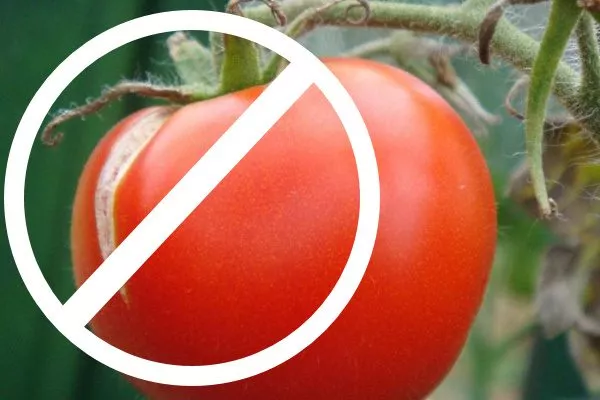
Tomatoes in greenhouses and open ground can crack as they ripen. To understand why, learn about the most common reasons why tomatoes crack.
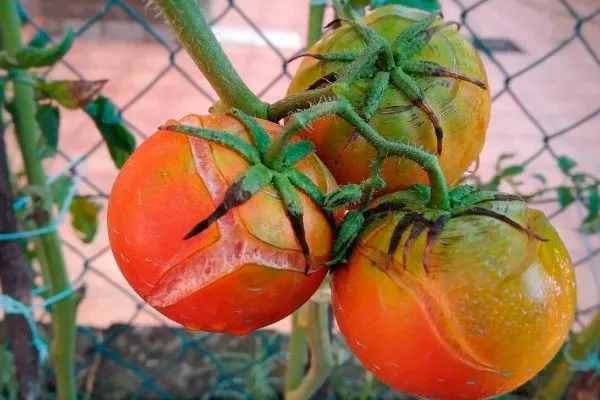
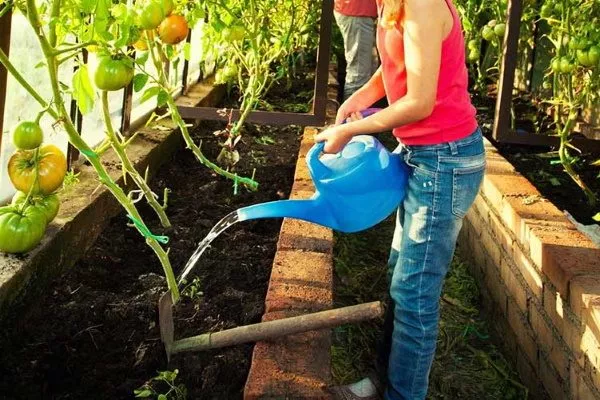
Incorrect and irregular watering
Tomatoes often suffer from improper watering while still on the vine, causing cracks to form. Tomatoes are especially sensitive to moisture.
- ✓ Optimal water temperature for watering: +20-22°C to avoid stress on plants.
- ✓ The watering depth should reach 25-30 cm to provide moisture to the root system.
When the soil is dry and you water it, tomatoes begin to absorb water very quickly. Tomato skins can't immediately stretch, so they crack due to excess liquid. This is especially true for tomatoes grown in greenhouses, where high temperatures cause the soil to dry out immediately after watering.
Watering in hot weather
Never water tomatoes in hot weather. If you water completely dry soil in direct sunlight, the roots will quickly absorb the moisture and disperse it throughout the plant.
Ultimately, this will lead to the same consequences as with irregular watering: the fruits will quickly become saturated with moisture, become larger in size, and then begin to crack.
Unsuitable microclimate
If you're growing tomatoes in a greenhouse, cracking may be caused by improper conditions. For healthy development, daytime temperatures should be between 22-25°C (72-77°F).
During extreme heat in the greenhouse, temperatures can reach 40°C and even 50°C. This causes growth to stop, and the tomato skins become tougher. When growth resumes, the hardened skins burst, causing cracks to form on the fruit.
Incorrect feeding
Tomatoes need fertilizer just as much as regular watering. However, improper feeding can actually harm the developing fruit, causing them to crack.
Helpful tips:
- Tomatoes require fertilizing twice a month during the growing season. Fertilizers should be combined with watering, and the concentration of potassium, phosphorus, and nitrogen applied should be monitored.
- If you feed tomatoes with concentrated fertilizer rather than diluted with water, this can cause the fruits to crack.
- In a greenhouse, keep the concentration even lower than in open ground, since high humidity causes plants to absorb nutrients faster, which prevents them from having time to assimilate them.
- Don't forget about the microelements that tomatoes need during their ripening period.
Regular heavy rains
Prolonged rainy and damp weather can cause tomato beds to become waterlogged. The plant simply can't cope with such an abundance of constant moisture. The fruits literally burst from the inside, causing their skins to split.
In such cases, cover exposed plantings with plastic to protect them from excess moisture. Drainage channels will help drain excess water. Sometimes, completely green, unripe tomatoes crack. Such fruits will never turn red.
Excessive pinching and leaf removal
When the bushes have already produced a sufficient number of fruits, most gardeners prune the tops of the plants, removing excess lateral shoots. This way, they try to direct all the plant's energy toward fruit ripening.
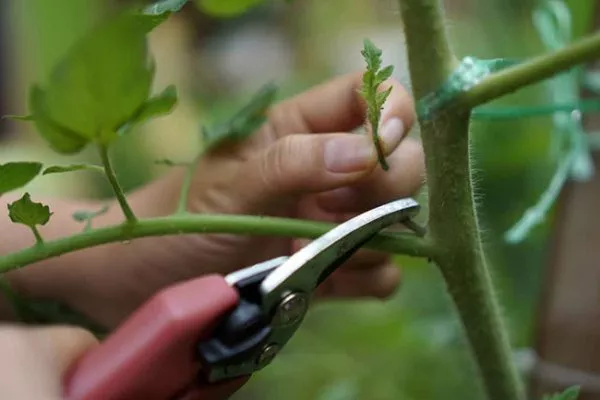
However, having lost most of its leaves and shoots, the plant begins to release all its moisture to the fruit. If there's too much moisture, the tomatoes crack.
Lack of light
Tomatoes are sun-loving plants. In low light, shoots become elongated, growth is poor, fruiting is delayed, and the taste and quality of the fruit deteriorate.
Insufficient light most often occurs when plants are planted too closely together, which is especially true when grown in a greenhouse. This also poses a risk of various diseases due to poor oxygen supply.
Incorrect lighting
Direct sunlight can damage tomatoes. To preserve and protect tomato plants, it's recommended to use mesh material stretched over the beds to block excessive light.
Overload of bushes with ovaries
If you don't remove tomato suckers in a timely manner, you'll have to wait a long time for a good harvest. This happens because the ovaries don't receive enough nutrition—all the energy goes into growing green mass rather than fruit formation.
Diseases
Often, the cause of tomato cracking is not the growing conditions, but the development of various diseases. Most likely, only chemical treatments will help combat the disease, but to take effective measures, determine the specific problem you need to address.
Common diseases:
- Blossom-end rot. Typically, it appears on green fruits as a black spot near the stem. The main cause is calcium deficiency.
- Alternaria. A fungal disease that causes dry spots on leaves and fruit, which detracts from their marketability. Over time, this leads to leaf dieback and spots appearing on the stem. Eventually, the plant wilts. Fungicides are essential to save the plant.
- Gray rot. A fungus that thrives in damp and cool weather. The disease affects not only the stems but also the tomatoes, causing dark gray spots to appear on them.
What is the danger of cracking?
The cracks themselves are a cosmetic defect, making them unsuitable for mass distribution. Furthermore, they are not used for canning, as exposure to boiling water will remove the skin and the flesh will become mushy.
However, the main danger is that cracks in tomatoes can become an entry point for various infections. Once inside the tomato, pathogenic microorganisms cause active disease development, leading to fruit rot. These tomatoes are unfit for consumption.
If the peel begins to crack, this indicates a problem with the growing process, and if the effects of unfavorable factors are not eliminated, fungal, viral, or bacterial infections will join the harmless cracks.
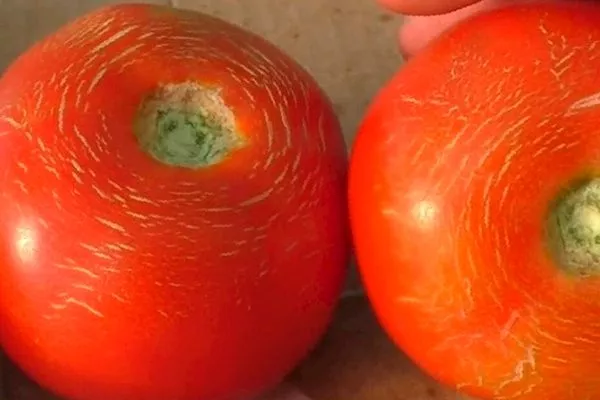
Types of cracking:
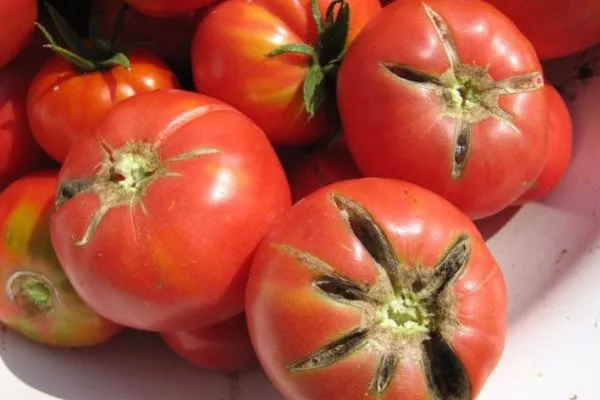
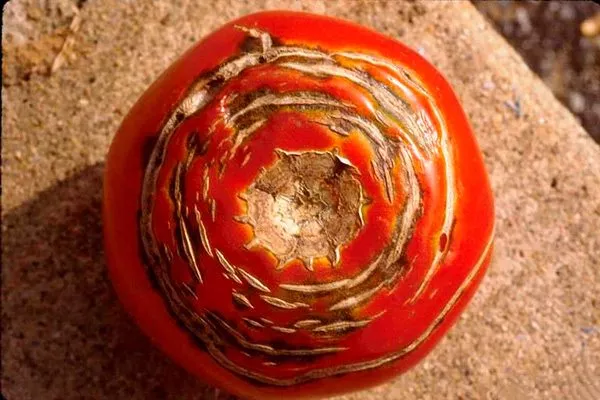
- Radial. Cracks form along the stalk, radiating outward. This occurs due to temperature fluctuations, insufficient watering with periods of increased soil moisture, varietal characteristics, or boron deficiency.

- Concentric. Cracks form at the stalk, spreading along the stem in circles and semicircles. There are several causes: a characteristic of certain varieties, an imbalance in water, and the use of excessive amounts of nitrogen-containing fertilizers.
- Mesh. A net-like pattern develops at the top of the tomato plant. This occurs during the green fruit formation stage. This is caused by flower injury during flowering, cold weather during bud and ovary formation, high nitrogen levels in the soil, or excess calcium with a potassium deficiency.
What to do with tomatoes that have cracks?
Many gardeners don't know what to do with tomatoes that have cracked. Since cracking is not a disease, these fruits are safe to eat.
Split tomatoes should be picked first to prevent infection from developing. Be sure to remove the damaged area before eating. These tomatoes are not suitable for storage or pickling.
If you have a lot of fruits and you can’t just eat them, use them to prepare various dishes:
- Tomato sauce. Remove the peel and any defects, and heat treat the remaining pulp.
- Tomato paste. Prepared from tomatoes by baking.
- Salad dressing. Mix the juice of ripe fruits with vinegar and spices.
- Tomato oil. Roast ripe vegetables, peel them, then add spices and herbs and mix everything with butter.
- Freezing. Cut out any deformed areas, cut the tomatoes into medium cubes or wedges and blast freeze.
Cracked tomatoes are a problem that can be easily solved. Use deformed tomatoes for processing, and you'll get the most healthy and delicious dishes to add variety to your diet.
Prevention: How to avoid tomato cracking?
The key to obtaining a healthy, high-quality harvest is maintaining proper growing conditions and promptly addressing any care issues. To prevent tomatoes from cracking, follow these care guidelines.
Proper feeding
Tomatoes are a rather capricious and finicky crop that reacts sharply to any soil problems. To avoid soil depletion, apply the first fertilizer before planting the seedlings. Use mineral fertilizers or well-rotted manure.
Next, apply fertilizers in stages:
- A week after planting in the ground. Add nitrogen compounds, for example, urea, calcium or ammonium nitrate - 150 g per 10 liters of water.
- After 10 days. Water the beds with a weak solution of potassium permanganate, repeating the treatments every 14 days. Additionally, fertilize the soil with a solution of chicken manure – 1 kg per 15 liters of water. Sprinkle ash around the bushes to prevent fungal infections.
- In another 10 days. Apply ammonium nitrate at a rate of 20 g per 10 liters of water. To speed up ripening, prepare a solution of 10 liters of water, 15 g of potassium sulfate, 10 g of urea, and 15 g of superphosphate.
- At the flowering stage. Use azophoska for watering.
- Perform the remaining fertilizing several times a month. Use organic fertilizers in the form of solutions.
As fertilizers, you can use various compounds in the form of folk recipes or store-bought compositions.
Nitrogen compounds
Use nitrogen compounds to water your plants, which will help prevent cracking. Dissolve urea and saltpeter in warm water, then apply to the roots. Use about 15 g of each compound per 10 liters of water.
Organics
To prevent tomato plants from becoming misshapen, feed them with organic matter. Use rotted manure, compost, or dried bird droppings. Dilute the organic matter in warm water at a ratio of 1:20. Apply root feeding at a rate of 1 liter per plant.
Mineral fertilizers
Mineral fertilizers (phosphorus and potassium compounds) will help protect tomatoes from cracking. You can sprinkle the holes and soil with ash to prevent the development of diseases that can cause cracking.
Mulching the soil
Mulching the soil It is considered an effective method used to prevent rapid evaporation of moisture from the soil.
- Prepare mulching material (straw, sawdust) 2 days before use.
- Mulch early in the morning to conserve moisture after watering overnight.
- Renew the mulch layer every 3-4 weeks to maintain effectiveness.
It's very simple to do: cover the top layer of soil with straw, grass, or wood shavings. This will protect the soil from drying out and slow down excessive weed growth.
Protection from direct sunlight
Bushes and fruits are often exposed to scorching sunlight. This is very dangerous, as the ultraviolet rays cause sunburn, which leads to cracking and drying out of the bushes.
The problem is easy to fix: stretch a diffusing net or tarp over your garden bed or greenhouse. If you're growing tomatoes in a greenhouse, whitewash the walls for best results.
The ideal temperature for tomatoes is 22°C (72°F) during the day and 16-18°C (61-64°F) at night. In a greenhouse, use containers filled with water to help cool the hot air at night. Don't forget to ventilate the room.
Normal watering
Regular watering will help prevent tomato cracking. Water the plants in the morning before the soil warms up, or in the evening after the heat subsides. Avoid watering during the day, as this will be ineffective—the moisture will evaporate quickly.
It's best to water directly at the roots. Plants don't like rain or spraying. If moisture gets on the leaves, it can cause burns.
Selecting varieties that are not prone to cracking
| Name | Resistance to cracking | Ripening period | Fruit type |
|---|---|---|---|
| Farmstead salting | High | Late | Small size |
| Bohemia F1 | High | Average | Large |
| Vladimir F1 | High | Average | Large |
| Asteroid | High | Average | Large |
| Rio Grande | High | Average | Plum-shaped |
| Lady fingers | Average | Early | Pear-shaped |
| Raspberry Viscount | Average | Average | Large |
| Pink honey | Low | Late | Very large |
| Grushovka | High | Average | Elongated |
You can pre-select tomatoes that are resistant to adverse climates and cracking. Familiarize yourself with the varieties before planting:
- Farmhouse pickling. The fruits take a long time to ripen and are small in size, but have a shelf life of 5 months. They are excellent for pickling and salting.
- Bohemia F1. The fruits grow quite large, reaching up to 140 g, and can withstand long transportation. They store well.
- Vladimir F1. This hybrid produces fairly large, firm fruits that store well, are resistant to various diseases, and are not prone to cracking.
- Asteroid. The variety is characterized by strong immunity, dense and large fruits, which are used for pickling.
- Rio Grande. A popular variety that produces plum-shaped tomatoes. The fruits store well, and the plants are drought-resistant.
- Lady fingers. Pear-shaped fruits. Excellent for pickling.
- Raspberry Viscount. A low-growing, low-maintenance variety that produces large fruits. Each tomato averages 130 g.
- Pink honey. The fruits are quite large, kidney-shaped, and weigh on average up to 500 g.
- Grushovka. An easy-to-grow variety. The tomatoes don't crack, have an elongated shape, and have a long shelf life.
Trivial mistakes
Gardeners often make simple mistakes when trying to "cure" cracked tomatoes. Typically, upon discovering cracks, people try to overwater the plants. This only makes the problem worse.
Gardeners also fertilize tomato plants incorrectly. Plants don't require nitrogen or phosphorus fertilizers during fruiting. However, they do require potassium and boron fertilizers.
The biggest mistake gardeners make is ignoring the problem. In fact, you might not notice cracked tomatoes if you're growing them for yourself rather than for sale, but it's best to find the cause and try to fix it.
Answers to frequently asked questions
Can you eat cracked tomatoes?
If you don't see any signs of fungal disease, it's safe to eat. Cracking is a normal part of the fruit. You can simply remove the cracked part and eat the remaining tomato.
How to prevent tomatoes from cracking?
Provide proper care for your plants. Don't forget to mulch the soil around the plants and maintain a regular watering and fertilizing schedule. During extreme heat, cover your tomatoes to protect them from direct sunlight.
Are there varieties that are resistant to cracking?
Yes, breeders have taken care of these varieties. Late-ripening tomatoes and tomatoes with thick skins rarely burst. Pink tomatoes are more likely to suffer from this problem. This isn't a problem if you're growing these varieties for juice.
You can avoid problems like tomato cracking by choosing the right planting location and following all care guidelines, including watering, fertilizing, loosening the soil, and mulching. This will ensure delicious, deformed fruits.
Thanks for the article, very informative. I also have cracks appearing on some varieties in my greenhouse. I try to properly care for and water the tomatoes, and I mulch the soil. My tomato harvest is always good, but cracks still appear.
Hello! It's possible that tomatoes are cracking due to overwatering in hot weather, especially if they're almost ripe.
They can also burst due to improper or untimely fertilization. Pay attention to the leaves: if they've turned pale, the tomatoes lack nitrogen; if they've turned purple, there's not enough phosphorus; if they're drying out, they need calcium. If dark veins appear on yellowed leaves, the plant needs potassium.
Perhaps there were temperature issues in the greenhouse, or you overdid it with removing side shoots, as the lack of foliage causes the bush to direct excess water from the roots to the fruit when watered.
I've been growing tomatoes for many years. They're my favorite vegetable crop. I devote a lot of attention to them, just like flowers. Summer is almost over now. It's been cold and rainy here.
I'm not watering the tomatoes right now. The tomato plants are healthy, the leaves are spotless, green, not drying out, and fruit buds are still forming at the tops. But the tomatoes are cracking, and while there are many healthy tomatoes on the plant, there's always one with a crack.
Tomatoes are growing in greenhouses. Right now, half the greenhouse door is open at night and during the day. The greenhouse itself is dry, and the soil above is dry and mulched with grass.
I think the moisture comes from the garden and the air, since it's been raining here all August, every day, and the humidity is high. The soil in the garden is very damp.
This evening we collected two buckets of cracked tomatoes.
This year, even the apple trees are cracked due to the rain. Well, what can you do? You can't argue with nature.
My tomatoes also crack, but I noticed it only happens during rainy summers. That's why for the last two years I've been covering my tomato beds with plastic during rainy seasons. It's been a lifesaver. I've even gotten the hang of growing some varieties right in the greenhouse, but I always leave the top open. I only close it during bad weather. I recommend trying this—no hassle with covering them (just cover them and that's it).