
Getting a good harvest of the Far North tomato variety requires considerable effort. Although prized for its low maintenance, it doesn't require pinching or staking and is forgiving of minor gardening mistakes by novice vegetable growers. However, it's best to know the basic steps of caring for the crop.
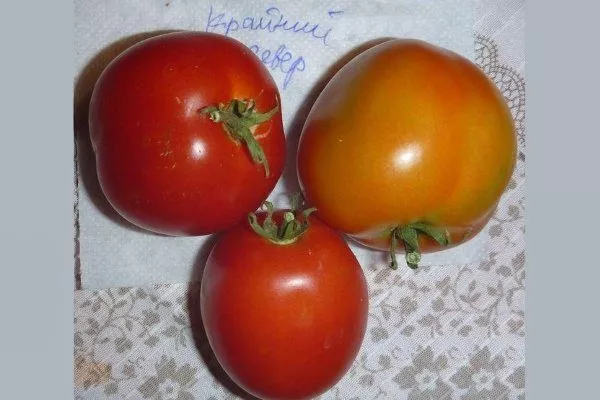
Far North tomatoes come in round and oblong, smooth and ribbed varieties.
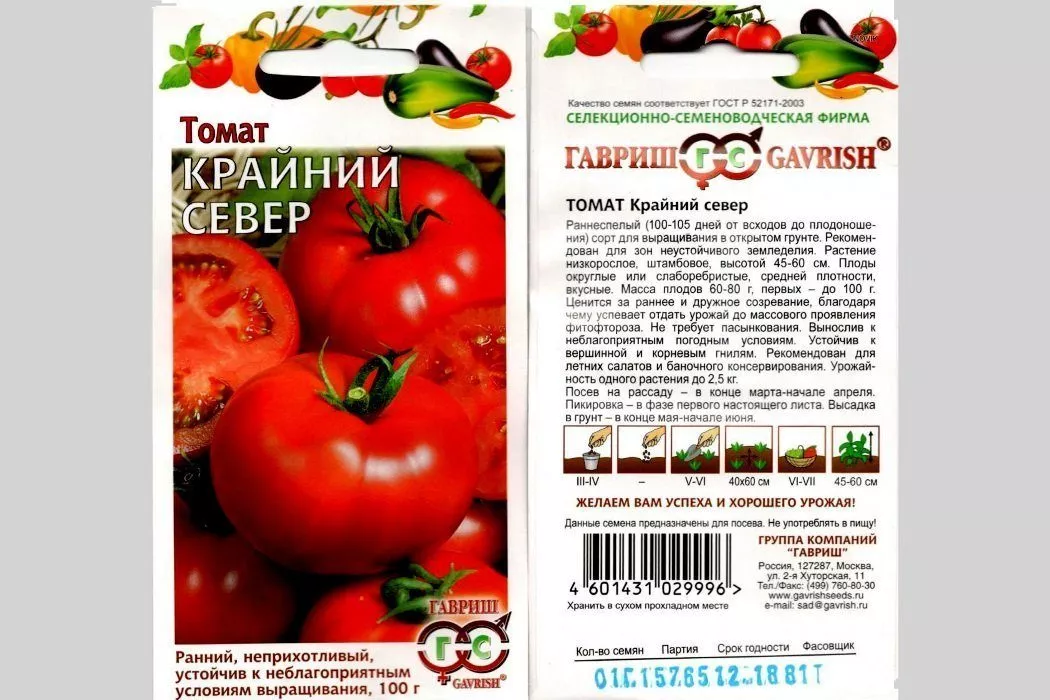
Tomato seeds Far North
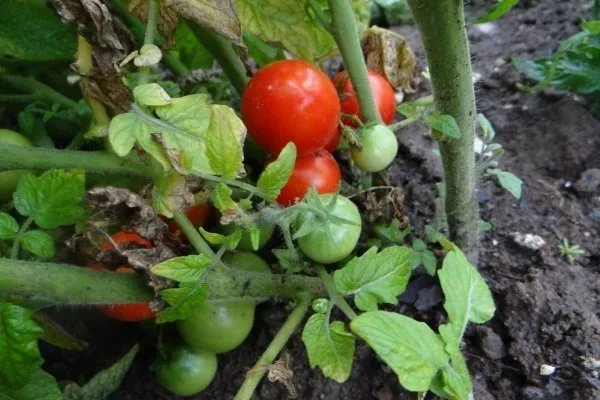
The Far North tomatoes are low-growing, with a maximum bush height of 55 cm.
Description of the variety
Tomato Far North grown in open ground or under cover. The fruits are suitable for fresh consumption, for making a variety of salads, and for canning.
This variety is determinate, meaning the bush grows no taller than 55 cm. The first inflorescence appears after 2-3 leaves emerge. The bush typically produces up to 6 simple inflorescences.
- ✓ Resistance to temperatures up to +5°C without loss of yield.
- ✓ Ability for uniform ripening of fruits in conditions of short daylight hours.
The leaves are medium-sized and range in color from green to dark green. This tomato not only tolerates low temperatures but also ripens very early. From germination to harvest, it takes only 80-90 days.
The variety was developed by the agricultural company "Biokhimik" specifically for the northern regions of Russia. It was added to the State Register in 2007.
Fruit characteristics and yield
The fruits are round or slightly elongated, smooth or slightly ribbed, and medium-firm. Unripe tomatoes are green, while ripe ones are red. Each fruit weighs 60-80 g. The flesh is juicy, sweetish, and medium-firm. Each tomato contains 4-6 chambers.
The fruits are characterized by their versatility; they are consumed fresh, as well as used for juice and canning.
On average, a single bush yields up to 1.5 kg of fruit. However, proper care and favorable weather conditions positively impact the yield, and a single bush can yield up to 3 kg of tomatoes.
When planting in a dense manner, 8 bushes per 1 square meter, up to 16 kg of tomatoes can be harvested from such a site.
Advantages and disadvantages of the variety
Like any variety, the Red North tomato has its advantages and disadvantages. Among its positive qualities are:
- unpretentiousness - the variety is suitable for beginners in gardening;
- cold resistance;
- fast and uniform ripening;
- versatility of fruits;
- minimal care - the bushes do not need garters or pinching;
- resistance to blossom-end and root rot.
In northern regions, root rot is a pressing issue, as climate conditions favor this process—low temperatures coupled with high soil moisture create an ideal environment for the development of putrefactive microorganisms. This tomato is also resistant to late blight—due to the early ripening of the fruit, it doesn't have time to affect it.
Some gardeners consider the following to be disadvantages:
- taste qualities of tomatoes;
- crop yield.
However, it's important to remember that there's no accounting for taste, and yield depends largely on the growing region, weather conditions, and care. Therefore, each gardener must decide for themselves whether a particular variety is suitable for them in these categories.
We invite you to watch a video in which a gardener from Yakutia harvests the "Far North" tomato variety:
Selecting seedlings
If there is no time grow seedlings yourself, then they buy it, choosing according to the following criteria:
- age 45-60 days;
- 6-8 true leaves, healthy in appearance, green in color;
- height no more than 30 cm;
- stem diameter 5-7 mm;
- well-developed root system, without damage;
- absence of formed fruits.
Before purchasing, carefully inspect seedlings for pests that may be nesting under the leaves. Avoid purchasing seedlings if:
- the leaves are a bright, unnatural green color, which indicates that they have been treated with nitrogen-containing substances;
- The leaves are twisted and deformed, this is the first sign of disease.
Soil and fertilizers
The key to successful tomato growing is soil. It should be light and loose, with good moisture and air permeability.
- ✓ Soil pH should be between 6.0-6.8 for optimal nutrient absorption.
- ✓ The soil must contain at least 3% organic matter to maintain structure and water holding capacity.
The soil is dug over and thoroughly cleared of roots and plant debris. Fertile soils should be fertilized with potassium and phosphorus fertilizers, while low-fertility soils should be fertilized with organic fertilizers. Acidic soils should be limed, as tomatoes prefer light soils with a neutral or slightly acidic pH. Dolomite flour, slaked lime, and crushed chalk are used for this purpose.
Well-rotted manure, supplemented with superphosphate, is also suitable as fertilizer. This mixture is spread over the entire surface of the dug bed.
In any case, the potassium rate should be 2-2.5 times higher than the amount of nitrogen applied. On average, 50-60 g of nitrogen and phosphorus fertilizers and 80-100 g of potassium fertilizers are applied per square meter of tomatoes. If urea is used as a nitrogen fertilizer, it is applied at a rate 1.5 times lower than other nitrogen-containing substances. A comparative analysis of the two fertilizers, urea and ammonium nitrate, is presented in this article.
Excessive nitrogen in the soil negatively impacts plant development. Tomatoes begin to grow very quickly and become elongated. They bloom profusely, but fruit formation is poor, and yield per plant declines.
To prevent insect pests in the spring before planting seedlings or sowing seeds, water the soil with a copper sulfate solution (dissolve 1 tablespoon in 10 liters of water). Use up to 1.5 liters of the prepared solution per square meter.
Growing conditions
Far North tomatoes require certain conditions when growing:
- Temperature. Maximum yield can be achieved if tomatoes are provided with a constant temperature of 20-26°C during the day and at least 16°C at night. If the temperature rises above or falls below the required level, the plant's development will be stunted, as will sudden fluctuations in temperature.
- Humidity. Tomatoes are drought-resistant. Humidity levels should be at least 70%. To set 1 kg of fruit, 120 liters of water per plant is required. Humidity does not affect the growth and development of the plant.
- Light. Tomatoes need plenty of light, with daylight hours ranging from 12 to 14 hours. When growing seedlings, it's worth extending the daylight hours with special lamps.
The tomato bed is prepared in the fall. They are grown in the same spot for 2-3 consecutive years, but with the addition of organic fertilizers. The best tomato precursors are:
- cabbage;
- cucumber;
- onion;
- zucchini.
Tomatoes should not be planted after their relatives in the nightshade family—peppers, eggplants, tomatillos, and potatoes. They should not be planted for at least three years after these crops.
Growing seedlings from seeds
To grow strong, healthy, and abundantly fruiting bushes, you need high-quality seedlings. These can be grown at home or purchased from trusted sellers. The sowing time depends on the growing region, based on the end of spring frosts. When growing seedlings from seeds, certain rules apply. The process consists of several stages.
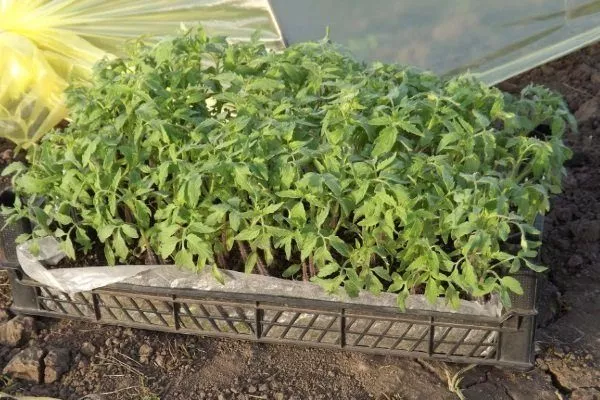
Seed preparation
Before sowing, the seeds are prepared and hardened. They are placed in a bag and heated in hot water (45°C) or on a radiator for 3 hours.
Then, the bag containing the contents is soaked in a potassium permanganate solution (1 g dissolved in 100 ml of water) for 25-30 minutes. After soaking, the seeds are rinsed thoroughly and left for 24 hours:
- in a solution of boric acid (0.5 g per 1 liter of water);
- or a solution of wood ash (2 tablespoons of ash and 1 liter of water);
- or use a solution of ash and mullein (you will need 1/2 teaspoon of each component, which is added to 1 liter of water).
Next the seeds are germinatedFill them halfway with warm water and wait for them to hatch. Change the water three times a day.
Germinated seeds are hardened in the refrigerator on the middle shelves for 19 hours, then kept at room temperature for 5 hours. This alternating heat and cold cycle is continued for 6 days, ensuring the seeds remain moist at all times. The prepared seeds are sown as seedlings or in open ground.
Soil preparation
For seedlings, prepare a loose, permeable soil mixture of turf, humus, and sand in a ratio of 2:2:1. Moisten it 6-7 days before sowing.
On the day of sowing, add 5-7 cm of soil to the container, level it, and compact it lightly. Then water with a hot copper sulfate solution (1 teaspoon per 10 liters of water).
Read about soil disinfection before planting seedlings. here.
Contents and location
To grow seedlings, use plastic cups, special trays, boxes, containers, and similar suitable containers. These are filled with potting soil. Place the containers on a south-facing windowsill or in a warm room with an optimal temperature.
When sowing, the temperature should be maintained at +20-25 °C.
A week after germination, harden the seedlings by lowering the daytime temperature to 12–15°C and 6°C at night. The future seedlings are kept in these conditions for about 5–7 days, until the first true leaf appears. After this, they are returned to a comfortable temperature.
Planting seeds
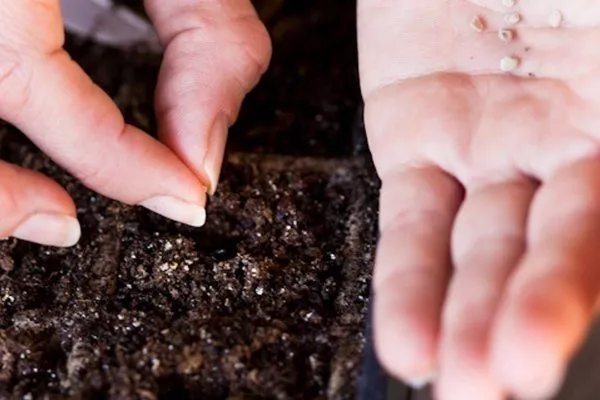
The seeds are sown for seedlings In early to mid-April, into prepared soil. This is done as follows:
- Place the seed containers in a warm location. Covering them with plastic or glass is not necessary to speed up germination. With regular watering, high-quality seeds germinate quickly and don't linger in the soil.
- The seeds are sown in moist soil.
- Make furrows, leaving a distance of 5-7 cm between them.
- Water them from a teapot and place the seeds at a distance of 1.5-2 cm.
- After sowing, lightly cover the seeds with soil. The seeds are sown to a depth of 1-2 cm.
A good option for planting seeds is using peat tablets. They are pre-soaked, then the potting mix is poured into plastic cups and watered with warm water. The seeds are placed on the tablets, and for better germination, a drop of Zircon stimulator is added to them using a pipette (2 drops per 100 ml of water, 1 drop per seed). A small amount of substrate is then sprinkled on top of the seeds.
Caring for seedlings
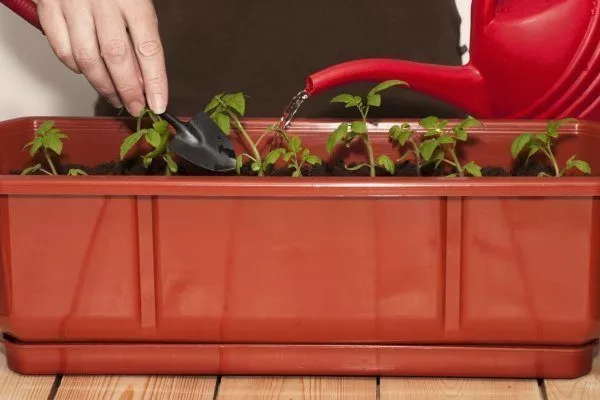
Containers with seedlings are left in a bright place where the air temperature does not drop below 16 °C. Picking This is done when the plants have two true leaves and the stems have strengthened. They are planted in individual pots at least 10 cm in diameter. The transplanted seedlings are shaded for 2-3 days, meaning they are moved to a shady location to avoid direct sunlight.
During the first week after transplanting, keep the seedlings at a temperature of 20-22°C (68-72°F) in clear weather; on cloudy days, 15-16°C (59-61°F) is sufficient. Once the plant develops 4-5 true leaves, reduce the temperature to 18°C (64°F) during the day and 14-15°C (57-59°F) at night. On cloudy days, the temperature may be 2-3°C (3-5°F) lower.
Seedlings are watered moderately on sunny days, early in the morning. Excessive soil moisture and high air humidity lead to vigorous plant growth and fragility, which can lead to stem breakage during transplantation. On the other hand, insufficient soil moisture negatively impacts tomato yield. Watering is reduced a week before planting young plants in their permanent location.
Transplanting seedlings into the ground
The seedlings are planted in a permanent location in May-early June:
- The air should warm up during the day to +14…+15 °C, and the soil to +10…+12 °C.
- Small holes are dug in the garden bed, leaving a distance of 30-40 cm between them.
- The holes are watered with a weak solution of potassium permanganate.
- The seedlings are planted 2 cm deep, up to the cotyledon leaves.
- Strongly elongated seedlings are planted at an angle, covering the stem to 1/4 or 1/3 of its height.
Some vegetable growers recommend feeding tomatoes with yeast fertilizer. This is made the day before planting using 10 grams of fresh yeast and 10 liters of water. Pour 220 ml of the "yeast" water into the hole, and then the plants are planted.
After planting, the soil around the roots is tightly pressed down, there should be no mound left near the stem, and the soil is watered generously.
Feeding seedlings Fertilization is also necessary. The first feeding is done 8-12 days after transplanting, using mineral fertilizers. These can be purchased ready-made at the store or mixed at home.
Dissolve in 10 liters of water:
- 5 g ammonium nitrate;
- 15 g potassium chloride;
- 40 g superphosphate.
If necessary, repeat the feeding 10 days after the first one.
Ten days before transplanting the seedlings into open ground, harden them off by gradually lowering daytime and nighttime temperatures. Three to four days before, take the plants outside for the night.
Care and cultivation in open ground
Growing and caring for tomatoes from seeds in open ground is in many ways similar to growing seedlings, but there are some unique features to the process.
With this type of cultivation, the harvest will appear 3 weeks later.
Open ground conditions
Since the "Karainiy Sever" tomato is one of the most cold-hardy varieties, the seeds can be safely sown directly into the ground. In southern regions, they are sown in warm soil as soon as the last frost has passed. In northern regions, sowing occurs in late April, but the bed is covered with a transparent covering material. This will protect the tender seedlings from direct sunlight and cold temperatures.
Although this tomato is cold-resistant, the plant does not tolerate sub-zero temperatures.
Planting seeds in the ground
When planting seeds directly into the soil, adhere to the following rules:
- the seeds are planted dry;
- holes are made to a depth of 30-40 cm;
- the distance between holes is 40 cm;
- 3-4 seeds are placed in one nest;
- After sowing, water with warm water and cover with film, which is periodically removed to allow air to reach the seedlings;
- Thin out the seedlings after 4-5 leaves appear, leaving one strong seedling per nest.
Watering
Drip irrigation is ideal for tomatoes. If this method isn't possible, remember that tomato plants have deep root systems, so 8-10 liters of water per square meter is recommended.
Typically, tomatoes are watered once a week with warm, settled water. To prevent moisture from evaporating quickly, the soil mulch around the roots. However, weekly watering shouldn't be a rule, as it's necessary to be guided by the weather.
During heavy rainfall, avoid watering and mulching. Retaining moisture in the soil during high humidity can lead to root rot.
Loosening the soil, weeding and hilling
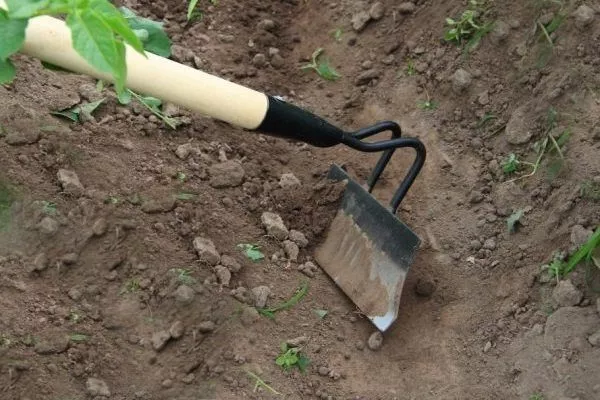
Loosening the soil will help manage excess soil moisture. This procedure is performed every two weeks. The first time, loosen the soil between the rows with a pitchfork or shovel to a depth of 12-15 cm. Then, use a hoe to a depth of 5-8 cm.
Timely weeding will help prevent widespread pest infestations. Weeding is carried out as the soil becomes contaminated with weeds. Typically, weeding is combined with loosening the soil.
Along with loosening and weeding, hilling is performed—a moist mound is created around the stem. The first hilling is performed 2-3 weeks after planting, and the second hilling is performed 2 weeks after the first.
Top dressing
Tomatoes respond well to fertilization. Depending on soil fertility, they are fertilized 1 to 3 times per season:
- Fertilizers are applied 2 weeks after sowing seeds or transplanting seedlings to a permanent location;
- before flowering;
- before the fruits ripen.
Fertilizers are either mineral or organic. Nitrogen-rich products are used for the initial feeding, as nitrogen is responsible for growth and the development of green mass. Ammonium nitrate is used for additional feeding (15 g per 10 liters of water, at a rate of 1 liter per plant). Cow manure (1:10) and chicken manure (1:15) diluted in water are also used. The rate is 1 liter per plant.
During budding and fruit set, apply mineral fertilizers rich in potassium and phosphorus. Apply 20 g of superphosphate and 10 g of potassium chloride per square meter. Apply the fertilizer into furrows 20 cm from the bushes. Keep the soil well moistened before applying.
Top dressing is carried out in the evening.
Harvesting and storage
The fruits ripen evenly. By the end of August, the plant has yielded its entire crop. The fruits are harvested during the day, when the dew is no longer on the bushes. If the tomatoes are not ripe yet, but must be picked, they are ripened indoors at a temperature of 20-25°C.
Ripe tomatoes are eaten immediately or stored on shelves in ventilated areas at an ambient temperature of 18-25°C for no more than 30 days. If transportation is necessary, pick the brown tomatoes.
Diseases and pests, prevention
The "Far North" tomato, as mentioned above, is resistant to some diseases, but it can still become ill. The main cause of these diseases is improper care. Errors in agricultural practices can trigger the development of gray mold, powdery mildew, white and black spots, and cladosporiosis. To prevent these problems, take the following measures:
- Fungicides that kill pathogens causing fungal and bacterial diseases are used, such as Pseudobacterin-2, Strobi, and others. When using fungicides, be sure to follow all manufacturer recommendations, including dosage and frequency of application.
- Preventive treatment of bushes at the beginning helps against mold growing season copper-containing preparations - copper sulfate solution, Bordeaux mixture, "Hom", "Abiga Peak".
- The most common pests attacking tomatoes include spider mites, aphids, cutworms, whiteflies, and slugs. If the infestation is small, treating the tomatoes with an onion infusion can help: add 200 grams of peels to 1 liter of warm water and let steep for 24 hours. For large insect infestations, more drastic measures are used, such as insecticides such as Molniya, Fastak, Marshal, and others.
- To get rid of slugs, sprinkle the soil around the bush with wood ash, tobacco dust, lime or ground pepper.
Not all bush diseases can be cured. If a bush is infected with a viral infection, such as viral streak, mosaic, or bacterial diseases such as verticillium wilt or bacterial canker, the plant should be completely dug up and burned.
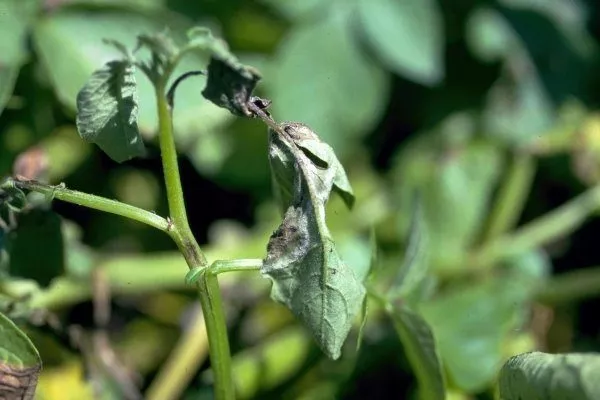
Tomato viral streak
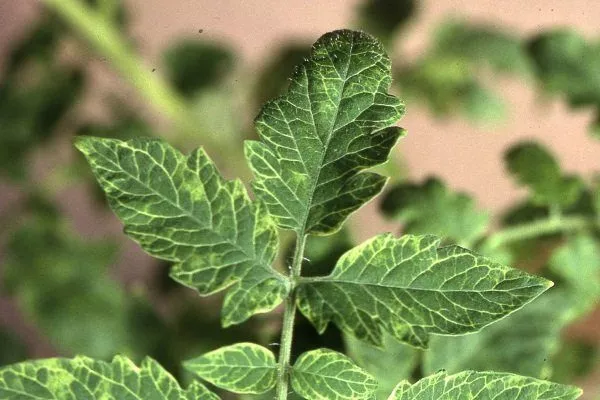
Tomato leaf affected by mosaic
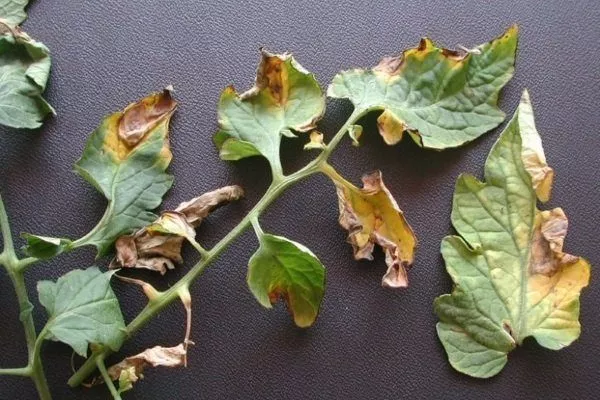
Verticillium wilt of tomato
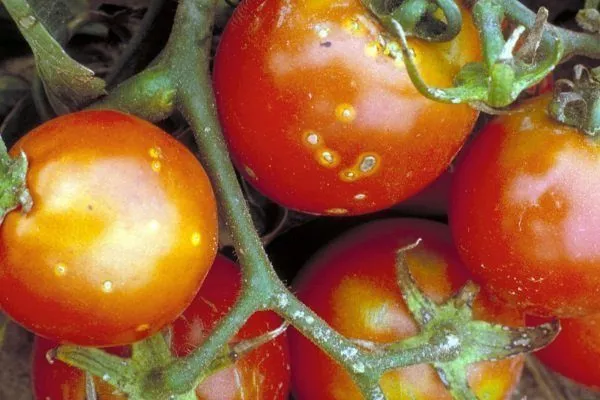
Bacterial canker on tomatoes
Possible problems and mistakes when growing
The plant's appearance will indicate any problems. For example:
- Twisted leaves. Leaves curled like this on a thick stem indicate an excess of nitrogen. It's washed out of the soil by overwatering. Upward-curling leaves indicate a mineral deficiency, in which case a complex fertilizer is needed. If only the lower leaves are curled, watering should be reduced.
This disease is also caused by aphids, spider mites, and whiteflies. These can be detected by inspecting the bushes. Insecticides are used to control them. - Shedding of ovaries. This indicates insufficient watering, as well as small fruits, in which case it is necessary to establish regular watering.
- Drooping appearance and curled leaves. They suspect the presence of a virus, and complex fertilizing and watering will help. If the plant doesn't return to normal after these measures, it is removed and burned.
- Yellowing of leaves. If it starts from the center of the leaf, it means the plant lacks potassium; the problem is solved by adding potassium-containing fertilizers.
Reviews of the variety
The "Far North" tomato is suitable for growing throughout Russia. Both experienced and novice gardeners can handle it, as this variety is low-maintenance, easily tolerates harsh weather conditions, and is disease-resistant. It also boasts excellent shelf life, transportability, and excellent flavor.