
The Damskie Fingers tomato is known to both professional and amateur gardeners. This variety has been around for a while, so it has established itself as a popular choice. It can grow and produce fruit vigorously both in greenhouses and outdoors. in open groundTherefore, it is recommended to grow it in various climatic conditions.
The origin of tomatoes
This tomato has been known for over 100 years, but was primarily cultivated in southern Russia. In 2006, the variety was added to the State Register. L. A. Myazin was the creator of this variety. Today, several varieties of this tomato are available, differing in fruit shape and color.
Description and characteristics of the Lady Fingers variety
Tomatoes are considered determinate varieties, as they ripen early. The first fruits can be harvested 100 days after planting.
Description of fruits and bush
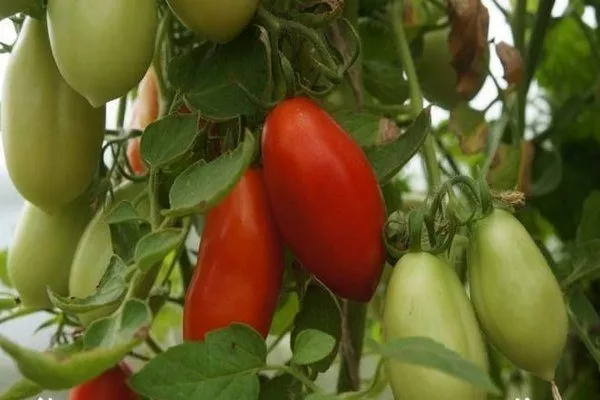
The bushes are not very tall – about 60 cm, but can reach 1 m when grown in a greenhouse. The dark foliage has an emerald hue. The plant is a racemose plant with simple inflorescences, each bearing about 5 fruits.
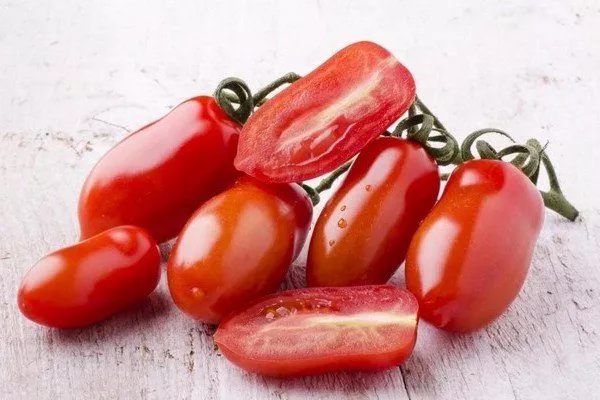
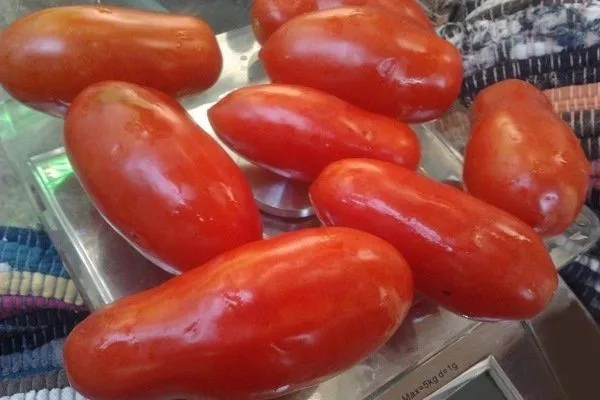
The fruits are cylindrical, slightly ribbed. The tomatoes are not large—about 60 g—and are almost uniform in size. The aroma and flavor are good—the fruits are sweet and tart, the flesh is tender and firm. The surface is shiny and smooth, with a dense texture.
Productivity and fruiting
This variety produces a good harvest—approximately 10 kg of tasty and juicy fruit can be obtained per square meter when grown outdoors. If Ladyfingers are planted in a greenhouse, an even greater yield can be achieved, provided all agricultural practices are followed.
Scope and features of use
This variety is considered universal and can be used for various purposes:
- preparing salads for the winter;
- obtaining lecho, tomato paste, ketchup;
- preservation;
- dried.
Advantages and disadvantages of this variety
The main advantages of the described variety are the following characteristics:
- easy to care for;
- the fruits do not crack;
- ripening occurs almost at the same time;
- the fruits do not fall off and remain well on the branches;
- the ability to collect seeds yourself – germination remains viable for up to 5 years;
- the fruits can be stored for a long time and tolerate long-distance transportation well;
- The fruits are universal in use.
This variety has practically no downsides, but there are several drawbacks:
- you can't get juice from the fruits;
- Tomatoes love warmth and light, so a large harvest can be obtained if they are grown in southern areas.
Cultivation techniques for Ladyfingers tomatoes
Planting for seeds and growing tomato seedlings It doesn't present any particular difficulties. The main thing is to prepare the seeds beforehand, which will allow you to remove empty ones and guarantee germination.
- ✓ Optimum soil temperature for planting seeds: not lower than +15°C.
- ✓ Required daylight hours for seedlings: 14-16 hours.
Working with seeds
Prepare your seeds for planting in advance by treating them with growth stimulants to prevent contamination. This will ensure your plants are disease-free and produce a good harvest.
You can also soak the seeds and place them on a cloth or napkin, moistening it periodically. Once the seeds sprout, transplant them into the soil, and discard any that don't sprout.
Growing seedlings
Planting seeds to obtain seedlings Carry out this procedure around mid-March (50-60 days before the planned planting). Depending on your climate zone, choose the optimal time.
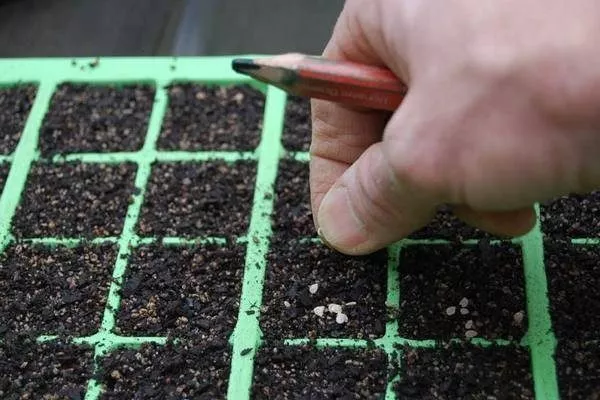
The landing procedure consists of several stages:
- Prepare the soil and planting containers. Treat the soil with a potassium permanganate solution to disinfect it. You can also use ready-mixed store-bought soil.
- Plant the seeds to a depth of no more than 1 cm, moisten the soil slightly, cover the boxes with a layer of film and place in a warm place.
- The first shoots will appear in about a week, after which remove the film and lower the temperature to 15 degrees Celsius. Don't forget about the need for proper lighting; install additional backlighting.
- When the third leaflet was formed, transplant the seedlings in separate containers. Remove the tip from the central root to speed up its development.
- About 14 days before planting the seedlings in a permanent location, begin hardening them off by taking them out into the fresh air for a couple of hours every day.
Planting seedlings in the ground
Around the 50th day of seedling growth, they need to be planted in open ground, but not earlier than the beginning of May.
Follow the following procedure:
- Plant early in the morning before the heat sets in, which will allow the tomatoes to adapt more easily to the new location;
- replant the plants together with the soil from the cup to the same depth;
- If the plant is too tall, plant it at a slight angle so that the extra stem is under the ground along with the root;
- leave a distance of about 50 cm between rows and at least 30 cm between bushes;
- stick to the plan - no more than 6-7 bushes per 1 sq. m.
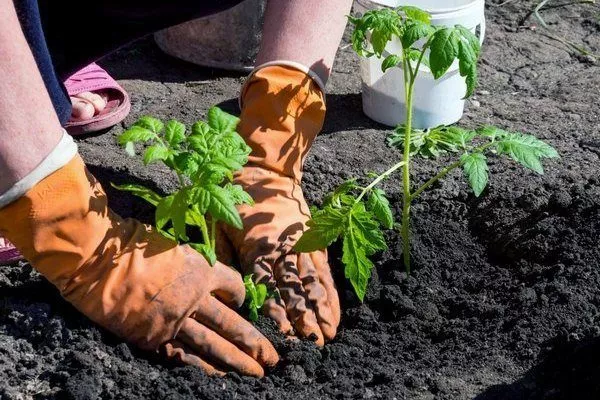
Planting and caring for plants
This tomato variety isn't particularly fussy and doesn't require any special conditions. However, to ensure a bountiful harvest, it requires following a few simple care and cultivation rules: timely watering, fertilizing, staking, and weeding, as weeds can carry dangerous diseases.
Tying up bushes
"Ladyfingers" grow no more than 1 m tall, so staking isn't necessary. For support, you can use a vertical or horizontal trellis, a low fence, or metal or wooden stakes.
Perform horizontal garter as the bushes grow:
- install support elements onto which you will stretch a wire or cord;
- Tie the plants to the taut wire - you can tie either the trunk itself or the clusters.
Watering
In spring, the soil is moist enough, so watering every 7-8 days is sufficient. For more frequent watering, use a hose, applying 40-45 liters of water per square meter of plot (approximately 7-8 plants).

Before flooding the trench, lightly moisten the soil to improve absorption. No watering is required during rainy or cloudy weather.
For watering, use warm water (about +14 degrees), as it is absorbed faster and better by the bushes.
Top dressing
Three weeks after planting the seedlings in open ground, the first feeding is carried out. A month later, fertilizer is applied again when active flowering and fruit formation begin.
- 3 weeks after planting: Apply nitrogen fertilizer for growth.
- A month after the first feeding: apply potassium and phosphorus fertilizers for fruiting.
The optimal method is to use ready-made fertilizers. The mixture should contain nitrogen (5 g), potassium (10 g), and phosphorus (10 g). Incorporate dry fertilizers between the rows.
Follow the following feeding schedule:
- water after planting;
- a day later, after the soil has dried out, apply fertilizer using the bulk method;
- Loosen the soil the next day;
- After 5-6 days, water the plant.
Watch a video about growing the Damskie Fingers variety in the ground:
Harvesting
Harvest the tomatoes as they ripen. The optimal time for this variety is June-July. Pick the tomatoes from the branches, being careful not to damage the skins. If you plan to store the tomatoes for a long time, remove the stems as well, otherwise they may damage the remaining tomatoes.
Transfer ripe tomatoes to boxes in a ventilated, dry area free of mold. At temperatures between 3 and 6 degrees Celsius, tomatoes can be stored for a long time. You can also pick tomatoes that are not fully ripe, which will extend their shelf life.
Ripe tomatoes cannot be stored longer than 20 days; if the fruits are unripe, they can be stored in boxes for longer than 30 days.
Disease and pest prevention
This tomato variety is characterized by high resistance to diseases and pests, regardless of whether it is grown in a greenhouse or in the open ground. The most common disease is mosaic, which requires that all affected leaves be removed and burned.
Bacteria and fungi are the main carriers of diseases, which are activated in the presence of unfavorable growing conditions.
To prevent the development of dangerous diseases or pest attacks, it is worth following several preventative measures:
- treat the seed material with a disinfectant infusion, for example, copper sulfate or potassium permanganate;
- During the period of active growth, sprinkle the bushes with dry ash or treat them with ash solution (helps against late blight);
- Remove affected leaves or bushes from the garden.
If a certain disease is detected, treat it with chemicals.
Learn how to combat late blight on tomatoes from this video:
Reviews
The Damskie Fingers tomato is easy to care for and doesn't require any special skills or knowledge. This variety regularly produces a large harvest, while the tomatoes are ideal for canning and have an interesting flavor.