
Fat Jack is a mid-early tomato variety characterized by good yields, low maintenance, and excellent marketable fruit quality. Its hallmark is the advantageous combination of low stature and high productivity. It performs well both in open beds and in a plastic greenhouse.
Description of the bush and fruits
This cultivar is a determinate variety. Its plants are short and fairly compact. They have a well-developed root system and a robust structure. Their appearance is described as follows:
- height - 0.5-0.7 m;
- low degree of spreading;
- strong stems that can withstand the load during the fruiting period;
- moderate foliage;
- Foliage: green, medium-sized, typical for the crop shape.
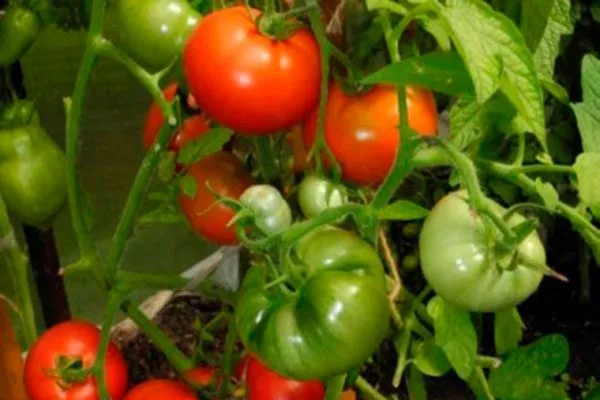
Fat Jack bushes, despite their low growth, require staking. This prevents the stems from breaking under the weight of the ripening crop. Plants should also be trained to 3-4 stems and moderately remove side shoots (it's possible to do without removing excess side shoots).
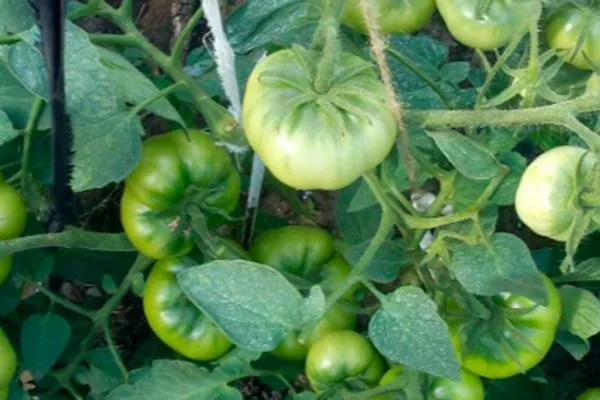
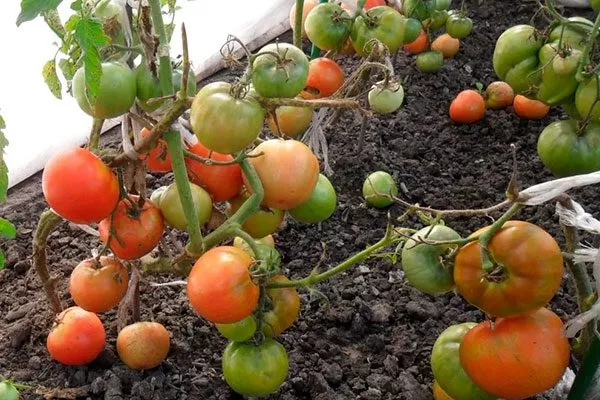
The yield of this variety is attractive, uniform in size and shape. The fruits are quite large and tend to gain weight quickly. They have the following characteristics:
- weight - 175-300 g;
- red or dark pink in color;
- neat flat-round shape;
- slightly pronounced ribbing;
- strong skin, smooth, with a beautiful shine;
- pulp: dense, fleshy, juicy and aromatic;
- a large number of seed nests.
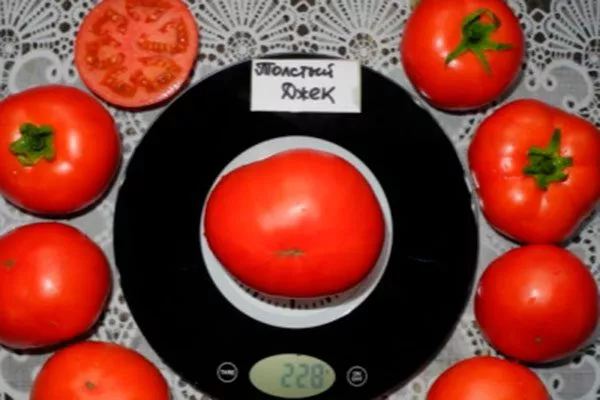
The harvested crop withstands long-distance transportation well. The fruits do not bruise, leak, or lose their marketable appearance during transport. They have excellent shelf life. Under suitable conditions, they can be stored for a long time without losing their firmness, excellent flavor, or the nutrients contained in their pulp.
Key Features
The variety was developed by Russian breeders V.N. Dederko and O.V. Postnikova. It was approved for use in 2014. The breeders imbued it with many excellent qualities: high yield, resistance to late blight, and the ability to produce abundant fruit sets even under significant temperature fluctuations.
- ✓ Resistance to late blight due to early ripening.
- ✓ Ability to form ovaries with temperature fluctuations.
Productivity, ripening time
This vegetable variety belongs to the category of mid-early, high-yielding varieties and hybrids. Its key technical characteristics are as follows:
- the crop ripening period is 105-115 days after germination (with the non-seedling cultivation method it increases by 7-10 days);
- fruit harvesting time: July, September;
- productivity rate is 42400 kg per 1 ha in industrial cultivation, 5-6 kg per 1 sq. m in private cultivation;
- The percentage of marketable output is 97.6.
Climate requirements and growing regions
Fat Jack is a vegetable variety that boasts excellent adaptability to growing conditions. Its bushes are well-suited to fluctuating temperatures. They produce fruit in any weather. They don't tend to shed their flower stalks due to cold snaps.
This vegetable variety has been approved by the Russian State Register for planting in private household plots and farmland located in many regions and districts of the country:
- Northern;
- North-West;
- Central;
- Volga-Vyatka;
- Central Black Earth Region;
- North Caucasian;
- Middle Volga;
- Lower Volga;
- Ural;
- West Siberian;
- East Siberian;
- Far Eastern.
Methods of use
A harvest grown in compliance with all agricultural practices delights gardeners with its attractive appearance and excellent taste, juiciness, and aroma. Its purpose is versatile: fresh consumption and home cooking. Homemakers use fleshy red tomatoes in the following ways:
- they make salads from them;
- added as an ingredient to various dishes (soups, side dishes, pizza, casseroles);
- make sauces, ketchup;
- processed into juice, puree, tomato paste;
- canned (large tomatoes are good for making winter preserves such as adjika and lecho);
- used for pickling and freezing.
Sowing and growing seedlings
Gardeners primarily grow this tomato variety using seedlings. They sow the seeds in a common box (or individual containers) filled with commercially available nutrient substrate in late February or March. They plant them 1-2 cm deep. The seeds are watered, covered with plastic wrap, and kept in a warm place.
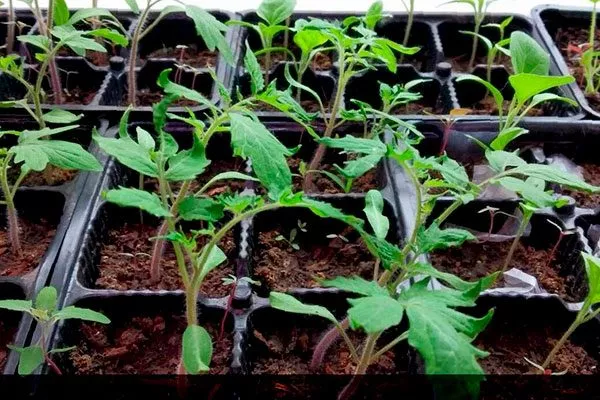
For tomato sprouts that have sprouted and are growing indoors, the following mandatory care measures will need to be carried out:
- supplementary lighting with phytolamps to ensure daylight lasting at least 8-10 hours;
- moderate watering;
- careful loosening of the soil under the seedlings;
- mineral complex feeding;
- picking after the appearance of 2 true leaves (the procedure is necessary for seedlings grown in a common box);
- hardening.
Transfer
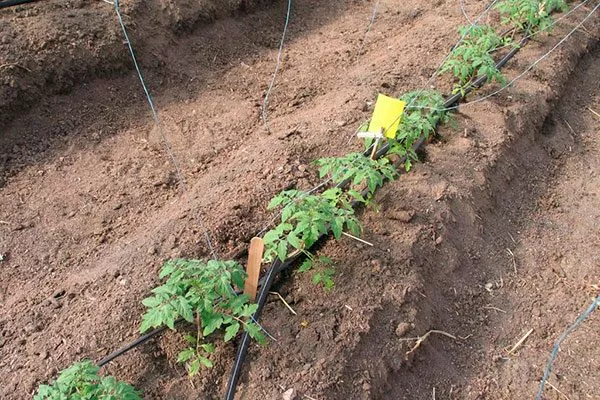
At 50-60 days of age, gardeners transplant tomato seedlings to their permanent growing location: an open bed or a greenhouse. In the former case, they wait until stable temperatures of 18-20°C (64-68°F) and the soil warms up. The seedlings are planted in the garden in May-June. Young tomatoes are "transplanted" into protected soil earlier, in April.

- ✓ Optimum soil temperature for planting seedlings: not lower than +15°C.
- ✓ Distance between plants when planting: 40-50 cm, between rows: 70 cm.
Gardeners space Fat Jack plants in the garden using a 40-50 x 70 cm pattern. No more than five seedlings are allowed per square meter. They are transplanted into loose, non-acidic soil enriched with organic and mineral fertilizers. Choose a sunny, wind-free location for the bed.
Further care
This tomato variety is easy to grow. Standard farming practices are sufficient to ensure its plants remain healthy, develop properly, and produce abundant fruit. Follow these care guidelines:
- WateringMoisten the soil in your tomato bed regularly, preventing it from drying out or becoming waterlogged for long periods. Water it once every 7 days. During dry periods, water the plants more frequently.
Use warm, settled water to water Fat Jack tomatoes. Pour it at the roots, avoiding splashing the stems and leaves. - Loosening and weedingThe day after watering, loosen the soil under the tomato plants to prevent a thick crust from forming on the surface, preventing air from reaching the roots. Combine this procedure with weed removal. Weeds inhibit vegetable growth and harbor pests that carry diseases.
- Top dressingTo ensure a bountiful harvest, use fertilizer. After transplanting tomato seedlings to their permanent location, apply nutrients at least twice. Be sure to fertilize Fat Jack bushes during flowering and fruit formation.
At the initial stage of vegetation, use organic matter (compost, humus, or mullein solution). Once the plants begin to set fruit, use mineral fertilizers high in potassium and phosphorus. - Forming the bush and tying it to supportsTo ensure your tomato plantings are productive, grow the plants into 3 or 4 trunks. It's okay to not pinch them out.
Experienced gardeners don't neglect this procedure. They periodically remove excess lateral shoots to redirect all their energy and nutrients from the soil toward fruit formation and ripening.
Due to the large size and high fertility of Fat Jack bushes, staking is recommended. This prevents the stems from breaking under the weight of the ripening crop.
Pest and disease control
This tomato variety has good immunity. Its plantings are not susceptible to late blight, as they produce a harvest before the infection begins to spread widely. They are moderately susceptible to other vegetable diseases.
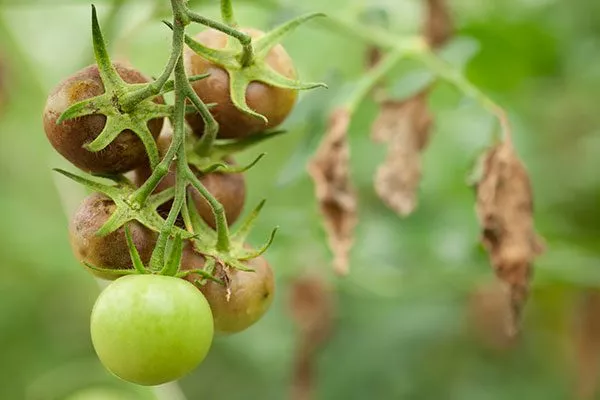
With proper care and favorable growing conditions, bushes remain healthy. Preventative measures also help gardeners prevent disease. These include the following:
- disinfection of seed material (it must be soaked before planting in a solution of potassium permanganate or any fungicide);
- watering the soil in the garden bed and the homemade substrate intended for growing tomato seedlings with a solution of potassium permanganate;
- annual replacement of the top layer of soil (its thickness is at least 5 cm) in the greenhouse, disinfection of all internal surfaces of the shelter;
- compliance with crop rotation standards;
- arrangement of a bed in the open air as far as possible from plantings of other nightshade crops;
- regular inspection of Fat Jack plantings for early detection of early signs of disease;
- destruction of parts of plants affected by fungi;
- regular weeding, removing plant debris from the garden bed;
- preventative treatment of tomato plantings with a solution of copper sulfate, Bordeaux mixture, fungicides such as Fitosporin-M;
- compliance with the irrigation regime, timing and rates of fertilizer application;
- removing the lower tier of foliage to prevent the occurrence of root rot.
Fat Jack plantings are plagued by insects such as mole crickets, whiteflies, aphids, Colorado potato beetles, spider mites, and slugs. Commercial insecticides can help control these pest infestations:
- Thunder;
- Fosbecid;
- Fitoverm;
- Actellic.
Apply them to the bushes in the evening, in calm, dry weather. Also, pick off the pests by hand and wash them off the leaves with a moderate stream of water. Don't neglect folk remedies: soapy water (for aphids and spider mites), hot pepper (for slugs), and ammonia (for mole crickets).
Pros and cons
The Fat Jack tomato has become a favorite among domestic gardeners and farmers for its many advantages, distinguishing it from other early determinate tomato varieties and hybrids. Its undeniable advantages include:
The cultivar also has several drawbacks. Its bushes require shaping and tying to supports. They lack good resistance to infections and pests, requiring mandatory disease prevention.
Reviews
Fat Jack is a product of domestic breeding. Gardeners love this variety for its early ripening, good marketability, productive bushes, low maintenance, and resistance to late blight. It's a favorite among those who appreciate tomatoes with a classic sweet and sour flavor that keep well and don't lose their shape during transportation.