
Tolstoy F1 is a hybrid tomato variety developed by foreign breeders. Its popularity among gardeners and farmers is due to the excellent marketability and transportability of its fruits. It produces consistently high yields both in open gardens and greenhouses.
Selection
The hybrid is the brainchild of Dutch scientists representing the seed company Bejo Zaden, which specializes in breeding elite vegetable crops and producing and selling high-quality seed. It was added to the Russian state register in 1999.
Description of the plant
Tolstoy bushes are indeterminate. They grow continuously throughout the season. They average 2 meters in height, with growth rates ranging from 1.8 meters to 3 meters. They are characterized by the following external features:
- shoots that are distinguished by good development and strength;
- short internodes;
- Foliage: light green, medium sized.
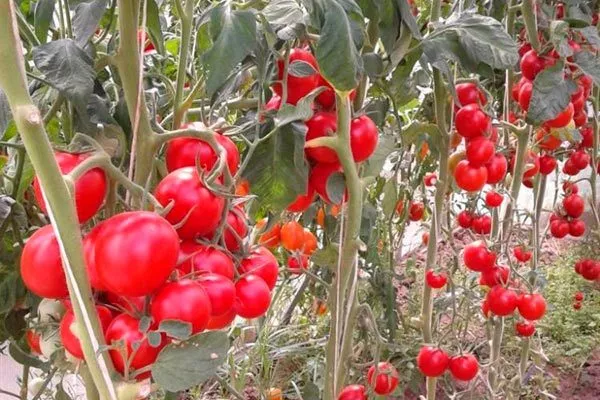
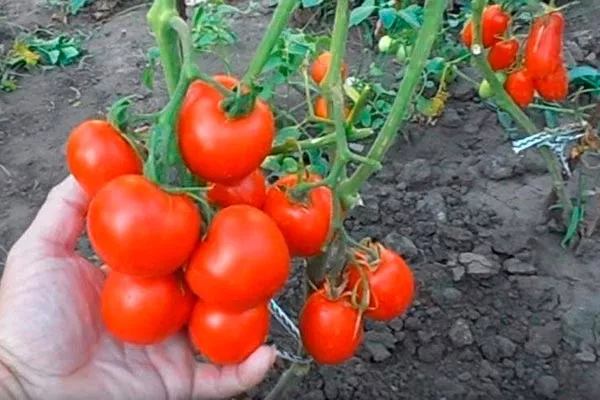
The plant forms dense fruiting clusters of 8 to 10 tomatoes. Each cluster produces 8-12 tomatoes.
Fruits and their taste qualities
The hybrid tomato variety's harvest is renowned for its attractive appearance. Although not particularly large, the tomatoes appear well-calibrated. They are uniform and attractive, with a regular shape.
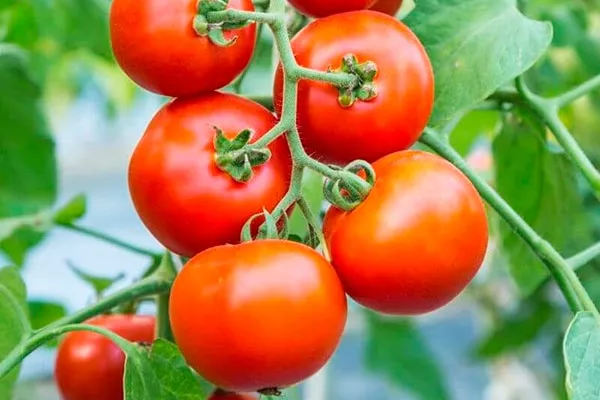
Tolstoy's fruits have the following characteristics:
- weight - 79-124 g;
- round shape (ribbing is weakly expressed);
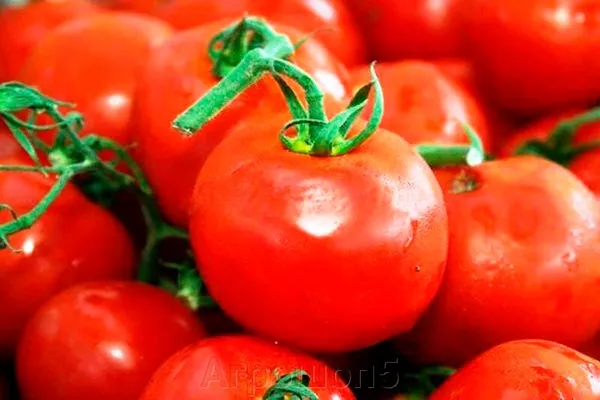
- deep red glossy skin;
- pulp: dense, moderately juicy, red, without white veins, with 4-6 seed chambers.
Tomatoes have excellent flavor. Their flesh is sweet, with virtually no tartness. Fully ripened tomatoes develop an interesting fruity flavor.
Hybrid tomatoes don't crack when overripe or in adverse weather. They can be picked green and ripened at home. They store for a long time, retaining their firmness and juiciness. They are easy to transport.
Characteristics of the variety
The Tolstoy tomato, like most Dutch hybrids, is renowned for its excellent technical characteristics. Check them out if you plan to grow it in your garden.
Application and storage
The vegetable crop is versatile in its application:
- tomatoes are eaten fresh;
- add them to summer salads;
- used for processing and preparing various dishes.
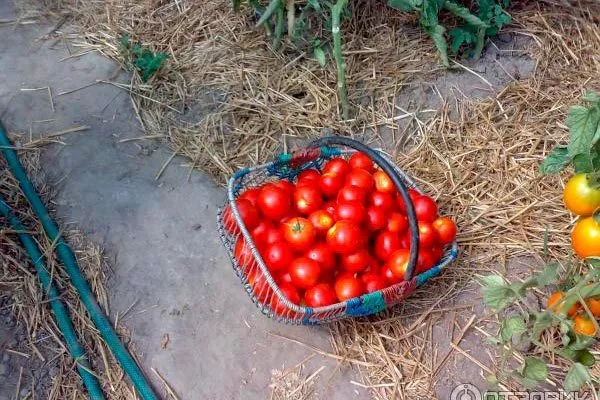
Their tough skin holds the flesh well. When sliced, the pieces look neat and add a beautiful appearance to a salad. Housewives use Tolstoy's harvest to make tomato paste and juice, ketchup, various sauces, and borscht dressing. They are added to vegetable stews, side dishes, and soups.
This hybrid is widely used in whole-fruit canning and pickling. Thanks to their small size and firm texture, these tomatoes look great in jars. They don't crack and retain their shape during winter preservation. When pickled, they don't soften or become watery.
Endurance
Plants of the Dutch hybrid delight gardeners with their resistance to adverse weather conditions:
- cold;
- heat;
- drought.
They tolerate sudden temperature changes and other vagaries of nature well, and can grow in partial shade. Thanks to their undemanding nature and hardiness, they are successfully grown both in open garden areas and under cover.
Tomato yield
The Tolstoy vegetable crop delights farmers and gardeners with its bountiful harvest. Its yields are quite high:
- 8-12 kg/sq.m – when grown in greenhouse conditions;
- up to 5.7 kg/sq.m – when grown in open areas of the garden.
Ripening time
This vegetable variety is classified as an early-ripening variety. The fruits ripen within the following timeframes:
- 68-75 days (from transplanting seedlings to the garden to harvesting);
- 110-115 days (from sowing seeds until the fruits reach the stage of technical maturity).
The crop is harvested as it ripens. When grown in greenhouses, farmers can harvest tomatoes 2-3 times per season.
Suitable regions
The Dutch hybrid can be grown almost anywhere. The State Register has approved it for the following regions of the country:
- Northern;
- North-West;
- Central;
- Volga-Vyatka;
- Central Black Earth Region;
- North Caucasian;
- Middle Volga;
- Lower Volga;
- Ural;
- West Siberian;
- East Siberian;
- Far Eastern.
In the northern regions, this vegetable variety is grown exclusively in greenhouses. In the southern and central regions, gardeners cultivate it in open beds. Thanks to its hardiness and strong immunity, it can thrive even in areas with frequent, prolonged rainfall.
Growing rules
Gardeners cultivate this Dutch breeder's creation using seedlings. It is designed for growing in open beds or lightweight, unheated plastic greenhouses.
Opt for a greenhouse. This creates optimal conditions for good growth and abundant fruiting of Tolstoy bushes:
- maintain the temperature in the shelter at +19°C during the day (+15°C at night);
- air humidity required is 60-75%:
- Provide additional lighting for the crop.
Timing and rules for sowing
When cultivating the Tolstoy hybrid, adhere to the timing recommended by the seed manufacturer:
- last days of February, first week of March - sow seeds for seedlings;
- second half of April - transfer the seedlings into greenhouse soil;
- Last week of April, first ten days of May – transplant seedlings into an open bed.
Follow the guidelines regarding planting density and rates. Do not plant more than 4 plants per square meter. For commercial cultivation, plant 20,000 to 23,000 Tolstoy bushes per hectare.
Soil preparation
Tolstoy's plants thrive best in soil that has the following characteristics:
- loose;
- air and moisture permeable;
- rich in nutrients;
- neutral in acidity;
- well lit and warmed by the sun;
- moderately moist, not low-lying (groundwater should not be close to the surface of the earth);
- which served last season as a bed for such vegetable crops as carrots, zucchini, cucumbers, cauliflower, and beans.
Prepare the soil for growing tomatoes by deep digging and removing weeds. Improve soil fertility by adding compost and complex mineral fertilizers. Structure dense clay soil with coarse sand, and enrich acidic soil with chalk, ash, or dolomite flour.
Prepare the soil for growing the Tolstoy hybrid, not only in the garden. You'll also need a suitable substrate for growing seedlings indoors. Purchase a general-purpose soil from a flower shop or make your own potting mix using the following ingredients:
- compost or humus;
- garden soil;
- sand.
Combine the above ingredients in equal parts. Bake the resulting substrate in the oven to disinfect it. Enrich it with superphosphate (20 g of superphosphate per 10 kg of potting mix). Add a little wood ash to balance the pH and increase the phosphorus and potassium content.
Sowing tomato seeds Tolstoy f1
At the end of February, begin sowing hybrid seeds for seedlings. They require no pre-treatment, and the manufacturer guarantees high germination rates. Just make sure the seeds haven't expired. If they're about to expire, soak them in an Epin/Zircon solution.
- ✓ Optimum temperature for seed germination: +25-30°С.
- ✓ Need for additional lighting for seedlings: 14-16 hours of light per day.
Grow Tolstoy seedlings in one of two ways:
- sowing seeds directly into separate cups;
- sowing in a common container with subsequent transplanting of plants into individual containers.
The first method is preferable because it produces strong seedlings with a closed root system. The traumatic process of pricking out the seedlings is avoided. The plants are transferred to the garden bed by transshipment (along with the root ball or the container, if it's peat).
If you prefer to grow seedlings in a common container, space the seeds 1.5-2 cm apart when sowing. Plant the seeds in moist soil. Finally, cover them with soil. Cover the seedlings with plastic wrap or glass. Keep them warm (22-24°C). The seedlings will emerge in 5-8 days. Remove the cover immediately.
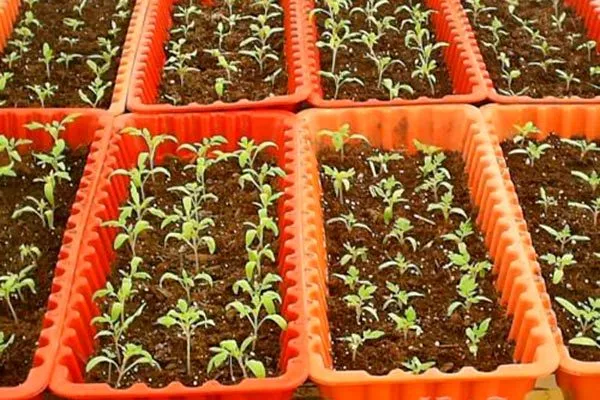
Once the sprouts emerge, move the box (or pots) containing them to a sunny windowsill in a cooler room (18-20°C). Care for the Tolstoy seedlings using the following procedures:
- water it moderately with warm, settled water (watering frequency - once a week);
- carefully loosen the soil under the plants;
- apply liquid fertilizer after watering;
- Provide additional light to the seedlings using phytolamps (they require 14-16 hours of light per day).
Picking seedlings
At 20 days old, when the seedlings in the main container have developed their third true leaf, transplant them into individual containers. Add fertilizer to the new substrate to stimulate vegetable growth.
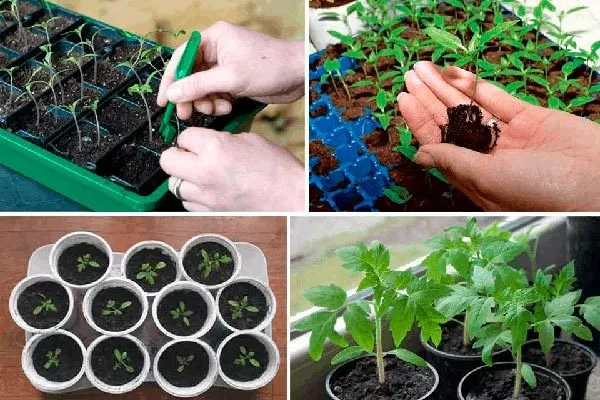
Perform the procedure carefully, using a wooden toothpick or match. Plant the plants deep enough to reach the cotyledon leaves. Finally, water them and shade them with a sheet of newspaper.
Preparing seedlings
To help your seedlings acclimate to the garden bed, prepare them for transplanting by hardening them off. Begin this process 10 days before the planned transplant date. Take them out onto the balcony every day and allow them to breathe fresh air. Let them spend their last night outside under plastic.
Transplantation of seedlings
Transplant the Tolstoy hybrid seedlings to the garden, open ground, or greenhouse using a gentle method. This involves preserving the root ball containing the plant's roots. Carefully remove the contents of each individual container, being careful not to disturb the integrity of the container.
Into open ground
Once the seedlings have six leaves, transplant them to the garden bed. Do this in May, when there's no longer any risk of frost. The soil should be warmed to 17-18°C. Transplant the plants according to the following guidelines:
- the distance between bushes is 50 cm;
- distance between rows - 60-70 cm;
- Number of seedling bushes per 1 sq. m. - 4 pcs.
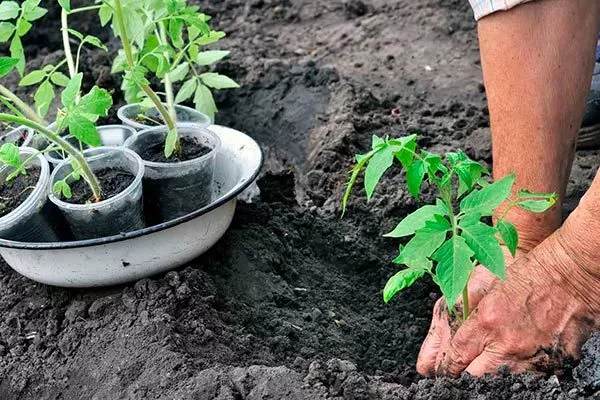
Don't overcrowd Tolstoy. Its plants don't tolerate crowding and require space to thrive.
- Plant them in strips in 1 or 2 rows.
- At the end of the procedure, water the bushes and cover the soil underneath them with mulch to retain moisture.
- Be sure to provide a support system.
Into the greenhouse
The technology for transplanting hybrid seedlings into a greenhouse is no different from planting them in open areas of the garden:
- transplant the seedlings, following the same pattern: 50x60-70 cm;
- form 1-2 rows of tomato bushes;
- ensure that there are supports for them.
If you're growing Tolstoy tomatoes in northern regions, make sure your greenhouse is heated in case of frost. Remember, the temperature inside the shelter shouldn't drop below 12°C at night.
Further care
The yield of a tomato hybrid depends on proper watering, a balanced supply of nutrients, proper plant formation, and preventative treatments.
Watering and fertilizing
The irrigation regime for the Tolstoy tomato bed depends on the amount of natural precipitation. If there's been a long period of no rain, ensure deep and regular watering of the soil beneath the bushes. Remember that their roots are deep.
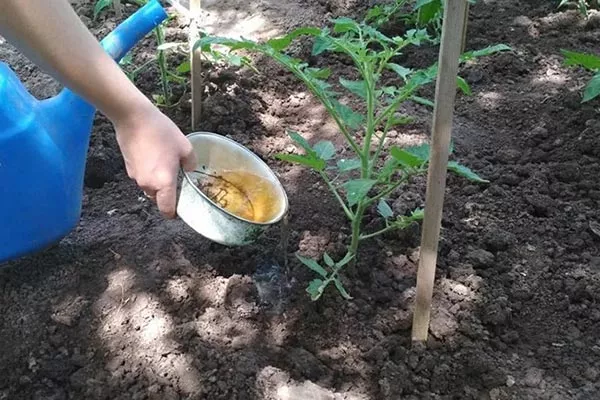
Follow the rules for watering tomato plants:
- use only warm, settled water;
- water the bed once every 5-7 days;
- use at least 0.7-0.9 liters of water per plant;
- perform the procedure in the morning or in the afternoon;
- It is advisable to water in cloudy weather.
If you planted Tolstoy seedlings in soil richly enriched with organic matter, you can skip fertilizing. When growing vegetables in poor soil, apply the following nutrient solutions throughout the season:
- organic (cow manure, bird droppings);
- mineral (ammonium nitrate, superphosphate).
Fertilize every 2-3 weeks. Alternate organic and mineral fertilizers. The hybrid does not require foliar application of nutrients. Its plants produce fruit well even under adverse weather conditions and stress.
Bush formation
Experienced gardeners, when growing indeterminate tomato varieties, prefer to train the bush into a single or double stem. They regularly and promptly perform the following essential procedures:
- pinching out side shoots from plants so that extra shoots do not take up nutrients to the detriment of flowering and fruiting;
- pinching the top of the main shoot to stop its growth;
- removing leaves that shade tomatoes (this manipulation is carried out throughout the entire period of fruit set formation).
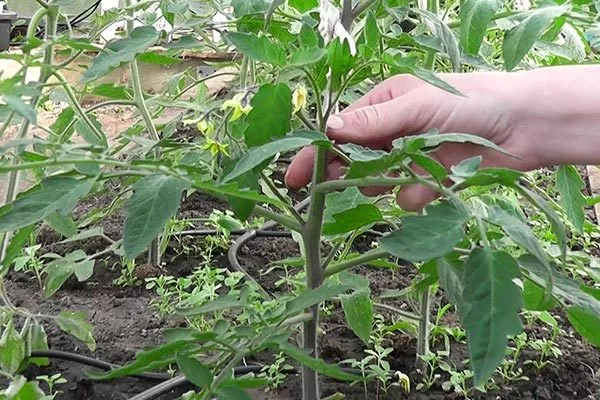
Due to its tall growth, this hybrid requires staking. This prevents the stems from bending toward the ground. Use soft rope to secure the tomato shoots to stakes or trellises. Staking will be necessary 3-4 times per season.
Loosening and mulching
Loosen the soil under the Tolstoy bushes after each watering. First, let the top layer dry. Try not to damage the roots while doing this. Combine this with weeding. This will improve the flow of air, moisture, and nutrients to the roots.
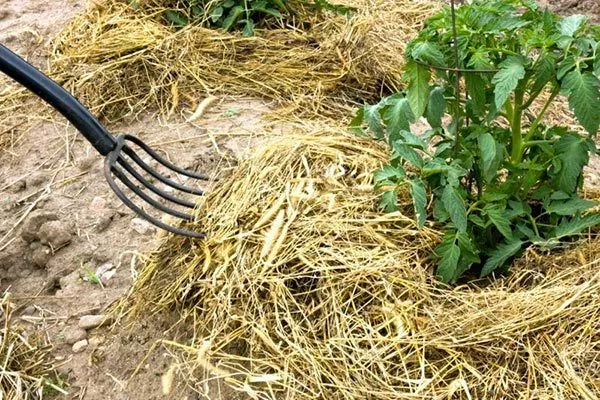
This hybrid tomato requires hilling to ensure maximum productivity. Perform this procedure several times per season, following a schedule:
- Hill up the plants for the first time 9-11 days after transferring the seedlings to the garden bed;
- the second time - 16-20 days after the first.
To reduce the amount of watering and weeding, experienced gardeners mulch their tomato plants. They cover the soil under the bushes with hay or straw, spreading the organic matter around the main shoot.
Pest and disease control
Dutch breeders have developed the Tolstoy tomato variety to be resistant to common vegetable crop infections:
- verticillium;
- Fusarium wilt;
- Cladosporiosis;
- leaf mosaic virus.
Even when grown in unfavorable climates, these tomatoes are rarely susceptible to disease. However, they are susceptible to late blight if not properly cared for and under unsuitable growing conditions. Fungal spores are transmitted from one plant to another. If gray-brown spots appear on the foliage, remove the affected plant immediately.
Treat tomato plants affected by late blight with Fitosporin-M. To prevent the problem, follow these preventative measures:
- hill up the plants;
- sterilize working tools;
- Disinfect the soil before sowing seeds for seedlings and before transferring them to the garden.
To avoid tomato planting diseases, you can use not only the above-mentioned agricultural practices but also preventative treatments. For this purpose, use Bordeaux mixture. Spray the plants with the solution 2-3 times during the summer.
- Carry out the first treatment with Bordeaux mixture 2 weeks after planting the seedlings.
- Repeat the treatment every 14 days until fruiting begins.
The most dangerous pest for Tolstoy's garden is the Colorado potato beetle. This insect eats leaves, shoots, and fruit. If left untreated, crop yields suffer. Take steps to address and prevent the problem:
- To avoid pest attacks, plant tomatoes away from potato bushes;
- Do not treat tomato crops with insecticides during harvest time;
- Practice regular hand-collection of beetles and their larvae.
Other pests also threaten hybrid plantings: slugs, wireworms, and whiteflies. Control them with folk remedies and commercial insecticides:
- Bazudin, liming of acidified soil - from wireworm;
- Confidor - against whitefly;
- loosening the soil under the bushes, using hot pepper powder to get rid of slugs.
Preventive treatment
Experienced gardeners do not neglect disease prevention when growing this Dutch hybrid, despite its reputation for strong immunity. Preventative treatments are especially necessary when planting Tolstoy tomatoes near other varieties.
They practice the use of combination, contact, and systemic antifungal medications. The best of these include:
- Ridomil Gold;
- Quadris;
- Revus Top.
Harvesting and storage
The Tolstoy hybrid's fruit ripens gradually. You can harvest the fruit not only when it's ripe, but also when it's green (for later ripening). At home, unripe fruit will fully ripen without any loss of flavor.
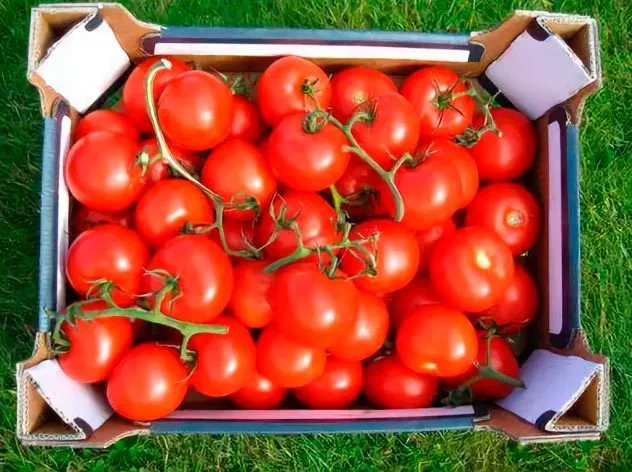
You can ensure good shelf life of your fruits if you store them in suitable conditions:
- temperature regime - +12-15℃ (it should not exceed +20℃);
- away from sunlight;
- laying out the fruits in 1 layer on a flat surface (box, tray);
- providing air access to them;
- separately from other vegetables and fruits;
- wrapped in paper napkins to prevent moisture accumulation and rotting of tomatoes;
- in the refrigerator in the vegetable compartment or on a cool balcony in boxes, or in the pantry.
Ripe tomatoes will keep fresh and firm in your home for 3-7 days. For long-term storage, select firm, unripe tomatoes that are undamaged.
Work on mistakes
Failures in growing the Tolstoy F1 hybrid most often occur due to gross violations of agricultural practices, and less commonly, due to unfavorable weather conditions. To solve the problem, correct the mistakes:
- If the seeds take a long time to germinate, the room temperature is too low. Increase the temperature to 25-30°C.
- Look for the cause of slow and poor seedling growth in the heavy soil you used to grow them or the lack of drainage holes in the planting container. Use the right soil mix and the right container to ensure strong and healthy seedlings.
- You're seeing flower heads fall from your greenhouse bushes due to excessive heat. Ventilate the area and regulate the temperature inside the shelter.
- Low yields and smaller fruit are the result of overcrowding and neglected side shoots. Follow planting guidelines and remove overgrown shoots to prevent complications.
Pros and cons
Domestic gardeners and vegetable growers have appreciated the numerous advantages of the Tolstoy hybrid. These include:
Among the disadvantages, gardeners point out the need for tall tomato bushes to be tied to supports.
Similar hybrids and varieties
| Name | Growth type | Disease resistance | Ripening period |
|---|---|---|---|
| Tolstoy F1 | Indeterminate | High | Early ripening |
| Evpator | Indeterminate | High | Mid-season |
| Verlioka | Indeterminate | Average | Early ripening |
| Intuition | Indeterminate | High | Early ripening |
| Maryina Roshcha | Indeterminate | High | Early ripening |
The Tolstoy F1 tomato shares similarities with some other vegetable varieties. High yields and attractive, medium-sized, versatile fruits are traits common to these tomato hybrids:
- EvpatorThis variety is intended for growing indoors. It is characterized by tall bushes. The fruits ripen 110-115 days after germination. They are characterized by a round shape, red skin and flesh, and a weight of up to 130 g. Gardeners can obtain up to 38 kg of yield per square meter of planting.
- VerliokeSuitable for both greenhouse and open-ground cultivation. This early-ripening hybrid grows to a height of two meters. Fruiting begins 95-105 days after germination. Clusters produce 5-6 flat-round red fruits weighing up to 100 grams. The plants are resistant to temperature fluctuations. Gardeners can harvest up to 18 kg of fruit per square meter.
- IntuitionsThis early-ripening tomato variety is suitable for indoor cultivation. The crop ripens in 100-110 days. The bushes are tall. The fruits are round and red, weighing 100 g. Gardeners harvest 25 kg of tomato per square meter, which can be stored for up to 3 months.
- Maryina RoshchaThis early-ripening hybrid produces a harvest in 85-95 days. The tall plants produce cluster-type fruiting and exhibit high resistance to infections. The tomatoes have red skin and flesh, weighing 100-130 g. They are suitable for canning and fresh consumption. Gardeners can harvest up to 18 kg per square meter.
Reviews
Tolstoy F1 is a popular tomato variety among Russian gardeners, characterized by tall bushes. They are highly productive both indoors and outdoors. They are highly disease-resistant, producing high-quality fruit that is easy to store and transport.