
The Taimyr tomato is an ultra-early ripening variety developed by Russian breeders for regions with cold climates. It is intended for open-ground cultivation and plastic covers. The plant tolerates spring and summer cold snaps well, recovers quickly, and continues to produce fruit, with the harvest period lasting until the first frost, which is especially pleasing to fans of fresh vegetables.
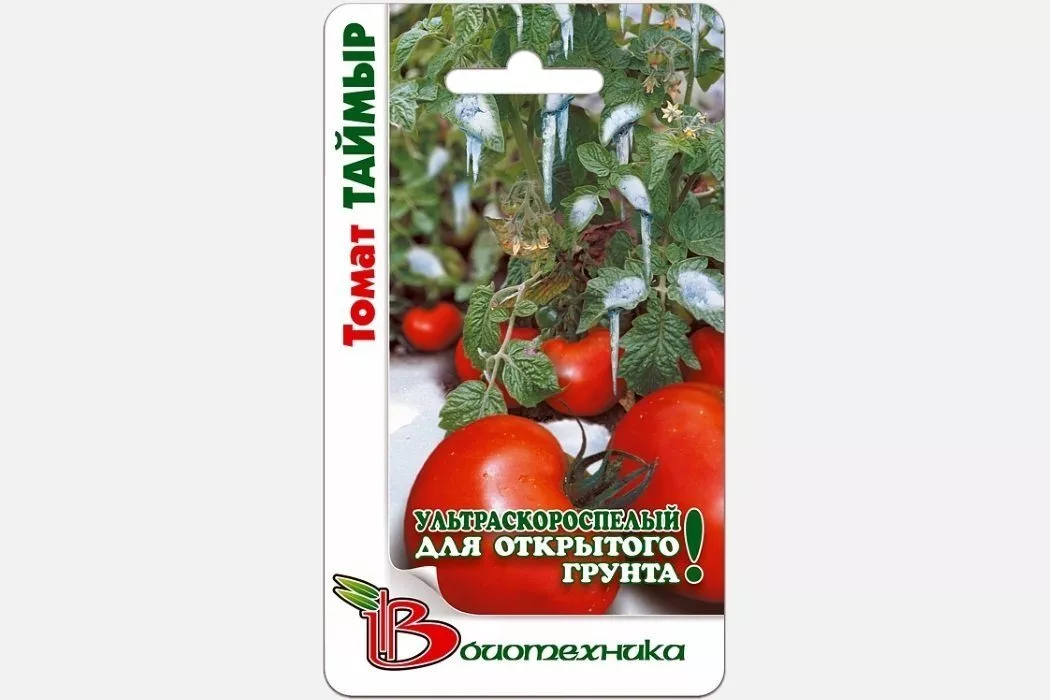
Tomato seeds of the Taimyr variety
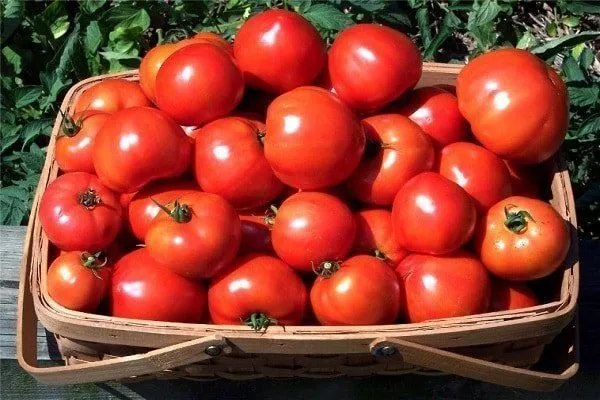
Tomatoes of the "Taimyr" variety
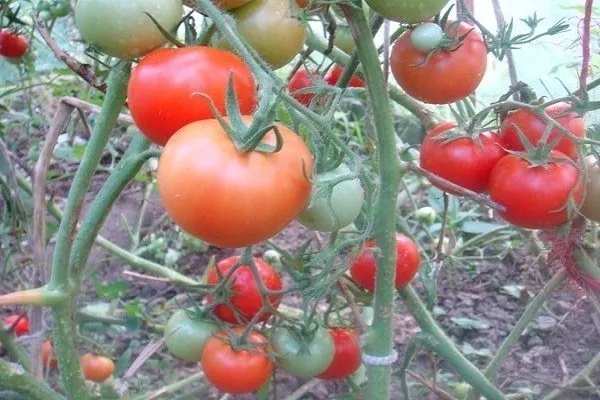
The bushes of "Taimyr" are massive and low-growing
Description of the variety
Taimyr is resistant to low temperatures, so it continues to grow and bear fruit even during spring frosts. The first harvest can be obtained 75-90 days after germination. More information about the characteristics of the bushes and fruits can be found below.
Bushes
The plant is determinate, standard, and compact. The bushes are strong and low-growing, reaching 25-45 cm. The root system is well developed and penetrates deep into the soil, where it is reliably protected from low temperatures. The crown is sparse and formed by large, dark green, vesicular leaves. This shape ensures good light and ventilation for the ripe fruit.
By the end of June, a large number of ovaries appear on the tops, which are compactly gathered into clusters. When grown outdoors, a single plant often produces 4-5 simple clusters at a time. Each cluster can contain up to 5-8 fruits.
The plant thrives in conditions of fluctuating temperatures and spring frosts, as it is cold-resistant. Thus, after inclement weather, it quickly resumes growth and rapidly increases its yield.
Fruit
In the Northwest, they begin to set fruit en masse from late June, and ripe tomatoes appear in mid-July. Fully ripened tomatoes are bright red, round, with dense, sugary flesh and weighing up to 80-100 g. They have a distinct, sweet, and pleasantly tart flavor.
Tomatoes are versatile. The first harvest is best eaten raw, served sliced or in salads. As they ripen, the fruits can be pickled in barrels and canned. Their thick skin prevents cracking after cooking, and their small size makes them easy to jar.
Table of characteristics
The main qualities of the variety are described in the table:
| Parameter | Description |
| Growing method | In open ground, in a greenhouse, hotbed, under film cover |
| Cultivation region | Ideal for growing in northern regions, as it is adapted to the local climate. In milder climates, it's best to choose varieties with less resistance to adverse weather conditions, but with higher yields and better flavor. |
| Productivity | If all growing guidelines are followed, a single bush can yield up to 3-4 kg of fruit, but the average yield is 2 kg. A better harvest can be achieved when grown in a greenhouse. |
| Fruiting | The final fruiting period is August. |
| Ripening | Tomatoes can ripen further after harvest, so you can cut the still-brown tomatoes from the bushes and place them on a windowsill to ripen in the sun. |
| Resistance to diseases and pests | This variety has strong immunity to diseases that affect nightshade crops. With regular watering, it resists blossom-end rot and late blight. However, overwatering the soil should be avoided, as this will encourage diseases that can lead to root rot. The plant actively bears fruit in August, making it virtually immune to fungi and pests. |
The following video describes the characteristics of the cold-resistant Taimyr tomato:
Agricultural technology
To get a good tomato harvest in cold climates with short daylight hours, you need to consider the following rules:
- For growing Taimyr, it's best to use seedlings. After 1.5-2 months, the seedlings can be transplanted into a greenhouse or open ground.
- In the northern regions sowing for seedlings It should be carried out no earlier than the second half of April, and planting seedlings in open ground should be done after June 10, with stable positive air temperatures and long daylight hours.
- The soil should be fertile, fairly light, and have a mild to neutral pH. If the soil is acidic, it should be limed, and if it's heavy, add sand to ensure drainage.
- Tomatoes should be planted in a bed previously occupied by cabbage, onions, and beans. Potatoes, eggplants, and other nightshade crops are undesirable predecessors.
- No more than 8-10 plants should be planted per square meter of garden bed. Although the manufacturer allows for up to 15 plants per square meter, overcrowding will not lead to good results.
- When fertilizing Taimyr with nitrogen fertilizers, caution must be exercised, as excess nitrogen can provoke active growth of green mass to the detriment of ripening times and yield indicators.
- ✓ Optimum soil temperature for planting seedlings: not lower than +10°C.
- ✓ Distance between plants when planting: 30-40 cm to ensure sufficient lighting and ventilation.
Tomatoes should be planted in areas of the garden with the best lighting, as they grow well in full sun.
Selecting seeds
Taimyr seeds are distributed by Biotekhnika, which guarantees their compliance with GOST R52171-2003. Each package must contain at least 25 seeds.
This variety is not a hybrid, so you can collect the seeds yourself from the previous harvest. They should be removed from fully ripened fruits and soaked in clean water. Any hollow seeds that float to the surface should be fished out and discarded. The remaining seeds should be soaked for 20-30 minutes in a weak solution of potassium permanganate to disinfect, then dried and placed in paper bags for storage until spring.
The ultra-early tomato Taimyr from the company "Biotekhnika" should not be confused with the mid-season hybrid Taimyr F1, the originator of which is listed in the State Register as the Dutch company Rijk Zwaan Zaadteelt en Zaadhandel BV
Growing seedlings
From mid-April you can start growing seedlingsThis process consists of several stages:
- Selecting containersSeedlings can be grown in spacious boxes with drainage holes, but individual containers—peat pots, plastic, or paper cups with a 1-liter capacity—are considered the best option. Choosing individual containers eliminates the need for transplanting later.
- Seed treatmentThe seeds should be soaked for several minutes in a weak hydrogen peroxide solution heated to 40°C. Then, they should be laid out on a flat surface and covered with a damp cloth. Within a few days the seeds will hatch and will be ready for sowing.
- Soil preparationThe soil should be nutritious, loose, and slightly acidic (neutral pH). A substrate with the desired characteristics can be purchased at a gardening store or prepared by mixing equal parts garden soil, humus, and sand. Next, disinfect the mixture using one of two methods:
- place in the oven for 20 minutes, then remove and leave to cool;
- Keep it in the freezer for a few days to kill harmful bacteria at sub-zero temperatures.
- Sowing seeds for seedlingsPlace drainage stones at the bottom of the seedling container to reduce the risk of fungal diseases, then add the soil mixture. Moisten it with a spray bottle, cover with plastic wrap, and let it sit for 2-3 hours to ensure even distribution of moisture. Next, use a toothpick to make small holes in the soil, 1 cm in diameter. Drop a single seed into each hole, cover with soil, and lightly moisten.
- Placement of seedlingsImmediately after planting, cover the container again with transparent film and keep it in a warm place (the optimal temperature is about 25°C) until the seedlings emerge. Then, remove the plastic film and place the seedlings on a windowsill. At this stage, the air temperature can be lowered to 17°C. The seedlings should receive 12-14 hours of light per day.
- CareThe soil should be watered regularly with settled water, avoiding either drying out or overwatering. When sowing seeds in a common container, when two true leaves appear, dive, leaving only healthy and strong sprouts. The seedlings should be planted deep down to the leaves to ensure the root system adapts well and the stems do not stretch excessively. During this period, it is advisable to provide the seedlings with additional lighting.
| Method | Processing time | Efficiency |
|---|---|---|
| Oven | 20 minutes | High |
| Freezer | A few days | Average |
After 1.5-2 months from sowing, the seedlings should have strong stems and a developed root system.
The following video clearly shows what Taimyr seedlings will look like:
Planting in open ground
It's carried out after the first ten days of June. However, the site must be prepared in advance, following this plan:
- In the spring, treat the soil with a hot solution of copper sulfate or Bordeaux mixture. This will improve the soil quality and disinfect it.
- When digging, fertilize the bed with humus or rotted compost, as well as mineral salts.
- If the soil is acidic, treat it with lime.
- Add a little sand to dense and heavy soil.
When growing tomatoes from seed, the prepared seeds should be planted directly into the soil in the standard manner, but only in a greenhouse or hotbed. The soil should be enriched with wood shavings beforehand.
When using the seedling method, you need to transplant strong seedlings into the ground. Follow this order:
- Water the seedlings thoroughly a couple of hours before transplanting to make it easier to remove them from the cups without disturbing the soil or damaging the root system. However, watering is unnecessary if they were grown in peat pots, as these can be placed directly into the holes along with the seedlings.
- Prepare shallow holes in the garden bed taking into account the optimal planting pattern (8-10 seedlings per 1 sq. m) and water with warm water.
- Place the seedlings in the prepared holes. Overgrown ones are best planted horizontally, as if lying down. After planting, lightly moisten the soil.
- Drive pegs near each sprout to tie up the bushes in the future.
When planting the Taimyr tomato in a greenhouse, follow the recommendations in the video below:
Tomato care and harvesting
To obtain a good harvest, seedlings require proper care. Let's look at what this entails.
Watering
After planting, water the soil for the first time approximately 7-10 days later. Subsequently, watering should be done once a week, or less frequently during rainy weather. This procedure should be accompanied by loosening the soil around the bushes and removing weeds. During hot summers, mulch the soil under the plants with sawdust, straw, or compost to keep it moist.
From the beginning of the fruit ripening period, the frequency of watering should be reduced by 1.5-2 times.
Top dressing
To increase the Taimyr's yield, it's worth feeding it with nutrients. If the tomato is growing in fertile soil, for the first time fertilizing seedlings It should be applied 3 weeks after transplanting to a permanent location.
The plant responds well to fertilizers diluted with mullein and enriched with potassium and phosphorus salts. If necessary, liquid chicken manure can be used instead of mullein. During flowering, it is recommended to spray the tops with a weak solution of boric acid to strengthen the flowers and ovaries.
Throughout the summer, 6 additional fertilizing sessions should be performed, including the addition of organic matter before transplanting the seedlings into the garden bed. Water the soil thoroughly before each fertilization.
After transplanting into the garden bed, seedlings should not be fed with nitrogen-containing fertilizers, as this can cause excessive growth of the bushes, a decrease in yield, and a decline in the quality of the fruit.
Tying up, pinching out side shoots
The low-growing plant bushes are compact, but need to be tied to a stake to allow fresh air and sunlight to enter.
Additionally, it's important to manage the bush load by removing side shoots. Too many side shoots will delay the ripening of the fruit. However, don't overdo it with removing them, as this will result in uneven ripening of the fruit.
Protection from pests and diseases
Taimyr is resistant to fungal diseases and is rarely attacked by insect pests. However, the crop can be planted in contaminated soil, causing signs of damage to its tops. To avoid this, keep the following preventative measures in mind:
- treat the future planting site in the spring with fungicides - a solution of copper sulfate or Bordeaux mixture;
- Before planting, disinfect seeds with a solution of potassium permanganate;
- water the seedlings with water with the addition of wood ash;
- In the fall, carry out deep plowing of the soil with the addition of insecticides to protect the plant from mites, bugs, aphids, nematodes, etc.
If your tomato plant is attacked by pests, it should be treated with insecticides according to the package instructions. Popular options include Malathion (Karbofos), Decis, and Provotox.
Harvesting
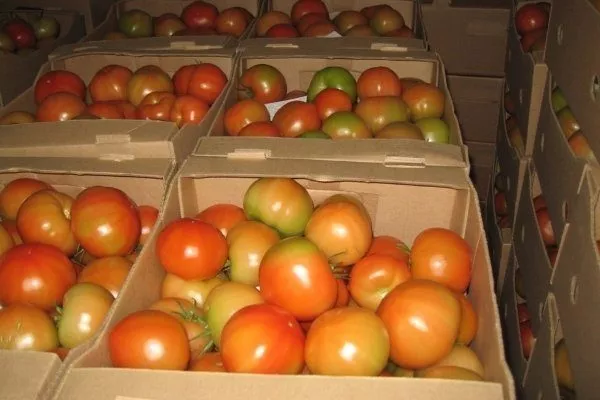
The fruits are harvested as they ripen, although they can be picked unripe, as they can ripen indoors. They should be placed in crates and transported to their destination. Only the firmest and most intact fruits should be stored.
Pros and cons of the variety
The key advantage of Taimyr is its tolerance to low temperatures, allowing the plant to bear fruit until autumn, even in conditions of sudden temperature fluctuations. Other advantages include:
- fast ripening period;
- ease of care;
- compact bushes, resistant to winds and supporting the weight of tomatoes well;
- strong immunity to diseases and pests;
- versatility in application;
- active ripening of fruits collected in a green or brown state;
- good transportability.
No significant drawbacks have been identified for Taimyr, but it should be kept in mind that it is sensitive to nitrogen fertilizers, as excess amounts will negatively impact yields. Furthermore, the bushes should be supported, otherwise the dense foliage of closely planted plants will block airflow to the soil.
The Taimyr tomato is an ultra-early, cold-hardy variety that will produce fruit even in the harsh climate of northern regions. The small fruits can be stored for some time or transported. They have excellent flavor, making them suitable for fresh consumption or processing.