
The Taiga tomato has received rave reviews for its unique tricolor flesh and juicy, sweet flavor. These tomatoes are eaten fresh and used for winter preserves. Due to their large size, just a few are enough to make a vegetable salad. Despite their tall growth habit, they don't take up much space in the garden.
Description and characteristics
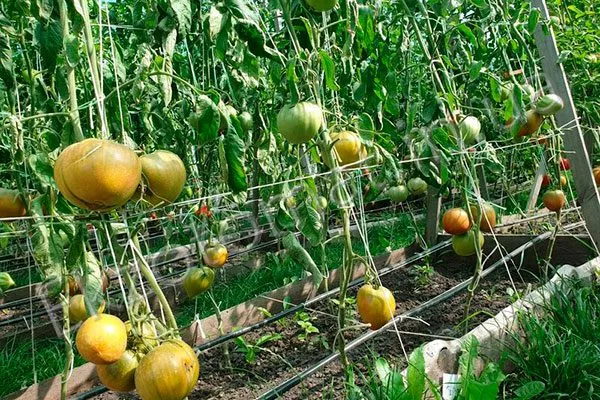
This new variety was developed by Canadian breeder Karen Olivier by crossing two varieties—Lyudmila's Pink Heart and Captain Lucky. It is characterized by tall, compact bushes with little branching, reaching 180-200 cm in height.
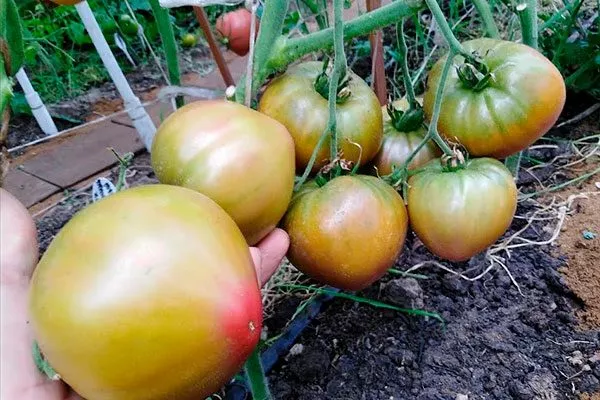
Distinctive features of the culture:
- The leaves are large, drooping, reminiscent of potato leaves.
- The fruits of this tomato have a sweet, rich taste with light spicy and fruity notes in the aroma.
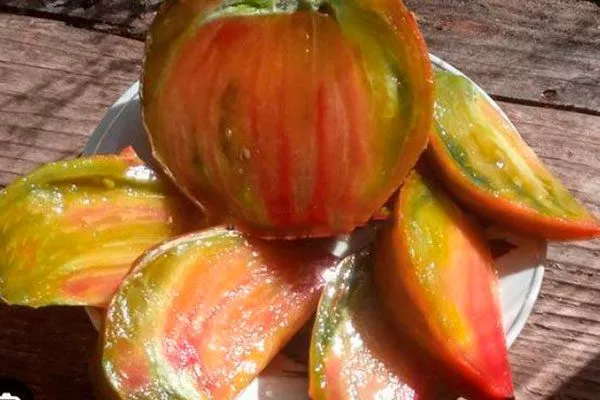
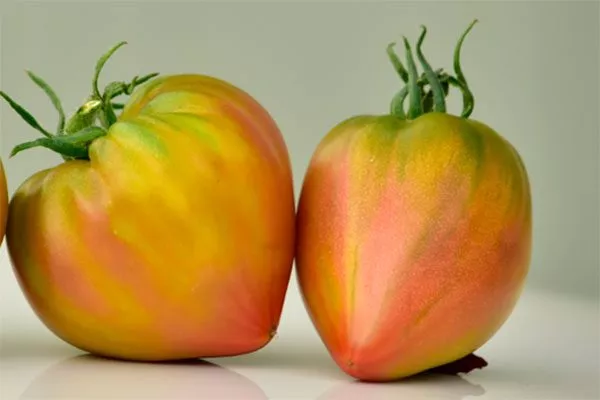
- The flesh is dense and oily, with a tricolor hue of pink, bronze, and olive. The skin is smooth.
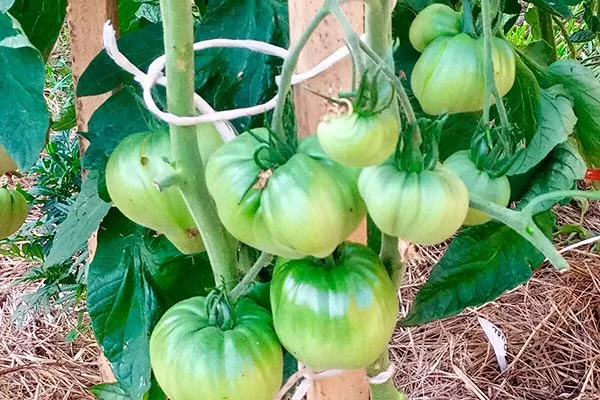
- With proper care, the vegetables are large – 250-400 g, heart-shaped or oval-heart-shaped.
- Ripe vegetables combine burgundy, yellow-green, pink and crimson shades.
- Tomatoes are eaten fresh, and are used to make juice, ketchup, and paste.
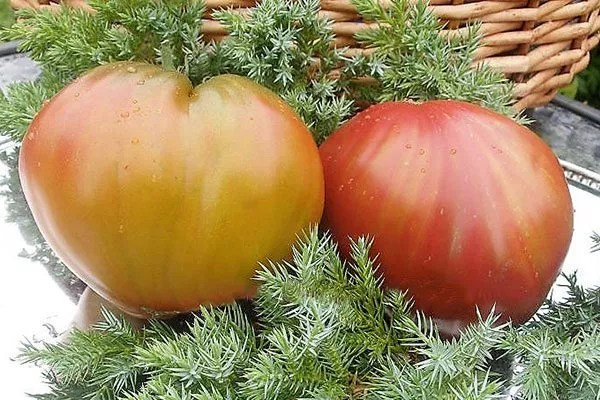
This mid-season variety has a germination to fruiting period of 100-105 days. Harvesting occurs from July to September. It is highly productive, yielding up to 10-12 kg of fruit per bush in greenhouse conditions.
Landing
The event consists of several key stages: sowing seedlings and planting them in open or closed ground.
- ✓ Optimum soil temperature for planting seedlings: not lower than +15°C.
- ✓ Recommended seeding depth: 1-2 cm, followed by light moistening.
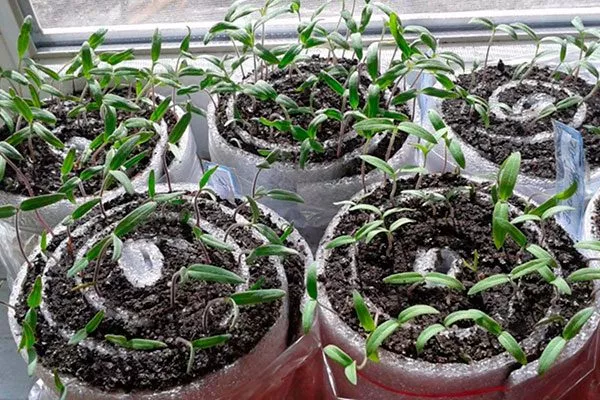
Please meet certain requirements:
- Sow tomato seeds for seedlings 60-70 days before planting. This time may vary depending on the region and climate. Start in late February or early March.
- Prepare the seeds. Harden them: place them in hot water (50°C) for 20-30 minutes, then immediately in cold water. Then dry them on a napkin. Treat the seeds with growth stimulants.
- Use a light, loose, and nutritious soil mixture for sowing. You can purchase a ready-made tomato soil or make your own by mixing equal parts garden soil, humus, and sand.
- Sow seeds in shallow containers, spaced 2-3 cm apart. Plant at a depth of 1-2 cm. Gently cover the seeds with soil, then lightly moisten and cover with plastic wrap or glass to create a greenhouse effect.
- Once the first shoots emerge, reduce the temperature to 20-22°C during the day and 16-18°C at night. Provide the seedlings with good light, ideally 12-14 hours a day. Regularly moisten the seedlings with warm, settled water to prevent root rot.
- Prepare the area for planting seedlings. A few weeks before planting, dig the area and add organic fertilizers (humus, compost) and mineral fertilizers. Potassium and phosphorus supplements are beneficial for tomatoes, promoting growth and fruiting.
- Transplant seedlings into open ground or a greenhouse after the danger of frost has passed and temperatures have stabilized at 15-18°C, in late May or early June. In greenhouses, you can plant them a little earlier if temperatures permit.
- Harden off the seedlings well: 1-2 weeks before transplanting, start taking them outside, gradually increasing the time they spend outdoors.
- Make furrows or prepare planting holes 20-25 cm deep. Plant the seedlings at the same depth they were growing in the container. Plant the stems deeper, as the plant will develop additional roots along the stem, which promotes better rooting.
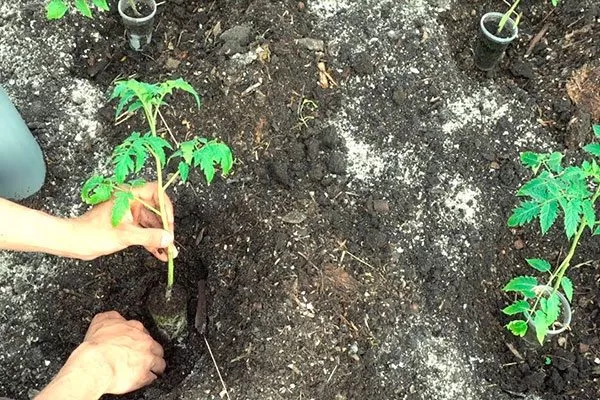
The distance between plants should be at least 40-50 cm to prevent them from shading each other. After planting, water the seedlings generously.
Further cultivation
Caring for tomatoes involves several important agricultural practices. Proper care promotes their health, vigorous growth, and high yields.
Perform simple activities:
- Watering. Provide the plant with regular but moderate moisture. Water the bushes in the morning using warm, settled water (22-24°C). Watering frequency depends on weather conditions: 2-3 times a week in hot weather, and less frequently on cooler days, every 5-7 days.
Water at the roots to avoid water getting on the leaves and stems, as this can lead to the development of fungal diseases. - Top dressing. The plant requires fertilization, especially during periods of active growth and fruiting. The typical schedule is 3-4 applications per season. During the early stages of development, apply nitrogen fertilizers, such as ammonium nitrate, to stimulate foliage formation.
To promote root development, improve fruiting, and strengthen immunity, use phosphorus and potassium fertilizers. Organic fertilizers, such as humus, compost, herbal infusions, or bird droppings, are excellent sources of nutrients. - Pinching out stepsons. Removing lateral shoots (stepchildren) that appear in the leaf axils promotes better air exchange, reduces the risk of disease and allows plants to focus their energy on forming large fruits.
Carry out this procedure 1-2 times a week, removing shoots that haven't yet bloomed. Do this early in the morning to avoid damaging the bushes during the hottest part of the day. - Garter. To prevent stem breakage, improve ventilation, and make plant maintenance easier, secure them with soft materials. Use vertical trellises or stakes.
- Trimming. Helps shape plants, improve light access to the lower parts, and stimulates growth and development. Trim lower leaves that are close to the ground to prevent the spread of disease. Remove old and diseased plants and excess shoots.
- Protection from diseases and pests. To prevent fungal diseases (powdery mildew and late blight), maintain a regular watering schedule, avoid overwatering the soil, and ventilate the greenhouse regularly. Treat the bushes with fungicides or herbal infusions, such as garlic or calendula.
Regularly inspect plants for pests such as aphids, spider mites, and other insects. Use insecticides and folk remedies such as soap solution or garlic infusion. - Loosening. Fluffing helps improve soil aeration, prevents crust formation, and improves moisture access to the roots. Do this carefully to avoid damaging the root system.
| Type of feeding | Periodicity | Efficiency |
|---|---|---|
| Organic fertilizers | Once every 3-4 weeks | High |
| Mineral fertilizers | Once every 2 weeks | Average |
Pros and cons
Before you start growing a new tomato variety, carefully familiarize yourself not only with its advantages, but also with its disadvantages.
Fruits can be sensitive to temperature fluctuations and suffer from overheating in greenhouse conditions without adequate ventilation.
Reviews
The Taiga tomato is deservedly popular among gardeners due to its versatility and high hardiness. These large, uniquely colored tomatoes with excellent flavor are suitable for a variety of culinary purposes. With proper care, this crop will delight you with consistent harvests throughout the season.