
The Syzranskaya Pipochka tomato is an old variety bred by local farmers. This beautiful and delicious tomato was developed in the Samara region and has remained popular for many years in many regions of Russia. It boasts excellent agronomic characteristics and excellent taste.
Description of the Syzranskaya Pipochka tomato
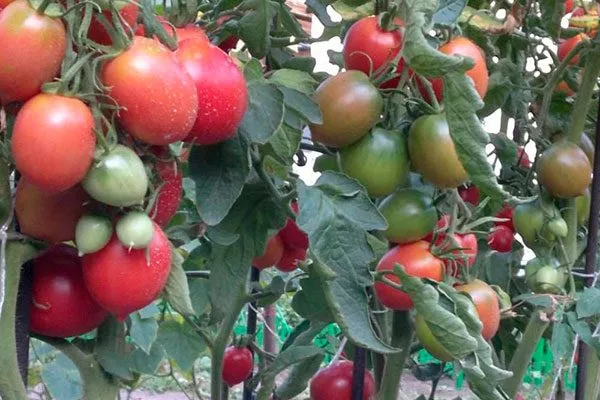
The bushes have an indeterminate growth habit. They are tall but compact, not spreading. They grow up to 2 m in height. The plants have medium foliage, with rich green leaves. The inflorescences are simple, and the fruits are small. A single cluster produces 7 to 9 tomatoes.
Brief description of fruits:
- Color of unripe fruits: green.
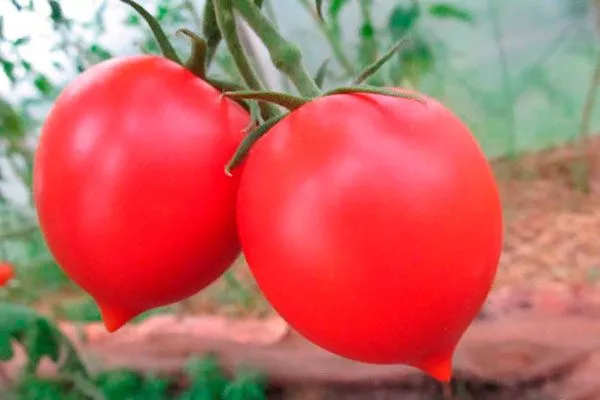
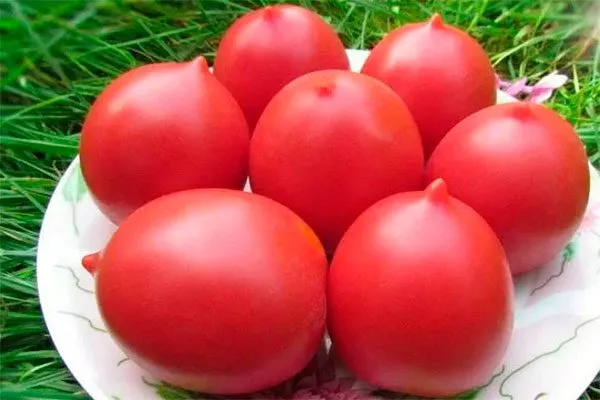
- Color of ripe fruits: pink.
- Form: oval, with a pointed tip.
- Skin: smooth, glossy, thin and dense.
- Pulp: dense, fleshy, juicy.
- Weight: 100-120 g.
History of creation
The Syzranskaya Pipochka tomato is a striking example of folk selection. Its exact origins are unknown, but many sources claim it is an ancient variety native to the Volga region, grown there for over 100 years. It is believed that this tomato was developed by gardeners from Syzran.
Other names: Syzran pimpochka, Syzran Dulka.
Characteristics
The Syzranskaya Pipochka tomato has long been popular not only due to its excellent taste but also due to its excellent agronomic characteristics.
Ripening time
The Syzranskaya Pipochka tomato is a mid-season variety. It takes 100-120 days from germination to harvesting the first fruits. Fruiting is prolonged, beginning in July and lasting until frost.
Productivity
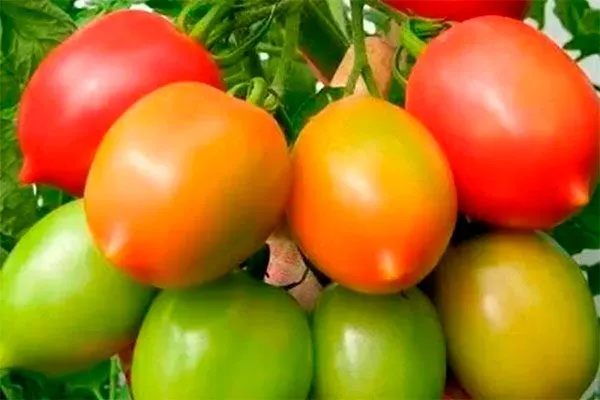
This variety is very high-yielding, with a single bush yielding up to 10 kg of fruit. A single cluster yields 0.5-1 kg of tomatoes.
Disease resistance
The variety is resistant to most nightshade diseases but requires preventative treatments. It is particularly vulnerable (under unfavorable conditions) to late blight.
Taste and use of fruits
Syzranskaya Pipochka tomatoes have a harmonious, slightly sweet flavor and a pleasant, subtle aroma. They are eaten fresh, preserved whole or in slices, dried, and cured.
These tomatoes are ideal for making salads, adjika, lecho and other appetizers, tomato juice, and for dressing first and second courses.
Pros and cons
The Syzranskaya Pipochka tomato, along with its recognized advantages, also has some drawbacks. These, however, have not affected the popularity of this time-tested variety. Nevertheless, before planting this variety in your garden, it's best to be aware of all its disadvantages.
Landing
The Syzranskaya Pipochka tomato is grown using seedlings; direct sowing into the ground is not recommended. It can be grown in both open and closed soil.
Seed preparation
Seeds purchased from agricultural stores are usually ready for planting. Home-grown seeds, however, require preparation beforehand—testing for germination, soaking in a growth stimulant, hardening, warming, and disinfecting.
How to properly prepare seeds for planting:
- To test seed germination, use a salt solution (2 tablespoons of table salt dissolved in 1 liter of hot water and cooled to room temperature). Immerse the seeds in the solution and wait 5-10 minutes. Any seeds that float to the surface are discarded as non-viable. Those that sink to the bottom are washed and dried.
- The selected seeds are immersed for 2 hours in a growth stimulator, for example, “Epin” (1-2 drops per 100 ml of water).
- You can warm the seeds on a radiator, after spreading them out on paper or newspaper. Keep the seeds there for 2-3 days. This procedure increases germination energy.
- The seeds can be disinfected in a weak solution of potassium permanganate (1 g per 100-150 ml of water). They should be soaked for no more than 20 minutes. Then they must be rinsed and dried.
Site selection and preparation
The Syzranskaya Pipochka variety grows well in sunny areas protected from drafts and gusty cold winds. The site should receive 11-12 hours of daylight. There should be no shade.
The best soils for the Syzranskaya Pipochka tomato are light and fertile loams or sandy soil mixtures. The optimal pH is 6 to 6.5. When choosing a site, it's also important to consider crop rotation.
The Syzranskaya Pipochka tomato can be planted after cucumbers, root vegetables, greens, and other garden crops that are not nightshades. Tomatoes should not be planted after peppers, potatoes, or eggplants.
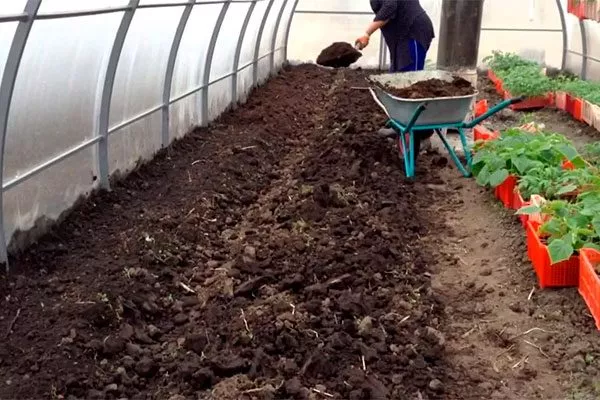
The area before planting tomatoes is prepared in advance:
- The soil is prepared in advance, preferably in the fall. Organic matter, such as compost, humus, and wood ash, is added during digging.
- For poor soils, it is recommended to add additional complex mineral fertilizers. For example, you can apply ammophoska, nitroammophoska, or diammonium phosphate (30-40 g per square meter).
- If the soil is acidic, it is necessary to add wood ash, slaked lime or dolomite flour (300 ml per 1 sq. m).
In a greenhouse, the soil also needs to be prepared for planting. It is dug over or loosened. The soil should be worked to a depth of at least 25–30 cm. The soil must be disinfected. You can treat the soil with a steam generator or biological treatments.
Selection and preparation of containers
Containers for tomato seedlings are selected based on the age of the plants. It's also important to consider whether transplanting will be necessary. If sowing in large containers, the seedlings will need to be transplanted into individual containers after 2-3 weeks.
If you plan to grow seedlings without transplanting, you can sow them directly into large individual pots. Their optimal volume is 300-500 ml. Alternatively, you can use peat pots or pellets. You won't have to remove the plants from these pots; they can be planted in their permanent location along with their containers.
For growing seedlings, you can also use cassettes or wooden boxes 10–15 cm deep. Planting containers should have drainage holes.
Features of preparation of planting containers:
- Containers for seedlings are washed with hot water and soap or detergent.
- If the container is reused, it must be disinfected, for example, with potassium permanganate.
- The washed and disinfected container must be thoroughly dried and the inner surface treated with an antifungal agent.
Substrate preparation
To grow seedlings, you can use a ready-made substrate or prepare it yourself.
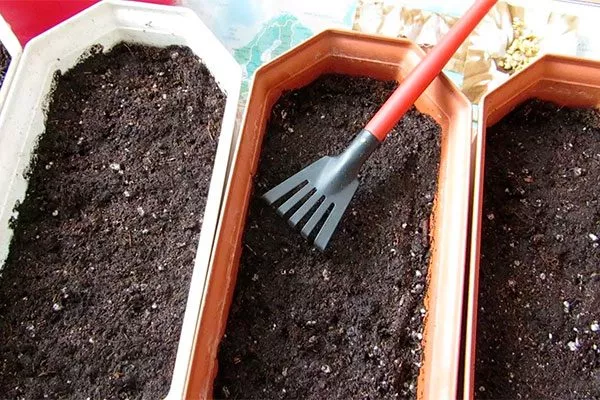
Ingredients for preparing the soil mixture:
- Basic ones are humus, rotted compost, lowland peat (neutral or deoxidized), forest, turf or garden soil.
- Additives to improve the structure - river sand, perlite or vermiculite, coconut fiber.
- Nutritional additives – humates, vermicompost, natural extracts.
Example recipe:
- Mix 1 part garden soil with 2 parts humus and 1 part sand.
- Add 200 g of ash, 50 g of superphosphate and 20 g of potassium sulfate to the mixture.
Among the ready-made substrates suitable for growing tomato seedlings are: Terra Vita, Agricola, Humimax, and Chudo Gryadka.
Sowing seedlings
The Syzranskaya pipochka tomato is sown for seedlings 60-65 days before the expected planting.
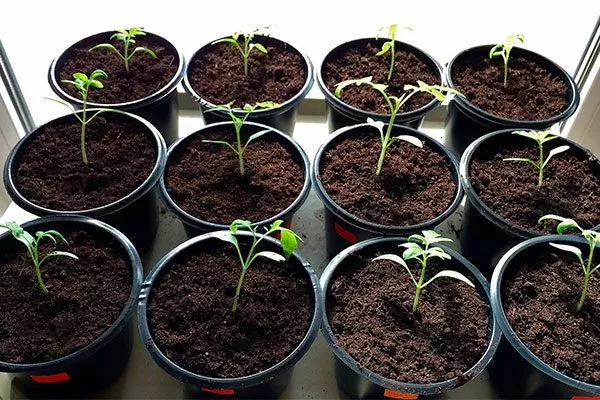
Sowing features:
- The soil poured into the planting containers is leveled and lightly moistened with a spray bottle.
- For sowing, make furrows or holes 2-3 cm apart. Leave 4-5 cm between furrows. Cover the sown seeds with soil and moisten them again. Plant to a depth of 1 cm.
- The crops are covered with a transparent material, glass, or film. They are placed in a warm room with an air temperature of 22 to 25°C and diffused light. The crops are aired daily. If the soil dries out, moisten it with warm, settled water.
Remove the covering immediately after the seedlings emerge. Delay is essential, as the seedlings may overheat and die.
Growing seedlings
The seedlings must be carefully looked after and provided with favourable growing conditions.
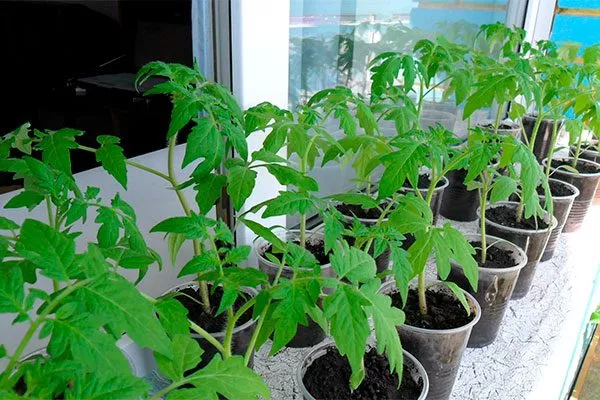
Features of seedling care:
- After removing the cover, the seedlings are moved closer to the light. To prevent them from stretching, the temperature is lowered to 15–16°C for a week. At night, it should drop to 13–14°C. After a week, the temperature is raised again to 20–25°C.
- Initially, seedlings are provided with 24-hour light. This is achieved by using artificial lighting, such as phytolamps.
- Before transplanting, water the seedlings sparingly, about once a week. Overwatering is unacceptable, as it can trigger the development of blackleg, which is fatal to seedlings. After transplanting, water the seedlings more frequently, 2-3 times a week.
- Seedlings are pricked out when they have 2-3 true leaves (not counting cotyledons). During transplantation, the central root is pinched to stimulate lateral root branching.
- After transplanting, it is recommended to feed the seedlings with complex mineral fertilizers. Apply 2-3 applications at two-week intervals. For example, you can use Fertika Lux or Gumi-Omi for Seedlings. They contain nitrogen, phosphorus, potassium, and microelements.
About two weeks before planting the seedlings outdoors, they begin hardening them off. The plants are taken outside or onto the balcony daily. The time spent outdoors is gradually increased, starting with 1-2 hours, and gradually building up to 10-12 hours. Watering is reduced during this time.
Planting seedlings in the ground
Seedlings are planted outdoors when the air temperature reaches 16–18°C, the soil temperature reaches 12–14°C, and the risk of frost has passed. Planting times vary depending on the growing region.
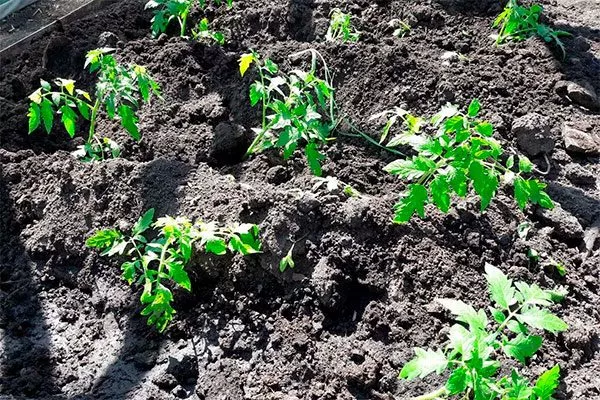
Approximate planting times:
- Southern regions - from May 10 to 15.
- Central Russia - from June 5 to 15.
- Urals and Siberia – from June 5 to 15.
Features of planting seedlings:
- For planting, dig rows or holes, the depth of which should be 5 cm greater than the size of the root ball.
- Between adjacent holes (or plants in rows) - 45-50 cm.
- Organic matter is poured into the bottom of the hole, for example, a couple of handfuls of humus or compost, the same amount of wood ash and 30 g of superphosphate are added.
- The fertilizer-filled holes are watered with warm water. After an hour, when the water has been absorbed, the seedlings are planted, and the empty space is filled with fertile soil, which is carefully compacted by hand. The seedlings are placed vertically in the holes. Soil is added up to the first pair of true leaves.
If the seedlings are overgrown, they need to be planted deep to the 3rd pair of true leaves.
Care
The Syzranskaya Pipochka tomato doesn't require much care; it just requires watering, fertilizing, loosening the soil, and preventative spraying. This tall tomato also requires staking and pinching.
Watering
The bushes are watered as the soil dries out; it is important to avoid over-watering or over-drying.
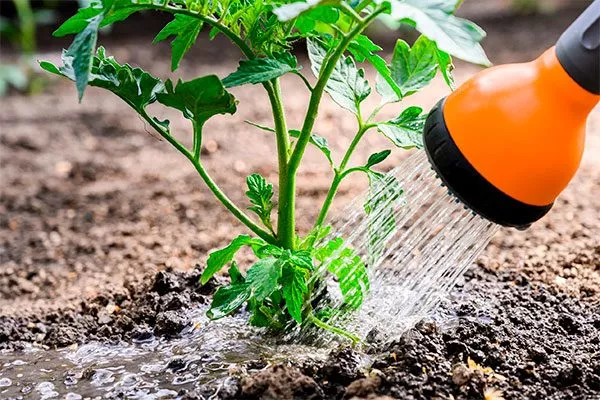
Water tomatoes taking into account the stage of plant development:
- After planting and until buds form, water tomatoes 2-3 times a week. The recommended watering rate is 2 liters.
- During flowering, water weekly with 5 liters of water.
- During the fruiting period, tomatoes are watered once every 3-4 days. The recommended watering rate is 3 liters.
Tomatoes are watered with warm, settled water in the morning or evening. In greenhouses, watering is always done in the morning, and then the greenhouses are ventilated to reduce humidity.
Loosening
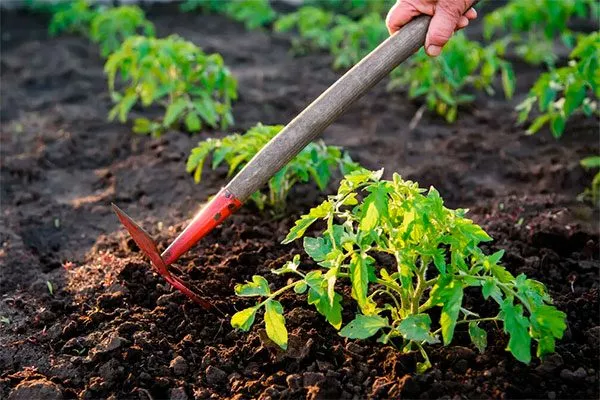
The day after watering, it's recommended to loosen the soil to provide oxygen to the roots and improve root aeration. Loosening also helps kill pests in the soil. The recommended loosening depth is approximately 10 cm.
Top dressing
Tomatoes are fertilized 3-4 times per season, depending on soil fertility and plant health. Before applying fertilizer, thoroughly moisten the soil. It's important to follow the correct dosage to avoid burning the roots.
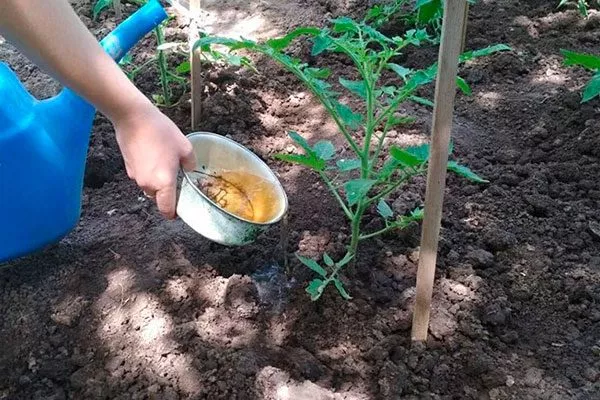
During the flowering and fruiting stages, tomatoes require potassium and phosphorus fertilizers to accelerate ripening. For example, superphosphate and potassium sulfate can be added at a rate of 1 tablespoon per 10 liters of water. If micronutrient deficiencies occur, additional fertilizers, including foliar feeding, are used.
Garter
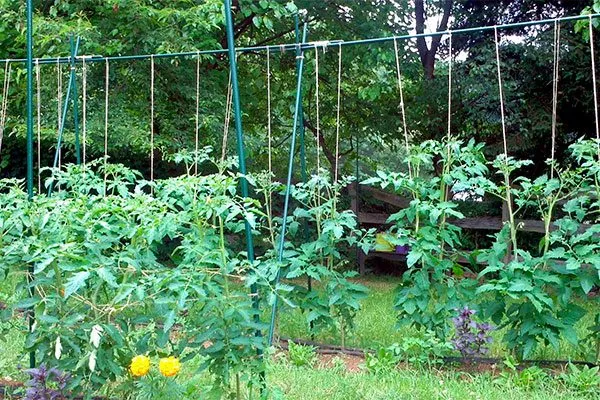
This variety is tall, so staking is essential. This is done as the bush grows. If left unsupported, the main stem may break. Bushes are tied to wooden supports, iron rods, etc.
Pinching and shaping
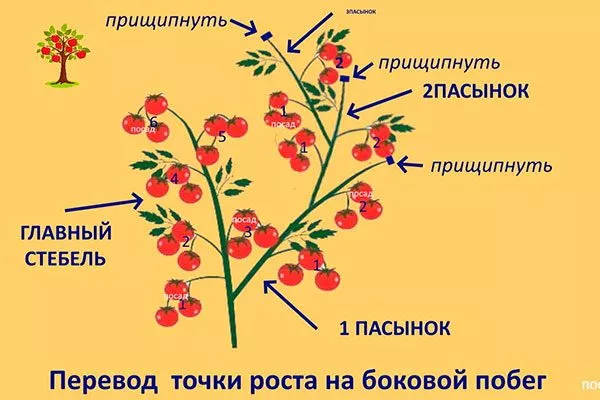
Pinching out side shoots is necessary to prevent the bush from becoming too dense. Removing shoots from the leaf axils stimulates the formation and ripening of larger fruits. Side shoots should be removed as they appear. It is recommended to train the bushes into two stems. This ensures maximum fruiting.
Pest and disease control
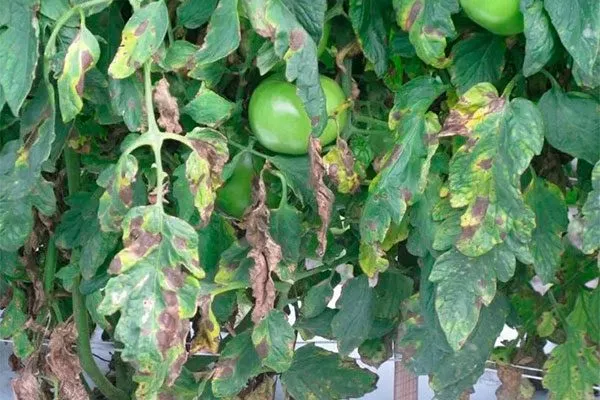
The Syzranskaya Pipochka tomato has good immunity, but under unfavorable growing conditions, the risk of infection increases. Bushes can become susceptible to late blight, cladosporiosis, and blossom-end rot. To combat these diseases, biological or chemical fungicides are used, such as Fitosporin-M, Alirin-B, Quadris, and others.
The most dangerous pests affecting the Syzranskaya Pipochka tomato include whiteflies, cutworms, aphids, and slugs. To combat them, biological products are used, such as Fitoverm, which kills over 20 pest species, and in severe cases, insecticides are used, such as Aktara, a contact and stomach pest control product for sucking and leaf-eating pests.
Harvesting and storage
Syzranskaya Pipochka tomatoes are picked slightly unripe if they need to be transported or stored. For eating, they are harvested fully ripe. Harvesting should be done in dry weather; otherwise, the tomatoes will spoil quickly.
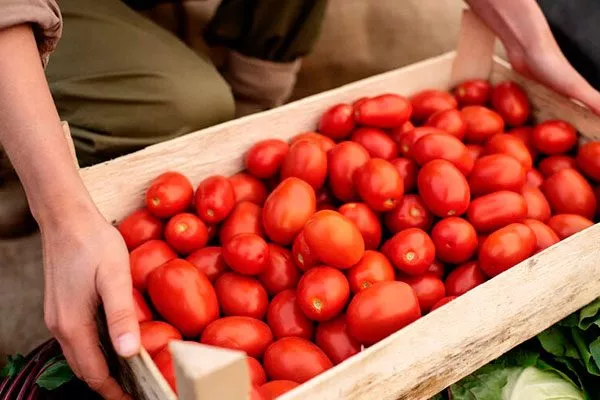
Syzranskaya Pipochka tomatoes store well and for a long time thanks to their dense flesh and tough skin. Store them in a cool, dry place.
Reviews
The Syzranskaya Pipochka tomato is a reliable variety that has stood the test of time and generations of gardeners. These tomatoes have excellent flavor, high yields, and are versatile—suitable for all occasions, from salads to whole-fruit preserves.