
The Supermodel tomato is considered a relatively new variety, developed in 1912. It is suitable for cultivation in all regions of Russia except the northern part (the Far East, Siberia). low-growing tomatoes, the bush of which is distinguished by its elegance, and the fruits by their unsurpassed taste.
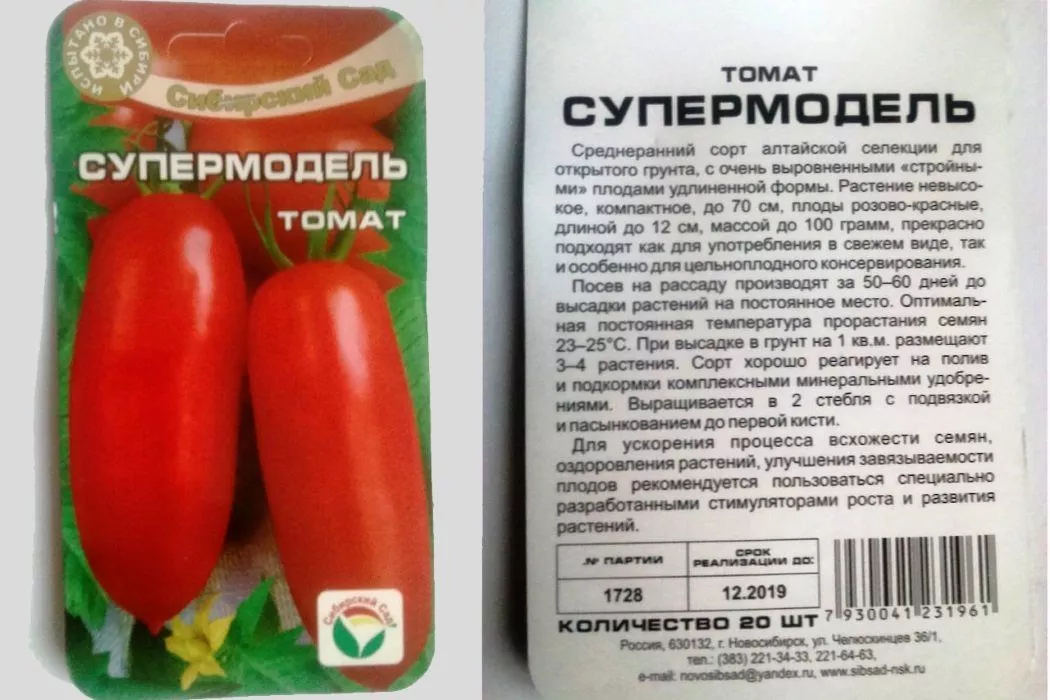
Seeds of the tomato variety "Supermodel"
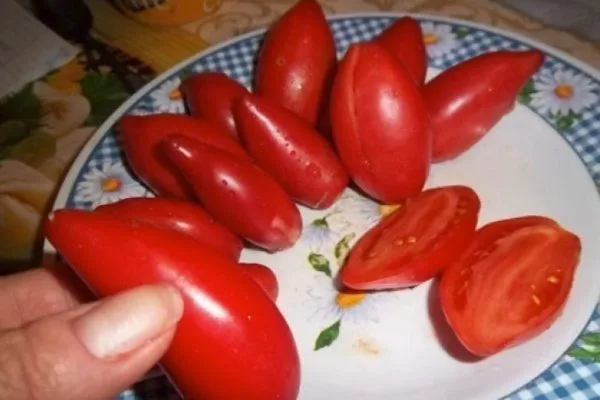
Tomato variety "Supermodel"
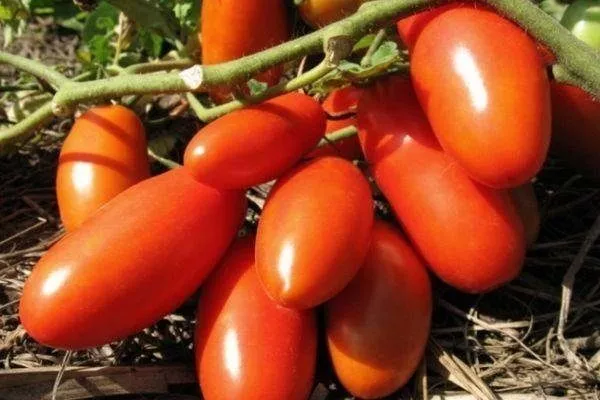
You can harvest up to 8 kg of tomatoes from one square meter.
General characteristics of the variety
Supermodel is a mid-early determinate variety, which is accepted grow in open groundRequires staking and removal of side shoots, which increases yield. The greatest number of tomatoes is produced on a plant with no more than three shoots.
This variety is used for a variety of purposes, including fresh eating, canning, drying, and pickling. It also makes delicious sauces.
Appearance of bushes:
- minimum height - 60 cm, maximum - 80;
- leaf size - small;
- color – dark green;
- The bush is a compact standard.
Fruit characteristics:
- the color of tomatoes is pink-red;
- the shape is distinguished by its elongation;
- the pulp is of medium density and fleshy;
- the skin is thin, even and smooth;
- there are no more than 3 seed nests;
- taste qualities – sweet and sour;
- amount of dry matter – no more than 6%;
- the tomato grows up to 15 cm in length;
- weight ranges from 100 to 120 grams.
Ripening period:
- the shortest ripening period after planting is 100 days;
- maximum term – 120 days.
Productivity:
- there are up to 8 kg of fruits per 1 sq. m;
- If care rules are not followed, the yield will decrease to 5 kg.
The yield is influenced by the growing region—the largest number of tomatoes can be harvested in the south and central regions. The main growing conditions are adequate watering and sunlight.
Features of planting, growing and care
Requirements:
- the soil should be sandy loam and loamy;
- the soil is enriched with humus;
- earth is neutral;
- wind protection is required;
- When planting, the soil must be well warmed up;
- air humidity should not exceed 60%;
- temperature range: from 20 to 25 degrees.
- ✓ The soil pH level should be strictly within 6.0-6.5 for optimal nutrient absorption.
- ✓ Humus content in the soil should be at least 3.5% to ensure the necessary nutritional value.
Sowing times:
- for seedlings in containers – February 26 – March 10;
- when sowing in the ground, but under film - April 11 - May 1;
- for late planting in the garden – May 1-5.
These dates are for direct planting, that is, sowing seeds. With early planting, the harvest can be in the first half of August; with late planting, it can be harvested at the end of the same month.
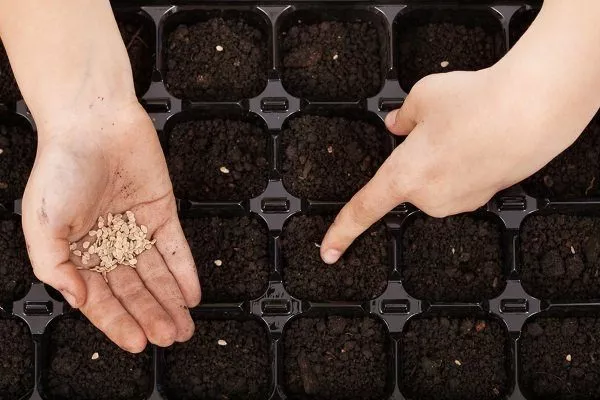
How to plant seeds for seedlings?
Seed preparation begins approximately two months before transplanting the bushes into the open ground. The seeds require special treatment to prevent disease. To do this, they are placed in a manganese solution for 15-20 minutes. Then, planting tomato seedlings You need to adhere to the following rules:
- the soil should be moist and slightly compacted;
- the distance between seeds is maximum 4 cm;
- each seed must be carefully pressed in;
- the temperature before sprouts form should not be below 25 degrees;
- after the emergence of seedlings, the temperature regime decreases (20-22 degrees);
- picking seedlings in separate containers is carried out after 3 leaves have formed on the bush.
For helpful tips on how to grow tomato seedlings, read in our other article.
How to plant seedlings and care instructions
Seedlings are transplanted only when there is no risk of frost, as the plant is considered heat-loving. Rules:
- The seedlings should be 28-30 cm in height and up to 60 days old.
- The number of formed leaves is from 6 to 8.
- The foliage should be saturated with a green hue. There should be no spots, damage, or wrinkles on the leaves or stems.
- Before replanting, carefully inspect the roots (to ensure there are no deformations).
- Planting in the ground is carried out in rows or in a checkerboard pattern.
- The holes are dug at a distance of 50-60 cm from each other.
- Inter-row width – 50 cm.
In greenhouse conditions Frequent ventilation is required, but it should be kept away from the plants, as they dislike wind. Optimal temperature and humidity levels must be maintained.
In open ground In hot, dry weather, Supermodel needs to be watered daily. If the summer is excessively rainy, to prevent the risk of disease, it's necessary to create drainage channels around each hole.
Watering rules:
- watering is carried out between rows under the root system;
- Moistening should be carried out to a depth of 35-40 cm.
If the rows next to the tomatoes, mulch, then loosening is unnecessary. Simply pulling out the weeds is sufficient. Watering requirements change – since the soil won't crack, less water will be needed.
Top dressing:
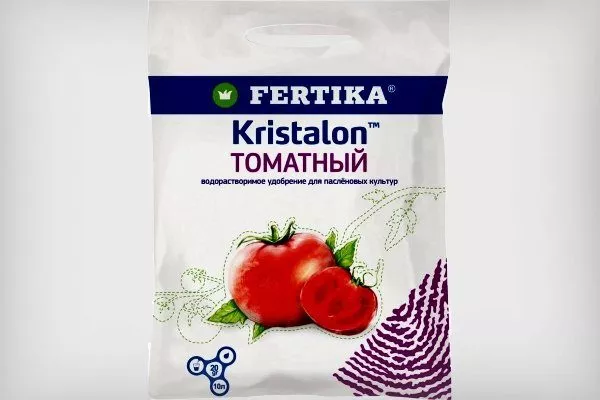
- First time feeding seedlings Apply a fertilizer containing potassium and phosphorus a couple of weeks after transplanting to a permanent location.
- Secondary feeding is carried out after a month. Complex fertilizers are applied, such as Nitrophoska and similar products.
- Next time (in another month) you need to add potassium and nitrogen.
Diseases and pests
Pest and disease control for Supermodel:
- Phoma blight. Treatment is carried out with Hom. It is also important to remove and destroy affected tomatoes. Reduce watering and nitrogen fertilization.
- For dry spotting, use Tatu, Consento, Antracol.
- This variety is actively attacked by Colorado potato beetles. Control them with Prestige, Apache, Aktara, Tabu, Regent, Corado, Molniya, and Komandor.
It is important to carry out preventive measures, including the following actions:
- compliance with crop rotation and irrigation requirements;
- weed removal;
- trimming the lower leaves;
- no crowding during planting;
- timely loosening and application of fertilizers;
- treating seedlings with Bordeaux mixture before transplanting;
- introduction of copper oxychloride;
- adding ash to the soil.
- ✓ Yellowing of the lower leaves may indicate a lack of nitrogen or overwatering.
- ✓ Leaf curling is often a reaction to sudden temperature changes or calcium deficiency.
Harvesting and storage
Despite their thin skin, the fruits are quite firm, making them easy to store. They ripen sequentially, so harvesting takes place over a long period. For long-term storage, tomatoes are best picked when they're brown, as they ripen successfully in the sun for a couple of weeks.
Storage requirements:
- If you're growing a small number of tomatoes for storage, store them in a basement in wooden containers. It's best to sprinkle them with sawdust.
- If the harvest is significant, a storage pit is created. The hole should be up to 60 cm deep, 40 cm wide, and of any desired length. Geotextile material or regular straw is placed on the bottom. The layer of tomatoes should not exceed 40 cm. A protective material is laid over the stacked fruits and covered with wooden shields. The storage period for this type of storage is 30 days. During this time, the storage pit should be aired 4-5 times and the vegetables should be sorted, removing any rotten ones.
If ripe, red tomatoes are picked for storage, they will keep for up to two months in a well-ventilated basement. If the tomatoes are picked brown, their shelf life is significantly increased.
Pros and cons
Advantages Supermodel varieties:
- presentable presentation;
- excellent immunity to many diseases and pests;
- ease of planting, growing and care;
- excellent taste;
- versatility of use;
- shelf life;
- possibility of transportation.
Flaws:
- needs a lot of sunlight;
- relatively low yield;
- demanding for the removal of weeds and excess moisture.
Reviews
The Supermodel tomato isn't known for its high yield, but it's popular due to its unique shape, flavor, and ease of care and maintenance. It's not grown in northern regions, but is ideal for central and southern regions. If you follow all the guidelines, you can achieve good results in increasing the number of tomatoes per plant.