
The Suleiman tomato is a new pink variety with excellent marketability and flavor. Its fruits have a truly unusual appearance, with their pointed tops reminiscent of either the domes of Eastern temples or the pointed slippers of a sultan.
Who bred the Suleiman tomato?
The Suleiman tomato was developed by Russian breeder V.I. Blokin-Mechtalin and is a hybrid. It was approved for cultivation in 2024 and is recommended for use in the central regions.
Description of the variety
The Suleiman variety grows as determinate plants, reaching 70 cm in height. The first flower cluster appears above the sixth or seventh leaf, with subsequent clusters occurring every other leaf. The foliage is medium, with medium-sized, standard leaves. The inflorescences are simple. The fruits of the Suleiman tomato are small to medium. Five to six tomatoes ripen on a single cluster.
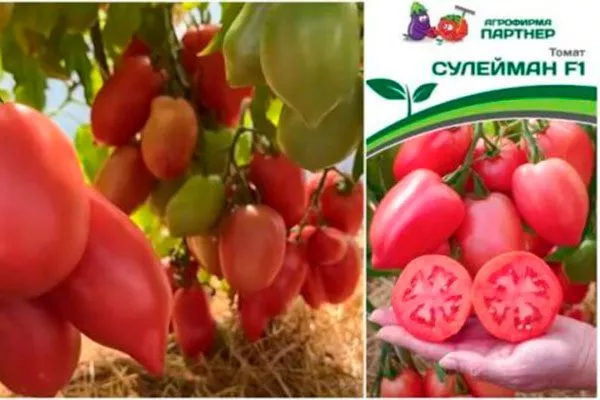
Brief description of fruits:
- Color of unripe fruits: light green.
- Color of ripe fruits: dark pink.
- Form: cylindrical with a pointed top.
- Skin: smooth, dense.
- Weight: 70-130 g.
The taste of fruits and their purpose
This hybrid has excellent flavor. With proper care, the fruits are juicy, sweet, and aromatic. They are truly fleshy and sweet, and are eaten fresh and used in salads, juices, and a variety of dishes.
Characteristics of the Suleiman tomato
The pink hybrid Suleiman is not only tasty and visually attractive, but also possesses enviable agronomic characteristics that allow it to be successfully grown even in difficult weather conditions.
Ripening time
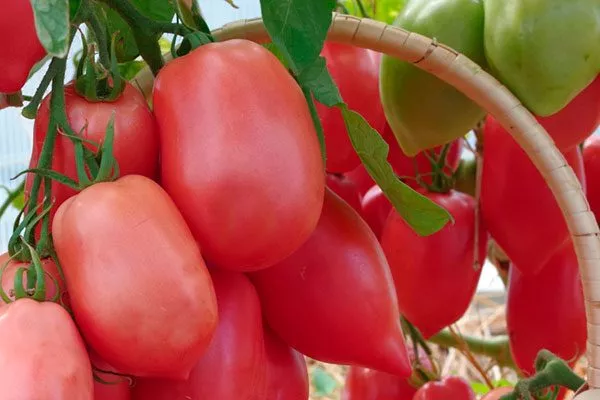
The hybrid tomato Suleiman is an early-ripening variety. It takes 95-100 days from germination to harvesting the first fruits. Harvesting occurs in mid- to late August, depending on the growing region and its climate.
Productivity
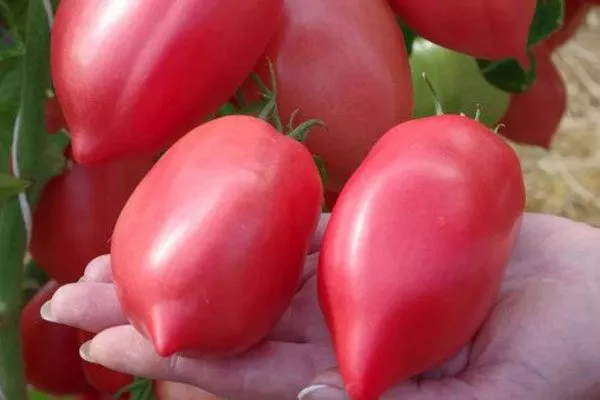
The pink tomato Suleiman is a high-yielding variety. Under appropriate growing conditions and with good care, approximately 15 kg of tomatoes can be harvested per square meter. Since three or four tomato plants are planted per square meter, the yield per plant ranges from 3.75 to 5 kg.
Cold resistance
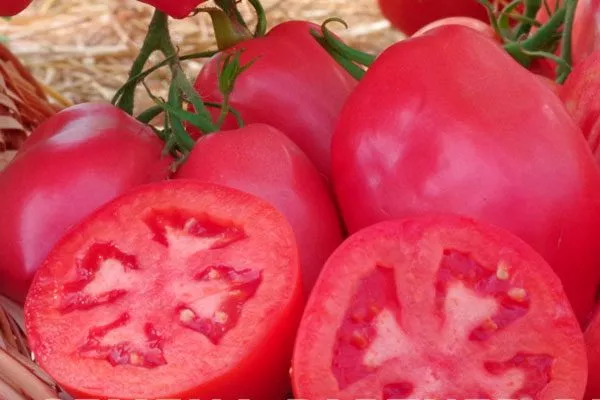
The Suleiman tomato tolerates any stressful situations well, including extreme weather conditions—cold snaps, sudden temperature changes, and dry periods.
Disease resistance
The pink hybrid Suleiman has very good resistance to fungal, bacterial, and viral diseases. However, to prevent damage, which can occur under unfavorable conditions, timely preventative spraying is necessary.
Pros and cons
To attract gardeners' attention, you need truly outstanding qualities—that's how fierce the competition is in the seed market today. This new variety is easily a success—like most pink tomatoes, it has excellent flavor, and it also boasts a host of other advantages.
Landing
The Suleiman tomato is grown primarily from seedlings. It takes approximately 60 days for the seedlings to grow. They are then transplanted into open ground or a greenhouse.
Preparing the planting container
Seedlings can be sown in large plastic containers or individual containers such as cups, peat pots, or tablets. If the containers have already been used for planting, they should be disinfected, for example, with a potassium permanganate solution. For new containers, simply rinse them with boiling water.
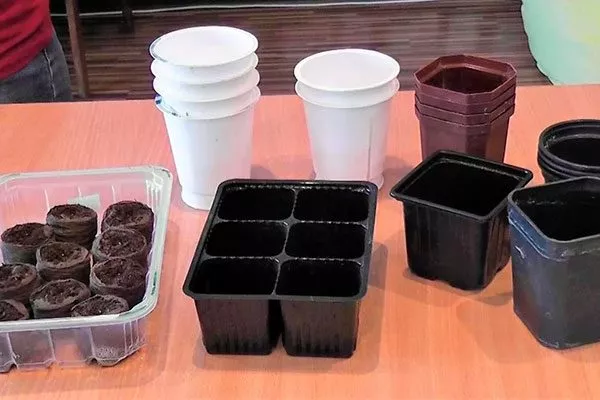
If containers and cups don't have drainage holes, make them with a hot awl. Individual planting containers should hold at least 500 ml and be 8-10 cm high. Fill the planting pots with a ready-made (store-bought) substrate or a homemade potting mix. Fill the containers approximately 1/3 full.
- ✓ The use of high-moor peat ensures optimal air permeability and moisture retention.
- ✓ Adding wood ash not only enriches the soil with potassium, but also reduces acidity.
An example recipe for preparing a potting soil mixture is to mix 10 liters each of peat, sand, and humus (or compost), adding 1 liter each of wood ash and wood shavings. Mix the mixture thoroughly and pour hot boiled water over it to kill harmful microorganisms and weed seeds. After 24 hours, pour the mixture into pots.
Seed preparation
To achieve high germination rates and grow strong, healthy seedlings, it is recommended to prepare the seeds for planting.
Features of preparing tomato seeds Suleiman:
- Pay attention to the expiration date. The fresher the seeds, the better. The maximum shelf life for tomato seeds is 4–5 years.
- To discard unviable seeds, soak them in a salt solution (1 tablespoon of table salt dissolved in 250 ml of water). Poor-quality seeds will float to the top, while good ones will sink to the bottom.
- Seeds can be oxygenated by placing them in a glass of water and inserting a compressor tube into the glass. This procedure is called bubbling. It lasts approximately 10 hours. After this treatment, seeds germinate better.
- The planting material is hardened off by alternately placing it in warm and cold environments. At night, they are placed in the refrigerator, wrapped in a linen bag, and during the day, they are kept indoors at room temperature. This cycle is repeated 2-3 times.
- The seeds are disinfected for 20 minutes in a 1% potassium permanganate solution or in hydrogen peroxide heated to 45°C. After disinfection, the seeds are thoroughly rinsed under running water.
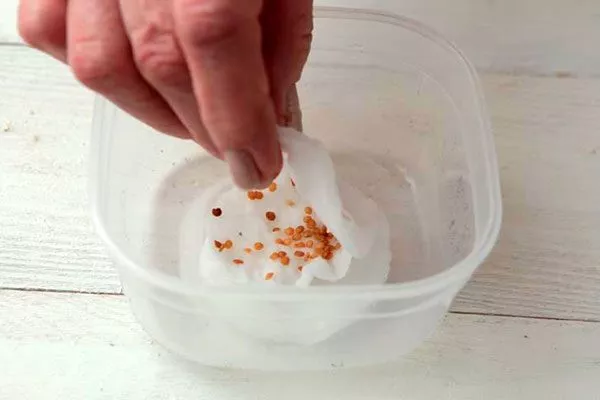
- To speed up germination, the seeds are germinated in damp cheesecloth. A growth stimulant such as Zircon or Epin can be added to the water. Once the seeds sprout, they are planted in prepared containers.
How to grow seedlings?
Seeds are sown around mid-March; the exact timing varies by region and climate zone. The main thing to keep in mind is that it takes 60-65 days for seedlings to grow. Therefore, sowing should be done two months before the expected planting date.
Features of growing tomato seedlings Suleiman:
- The soil in the planting containers is leveled and moistened with a spray bottle. In the main container, the seeds are planted in rows, leaving 2-3 cm between adjacent seeds.
- The planted seeds are covered with a thin layer of soil—1 cm is sufficient—and covered with a transparent material, glass, or plastic film. The cover creates a greenhouse effect, helping to retain heat and moisture.
- Until the seeds germinate, keep the seedling containers in a room with a temperature of 22 to 25°C. Seedlings should appear in about a week. Remove the film immediately. To ensure the sprouts receive plenty of light, place them in a south-facing window. Lower the temperature by a few degrees to prevent the seedlings from stretching and to ensure they remain strong and healthy.
- After a week, the temperature is raised again and maintained at +18…+20 °C.
- Seedlings are provided with 11-12 hours of daylight. Artificial lighting is added if necessary.
- Water the seedlings moderately, using a spray bottle and later a watering can. Avoid overwatering. Water the seedlings only after the top layer of the soil has dried. The recommended watering frequency is once a week.
- When the plants develop one or two true leaves, they can be pricked out and transplanted into separate containers. At the same time, pinch the seedlings' roots to encourage lateral branching.
- To ensure seedlings transplanted outdoors survive the transition well, acclimate them to the new conditions for about a week by taking them outside every day. This starts with 15-20 minutes and gradually increases to several hours.
Selecting a site
For planting Suleiman tomatoes, choose a level, well-lit area free from drafts and gusty winds. Stagnant water and waterlogged soils are undesirable. Tomatoes grow best in sandy or loamy soils that are rich in humus, retain moisture, and are permeable. The optimal pH is 6.0-6.8.
- ✓ The site must have a slope of no more than 5° to prevent water stagnation.
- ✓ Check the groundwater level; it should not be higher than 1.5 m from the surface.
When choosing a planting site, it's also important to consider crop rotation rules. The best predecessors for tomatoes are legumes, green crops, and various root vegetables. It's not recommended to plant tomatoes after potatoes, peppers, eggplants, or other nightshade crops.
Preparing the beds
To prepare the area for planting, dig the soil in the fall and cultivate it with a Fokin flat-plower. This tool preserves the soil structure and does not disrupt the activity of beneficial microorganisms. In the fall or spring, you can sow green manure crops in the area; they will enrich the soil with essential micronutrients.

During the fall tillage, add organic matter, such as compost, at a rate of 10 liters per square meter. Seaweed meal can also be added to the soil at a rate of 50 grams per square meter. For heavy clay soils, it is recommended to add loosening agents such as sand or sawdust, and for acidic soils, slaked lime or dolomite flour. If you failed to prepare the soil in the fall, you can do so in the spring.
In any case, in the spring, it's recommended to re-till (plow) the soil to a depth of 20-25 cm to ensure increased oxygen access to plant roots. This also eliminates weeds and mixes in minerals. It's recommended to add mineral fertilizers and then level the beds to ensure good water drainage.
Transplanting
Hardened 60-day-old seedlings are planted in open ground, taking into account the local climate and weather conditions. Specifically, the established air and soil temperatures should be between 18 and 22°C and 14 and 16°C, respectively. By the time of planting, the seedlings should have 6-7 true leaves.
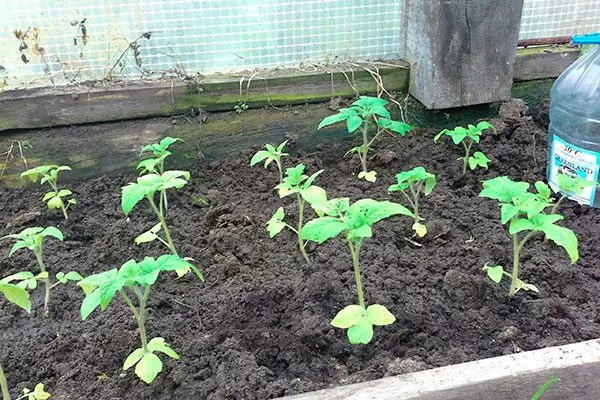
Features of planting seedlings:
- In the south, seedlings are planted in early to mid-May, while in temperate regions, they are planted in late May to early June. Tomatoes are planted in greenhouses a few weeks earlier.
- For planting, prepare holes measuring 40x40 cm. Tomatoes can also be planted in rows. The holes should be 15 cm deep and 20-25 cm wide. The planting holes should be large enough to comfortably accommodate the seedling's root system and root ball.
- Before planting, water the holes and leave them for 0.5-1 hour to allow the soil to settle. Place a handful of ash or sawdust at the bottom beforehand.
- The seedlings are placed in the holes, the roots are covered with soil, the soil is compacted, and the soil is watered. The water is warm. Once the water has been absorbed, the soil is mulched with humus, sawdust, straw, etc.
Care Features
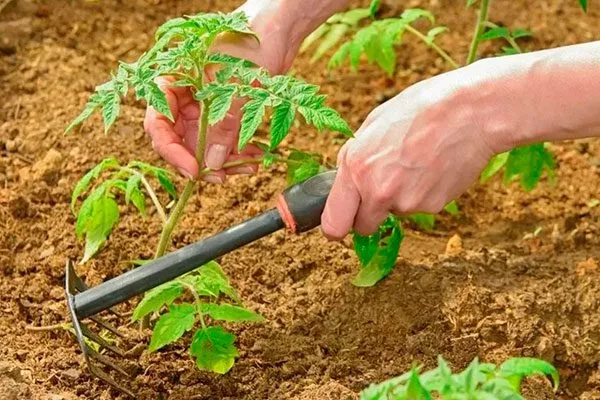
Caring for the Suleiman tomato is quite simple, as it's hardy, undemanding, and, most importantly, resistant to various diseases and extreme weather conditions. This pink tomato requires watering, fertilizing, loosening the soil, weeding, shaping, and preventative spraying.
Watering and loosening
While the seedlings adapt to the new environment, they are not watered. This period lasts approximately 10 days. However, if there is severe drought and heat, the tomatoes will need watering. Subsequently, watering should be done 2-3 times a week, depending on the weather and soil conditions. The recommended watering rate is 20-30 liters per square meter.
During the formation of flower clusters and flowering, watering rates are reduced to 1-2 liters per plant. When the bushes begin to set fruit, the water rate is increased to 3-5 liters. During the ripening stage, watering is sharply reduced or stopped altogether, as excess moisture can cause fruit cracking.
Top dressing
The Suleiman tomato is fertilized throughout the growing season, once every two weeks. Nitrogen is added during the initial growth stage to promote foliage growth; potassium is needed during the fruiting stage; and phosphorus is a constant requirement.
Garter and shaping
It's recommended to train the Suleiman tomato into 3-4 stems. The bushes also need to be tied up, as the trunks aren't strong enough to support the weight of the fruit.
Diseases and pests
The Suleiman tomato has strong immunity to all types of pathogens, but under unfavorable conditions and poor agricultural practices, bushes can be particularly susceptible to blossom-end rot and tomato mosaic, which are transmitted by aphids, thrips, and leafhoppers.
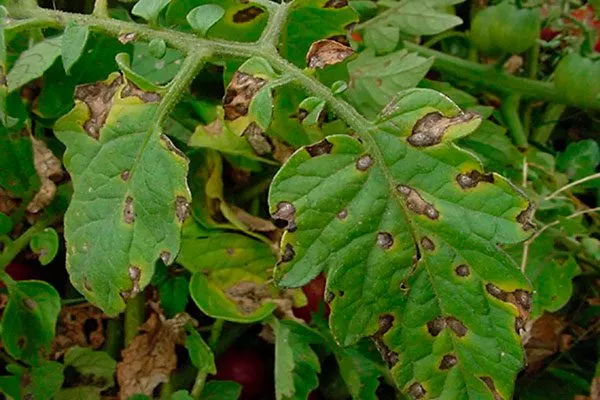
Mosaic rot is incurable, but blossom-end rot is treated with a calcium chloride solution supplemented with wood ash and milk. Fungicides such as Topaz, Alirin B, Fitomycin, Fitosporin, Anti Vershinka, and similar products also help combat the disease.
The Suleiman tomato can be affected by various insect pests, including slugs, which carry fungal infections. These can be controlled with Grom, Axela, and other pesticides.
Bushes can also be attacked by aphids, whiteflies, thrips, and spider mites, against which various insecticides are used, such as Fitoverm, Aktara, Biotlin, etc.
Harvesting
The fruits are harvested fully ripe for eating or making juice, and unripe for storage. It's important to remove all the fruits from the bushes before the temperature drops below 10°C. It's recommended not to pick the tomatoes; instead, carefully cut them off with pruning shears, along with the stems.
The harvested fruits are placed in shallow containers such as boxes, basins, or baskets. It's best to store tomatoes in a single layer. If long-term storage is planned, each fruit can be wrapped in paper.
Reviews
The Suleiman variety is an excellent choice for lovers of pink tomatoes and winter preserves. This tomato's small, attractive fruits are ideal for whole-fruit canning. Most importantly, this variety is very hardy and adapts easily to a wide range of conditions, so even inexperienced gardeners will have no trouble growing it.