
Sprut is an unusual tomato variety distinguished by its vigorous growth, high yield, and resistance to disease and harsh weather conditions. Its main advantage is the ability to train the bush to resemble a true tomato tree. This plant, like an octopus, twines its numerous vines around the greenhouse.
Origin and regionality
The tomato, cultivated as a perennial tree, has long been known in South American countries. For Russian gardeners, it remains a curiosity. The variety made a splash in 1985 during the EXPO World Exhibition. Nozawa Shigeo's Sprut f1, grown hydroponically, was on display there.

The Japanese breeder's success was replicated by Russian scientists working at the Institute of Plant Protection. In 2007, the species was added to the Russian State Register. A Russian tomato plant has the same name. It was developed by A. N. Lukyanenko, S. V. Dubinin, and I. N. Dubinina. The seeds are sold by the Sedek agrofirm.
Octopus is designed for cultivation in different conditions:
- in open areas of the garden (in the southern regions);
- in heated greenhouses (year-round cultivation, as well as perennial cultivation in the form of a tree, provided that special conditions are created and hydroponic technology is used);
- in a film shelter (in the Central and northern regions, seasonal cultivation);
- at home in tubs and barrels.
It is cultivated as both an annual and perennial crop. Thanks to its resistance to diseases (blossom-end and root rot, TMV, verticillium wilt, and powdery mildew), increased heat and cold tolerance, and hardiness, this tomato hybrid performs well in a variety of climates. It is grown throughout Russia.
Description of the plant
This hybrid tomato variety is distinguished by its abundant and unlimited growth energy, generative development, and cluster fruiting. Its stems continuously elongate and branch.
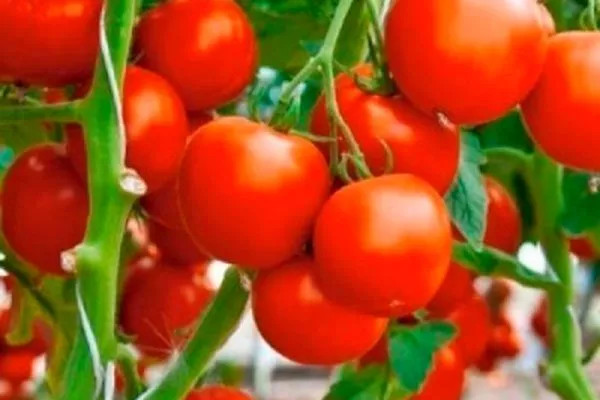
Octopus bushes are vigorous and well-ventilated. They possess the following characteristics:
- indeterminacy (height - 4 m or more);
- high degree of branching;
- intensive formation of stepsons;
- long internodes;
- foliage: large, dark green, oval-shaped;
- flowers: pale pink, large;
- numerous brushes consisting of 5-7 fruits (formed every 3 leaves).
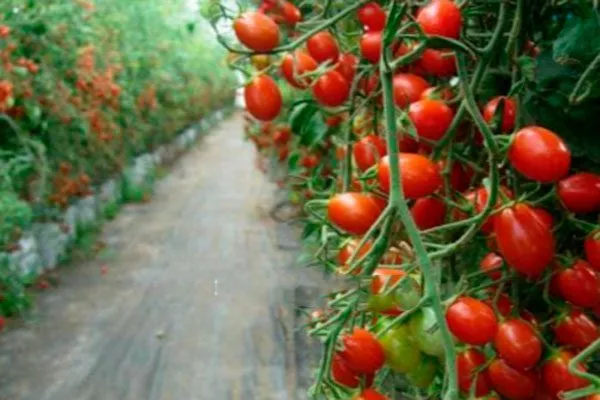
When grown in greenhouses, gardeners tie plants to a specially designed frame that supports numerous constantly growing branches. Lateral shoots are left in place and secured to the support. Only some of the lower shoots (those that form below the first cluster) are removed.
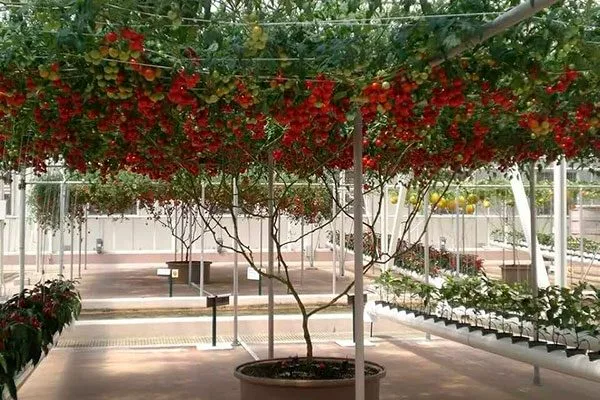
A tomato plant grown hydroponically is shaped like a tree. It grows in a heated shelter for several years. It has strong roots, a woody trunk, and a large, dense crown (up to 50 square meters in diameter). It reaches a height of 5 meters.
Fruits, their taste and purpose
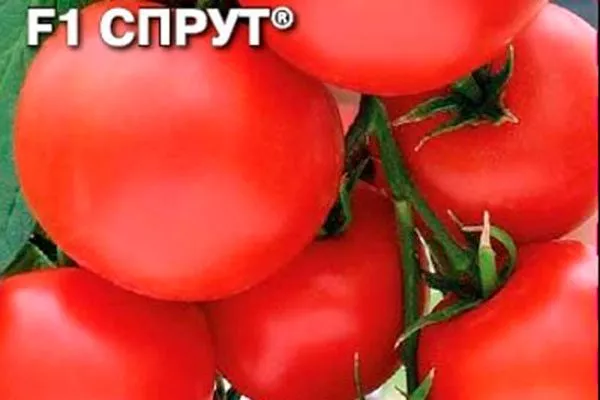
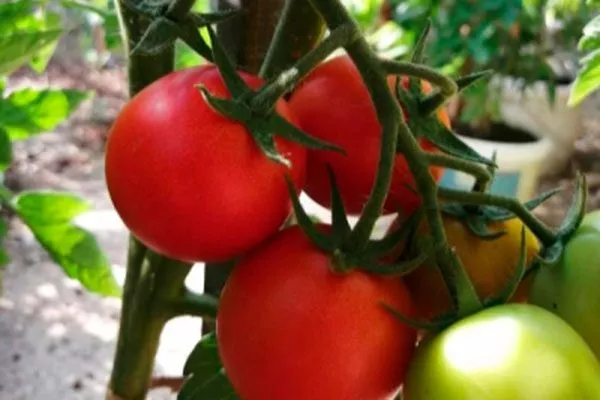
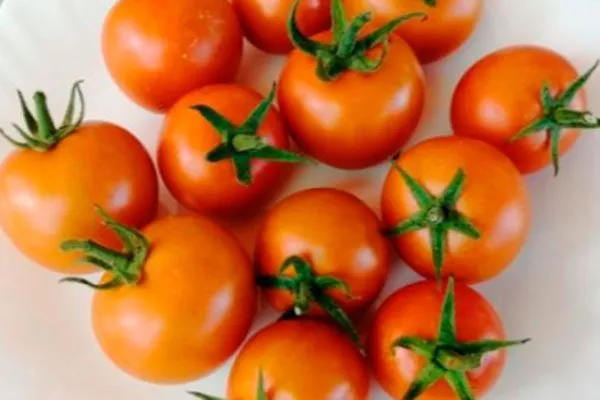
Tomatoes, ripening in numerous clusters of the octopus plant, have excellent consumer characteristics. They are uniform, attractive, and keep well. Their appearance is described as follows:
- small size;
- weight - 160 g;
- neat rounded shape;
- rich red color;
- smooth, glossy skin;
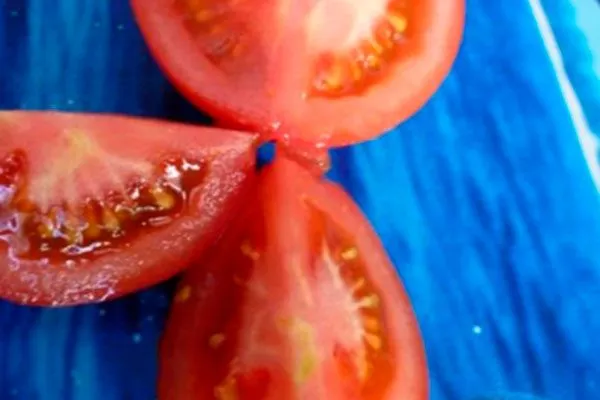
- pulp: fairly dense, fleshy, juicy, evenly colored, without veins.
The hybrid tomato variety has a pleasant flavor: its sweetness is harmoniously balanced with a subtle tartness. They are eaten fresh, added to salads, appetizers, and other dishes. The fruits are also suitable for juice/pureeing, making sauces and ketchup, canning, and freezing.
Ripening and yield
This hybrid tomato is classified as a mid-season variety. Its harvest matures in 115-120 days after germination. When grown seasonally, its bushes produce abundant and long-lasting fruit (from July to October).
The yield indicators are high:
- 6.9 kg per 1 sq. m is the average productivity of plants grown in open areas of the garden;
- up to 10 kg from 1 bush - when grown in greenhouses;
- up to 10,000 fruits or up to 1,500 kg from 1 plant grown in a heated shelter all year round in the form of a tomato tree.
Where does it grow best?
Cultivating this unusual tomato variety is possible using a variety of methods: from planting seedlings in open-air garden plots to growing them in protected soil, including hydroponics. The most impressive results are achieved using a complex method involving tree shaping.
In greenhouses
If you want a bountiful year-round harvest of small fruits (120-160 g), grow Sprut in a heated greenhouse. Remove side shoots before the stem reaches 2 m to form the tree's crown. For larger tomatoes (up to 200 g), grow the variety as a regular indeterminate variety under cover.
In the climate of the central zone of the Russian Federation, seasonal cultivation of Octopus in greenhouses is recommended:
- polycarbonate;
- film.
With proper care, you can harvest 12-15 buckets of high-quality fruit from a single plant. Follow these guidelines:
- grow the hybrid using the seedling method;
- sow seeds starting in the second half of January;
- transfer seedlings to shelter from mid-April;
- It is advisable to plant tomato seedlings in a raised bed insulated with compost;
- the day before transferring the seedlings to the shelter, remove 2 pairs of their lower leaves;
- when planting in a garden bed, deepen the plants 15 cm into the soil;
- add humus and wood ash to the holes;
- until stable heat is established, cover the bed with planted seedlings with non-woven material, throwing it over arches;
- Do not remove side shoots from the bushes to obtain the maximum possible harvest;
- tie up all the resulting shoots with clusters to a wire stretched under the ceiling of the shelter (already in July the octopus plant will cover the entire interior space of the greenhouse, stretching up and out for several meters);
- In summer, ventilate the greenhouse to ensure an influx of fresh air and avoid stuffiness in the shelter);
- Pay special attention to watering: in hot weather, water the tomato planting every morning;
- provide good lighting inside the greenhouse;
- maintain soil moisture at 60%;
- Make sure to add fertilizer (biohumus) at least once a week;
- leave 7-12 fruit clusters on the plant to ensure larger tomatoes;
- remove all the leaves located under the first brush.
With proper management, you can begin harvesting towards the end of June. The plants will produce fruit until the autumn frosts.
By growing Sprut in a heated greenhouse, you can enjoy tomatoes all year round. This hybrid, which grows for a long time, is taller and more spreading, producing 15-40 clusters. The number will depend on your preference and the technical specifications of the shelter, which should be at least 4 meters high.
In open ground
If your garden is located in the southern regions, try growing Sprut as a regular indeterminate variety in an open bed. It's well-adapted to life outdoors: it's cold- and heat-resistant, disease-resistant, easy-to-grow, and productive.
Follow the rules:
- cultivate the hybrid using the seedling method;
- Sow seeds in February;
- transfer the seedlings to the garden in May;
- plant them in a well-lit and sun-warmed area with fertile, loose soil;
- At first, cover the plants with film to protect them from the night cold;
- ensure that the bushes are tied to a strong and voluminous trellis (all growing shoots of the bush will need to be secured to it);
- water and feed them properly;
- Ensure prevention of diseases and pest attacks (despite the strong immunity of the crop, when it is grown in an open bed, the risk of infection and damage by parasites increases).
Hydroponics technology
To yield 15,000 kg of tomatoes per year, grow a tree-shaped Octopus plant. Hydroponic cultivation, which involves year-round cultivation of tomatoes indoors without soil, will help you achieve such stunning yields.
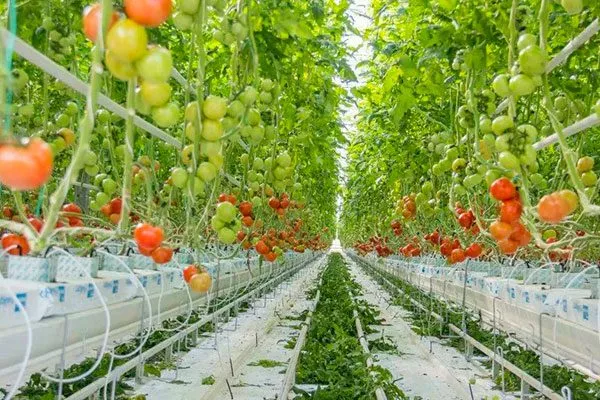
To implement this progressive technique, you will need the following equipment:
- a large greenhouse, constantly heated and equipped with an uninterruptible lighting system (lamps with an optimal spectrum) and ventilation;
- devices for monitoring air temperature and humidity, and controlling the concentration and composition of the hydroponic solution.
Grow a tomato tree by following these step-by-step instructions:
- Equip the greenhouse: install a compressor, lighting lamps, and control devices.
- Cut out cube-shaped blanks from glass wool. Their dimensions are 20 x 20 x 10 cm. Make holes in them for the seeds.
- Soak the glass wool blanks with a commercial hydroponic solution.
- Place a hybrid tomato seed in each hole.
- Place the seed cubes in containers filled with the same solution. They should be 1/2 full.
Constantly moisten the top of the cubes with a hydroponic solution. Grow the seedlings in them. At two months of age, when the seedlings have 5-7 true leaves, transplant them into larger glass wool cubes measuring 50 x 50 x 30 cm. - Attach tubes to each cube, connected to an aerator. As the roots grow, add air tubes, maintaining a distance of 30-40 cm between them.
- Place the cubes with seedlings in containers with walls more than 50 cm high. They should be 1/3 filled with hydroponic solution.
- Cover each container with a black lid with a hole punched in it for the seedling to grow through.
Care for your tomatoes properly. Maintain the greenhouse temperature at 18-25°C. Provide 12 hours of daylight. Provide air to the roots daily. Monitor the concentration and temperature of the nutrient solution. It should be 19-25°C.
For the first 7-8 months, don't allow the Octopus bush to bloom. Devote this time to shaping it. Install a trellis 3 m high next to the plant. Stretch a net over it to attach the new shoots. Follow these guidelines when shaping the tomato tree:
- After the plant trunk reaches the net, carefully lay the shoots on it and secure them;
- orient them in different directions;
- pinch the main stem at 3 m;
- do not pinch out tomato stepsons;
- Before the flower ovary is fully formed, break off the flower ovary.
With this cultivation technology, fruits will form and ripen in the spring and summer.
In barrels or boxes
The hybrid tomato "Sprut" can also be grown indoors. Try growing a small tomato tree in a glassed-in garden. Plant in the spring. Sow the seeds in trays filled with nutritious potting soil, planting them 1.5 cm deep.
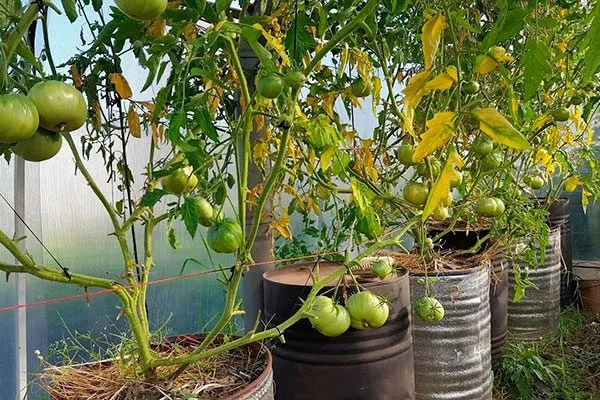
Water the seedlings, feed them, and keep them warm and well-lit. Transplant them into individual containers after they develop one or two true leaves. Plant them on an insulated balcony facing south. Mulch the soil under the tomatoes with moss or sawdust.
Transplant the mature seedling into a barrel. Follow the guidelines for growing a plant at home in a large container:
- use a barrel with a capacity of at least 200 liters (it is acceptable to replace it with a large wooden box or a thick plastic bag);
- punch holes in the bottom of the barrel to allow excess water to drain;
- Make holes 1 cm in diameter around the perimeter of the container, leaving a distance of 20 cm between them (they will allow air to reach the tomato roots);
- partially fill the barrel with soil, turf, and biofertilizers, alternating layers (each 10 cm thick);
- add fertile soil on top (at least 10 liters);
- plant the strongest seedling bush into the barrel, having first removed its lower leaves;
- add another layer of soil mixture with fertilizers;
- cover the planting with film (you can remove the cover after the threat of frost has passed);
- As the main stem grows, add layers of soil to the barrel (10 cm thick), filling it up to the lower leaves.
- several times a week, connect the tubes connected to the pump to the holes and ventilate the contents of the container;
- water the crop with a nutrient solution once every 14 days;
- During the winter period, refrain from watering and fertilizing;
- remove side shoots from the plant until the barrel is completely filled with soil;
- then, avoid the step-sonning procedure and do not pinch the buds;
- provide the tomato tree with support;
- Starting from mid-summer, tie up the vines.
Landing features
Gardeners grow hybrid tomatoes through seedlings and direct sowing of seeds into the garden. The latter option is only possible in the southern regions. Follow the sowing procedure, properly prepare the containers and soil for the tomato seedlings, and provide them with high-quality care.
Preparing containers with soil
To grow tomato seedlings, use suitable containers:
- spacious boxes made of plastic or wood (the height of their walls is at least 10 cm);
- 400 ml glasses or peat pots.
The container you'll be growing tomatoes in should have drainage holes in the bottom. If it's reusable, treat the inside with a potassium permanganate solution or alcohol before planting.
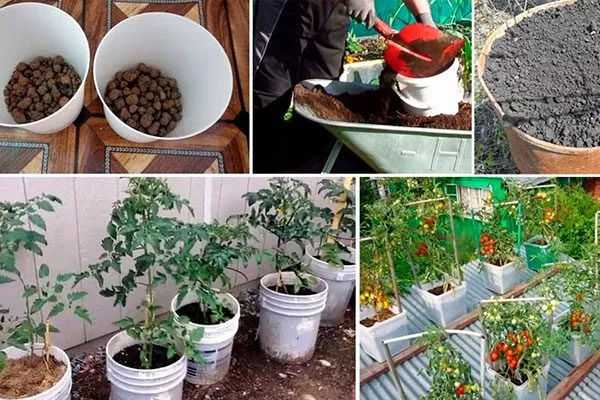
Tomato seedlings require light, loose, and nutritious soil for good growth and development. The optimal pH is between 6 and 6.5. Use a general-purpose, store-bought soil or a homemade mixture made from the following ingredients:
- garden soil - 30%;
- sand - 20%;
- peat - 20%;
- humus - 30%.
Disinfect your homemade potting soil by watering it with a potassium permanganate solution. Store-bought potting soil doesn't require disinfection. It's free of pathogens and parasites, as it's already been treated by the manufacturer.
Landing
To grow Octopus, use high-quality seed from a reputable seller. Check the expiration dates. No treatment or other procedures are required before planting.
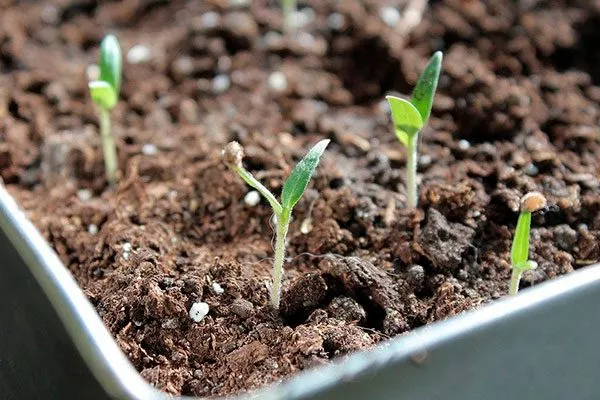
Sow hybrid seeds from late January to mid-February. Follow these step-by-step instructions:
- Fill the planting containers with nutrient-rich soil and level the surface.
- Water the soil in the box with warm water from a watering can.
- Spread the seeds on the surface of the substrate using a regular spoon. For ease of placement, it's a good idea to make shallow furrows (1 cm deep) in the soil. Space the seeds 2-3 cm apart.
- Cover the tomato seeds with soil. Do not compact it.
- Cover the seeds with plastic wrap and leave them in a warm place, protected from direct sunlight.
Post-landing care
To ensure that tomato seedlings in your home thrive and are healthy, provide them with favorable conditions:
- abundant and diffused light (sunny windowsill, use of a phytolamp to extend daylight hours to 18 hours in the first 3 weeks, and then to 12 hours);
- stable heat (temperature for seed germination is +25-27°C, for the growth and development of young tomatoes - +20-22°C);
- air humidity - 65-85%.
Follow the rules for caring for the Octopus planting:
- Moisten the soil under the seedlings moderately, preventing it from drying out or becoming waterlogged;
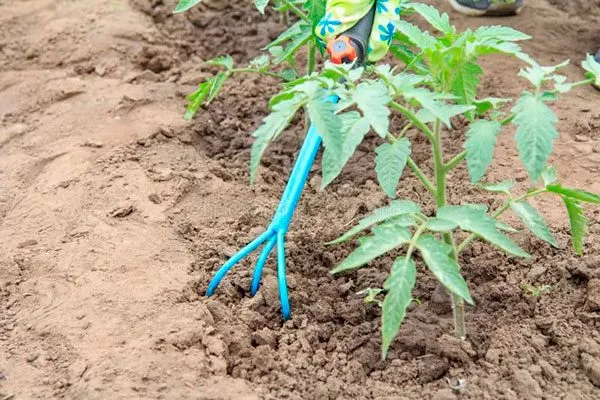
- loosen it carefully;
- transplant three-week-old seedlings into individual containers;
- Feed the plants with complex fertilizers once every 10 days;
- Harden off seedlings that you plan to transplant to open areas of the garden.
Transplanting tomatoes into open ground
Transplant the Octopus seedlings to the garden bed in early June. By this time, the seedlings should reach a height of 15 cm and have 5-7 leaves.
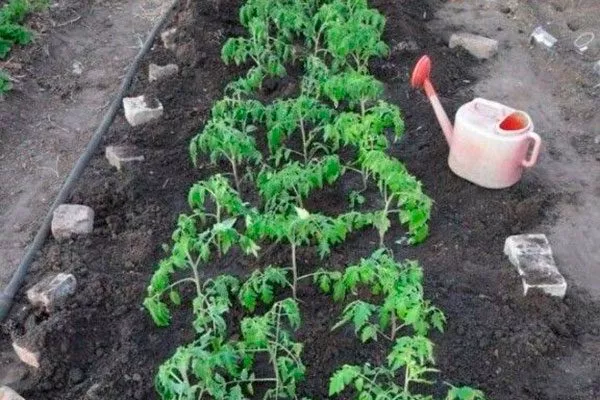
Select a plot of land for planting hybrid tomatoes that has the following characteristics:
- solar;
- protected from wind and drafts;
- non-floodable;
- with soil: loose, fertile, not acidic, loamy (it will need to be dug up in advance, enriched with organic and mineral compounds).
Caring for the variety
Most gardeners don't have the resources to create suitable conditions for growing the Octopus tomato plant. They cultivate the hybrid as a regular indeterminate crop, following standard care procedures, including:
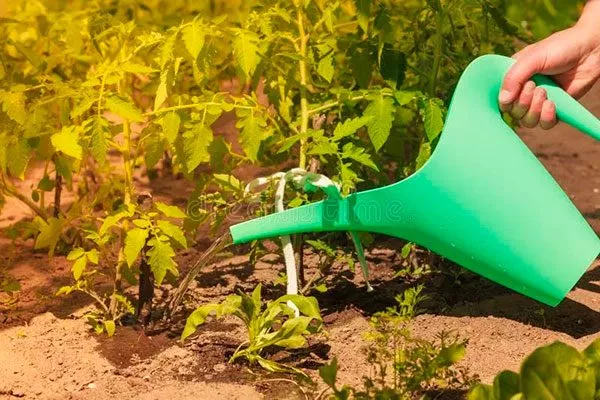
- WateringWater the tomato plant moderately, waiting until the top layer of soil dries out. Use warm, settled water. Avoid dripping on the foliage. Water 2-3 times a week. Adjust the frequency depending on weather conditions.

In the greenhouse, after watering, open the vents and doors for ventilation. - Loosening the soilThis measure improves oxygen access to the plant's roots. Combine it with weeding.
- Mulching the garden bedA layer of organic matter (sawdust, peat, mown grass, straw) covering the soil under tomatoes creates a favorable soil microclimate, retains moisture, and prevents weed growth.
- Adding nutrientsApply fertilizer to the roots of tomato plants at least 3 times per season:
Apply the first fertilizer 14 days after transplanting the seedlings to their permanent location. Use a solution of mullein/poultry manure and ammonium nitrate (25 g per 10 liters of water).
The second time, when ovaries begin to appear on the bushes, water them with a liquid composition of 10 liters of water, 10 g of ammonium nitrate, 10 g of superphosphate.
Time your third fertilization for the fruiting period. Feed the Octopus planting with superphosphate dissolved in water (15-20 g per 10 liters).
Pay close attention to the formation of hybrid tomato bushes. Train them to form 2-3 trunks. If you want to give them a tree-like appearance, remove excess shoots until a crown forms. Don't neglect pinching the main stem. Remove leaves:
- during the ripening period of the fruits of the first brush, it will be necessary to remove all the foliage located under it;
- Throughout the season, remove old, wilted, yellowed leaves.
Problems you may encounter
Despite the tomato hybrid's strong immunity, gardeners sometimes encounter complications when growing it. These complications arise from improper agricultural practices.
Pests
Octopuses are highly resistant to attacks from many insects. If gardeners neglect preventative measures, their crops will suffer from aphids, whiteflies, and caterpillars.
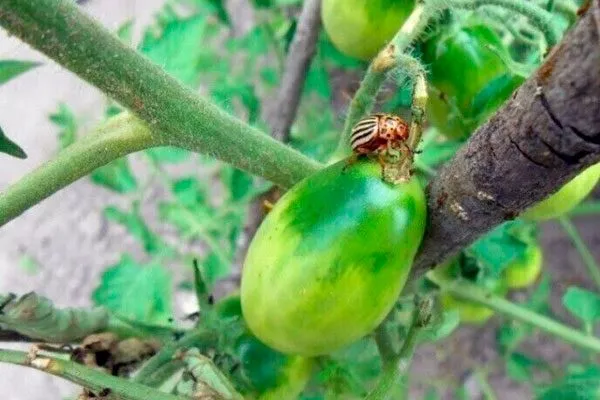
The following steps will help you prevent damage to tomatoes by pests:
- inspection of bushes for timely detection of pests and their larvae;
- manual collection of insects;
- using traps to catch them;
- using folk remedies to repel pests from tomato bushes (tobacco infusion, garlic decoction, cayenne pepper, laundry soap;
- treating plantings suffering from parasites with purchased insecticides and biological preparations.
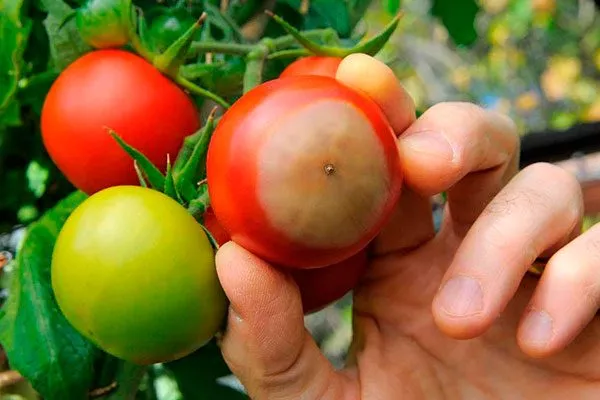
Plant rot
Octopus plants do not tolerate dampness. In conditions of high air and soil humidity, they suffer from rot. The following measures can help prevent this problem:
- strict adherence to the recommended irrigation regime for the crop (it is unacceptable to over-moisten the soil in the garden bed, causing it to become waterlogged);
- ventilation of the greenhouse after watering the tomato planting;
- disinfection of the shelter and soil in the garden bed before planting.
Diseases
The octopus has a strong immune system. Its bushes are resistant to infections such as tobacco mosaic virus, verticillium wilt, and powdery mildew. If not properly cared for, they suffer from late blight.
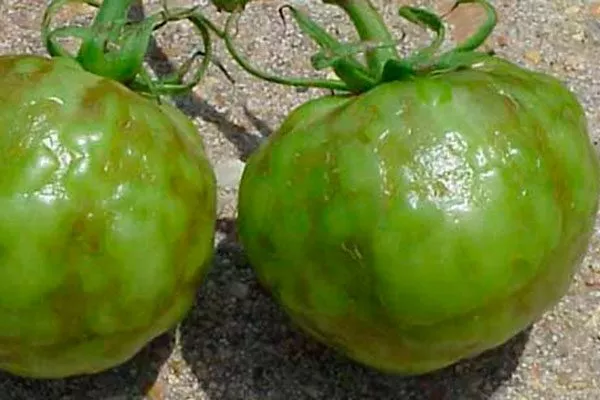
Prevention will help prevent hybrid tomato from becoming infected with late blight:
- Observe the rules of agricultural technology of the crop;
- hill up the bushes;
- spray them with HOM, Bordeaux mixture, Fitosporin-M, Quadris.
Carry out antifungal treatments of tomato beds at the following times:
- 1 week before “relocation” to a permanent location or 7 days after it;
- after the formation of fruit ovaries, with a frequency of once every 15 days, if the summer season was damp and cold.
If signs of late blight (brown spots, white coating) appear on the bushes, treat them and the soil beneath with copper sulfate. Fitosporin-M, a biofungicide, can also be used to combat this problem.
Harvesting
Ripe tomatoes are a deep red. It's acceptable to pick them from the bush before they're fully ripe. By removing pinkish-brown tomatoes from the branches, gardeners artificially increase the yield. They let the harvested tomatoes ripen at home for a week. This doesn't affect the flavor.
Pros and cons
The octopus has become a favorite among domestic summer residents due to its many advantages:
The Sprut tomato has its drawbacks: the bushes are demanding in terms of light and fertilizer, they must be tied to supports, and it's impossible to collect seeds yourself. Another significant drawback is the complex and expensive technology for growing tomato trees, which is inaccessible to most gardeners.
Other Octopuses
The tomato hybrid has several subspecies that are no less popular:
- Octopus Plum F1This variety is characterized by a mid-early ripening period (110 days after germination). The fruits are neatly plum-shaped and weigh 15-20 g. They are all uniform in size. A cluster contains up to 12 fruits. They differ from the main hybrid in color (it can be orange or crimson).
- Octopus Cherry F1. Characterized by early maturity (100-105 days after sowing) and higher yields, it produces clusters of 16-20 miniature cherry tomatoes, each in shades of red, raspberry, or pink. Their flavor is sweet.
Reviews
Sprut is a unique tomato hybrid that can be grown as a perennial tree. Domestic gardeners love it for its abundant harvests, high commercial quality, heat- and cold-resistant bushes, and strong immunity. The classic sweet and sour flavor of its fruits is universally appreciated.