
The Black Sosulka tomato attracts gardeners with its unusual fruit color and interesting shape. The small fruits are suitable for whole-fruit canning. This variety appeared relatively recently, but has quickly gained popularity and become in demand in our country.
Description and characteristics
Icicle Black is a tomato created through the joint efforts of experienced agronomists: Kachainik V.G., Gulkina M.N., Karmanova O.A. and Matyunina S.V. In 2018, the variety was officially approved for use.
What does the bush look like?
This is an indeterminate variety—a plant height of up to 2 m is normal. Distinguishing features:
- The bush is a racemose type, with each raceme producing up to seven elongated fruits. The first complex inflorescence appears above the seventh leaf, with subsequent ones appearing at intervals of two leaves.
- The shoots are covered with long leaves of a rich dark green color, and the stalks have no joints.
- The variety bears fruit well even in partial shade and sets fruit reliably in unfavorable weather conditions.
- ✓ High resistance to adverse weather conditions.
- ✓ Ability to set fruit even in partial shade conditions.
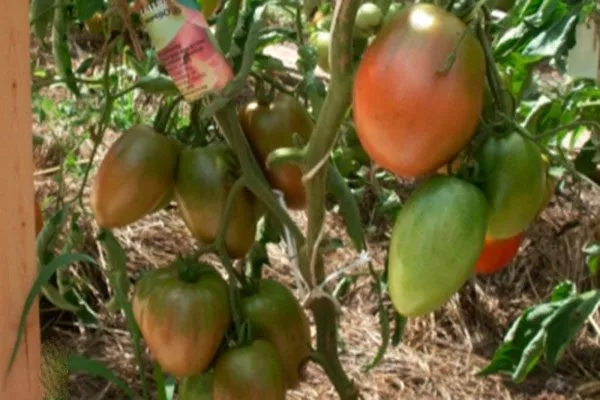
The main advantage of the crop is the lack of tendency for vegetables to crack.
What are the fruits?
Gardeners should be aware that the color of the Black Sosulka tomato doesn't match its name, although the fruits contain significant amounts of anthocyanins. The variety does not belong to the indigo group. At the technical ripeness stage, the tomatoes are light green, with a noticeable dark spot extending from the stem along the shoulders.
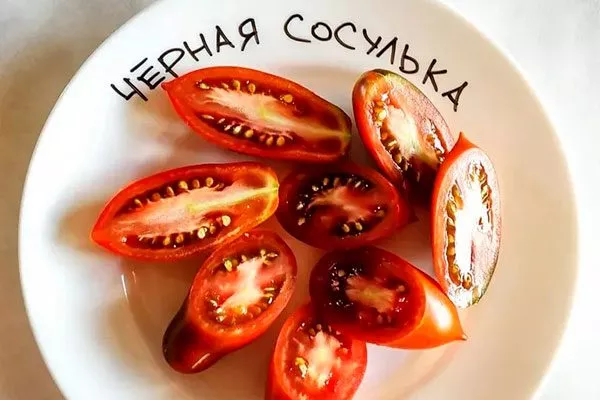
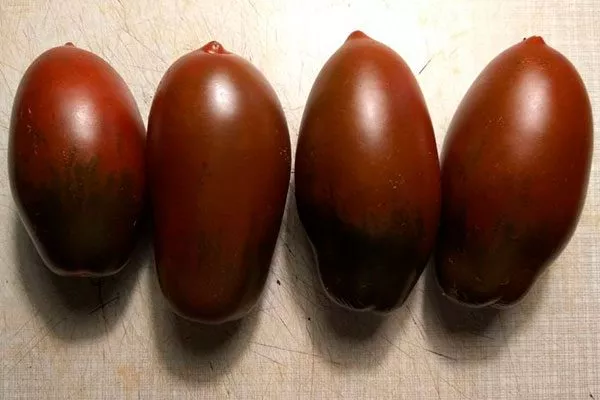
As tomatoes ripen, they acquire a brown hue reminiscent of brick red, but the area around the stem remains green longer than the rest of the fruit. Tomatoes reach their most intense flavor when they reach a terracotta hue, but the coloring isn't yet completely uniform.
Features of the form:
- Most often it is cylindrical or elongated-oval in shape, less often round.
- The ribs may be weakly defined or absent.
- The sides can be smooth or constricted closer to the stem. Such variations are possible even within a single cluster.
- Tomatoes are often asymmetrical about the central axis.
- The nose of vegetables can be small, the so-called “pipochka”, or smoothed, sometimes with a sloping top.
Other characteristics of tomatoes:
- Number of seed chambers: usually 3-4, less often 2.
- Weight: when forming a plant into 1-2 stems – about 100 g, with moderate pinching – from 50 g.
- Density: average.
- Skin: strong, which contributes to good preservation and transportation.
- Pulp: fleshy, moderately juicy.
- Color on cut: uneven, with a brownish-red tint.
The vegetables have a rich, sweet and sour taste.
Yield and ripening time of the Black Icicle tomato
This variety is considered an early-ripening variety. The first fruits are harvested within 100-105 days after germination. The low position of the first cluster and the medium size of the fruits contribute to rapid ripening.
Commercial and overall productivity is 13-15 kg per square meter. This confirms that gardeners can truly count on a high yield of high-quality tomatoes.
Resistance to diseases and pests
The Black Icicle tomato is highly disease-resistant. It is resistant to rot, fusarium, and tobacco mosaic virus. However, if not properly cared for, its immunity can be weakened, increasing the risk of pest and pathogenic bacteria.
Despite these qualities, experienced gardeners recommend preventative spraying to prevent disease and insect attacks. There are many effective products available on the market for this purpose.
Methods of application
The Black Sosulka tomato is characterized by its versatility, as confirmed by many vegetable growers. The tomatoes have an attractive presentation and withstand transportation well, making them suitable for commercial sale.
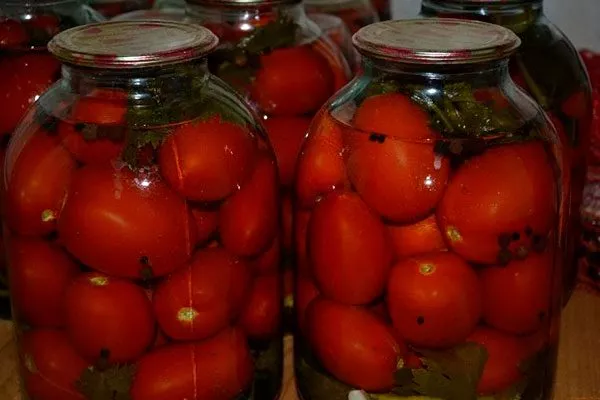
Tomatoes are added to salads, used in a variety of dishes, and frozen for long-term storage. They are also a popular addition to sandwiches and a garnish for vegetable platters.
Landing
Start growing seedlings in late March or early April using high-quality seeds. Prepare a soil mixture consisting of black soil, peat, and sand. Planting trays should be equipped with ventilation holes.
- ✓ Optimum soil temperature for seed germination: +25-28°C.
- ✓ Required soil moisture for seedlings: 70-75%.

Follow these recommendations:
- Before sowing, soak the seeds in a solution of potassium permanganate for 24 hours for disinfection.
- Place the prepared soil in the boxes, then place the seeds in the furrows at a depth of 1-2 cm. Gently spray with water and cover with film or glass.
- Place the containers with seedlings in a warm, well-lit place with a temperature of +23-25°C.
- Caring for seedlings includes regular watering, ventilation and weed removal.
- Before planting outdoors or in a greenhouse, harden off the seedlings. To do this, move the plants outdoors, gradually increasing the time they spend outside.
- Transplant into the garden beds 50-60 days after sowing. If the seedlings have become very leggy, lay them horizontally in furrows 20 cm deep, leaving 3-4 leaves above the surface. Over time, the plants will straighten up and begin to develop normally.
Further cultivation
It's more convenient to use trenches for watering shrubs. This method ensures effective root nutrition, preventing water from reaching the leaves and reducing the risk of late blight. Furthermore, mulching with grass helps retain moisture, allowing you to water the plants every few days.
To strengthen the seedlings, fill the trenches with fertilizer: grass mulch, wood ash, or organic root fertilizer. This approach promotes the formation of strong and healthy bushes.
Even with proper care, disease prevention remains important. Treat the plants with fungicides twice: once a week after planting the seedlings, and again 21 days before harvest.
While tomatoes are ripening, water and spray the plants every week:
- Iodine solution (10 drops per 10 liters of water).
- Soda solution (2 tbsp. per 10 liters of water).
- A solution of potassium permanganate (to the color of red wine).
To prevent disease and promote better plant development, remove lower leaves up to 30 cm from the ground. Pinch out side shoots regularly, and at the end of July, trim the tops of the bushes to focus their energy on fruit formation.
Possible problems
Some vegetable growers note that tomatoes of this variety have a bland taste. Indeed, fully ripened tomatoes left on the vine may be less tasty than those with some greenness remaining at the stem.
Another important point: if tomatoes ripen in the shade or with insufficient light, their flavor deteriorates significantly. This is typical for all tomatoes containing anthocyanin pigments.
Pest and disease control
Black icicles have a strong immune system, but this doesn't guarantee complete protection from diseases. Overwatering and insufficient fertilizing can weaken the bushes and make them vulnerable to the following diseases:
- Septoria (White spot) manifests itself as dry, whitish-covered leaves, which reduces yield. The disease begins on the lower shoots and gradually spreads throughout the plant. It most often develops in August and September. There is no cure, so remove all affected shoots.
- Fusarium Develops in dense plantings, waterlogged soil, excess nitrogen in fertilizers, and insufficient sunlight. The disease manifests itself as wilting of the bush, yellowing and curling of the leaves, and drying of the stems. Without intervention, the plant gradually dies, and yellow veins are visible on the cut shoots.
There is no cure for fusarium wilt. Remove the affected plant and review your farming practices.
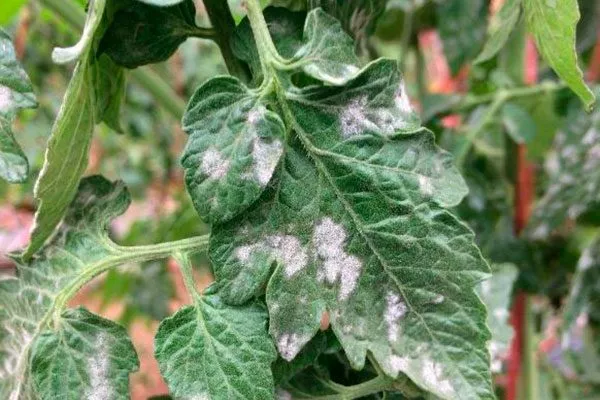
To prevent diseases and protect against pests, regularly inspect your plants and follow proper agricultural practices. For additional protection, use biological products such as Fitoverm or Lepidocide.
Pros and cons
Black Icicle has a number of advantages that make it attractive to gardeners. Key benefits:
The variety has one drawback: the indeterminate growth of the bush, which requires regular shaping of the plant.
Similar varieties
There are tomato seeds on the market that are similar in appearance to the Black Icicle. Popular alternatives are listed below:
| Name | Description and characteristics |
| Bronze | An indeterminate variety reaching a height of approximately 2 m. It requires staking and regular pinching; training into two stems is recommended. The fruits are elongated, plum-shaped, smooth, and bronze-colored when ripe, weighing 80-100 g.
The flavor is balanced: juicy, with a slight tartness and a sweet aftertaste. The flesh is pink. Excellent for whole-fruit canning. Tomatoes are ideal for making tomato sauces, juices and purees, and also as an addition to fried potatoes. |
| De Barao is black | The bushes are distinguished by their vigorous and robust growth, reaching a height of 2 m if the tops are not pinched. One of the main advantages of this variety is its delicious and attractive tomatoes. They are ovoid in shape, smooth in texture, weighing 50 to 60 g, and the size of cocktail tomatoes. When unripe, they are green with a spot near the stem.
This late-ripening variety ripens in 115 to 130 days, depending on climate conditions. Yields are high, up to 8 kg per bush, and with proper care, even greater yields are possible. The variety is resistant to many diseases, but if cultivation practices are improper, blossom-end rot and leaf spot may occur, which are associated with calcium deficiency in the soil. |
| Cuban Black | An indeterminate variety ideal for growing indoors, the plant reaches over 2 m in height. The leaves are green, and the fruits turn a deep burgundy when ripe. They are pepper-shaped and large, weighing between 200 and 300 g.
The skin is smooth and strong, and the flesh is fleshy and juicy, which makes the vegetables resistant to cracking and allows them to retain their commercial qualities for a long time. The cultivar has a mid-season ripening period and good yield, and is ideal for fresh consumption and storage. |
| Black plum | The bushes reach a height of over 200 cm and have sparse foliage. Ripe tomatoes are brown, plum-shaped, and weigh approximately 60-70 g. A cluster can contain 7-10 fruits. The flesh is meaty and juicy, with a pleasant sweet taste and a distinctive aftertaste.
This variety is ideal for a variety of culinary uses, including sauces, ketchup and tomato juice, as well as for pairing with meat, fish and vegetables. |
Reviews
The Black Icicle variety combines not only an attractive appearance but also excellent agronomic characteristics. These tomatoes not only delight with their delicious taste but also produce consistent yields with minimal care. These vegetables can be used to prepare a wide variety of dishes, including stocking up for the winter.