
Another achievement of Dutch breeders is astonishing gardeners worldwide: the Solerosso tomato hybrid. Translated, it means "red sun." The radiant fruits are beautiful and appetizing, and the plant is noted for its high yield and low maintenance.
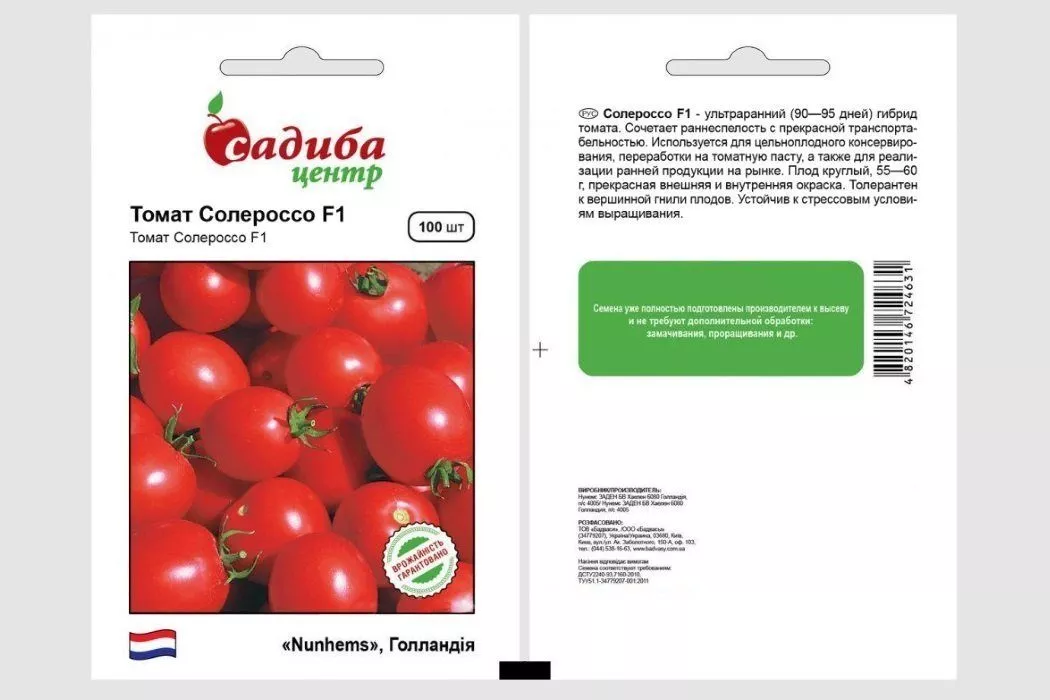
Solerosso tomato seeds
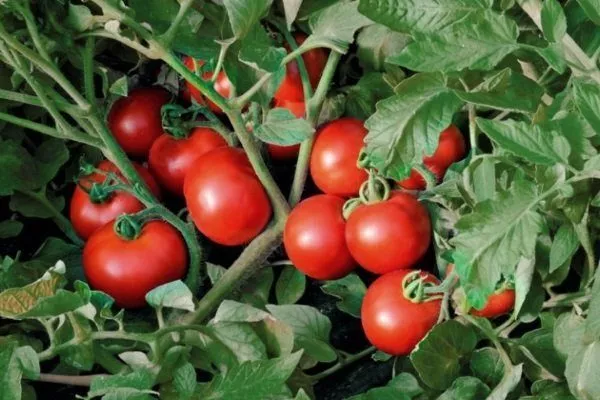
Solerosso tomatoes on the bush
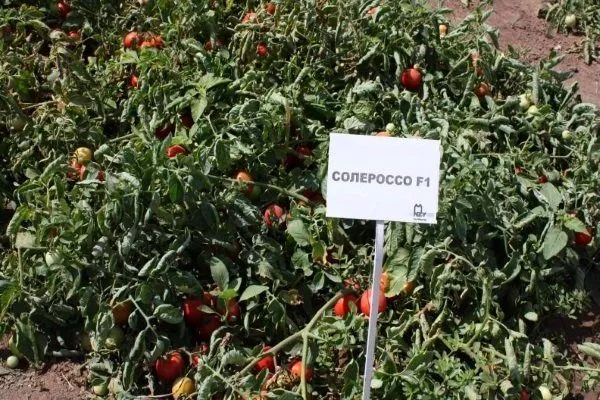
The bushes are spreading and densely covered with fruits. The variety is high-yielding.
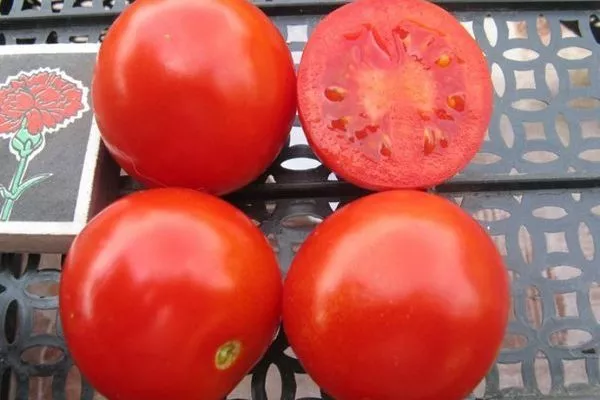
Cross-section of Solerosso tomatoes
Origin of the Solerosso tomato
Originating in the Netherlands, the variety was developed by scientists at the breeding company Nunems. The company specializes in the production, sale, and cultivation of new plant varieties. The company has branches in many countries where vegetable growing is well-established.
Nunems is a leading breeding company worldwide, ranking among the top five. A branch has also been opened in Russia, and a Russian-language website has been launched. The Solerosso hybrid has undergone extensive testing in Russia and is listed in the state registry as a variety that can be grown in all regions of the country.
Characteristics of the variety
This variety is most often grown commercially, as the hybrid's key features include its compact appearance and the ability to be planted close together. Solerosso is also grown in small garden plots; the fruits are eaten fresh and also used for various preserves. Heat-treated tomatoes retain their shape and flavor.
The Solerosso hybrid is distinguished by its early ripening period. The bush is compact, with slightly spreading branches. A single cluster produces approximately six fruits, spaced closely together. It grows to a certain size (a critical point) and then stops growing.
Description of fruits
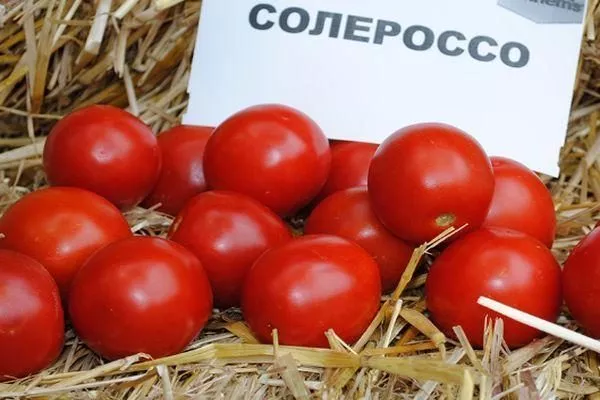
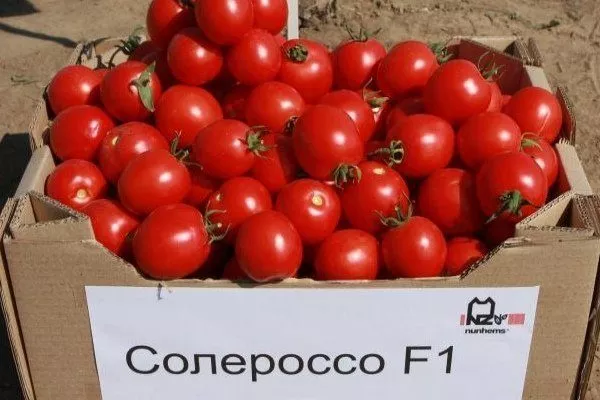
Solerosso tomatoes are small, flattened and round in shape. Slight ribbing can be seen near the stem. The flesh is juicy and medium firm. The skin is thin but strong, preventing cracking and transporting the tomatoes well. The flavor is sweet.
Ripening time and yield
Tomatoes boast abundant ovary formation, meaning there are almost no empty flowers. The flower stalks are large, and during flowering, the foliage is practically invisible, covered in blooms.
This is an early variety, so the fruit can be harvested three months after planting. One of its significant advantages is its undulating ripening, meaning you can harvest the tomatoes throughout the season. The tomatoes store for over a month, have a presentable appearance, and are easy to transport.
The yield is high – approximately 8-10 kg of fruit can be obtained from 1 square meter. Each plant weighs 100 g.
Watch the video below to learn about the ripening characteristics of the Solerosso F1 tomato variety in open ground:
What regions is this variety suitable for?
The plant thrives in warm or temperate climates. However, the shrub can adapt to low temperatures and weather fluctuations, so it can also be grown in northern regions, provided it's planted in a greenhouse or hothouse.
Resistance to diseases and pests
The variety is resistant to various wilting, bacterial, and viral diseases. The only threat is fungal diseases, such as late blight. Growing plants without cover increases the risk of slugs, mole crickets, and aphids.
Advantages and disadvantages of the variety
The Solerosso tomato variety, like other crops, has its pros and cons, which must be taken into account when growing the plant.
Advantages of the variety:
- compact bush;
- it is possible to place plants close to each other;
- unpretentiousness to conditions;
- adaptation to any climate and weather;
- high yield;
- tasty and juicy fruits;
- strong immunity.
Disadvantages of the variety:
- If care is not provided properly, the yield will decrease;
- supports are required;
- cannot be grown in northern regions in open soil.
Planting tomatoes
Since this variety is a hybrid, growing it directly from seed indoors is not recommended. To ensure a bountiful and delicious Solerosso harvest, it's best to purchase ready-made seedlings from specialized stores, where the plants are regularly treated for pests and diseases.
Growing seedlings
At growing seedlings yourself You need to think about containers and soil in advance. Any pots can be used. Many choose a large wooden box with holes in the bottom. First, sow the seeds in it, and then transplant the grown seedlings into individual cups.
You can use peat pots right away. Fill them with humus. The best time to sow the seeds is the first week of March. First, treat the containers with a growth stimulant, then add soil.
Seeds must be treated before planting. First, select the best seeds and place them in a salt solution (10 g of salt per 250 ml of water). The good ones will sink to the bottom, and the bad ones will float. Rinse the good seeds under running water and soak them in a weak solution of potassium permanganate for 15 minutes.
After treatment, you can improve their growth by placing them on damp cheesecloth to germinate. Be careful not to let the seeds dry out. Then squeeze the remaining water out of the cheesecloth and refrigerate for 12 hours. After the specified time, remove the seeds, place them in a warm place, and repeat the process three times. The seeds are now ready for planting.
Make small holes in the soil and place the seeds in them. Move the containers to a location with a temperature of about 25 degrees Celsius. As soon as the sprouts begin to emerge, move them closer to sunlight. If you don't have such a location, provide artificial lighting (at least 13 hours a day). You can use lamps for seedlings.
Water the sprouts only with warm water, using a spray bottle. More information on how to germinate tomato seeds for seedlings can be found here. Here.
You can buy potting soil at the store. If you can't find it, mix equal parts of peat moss, humus, and river sand. Add a little wood ash to the mixture.
If you're using separate pots for each plant, there's no need to transplant. Otherwise, transplant the plants separately after two leaves appear. Transfer the root ball along with the seedling to avoid damaging the root system.
Learn how to grow Solerosso tomato seedlings in cups in this video:
Transplanting seedlings into a greenhouse
If you're planting outdoors, harden off the seedlings by taking them outside every day. If you're planting in a greenhouse, this isn't necessary.
Soil preparation
The soil for planting is prepared in the fall. The top layer is replaced, as it can harbor spores of various diseases.
Tomatoes are not grown in the same place for more than 2 years in a row.
The growing soil is made from the following ingredients: turf, peat, humus, and river sand. The crop grows well in light, nutrient-rich soils. Air permeability is essential.
Transplantation into open ground
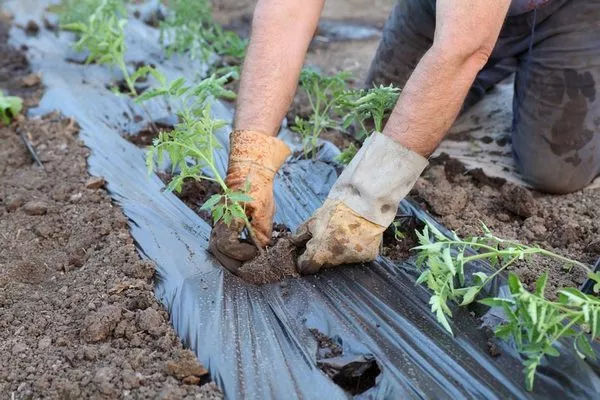
Select a site based on the climate and soil moisture. Transplant tomatoes outdoors on a cloudy day. Treat the seedlings with boric acid 14 days before transplanting. On the day of planting, make 0.12 m (0.4 ft) deep holes in the soil. Remove the seedlings from their pots and place them in the soil. Water after planting.
To prevent tomatoes from dying in open ground, the plants are covered with fabric greenhouses for the first 14 days. The plants are left in direct sunlight in the morning and afternoon, and covered in the evening.
Rules for hardening seedlings before planting in open soil:
- 2 weeks after transplanting, take the plants out onto the balcony;
- keep them there at a temperature of +16 degrees Celsius for 2 hours every day;
- gradually increase the time;
- After carrying out this procedure, plants will gain strong immunity.
The predecessors of tomatoes in the selected area should be cucumbers, melons and onions.
Planting seedlings in open ground Sowing is carried out only when the soil has warmed up completely. Tomatoes are planted in holes 0.4 meters apart, with a 0.5 m gap between rows. After transplanting the seedlings, be sure to water them with settled water.
- ✓ The optimal soil temperature for planting seedlings should be at least +15°C.
- ✓ The distance between plants when planting should be 40 cm, between rows - 50 cm to ensure sufficient ventilation and lighting.
Features of cultivation and care
Care consists of regular fertilization and watering. Plants of this variety do not require pinching. To prevent the fruit from falling to the ground, they should be tied up.
Watering
With regular watering, the Solerosso tomato produces a bountiful harvest. Tomatoes require a soil moisture level of 90%. If water is insufficient, the tops dry out, and prolonged heat destroys the blossoms and fruit. However, be careful not to overwater the plants; too much water can quickly lead to fungal diseases.
1 plant needs 3-5 liters of water.
Tomatoes are watered for the first time immediately after transplanting, and then once a week. Plants require plenty of water during flowering. Water in the morning or evening, and be sure to loosen the soil after watering to allow the root system to fully absorb not only moisture but also air.
Top dressing
With high-quality and consistent fertilization, the plant produces a stable harvest. Mineral fertilizers and folk remedies are used for supplementary feeding. The most important micronutrients are potassium and phosphorus. Phosphorus accelerates plant metabolism and ensures normal fruit development. It is applied as superphosphate (40 g per 10 liters of water).
Potassium is responsible for flavor and is added as potassium sulfate (30 g per 10 liters of water). Both fertilizers are applied at the roots. During flowering of the Solerosso hybrid, a weak solution of boric acid is used (1 g per 10 liters of water).
As for folk methods, the best results are achieved by fertilizing tomatoes with wood ash; you can simply add it to the soil or water it with an infusion based on it.
| Feeding method | Periodicity | Efficiency |
|---|---|---|
| Mineral fertilizers | Every 2 weeks | High |
| Folk remedies (ash) | Every 4 weeks | Average |
Protection from diseases and pests
Many gardeners claim that Solerosso tomatoes have a strong immune system, so there's no need to worry about diseases. However, to avoid even the slightest risk of illness, it's important to take a number of preventative measures:
- Water your plants on time.
- Apply sufficient amount of fertilizer.
- Ventilate the greenhouse to avoid high humidity.
In open soil, tomatoes are susceptible to aphids, mole crickets, and thrips. To get rid of them, use specialized products. For example, laundry soap and tobacco are effective against aphids, and ammonia is effective against slugs.
Harvesting
You can tell when the tomatoes are ripe by their appearance. They will turn a rich, uniform red color, with no other colored spots. Solerosso hybrid tomatoes ripen in batches, so they need to be picked approximately every four days.
Gardeners' reviews
Solerosso hybrids are suitable for both home and commercial cultivation. They are characterized by early ripening, excellent flavor, and excellent yields. Growing them requires little attention, the main thing being timely watering and fertilizing.