
The Treasures of the Incas F1 tomato is a Russian-bred hybrid with unusually colored fruits. These red-orange tomatoes, reminiscent of persimmons, are delicious and suitable for a wide variety of purposes. Most importantly, they are quite easy to grow—simply using standard farming techniques.
History of the variety's creation
The "Treasure of the Incas" tomato is a Russian-bred hybrid. Developed by O. D. Kiramov and originated by the Partner agricultural firm. This hybrid variety was approved for cultivation in 2018 and is recommended for cultivation in all regions of the country.
Description of the Treasure of the Incas variety
The bushes are tall and belong to the indeterminate type of plants. They reach a height of 1.8-2 m. The leaves are dark green and medium-sized. The inflorescences are simple. The first inflorescence occurs above the 7th or 8th leaf, and subsequent inflorescences occur three leaves apart.
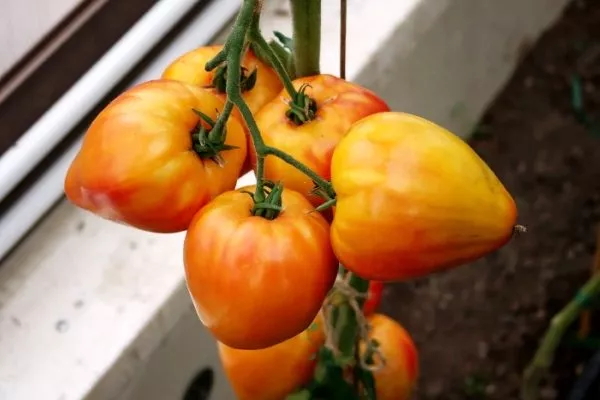
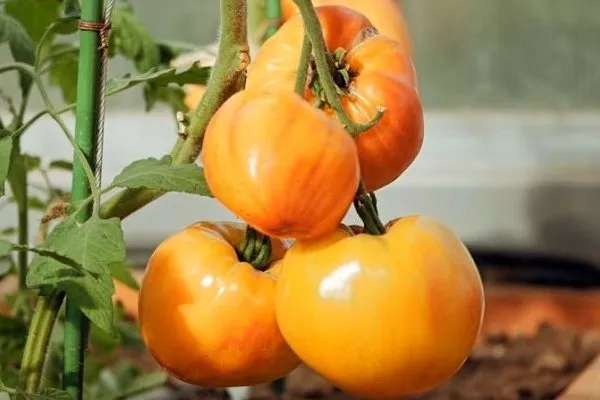
The fruits of the "Treasure of the Incas" tomato are large. They contain 4 to 6 chambers containing a few seeds. Each cluster produces 4-5 fruits.
Brief description of fruits:
- Unripe fruit color: light green.
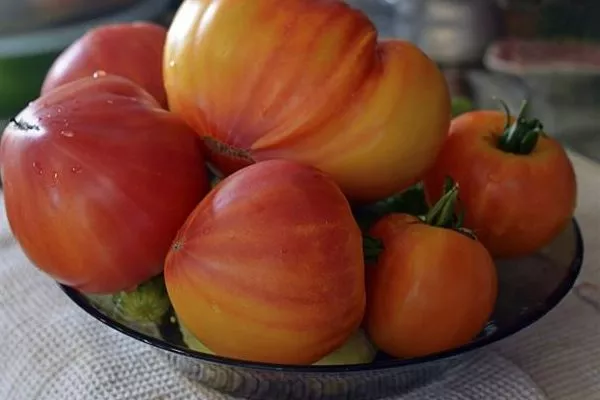
- Color of ripe fruit: orange-red with green stripes and a crimson "star" at the top, no green spot near the stalk.
- Form: flat-round, conical, slightly ribbed.
- Pulp: bright orange.
- Weight: 250 g
Taste and purpose of fruits
The flesh of the Treasure of the Incas tomato is aromatic, dense, meaty, and sugary, with a slightly sweet taste. The fruits are versatile, suitable not only for fresh consumption but also for making tomato juice.
- ✓ Resistance to late blight, alternaria, verticillium wilt, tobacco mosaic virus and fusarium wilt.
- ✓ It is necessary to form a bush into 1–2 stems to obtain large fruits.
Characteristics
The Treasure of the Incas tomato is a mid-early variety. It takes 90-95 days from germination to the ripening of the first fruits. This hybrid yields 16-17 kg per square meter. This tomato is highly resistant to late blight, early blight, verticillium wilt, tobacco mosaic virus, and fusarium wilt.
Pros and cons
Besides its unusual fruit appearance, the Treasure of the Incas tomato has other qualities that appeal to gardeners. Before planting this unique hybrid in your garden, familiarize yourself not only with its advantages but also with its disadvantages.
Landing features
The Treasure of the Incas hybrid can be grown both outdoors and indoors. In either case, this tomato is grown using seedlings.
- ✓ Optimum soil temperature for planting seedlings: +12 °C.
- ✓ The need for additional lighting for seedlings in the first weeks: around the clock.
Preparing containers and seeds
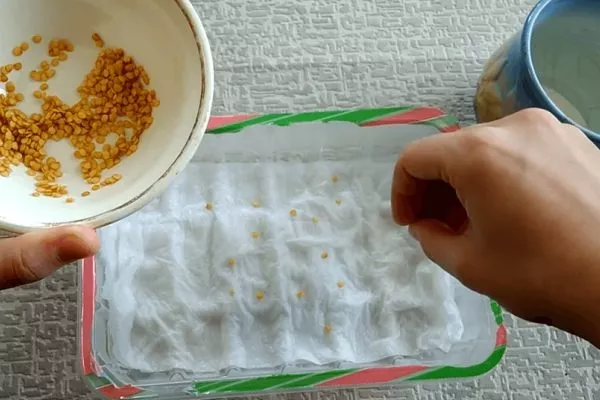
Containers for growing seedlings should be thoroughly washed with hot water and soap. If they have already been used, they should be disinfected with potassium permanganate or hydrogen peroxide. Large boxes, containers, or basins can be used as planting containers.
Individual containers can be used for growing seedlings—sowing and/or transplanting. These can be regular or peat pots, plastic cups, or even fermented milk product bags. The planting containers should have drainage holes in the bottom to prevent water from stagnating.
Soil preparation
To grow tomatoes and get a good harvest, it is important to provide them with high-quality soil at all stages of the growing season.
Features of soil preparation:
- For seedlings. The planting container is filled with a store-bought substrate—you need a soil specifically designed for growing seedlings. However, you can also prepare your own soil mix, for example, from humus, peat, sand, and vermiculite. Peat-based soils, compost, or coconut coir are all suitable.
- On the site. In the fall, the soil is dug up to the depth of a shovel, adding mineral fertilizers and organic matter - compost or humus (10 kg per 1 sq. m) during digging.
If necessary, add acidity-correcting components to either open or closed soil. The pH should be between 6 and 6.8. If the soil is acidic, add lime (slaked), dolomite flour, or wood ash (300-400 g per square meter).
You can increase acidity by adding high-moor peat. Clayey and heavy soils should also be supplemented with river sand.
Sowing for seedlings
Sowing of the Treasure of the Incas tomato is carried out from the end of February to April, depending on the climatic features of the region.
Features of sowing seeds for seedlings:
- The soil in the planting containers is first leveled and then moistened with warm, settled water.
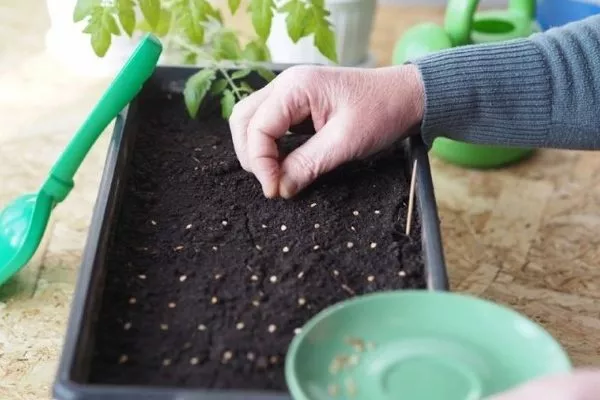
- Seeds are planted at a depth of 1-1.5 cm, leaving 2-3 cm between adjacent plants. If planting in containers, the seeds are planted in rows, with intervals of 3-4 cm between them.
- If planting is done in individual containers, then several seeds are planted in them at once to guarantee sprouting (the excess ones are then removed).
- Sprinkle the seeds with a thin layer of soil, then water the crops. Water carefully with a spray bottle to avoid washing away the soil.
- The planting containers with the crops are covered with a transparent covering material, which is opened every day to ventilate the greenhouse and moisten the soil by spraying.
- Keep the seeds in a warm, bright room until germination. Optimum temperature: +23…+25 °C.
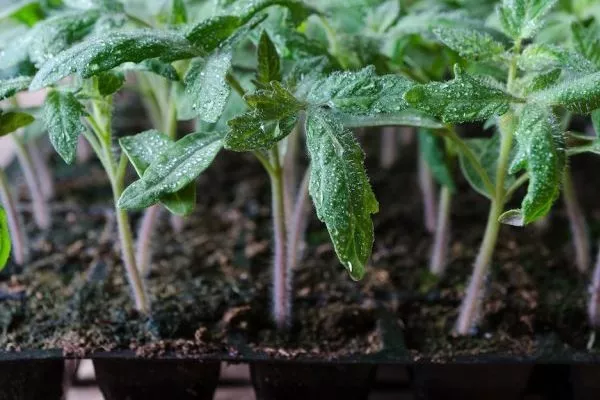
Seedlings emerge 4-7 days after sowing. Once this occurs, the cover is removed and the seedlings are moved closer to the light. Most importantly, the temperature is reduced to 14–16°C to prevent the seedlings from stretching.
Caring for seedlings
Treasure of the Incas tomato seedlings are grown for 45–55 days (maximum 60 days). During this time, appropriate temperature and humidity conditions must be maintained, the seedlings must be watered and fertilized regularly, their condition must be monitored, and appropriate measures must be taken promptly.
Features of caring for seedlings of the Treasure of the Incas hybrid:
- Seedlings require moderate watering, as they do not tolerate overwatering. Water the seedlings in the morning and only after the top layer of soil has dried. Use room-temperature water. After transplanting, watering frequency approximately doubles.
- During the first week, seedlings require 24-hour light, so they are supplemented with lamps. After a month, the daylight hours are gradually reduced to 12-14 hours.
- The seedlings are fed for the first time 2-3 weeks after transplanting. A nitrogen-rich complex mineral fertilizer is applied. Fertilizing is done at two-week intervals. Gradually increase the dose of potassium and phosphorus.
- After 2-3 true leaves appear, transplant the seedlings into individual containers, pinching off the central root. Transplanting is usually done two weeks after germination.
- To help the seedlings establish themselves and adapt to their new location, they are gradually acclimated to fresh air by taking them outside every day. Initially, this is done for an hour or two, gradually increasing the duration of these "walks," reaching 8-10 hours.
Transplanting
The timing of seedling planting depends on the climate and soil type. Tomatoes are planted in heated and polycarbonate greenhouses 2-3 weeks earlier than in open ground. Seedlings are transplanted to their permanent location when there is no longer a risk of frost. The soil should warm to 12°C, and the air to 18–22°C.
Features of planting seedlings of the Treasure of the Incas hybrid:
- Optimal planting pattern: 50-60 x 70-80 cm.
- The depth of the holes is 15 cm, the width is 20 cm.
- 3 seedlings are planted per 1 square meter.
- The holes are dug in a staggered pattern. In greenhouses, row planting is more common.
- Fertilize each hole with two handfuls of compost, a handful of wood ash, and superphosphate. Top with soil and add water—about 3 liters per hole.
- Tomatoes aren't planted immediately; you need to wait about an hour for the soil to settle. After that, the seedlings are transplanted into the holes using the transshipment method.
- The roots are covered with soil, compacted, and then watered with warm, settled water.
Care Features
The Treasure of the Incas tomato thrives in warm, stable temperatures, so it's recommended to grow it in greenhouses. In the south, it can also be grown outdoors, but in either case, this variety requires regular care.
Watering and loosening
Tomatoes are watered moderately, on average 1-2 times a week, but more frequently in hot weather. Water should be applied to the roots, avoiding the leaves and stems, as dampness promotes fungal diseases. In hot weather, watering frequency increases to 3-4 times a week, and the amount depends on the age of the plants, weather conditions, and soil conditions. A mature plant requires approximately 5 liters of water.
After watering, the soil is loosened, while weeding out any growing weeds. Loosening prevents the soil from hardening and is done the day after watering or heavy rainfall.
Fertilization
During the season, the Treasure of the Incas tomato is fertilized three or four times. The fertilizer composition depends on the growing season of the tomato plants.
A couple of weeks after planting, you can feed the bushes with a diluted complex fertilizer containing a high concentration of nitrogen. During the period of fruiting and ovary formation, focus on phosphorus and potassium fertilizers.
Shaping and garter
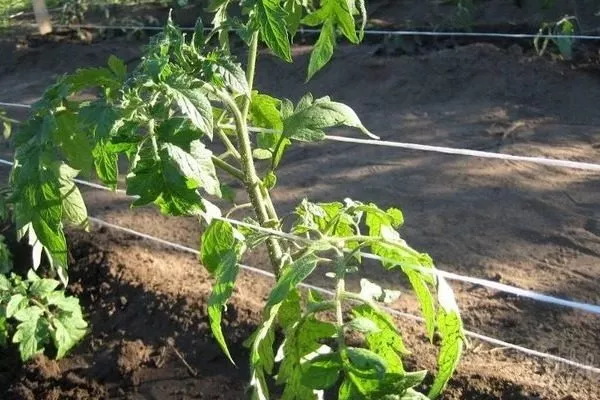
This variety requires regular side-shooting—periodically removing growing side shoots (the shoots that form in the leaf axils). Tall Treasure of the Incas tomato plants also require support.
The bushes are trained into 1–2 stems. The former produces larger fruits. The green mass is plucked down to the first fruit cluster.
Diseases and pests
The variety has good immunity, but adverse conditions can increase the risk of fungal and bacterial infections. For example, if the bushes become too dense, they can be susceptible to late blight or cladosporiosis. To prevent diseases, treat the plants with Fitosporin or other biological preparations.
The hybrid can be affected by whiteflies, aphids, thrips, and other insect pests. To control them, use products such as Fitoverm, Biokill, Aktarofit, or similar products.
Harvesting
It's recommended to pick the fruits immediately after ripening. Avoid overripening. Tomatoes have thin skins and are prone to cracking. Harvesting is recommended in the morning, when there is no dew.
The fruits are stored in boxes, laid in a single layer. It's best to pick the fruits of this variety unripe—after ripening, they taste better than when fully ripened on the bush.
Reviews
The "Treasure of the Incas" tomato is one of the most unusual and beautiful varieties bred in Russia. Fans of unique tomatoes will definitely love it. At the same time, this hybrid is quite easy to grow, hardy, and productive, making it a valuable asset for experienced gardeners.