
The Sofia tomato has gained popularity due to its low maintenance and excellent productivity. Its early maturity, firm fruits, and high disease resistance make it an ideal choice for both beginner and experienced gardeners. This crop will delight you with generous and consistent harvests, provided all proper agricultural practices are followed.
History of selection
The variety was created in 2018 by specialists V. M. Motov, I. Yu. Kondratyeva and Yu. A. Astrakhansky (NPF Agrosemtoms LLC).
Description of the plant
This tomato is a determinate variety. The bush is compact, reaching 1-1.5 m in height, depending on whether it's grown outdoors or in a greenhouse. The shoots are covered with small, dark green leaves.
Fruits, their taste and purpose
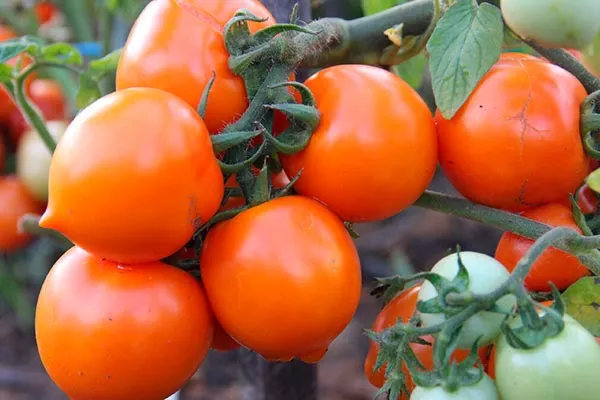
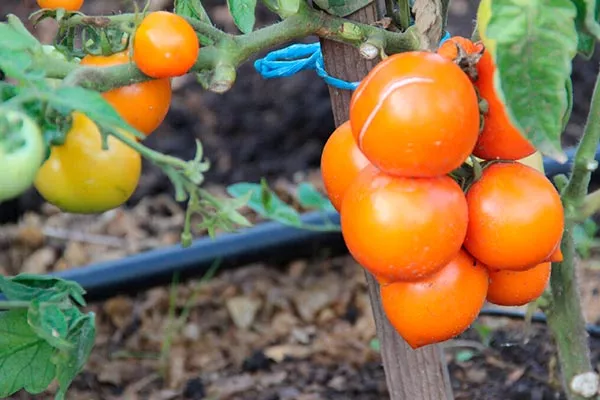
The tomatoes are round and slightly ribbed, turning a bright orange when ripe. Each fruit weighs between 150 and 200 grams, and the flesh is medium-dense.
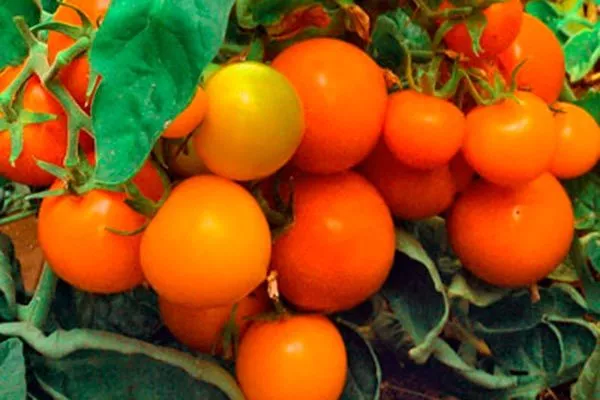
This tomato has a pleasant, sweet flavor. It's ideal for eating fresh and adding to various salads and appetizers.
- ✓ Bright orange color of the fruits when ripe, which is a rare trait among tomatoes.
- ✓ High resistance to low temperatures and waterlogging, which makes the variety suitable for growing in various climatic zones.
Characteristics
Tomatoes are one of the most popular vegetables in the world, renowned not only for their exceptional taste but also for their rich vitamin and nutrient content. There are a huge variety of tomatoes, but Sofia is considered one of the best due to its numerous characteristics.
Productivity
The yield of this variety under film shelters reaches approximately 4.6 kg per square meter. This is an excellent result for such a compact variety.
Timing of planting seedlings and transplanting into the ground
Sow seeds in advance so that the plants are ready to be transplanted into open ground or a plastic greenhouse. The optimal time for planting seedlings depends on the regional climate.
Ripening and fruiting
Sofia is a mid-early variety with a ripening period of 100-105 days. The bushes are characterized by high productivity, ensuring an excellent quality harvest.
Resistance to adverse weather conditions
The crop tolerates low temperatures and waterlogging well, making it a reliable choice for growing in various climatic zones.
Culinary uses
Crisp tomato slices are perfect for fresh salads. Their plump, juicy flesh pairs well with lettuce, cucumbers, cheeses, and other vegetables. For hot side dishes, pair them with meat or fish. Simply fry them in a pan or bake them in the oven.
Vegetables are ideal for making a variety of sauces and spreads. Use them to make a rich tomato sauce for pizza, pasta, lasagna, and other Italian dishes. Make a sautéed sauce with onions and spices to add a unique flavor and aroma to your dish.
Beneficial properties and application in medicine
Sofia tomatoes possess a number of beneficial properties that are widely used in medicine. Ingredients:
- Antioxidants – They are a rich source of antioxidants, which help protect cells from damage and support the immune system.
- Vitamin C – strengthens capillaries and promotes improved skin health.
- Vitamin K – necessary for normalizing blood clotting.
- Carotenes – maintain vision and protect eyes from cataracts and degenerative changes.
- Flavonoids – have anti-inflammatory properties and promote the healing of wounds and ulcers.
Vegetables are useful for the prevention and treatment of a number of diseases. However, before using them for medicinal purposes or if you have any medical concerns, it is recommended to consult a doctor.
Recommended region
Tomato Sofia is recommended for cultivation in the following regions: Northern, Northwestern, Central, Volga-Vyatka, Central Black Earth, North Caucasian, Middle Volga, Lower Volga, Ural, West Siberian, East Siberian and Far Eastern.
Agricultural cultivation techniques
Proper tomato cultivation is crucial for achieving a high yield and preserving all the nutritional and flavor qualities. Failure to follow proper cultivation practices can lead to reduced productivity, disease development, and pest infestation.
Lighting requirements
After germination, provide 24-hour supplemental lighting for 3-5 days, then reduce it to 18-20 hours, and by the fourth or fifth week, reduce it to 11-12 hours. Water 1-2 times a week for the first three weeks, then increase to 3-4 times a week until planting.
To improve humidity, sprinkle water 2-3 times a week using a regular sprayer. If you're growing plants without supplemental lighting, for example, on a windowsill, rotate the container toward the light source (window) 2-3 times a week.
Good and bad predecessors
Plant the crop after zucchini, cabbage, pumpkin, turnips, cucumbers, radishes, carrots, and radishes. Tomatoes grow well after green manure crops, such as mustard and kale. Eggplants, peppers, potatoes, and corn are poor predecessors for tomato seedlings.
Soil preparation
Before sowing seeds, thoroughly cultivate the area. Follow these recommendations:
- Perform deep plowing to improve the soil structure and ensure good oxygen access to the roots.
- Remove all weeds to avoid competition for nutrients.
- Add organic matter, such as compost or humus, to improve fertility and provide plants with essential nutrients.
Carry out surface loosening of the soil to improve water and air permeability, and to promote uniform distribution of fertilizers.
Sowing seeds
Prepare a small saucer (such as a disposable plastic one) and fill it with soil to a depth of 3-4 cm, ensuring the soil is free of lumps and debris. Then follow the instructions:
- Moisten the soil.
- On the surface of the ground, mark out a grid with cells approximately 1-2 cm in size.
- Place the seeds where the grid lines intersect.
- Sprinkle with a layer of soil about 1 cm thick and sprinkle with water.
- To prevent the soil from drying out before the seedlings appear, cover the saucer or place it in a plastic bag.
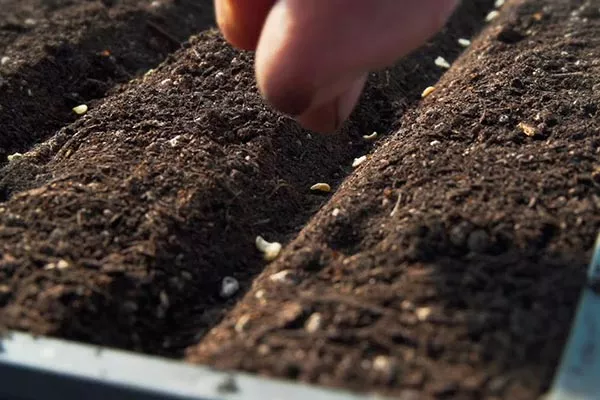
To avoid picking, follow these steps:
- Fill the pot with soil about 2/3 full and water.
- Make a small hole, place a seed in it and water it lightly.
- Sprinkle with soil and moisten again.
To prevent the soil from drying out before the seedlings appear, cover the container or place it in a plastic bag.
Growing seedlings
Until seedlings emerge, maintain a temperature of 24 to 26°C. Once the first shoots emerge, reduce the temperature to 18 to 20°C during the day and 14 to 16°C at night to prevent stretching.
- ✓ Optimum soil temperature for sowing seeds: +24…+26°C.
- ✓ It is necessary to reduce the temperature after emergence to +18…+20°C during the day and +14…+16°C at night to prevent stretching.
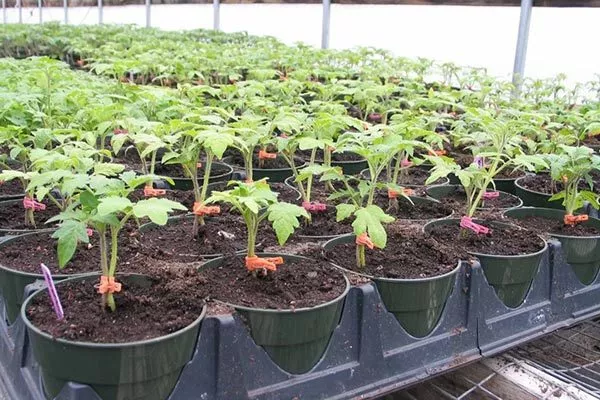
Perform the following activities:
- Water moderately, only when the top layer of soil dries out. Use settled, room-temperature water. Avoid stagnant water in the saucer to prevent root rot.
- 10-14 days after the first true leaves appear, transplant the seedlings into individual containers. Plant the seedlings deep down to the cotyledons to stimulate root development.
- Apply the first fertilizer 10-12 days after transplanting, using a complex mineral fertilizer with nitrogen. Repeat every 10-14 days, alternating mineral and organic fertilizers.
- Ventilate the room regularly, avoiding drafts. This will help harden off the plants and strengthen their immunity.
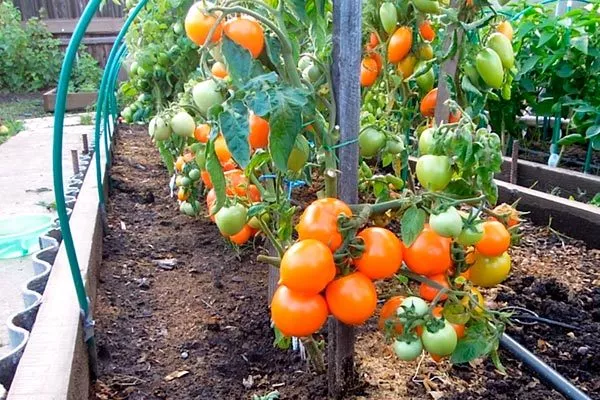
Transplanting seedlings
To plant seedlings in a garden bed, follow a few simple steps. Follow these instructions:
- Make a hole in the bed and water it thoroughly with 3-5 liters of water. Allow the soil to settle for about 0.5-1 hour.
- Meanwhile, prepare the cup containing the seedling. Water the soil generously until it's thoroughly moistened.
- Carefully remove the plant, being careful not to damage the roots, and place it in the hole.
- Lightly compact the soil around the seedling and sprinkle it with soil so that a small depression is formed around the trunk - this will be useful for watering the roots in the future.
After planting, water again. Do not add any more water for the next 10-12 days, except during periods of unusually hot weather.
Plant care and formation
The Sofia tomato, a large-fruited, tall variety, requires proper training to achieve a high yield. The primary method is to train the shoots into a single trunk. This ensures adequate light, improves ventilation, and prevents overcrowding.
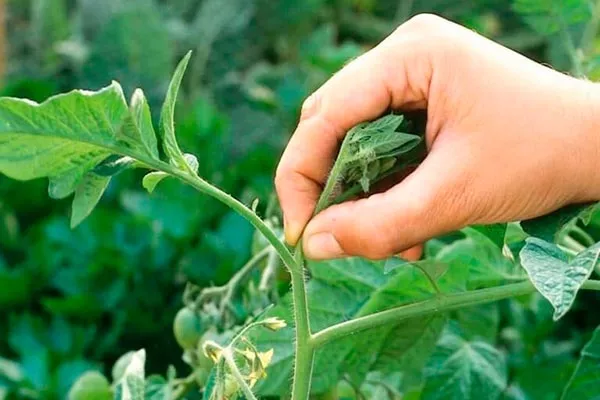
Features of formation:
- Remove all lateral shoots that appear in the leaf axils. Do this regularly until the shoots reach 5-7 cm in length, so the plant doesn't waste energy on their development.
- Periodically remove old and damaged leaves from the lower part of the bush. This will improve air circulation and reduce the risk of fungal diseases.
- To redirect nutrients to ripening fruits at the end of the season, pinch the growing point, leaving 5-6 clusters on the plant.
With a sparse planting pattern, the Sofia tomato can be trained into two stems. To do this, leave the main stem and the strongest shoot growing from the axil under the first flower cluster. Space both stems evenly on a support or trellis.
Since the bushes of this variety are vigorous and tall, be sure to tie them to sturdy supports. This prevents the stems from lodging and being damaged by the weight of the vegetables. Use soft materials to avoid damaging the plant.
Watering, fertilizing and loosening
Moisten the soil with warm water every 2-3 days, using about 3 liters per plant. Allow the top layers of soil to dry out between waterings. In open ground, take into account possible precipitation. The irrigation method isn't critical, but avoid getting the leaves wet.
Feeding schedule:
- Due to their high yield, plants require regular fertilizing. In the spring, when preparing the beds, add humus and a complex fertilizer containing nitrogen, potassium, and phosphorus to the soil.
- 1.5-2 weeks after planting, treat the bushes with a solution of mineral nitrogen fertilizer. Then, fertilize every 15-20 days using specialized formulations for nightshade crops.
Loosen the soil once a week and weed after watering. Mulching your garden beds will help avoid these problems.
Harvesting and storage
Tomatoes ripen almost simultaneously in the bunch, and after picking, use ripe tomatoes immediately for processing or in salads and other dishes. At room temperature, they quickly lose their freshness, so store them in the refrigerator.
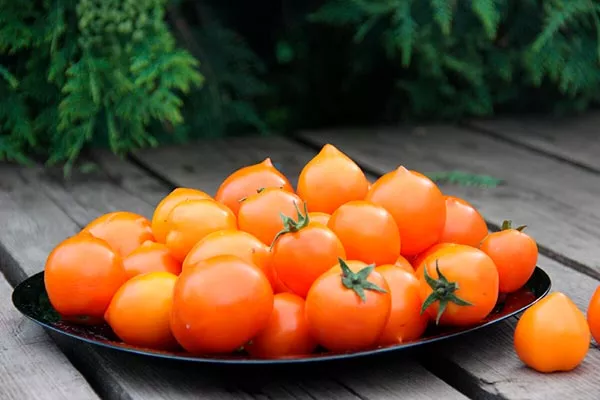
In the produce section, tomatoes retain their marketable quality and nutritional value for up to 3 weeks. Avoid storing tomatoes with signs of rot or mechanical damage near other tomatoes, as this can lead to rapid spoilage.
Diseases and pests
Despite good immunity, the crop may be susceptible to certain challenges. It's important to begin treatment promptly:
|
|
|
| Powdery mildew | White coating on leaves, yellowing and drying out. | Fungicides will help: Topaz, Strobi, Vitaros. |
| Late blight | Black spots on leaves and stems, rot on fruits. | Use fungicides Ordan, Ridomil Gold. |
| Downy mildew (peronosporosis) | Yellow spots on the leaves, white coating on the back side. | Spray with Hom or Oxyhom. |
| Tomato moth | Damage on leaves, fruits with holes. | Treat the bushes with Decis, Fitoverm, Karbofos. |
| Aphid | Changes in the shape of leaves, their curling, sticky secretions. | Use insecticides Inta-Vir, Aktara, Actellic |
| Spider mite | Yellow spots on leaves, cobwebs on the plant. | You can cope with the pest by using Neoron, Fitoverm, and Actofit. |
| Root rot | Wilting and yellowing of bushes, dark spots on the roots. | The following drugs are effective: Previkur, Topsin, Reglon Super. |
| White rot | Wet spots on the stems, the appearance of plaque. | Spray with Hom, Topaz, Fundazol. |
| mealybug | White or yellow spots on leaves, sap discharge on stems. | The problem can be solved with insecticides: Mospilan, Fitoverm, Aktara. |
| Mealybug | White coating on leaves, yellowing and wilting. | Use Aktau, Mospilan, Confidor. |
Pros and cons
Before planting a crop in your garden, carefully consider its advantages and disadvantages. The Sofia tomato has many advantages:
Among the disadvantages, some gardeners note the need for regular fertilizing, a tendency to become dense, low resistance to cracking during heavy rains, and the need for pinching.
Reviews
The Sofia tomato is an excellent choice for those who value a stable harvest and delicious fruit with minimal care. Despite some peculiarities, it justifies all the attention with its high-quality vegetables and disease resistance. With proper cultivation practices, you can achieve good yields.