
The Snegir tomato was developed specifically for Russia's northern regions, where the climate and weather are unsuitable for tomato cultivation. This variety adapts to any conditions—it grows without sufficient light and is resistant to frost and low temperatures. It also maintains fruit production and yield.
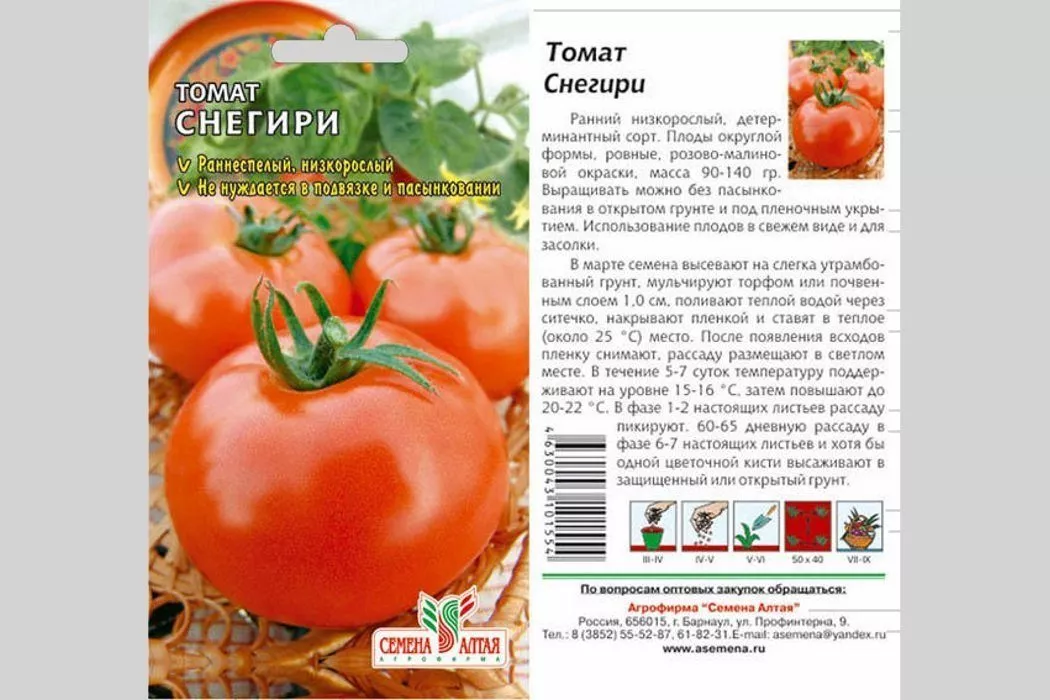
Tomato seeds of the "Snegiri" variety
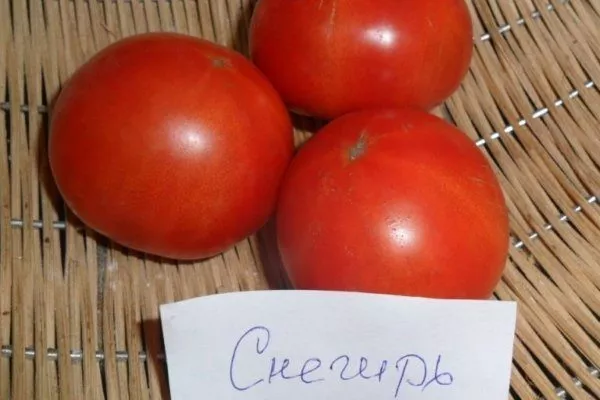
The fruits of this variety grown
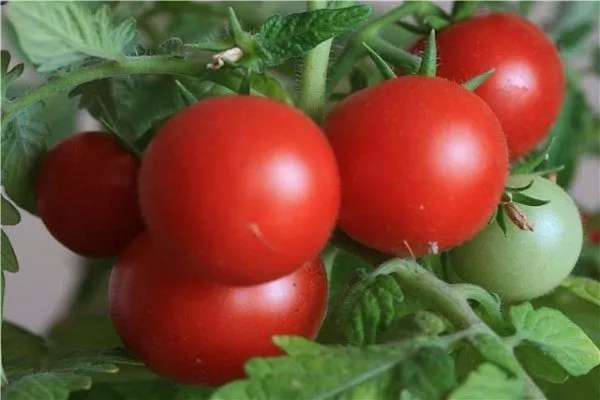
The “Bullfinch” variety is unpretentious and can grow in various conditions.
General characteristics of the variety
Snegiri is a determinate variety with a sturdy trunk that doesn't grow very tall (maximum 40 cm). This tomato doesn't require pinching, staking, or pruning, making it easy to care for. However, for high yields, it's advisable to use supports (wooden stakes). If the variety grows in temperate climates, it can be planted directly in the ground, without the need for a greenhouse.
- ✓ Resistance to low temperatures and lack of light.
- ✓ Ability to bear fruit in short summer conditions.
- ✓ Resistance to common diseases in cold climates.
Appearance of bushes
The bushes are characterized by their low growth and small leaves. They have one to two trunks. The foliage is medium, and the height ranges from 30 to 40 cm. This is a standard variety.
One cluster contains 3-5 tomatoes. The first tomatoes are located above the 6th leaf, the others are located 1-2 leaves away.
Description of fruits
Tomatoes are quite sweet and juicy, but not watery. They have a bright, deep red hue. They are characterized by the following characteristics:
- pulp – moderately dense;
- the number of seeds is insignificant;
- shape – round, even, smooth, sometimes slightly flattened;
- weight varies from 140 grams to 160;
- the color of unripe fruits is dark green;
- the skin is thin but dense, so the tomatoes do not crack;
- used for canning, making juices and salads.
Ripening time and yield
Snegiri is a super-early ripening variety that ripens within 90-97 days after emergence.
A single stem can have up to six clusters, each bearing at least three tomatoes. The yield per square meter is 6-7 kg.
To increase yields, pay attention to soil acidity, the quality of seeds and seedlings, and the nutritional value and looseness of the soil. Regular fertilization and watering are also important.
It's not advisable to transplant flowering shrubs or overfeed them. If you plant underdeveloped seedlings in soil, the ripening period will be extended by a couple of weeks, as the bushes take longer to establish themselves.
Features of planting and growing
If you buy seeds from a store, you must check them for germination quality and prepare seeds for germinationHow to do it:
- prepare settled water (you can use melted water);
- heat the liquid to 50 degrees;
- add seeds;
- let stand until cool;
- collect the hollow elements that float to the surface of the container;
- add growth stimulants to the water;
- leave for 3 hours;
- remove the seeds and dry.
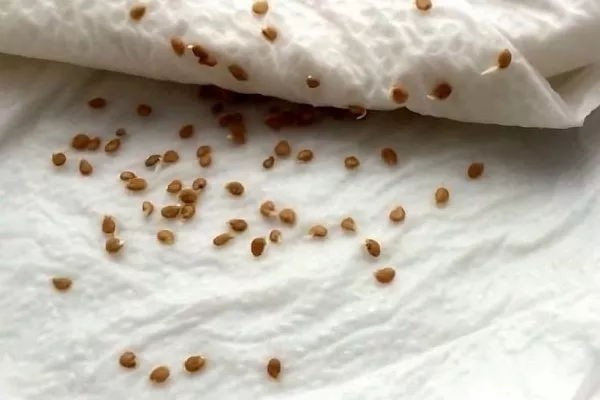
As a stimulating agent, you can use commercial Epin, honey with water (1 teaspoon of bee product per 200 ml), or 18-20 drops of natural aloe juice per the same amount of water.
Planting seedlings
Before planting the seeds, prepare special containers and soil (bake the soil in the oven, add a little compost, peat, ash, and sand). You can use store-bought soil. Then, planting tomato seedlingsAnd growing seedlings according to these rules:
- Prepare the area and add soil. There should be sufficient light, but not direct sunlight.
- Level the soil, then make small furrows (maximum depth: one and a half to two centimeters). Use regular matches for this.
- The seeds are laid out at a distance of 2 cm from each other.
- Soil is sprinkled on top.
- To speed up the germination process, you can cover the seeds with plastic. If you use this method, be sure to open the boxes occasionally to allow the soil to circulate.
- When the first sprouts appear, the film is removed completely and the containers are moved into the sun.
- After 2 leaves appear the seedlings are being transplanted in different pots. It's important to select the strongest plants and remove the weaker ones.
- In 7 days tomato seedlings are being fed nitrogen-mineral fertilizers.
- After 14 days, a urea solution is added (it can be replaced with ammonium nitrate).
- A couple of weeks before the next transplant, take the seedlings out onto the veranda or balcony daily to help them adapt to outdoor or greenhouse conditions. Hardening should begin at 1 hour, gradually increasing the time.
Until strong bushes have formed, watering with a watering can is strictly prohibited, as this will wash away the seeds. Spray bottles are used for moisture.
Transfer
Tomatoes can be transplanted outdoors at different times. This depends on the growing region, but there's one key rule: plant when there's no risk of frost.
In the central regions of the Russian Federation, Snegir tomatoes are transplanted into the garden after the 20th of April or in early May. In the northern regions, planting is not done until late May or early June.
Rules:
- The distance between rows should be 60-70 cm, and between bushes – 40-50 cm.
- The hole should be 30x30x30 in size.
- Superphosphate, which is resistant to dissolution, should be sprinkled at the bottom of the hole. This ensures the required fertilizer level in the soil is maintained at all times. A half-liter jar of compost, a handful each of manure, and ash should also be added.
- Water is poured from above.
- The bushes are removed from the soil, leaving a lump of earth.
- Place in the hole.
- Watering is prohibited for 6-7 days.
How to water bushes?
The first watering is carried out after a week, then watering is carried out less frequently, since the variety tolerates drought well, and pathogenic microorganisms multiply in an overly humid environment.
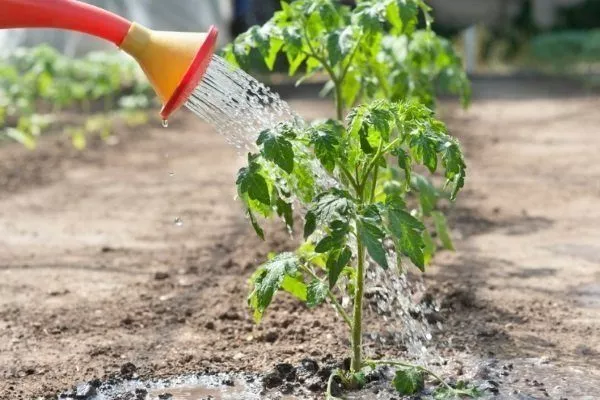
The following requirements must be met:
- warm water is used (preferably settled);
- It is better to water in the evening, since during the day and morning watering, drops of water remain on the leaves, which burn them under the influence of sunlight;
- about a liter of liquid is needed per bush;
- After moistening, the soil is mulched using any natural material (straw, peat, sawdust, grass).
- ✓ The water temperature should not be below 20°C.
- ✓ Watering should be done in the evening to minimize evaporation.
- ✓ Use mulch to retain moisture.
Top dressing
The initial feeding is carried out a couple of weeks after transplanting. For this, nitrogen fertilizers, manure infusions, and herbs are used.
Secondary feeding is carried out during budding. A fertilizer based on potassium and phosphorus is added to the soil. Ash or monopotassium phosphate is always added.
Loosening and weeding
Loosening the soil is done along with watering the plants, which helps the roots receive oxygen. Weeding should be done regularly. Side shoots are not needed because the plant is short.
Features of growing in a greenhouse and in open ground
The only difference between growing Bullfinch in a greenhouse and outdoors is that the greenhouse requires constant ventilation. Also, avoid excessively high temperatures, as this will sterilize the pollen.
How to grow tomatoes in open ground, you will help read in this article.
Diseases and pests
The Bullfinch is resistant to late blight. This is due to the early ripening of its fruit. The variety is also resistant to fungal diseases, blossom-end rot, brown spot, and gray mold. However, improper care can weaken the plant's immune system, so preventative measures are recommended. These include the following:
- remove weeds in a timely manner;
- Before planting in open ground, treat the soil with boiling water, copper sulfate, and potassium permanganate;
- periodically carry out treatment with Fitosporin;
- Before planting, soak the seeds in a weak solution of potassium permanganate;
- do not plant in an area where tomatoes have been growing for 3 years;
- transplant from nightshade crops;
- do not allow high humidity (do not flood, and during rain cover the beds with plastic film);
- If one of the bushes is affected, destroy it and disinfect the remaining plants.
The variety is susceptible to pest infestations. These include aphids, cutworms, Colorado potato beetles, slugs, and whiteflies. To prevent infestations, take the following steps:
- spray with soap solution;
- use celandine tincture;
- add hot pepper and mustard to the soil;
- Plant basil, marigolds or tobacco flowers nearby.
Harvesting and storage
Thanks to the Bullfinch's relatively thick skin, the harvest is easy to preserve. Because it doesn't crack, it's harvested when ripe. However, if long-term storage or transportation is required, it's best to harvest it when it's brown.
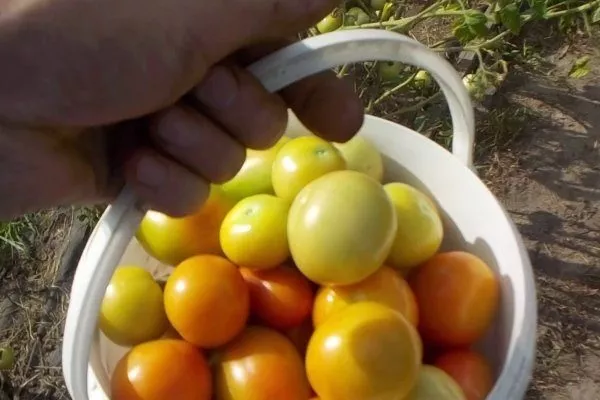
Storage rules:
- the room is equipped with a ventilation system;
- tomatoes are placed in wooden boxes, which are filled with sawdust;
- fruits should not have any mechanical damage or diseases;
- When picking tomatoes, they leave the stems on them;
- basement temperature range: from 10 to 12 degrees;
- indoor air humidity should not exceed 80%;
- shelf life - 2 months.
Pros and cons of Snegiri tomatoes
Advantages of the Snegiri variety:
- ease of care;
- the possibility of planting seedlings directly into open ground;
- resistance to low temperatures;
- early ripening;
- the entire harvest can be collected at one time;
- possibility of transportation and long-term storage;
- excellent taste and juiciness;
- wide range of applications;
- no need to pinch out side shoots or tie up bushes;
- excellent yield;
- disease resistance.
Flaws are practically not detected, but one can note the insensitivity to high humidity.
Tomato Snegir (video)
This video explains the key characteristics and some interesting facts about the Snegir tomato variety:
Reviews
The Snegir tomato can be grown in any conditions—outdoors, in greenhouses, and even in Russia's northern regions. It boasts excellent yield and flavor, earning it a well-deserved leading position. Its low maintenance makes it ideal for planting in garden plots where homeowners only visit once a week.