
The Slivka Bendrika tomato variety is distinguished by its versatility and adaptability to various climates. It is known for its abundant productivity, producing plum-shaped fruits. There are two types of Slivka Bendrika: yellow and red. The former is recommended for colon diseases due to its dietary properties.
How did the variety appear and where is it grown?
In 2014, renowned breeder A. N. Bendrikov created a unique tomato variety in Ukraine's Chernihiv region. It was obtained by crossing the yellow De Barao tomato with the red American Red variety. The De Barao served as the father, and the American Red served as the mother.
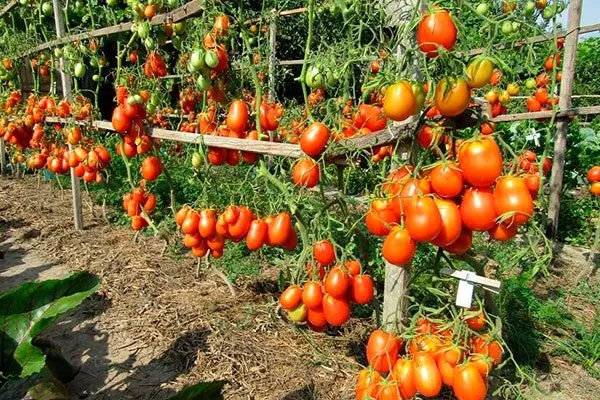
Inherited features:
- in the next generation the yield increased significantly;
- From its father, the variety received its taste and shape, and from its mother, resistance to sunburn and late blight, as well as good shelf life of vegetables;
- During pollination at high temperatures, fruits may not set, so it is recommended to use white spunbond to protect them;
- During cold periods, open beds should be covered with polyethylene material.
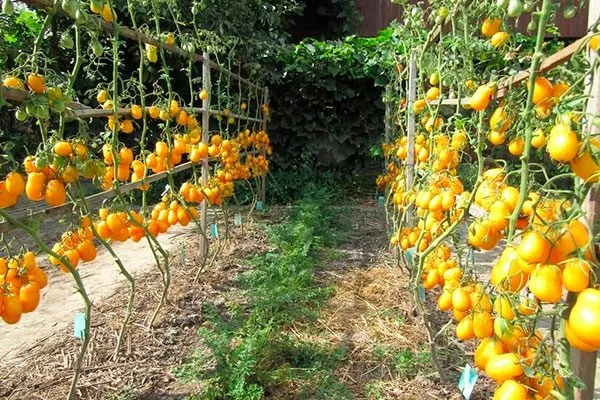
This variety is ideal for the southern regions of Russia, Crimea, and Ukraine. In the central part of the country, permanent or temporary cover is required for its cultivation.
Description of tomatoes and plants
Bendrick's Plum is unique in that it's not a hybrid, making it unique and eliminating the need to purchase planting material annually—it's harvested from home-grown fruits. This variety is a true giant among tomatoes, reaching a height of 100-150 cm and expanding in width.
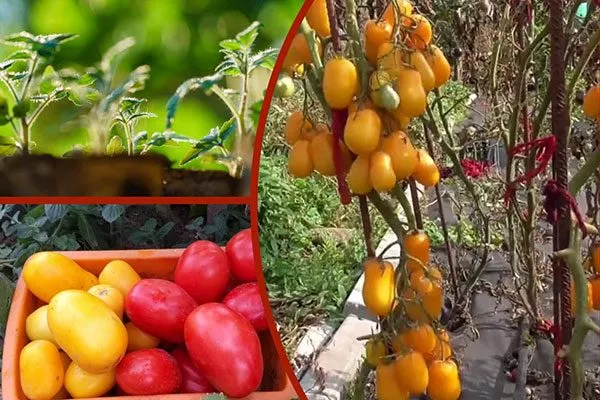
Varietal characteristics:
- The leaves have a traditional shape and a bright green color, and the bush has a medium degree of foliage and branching.
- The inflorescence is a complex bud on which 25 to 30 ovaries are formed.
- Cream brushes can weigh up to 1.8-2 kg and are strong enough not to break under their own weight.
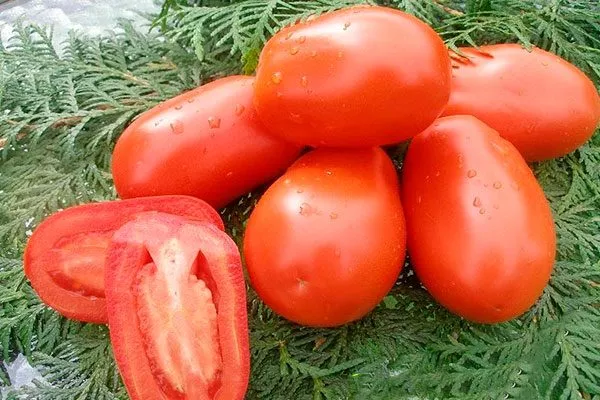
- The fruits have a characteristic plum-shaped form. They are red or yellow, without a greenish tint near the stalk, and weigh between 80 and 120 g.
- Tomatoes are fleshy and can remain on the bush after ripening without falling off for several more weeks, while maintaining a bright red or yellow color.
- The seed field does not contain many seeds, and small voids may sometimes be found in the pulp.
- Bendrick cream is resistant to damage during transportation.
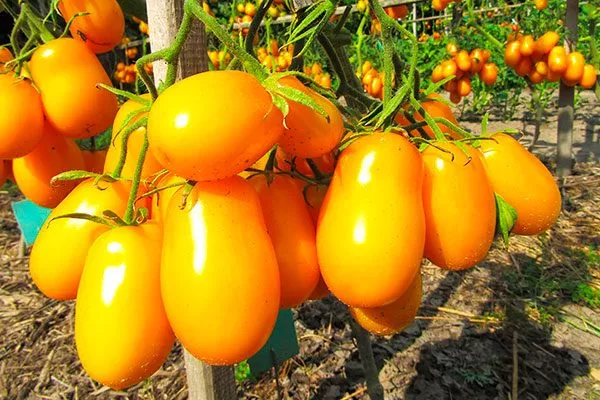
The tomatoes are highly flavorful. The author claims that these tomatoes can remain fresh for a long time, even in winter.
Characteristics of Bendrik's Cream tomato
The Bendrick's Plum tomato is an excellent choice for both outdoor and under protective film cultivation. With proper care, this plant promises a bountiful harvest.
Productivity and fruiting period
The highest fruiting rate is observed in the first two inflorescences. The vegetables ripen quite quickly – within 100-110 days after sowing. The fruiting period is extended, while the yield is impressive:
- about 8-10 kg per 1 sq. m outdoors, up to 15-16 kg in a greenhouse;
- Each plant in the garden can yield 2.5-3 kg, and indoors – up to 4 kg.
Resistance to diseases and pests
This variety has increased resistance to late blight, but preventative measures for the bushes are always important. Avoid watering the plants in cold weather.
To maintain an optimal level of moisture in the soil, which prevents the development of rotting processes, it is recommended to use mulch, for example, using nettle, burdock or celandine.
Methods of application
Bendrick's Plum is a versatile tomato variety that will be an ideal companion for all your culinary endeavors:
- Tomatoes are excellent for eating freshly picked or using in salads due to their attractive appearance, taste and harmonious aroma;
- They are ideal for fermentation in jars due to their compact size and ability to not burst during the canning process;
- can be used to create barrel snacks;
- easily tolerates drying in the sun, in an oven or dryer;
- The variety is an excellent raw material for the production of juices, pastes and lecho.
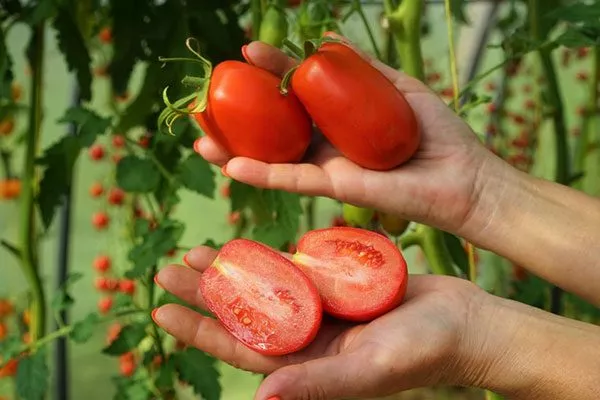
A special note applies to the yellow variety of this variety – it has low acidity, which makes it a particularly valuable product for people with stomach ulcers, colitis, and other gastrointestinal pathologies.
Despite various processing methods, including freezing, drying, boiling or drying, the fruits retain their taste and nutritional value.
Planting and care features
Bendrick's Plum tomatoes should be grown using seedlings. The variety's creator suggests planting them in two stages, which helps extend the harvest period. Seedling sowing is planned for early April.
How to prepare seeds?
Before planting, seeds need to be treated to speed up germination, strengthen their defense mechanisms, and increase yield. The preparation process includes the following steps:
- selection of whole, uniformly colored seeds without signs of damage;
- disinfection of seeds from surface bacteria by soaking them in solutions of potassium permanganate or hydrogen peroxide;
- the use of specialized agents to stimulate growth, such as Epin-Extra or Zircon;
- soaking the planting material in room temperature water for a day before planting.
Sowing for seedlings
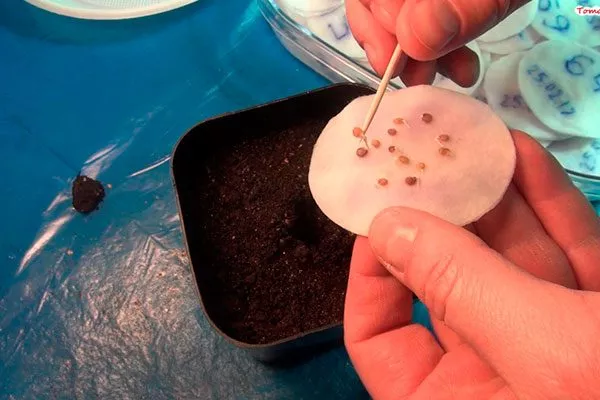
The selection of containers for growing plants isn't critical, but the presence of drainage holes is a must. The substrate is prepared using a mixture of garden turf, peat, sand, and compost, with the latter making up at least 10% of the total weight.
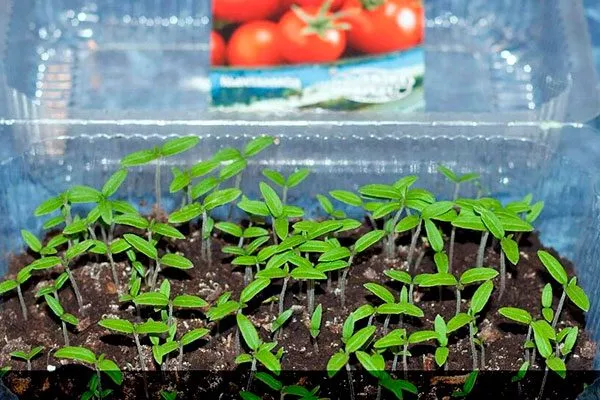
To plant you need a few simple steps:
- Make grooves 1.5 cm deep.
- Place the seeds deep and sprinkle with substrate.
- Moisten lightly.
- Cover with plastic film or glass to create a greenhouse-like microclimate.
- Keep the plantings at a temperature of 28-30 degrees.
- Once the first shoots appear, remove the film and move the seedlings to a windowsill. The plant thrives at a temperature of 22-24 degrees Celsius.
- If necessary, after the second true leaf has formed, transplant.
In the case of the seedless method, sowing is carried out from May 1, which allows harvesting by the end of August.
Transplantation into open ground
Experts advise avoiding planting tomatoes in areas previously occupied by nightshade crops. Legumes are considered ideal predecessors to these plants. In early May, before transplanting, the area should be thoroughly dug over, but there's no need to add organic matter at this time.
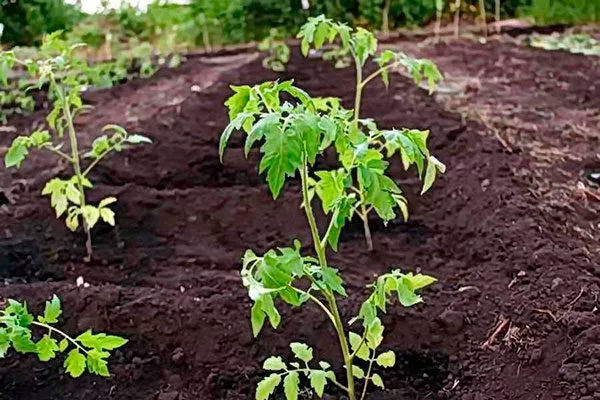
When replanting, be careful not to damage the fragile root shoots of young plants. Create a hole for each plant and create a nutrient-rich bed containing 150-250 g of vermicompost, a cup of compost, and 1 tablespoon of wood ash.
For successful growth, the following planting pattern should be followed:
- depth of planting holes – 15 cm;
- distance between plants – 30-40 cm;
- width between rows – 100-120 cm.
Watering
The variety's creator suggests avoiding watering young tomatoes. He's convinced that evening watering also promotes the development of late blight. He believes tomato roots will find the water themselves and absorb as much as they need.
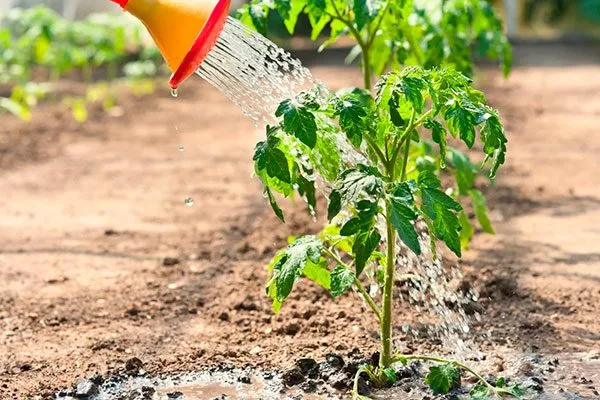
However, please follow these requirements:
- Watering is carried out once every 4-6 days, in the morning and evening hours;
- water that has been settled and heated is used;
- On cold days, humidification is reduced, or it can be abandoned altogether.
To improve fruit set, spray the bushes with a solution of Bioglobin or boric acid.
Pinching out side shoots, tying, weeding, loosening the soil
It's recommended to grow Bendrick's plum on a single stem. You'll need to remove shoots regularly to prevent them from delaying the ripening of the fruit. This is best done in the morning so the wounds have time to heal by evening. It's important to remove 2-3 lower leaves every week. By the end of the season, the bush should have a few leaves remaining at the top.
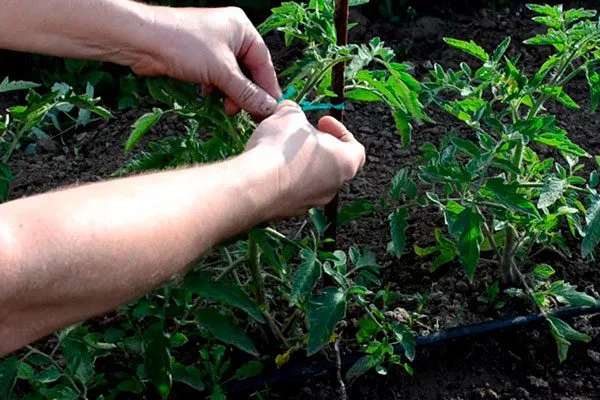
Other events:
- In dry weather, regular weeding is carried out weekly. In areas with frequent rainfall, it is recommended to loosen the soil after each rainfall.
- To retain moisture between rows and along the bed, use sawdust, straw or peat as mulch, laying them in a layer of up to 10 cm.
- During the period of blanching ripeness of the fruits, hill up the plants, creating a small ridge to drain excess moisture.
When drought is followed by heavy rain, experts recommend cutting lateral roots to a depth of 12-15 cm from the main stem to prevent the tomatoes from cracking.
Top dressing
According to the author, overfertilized plants are more prone to disease and develop foliage at the expense of their yield. Bendrik advises against using either organic or mineral fertilizers. He suggests using green manure and mulch as alternatives.
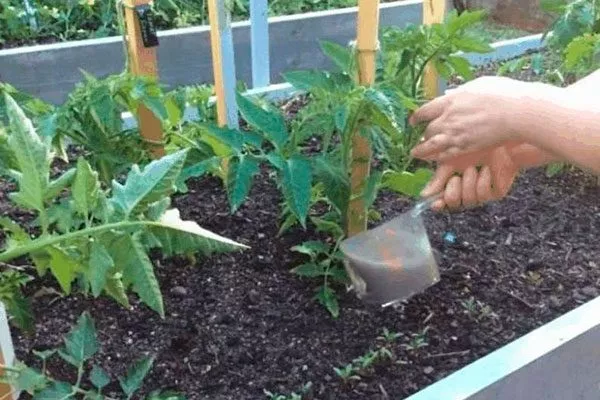
Despite this, to feed plants during the summer, it is necessary to carry out three procedures:
- First, dissolve 500 g of mullein in 10 liters of water, add 1-2 tablespoons of nitrophoska and water the tomatoes, using 500 ml per bush;
- Add 500 ml of chicken manure, 1 teaspoon of sulfate and 1 tablespoon of Senor Tomato fertilizer to 10 liters of water, using 800-900 ml per bush during the period of blooming of the second flower cluster;
- After the third brush appears, the plant is fertilized with sodium humate according to the instructions.
Pest and disease control
In humid weather conditions and if agricultural practices are not followed, the tomato variety may be susceptible to the following diseases:
- root rot, causing the death of the bush;
- a mosaic disease characterized by the appearance of red-green spots on the fruit;
- Brown rot, which appears as black spots on shoots and leaves.
To avoid these problems, it's important to ensure regular ventilation of the greenhouse and strictly adhere to temperature recommendations. Fungicides such as Quadris, Ridomil, and Fundazol are used to combat diseases. It's better to prevent diseases than to try to cure them. Mikohelp and Mikosan-V are suitable for strengthening the tomato plant's immune system.
Pests that can attack tomatoes include aphids, thrips, mole crickets, and slugs. Insecticides are used to control them.
Pros and cons
Bendrick's Plum tomatoes have thick skin, ensuring high resistance to transportation and long-term marketability. These fruits are easy to care for and offer several advantages:
In addition, these tomatoes are characterized by an attractive appearance, resistance to stress and a variety of weather conditions.
Flaws:
Reviews
The Slivka Bendrika tomato is a variety that doesn't require any special conditions for successful growth and fruiting. Its fruits are widely used in cooking due to their versatility. This variety is ideal for commercial production, as in addition to its high yield, it offers good transport and shelf life.