
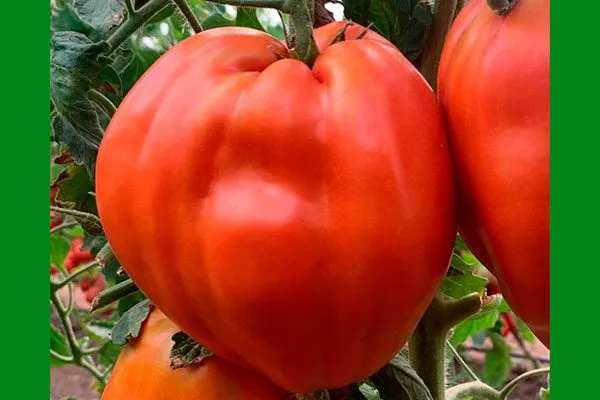
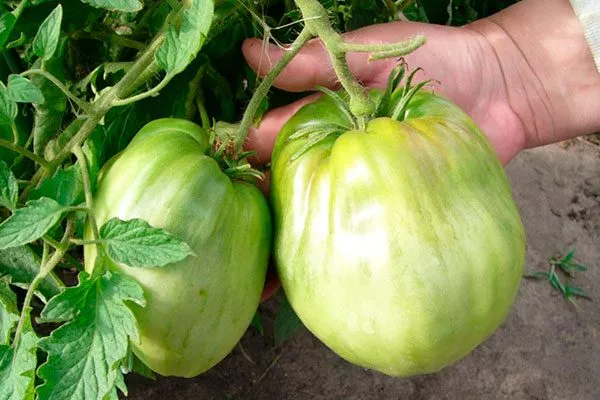
Auntie Svarlo's Polish Plum tomatoes have an unusual shape, are large, and heavy. They are an early-ripening variety, characterized by good productivity and minimal maintenance. Their thick skin allows for long shelf life, making them ideal for canning.
Description of the bush and fruits
This unique variety was bred in Canada. It's an indeterminate variety, meaning plants can reach up to 2 meters in height. The shoots have a small number of leaves, which allows for better light exposure and increases disease resistance.
Distinguishing characteristics:
- The bush forms several clusters (7-8) on the main stem, each containing 3 to 5 tomatoes. The total number on a single plant can reach 40, which is significantly higher than the average for most varieties.
- The fruits are large, making them ideal not only for eating but also for ornamental purposes. They can have a variety of shapes, from round-plum to round-heart-shaped, with irregular shapes.
- The weight of one vegetable ranges from 300 to 400 g, and the largest specimens can reach 1 kg.
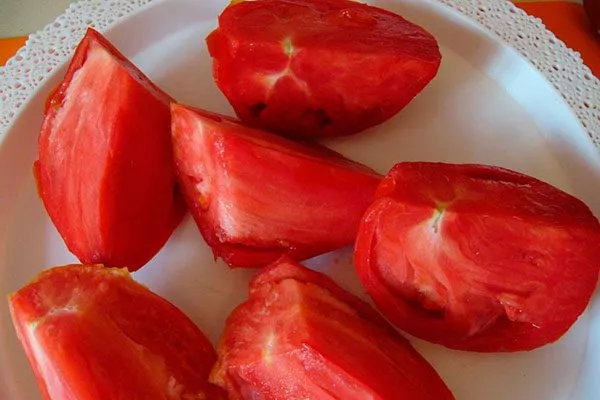
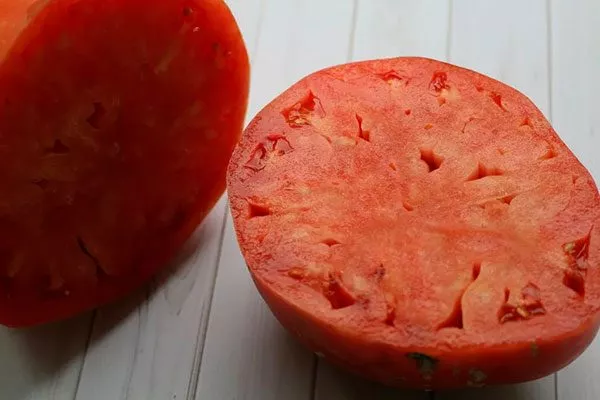
- Tomatoes are renowned for their fleshy texture and almost complete absence of seeds. Their thick skin makes them more resistant to mechanical damage.
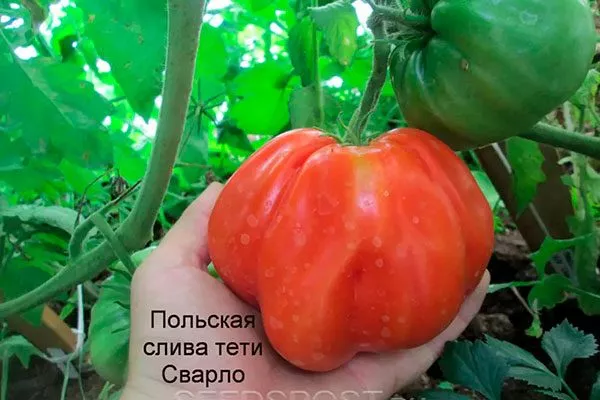
This is a true giant among tomatoes, with an excellent taste and aroma. The fruits are used for fresh eating, canning, and pickling.
Main characteristics
The Polish plum, Auntie Svarlo, is an early-ripening variety, ripening in just 90-100 days after germination. Its compact size allows it to be grown in small spaces. Furthermore, it doesn't require shaping or pruning, significantly simplifying care.
This variety is highly productive: a single plant can yield up to 3-4 kg of large, tasty fruit. The bushes are resistant to diseases and pests, but require preventative treatments to strengthen their immune system.
Care and cultivation of tomatoes
The crop is easy to grow, so even novice gardeners can easily handle it. It's important to follow certain planting guidelines and carry out timely agricultural practices.
Choosing a location for growing
For cultivation, choose sunny, well-ventilated areas. Plants love warmth and light, so the beds should receive at least 8-10 hours of sunlight per day.
The best predecessors for tomatoes are legumes, carrots, cabbage, onions, and garlic. Avoid planting them after nightshade crops (potatoes, peppers, eggplants), as they share similar diseases and pests.
Soil preparation and sowing
Two to three weeks before planting, dig the beds to a depth of 25-30 cm, removing weeds and residue from previous crops. Improve the soil:
- to improve fertility – humus (5-6 kg per 1 sq. m);
- to protect against diseases and replenish potassium reserves – wood ash (200 g per 1 sq. m);
- to strengthen the root system – Superphosphate (20-30 g per 1 sq. m);
- if the soil is too heavy – sand or peat.
Before sowing, subject the seeds to several stages:
- calibration – select large, dense specimens and remove small and damaged ones;
- disinfection – soak the grains in a 1% solution of potassium permanganate for 15-20 minutes, then rinse with clean water;
- increasing germination – treat with Epin or Zircon to speed up germination (according to the instructions);
- hardening – Wrap the seeds in a damp cloth and keep in the refrigerator for 1-2 days at a temperature of +2…+5°C.
- ✓ Optimum soil temperature for sowing seeds: +23…+25°С.
- ✓ Seed sowing depth: 1-1.5 cm.
- ✓ Distance between plants when planting: 40-50 cm, between rows: 60-70 cm.
Sow seeds in containers or trays at a depth of 1-1.5 cm. The soil should be moist but not waterlogged. Optimal germination temperatures are 23 to 25°C. The first shoots appear in 5-7 days.
Growing and transplanting seedlings
When sprouts appear, move the containers to a well-lit place and reduce the temperature to +18…+20°C so that the seedlings do not stretch out.
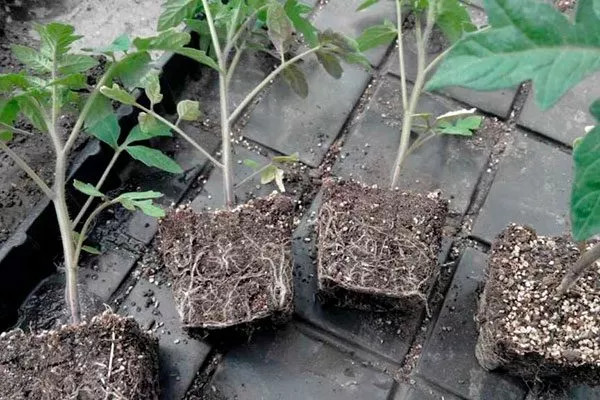
Provide them with proper care:
- moderate watering, as the soil dries out;
- illumination with phytolamps if natural light is insufficient;
- application of complex fertilizers with nitrogen, phosphorus and potassium 10-14 days after seedling germination;
- picking into separate cups at the stage of formation of 2-3 true leaves.
Transplant the plants to their permanent location at 50-60 days old, when they have 5-7 true leaves. A week before transplanting, begin hardening off the seedlings: bring them outdoors, gradually increasing the time spent outdoors.
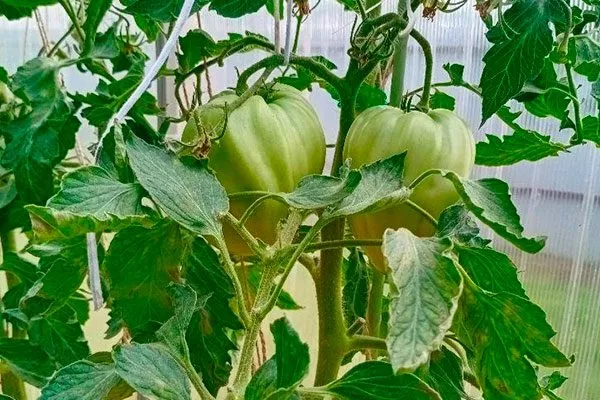
Plant tomatoes 40-50 cm apart, with 60-70 cm between rows. Make the planting hole 20-25 cm deep. Add a handful of compost and a little ash to each hole before planting. Then, moisten the seedlings with warm water and, if necessary, cover them with agrofibre for the first few days.
Watering and fertilizing
To ensure good growth and abundant fruiting, tomatoes require proper watering and timely fertilizing. Spray the seedlings with warm, settled water at the roots, avoiding contact with the leaves.
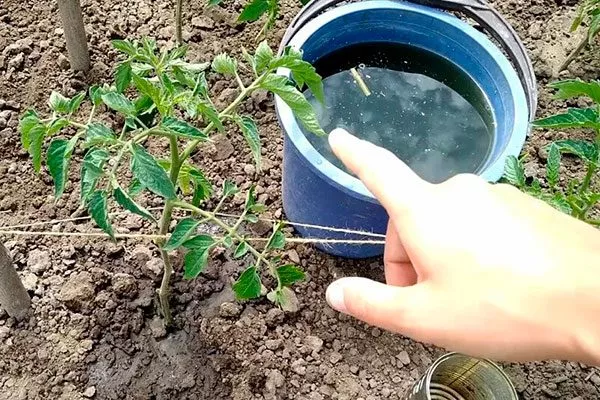
The frequency depends on the stage of plant development:
- after planting in the ground – once every 5-7 days;
- during the flowering period – moderate watering to prevent excessive growth of greenery;
- when the fruits are filling – 2-3 times a week, 5-7 liters per bush;
- during the ripening period – less often to prevent tomatoes from cracking.
The crop requires nitrogen, phosphorus and potassium, so apply fertilizer 3-4 times per season:
- 10-14 days after planting – infusion of mullein (1:10) or bird droppings (1:20);
- before flowering – mixture of ash or potassium-phosphorus substances;
- at the beginning of fruit ripening – Superphosphate and potassium sulfate (20 g per 10 l of water);
- during active fruiting – yeast dressing or herbal infusion to improve the taste.
Pruning and garter
These measures help tomatoes develop better, prevent diseases, and increase yields. To prevent the plant from wasting energy on unnecessary green matter, follow these steps:
- removal of stepsons – lateral shoots in the leaf axils, pick off once a week, leaving 2-3 main stems;
- thinning – trim the lower leaves as the bush grows, especially if they touch the ground;
- formation – In a greenhouse, grow plants with one stem; in open ground, you can leave two stems.
Carry out this procedure in dry weather to avoid fungal infections. Tall plants need support, otherwise they may break under the weight of the tomatoes.
- fix them a week after planting;
- use trellises, pegs or nets, securing the stems with soft tapes;
- Large brushes should be additionally supported so that they do not break under the weight of the fruit.
Proper tying improves air circulation, prevents vegetable rotting and makes caring for the bushes easier.
Diseases and pests
The crop is characterized by good immunity, but under unfavorable conditions it can be susceptible to diseases and insects. Timely protective measures will help preserve the harvest:
- Powdery mildew - The leaves become covered with a white coating and the plant weakens.
Treat with Topaz or ash solution. - Verticillium wilt – Leaves turn yellow and wilt from the bottom up. To prevent this, ensure proper crop rotation and apply Previkur at the first sign of the disease.
- Late blight - Dark spots appear on leaves and fruits. Apply Fitosporin or Bordeaux mixture. Prevention: moderate watering and ventilation.
- Gray rot - It appears as damp, bloomy spots. Remove the affected areas and spray the bushes with copper sulfate.
- Aphids - Small sap-sucking insects cause the leaves to curl. Use a soap solution or garlic infusion.
- Spider mite – The leaves become covered with a fine web. A solution based on onion peels or Fitoverm are effective.
- Colorado potato beetle – Eats leaves and stems. Collect the parasites by hand and treat with wormwood or Bitoxibacillin.
- Whitewing – Small white flies whose larvae suck out the juice. Set up special traps, use Aktara.
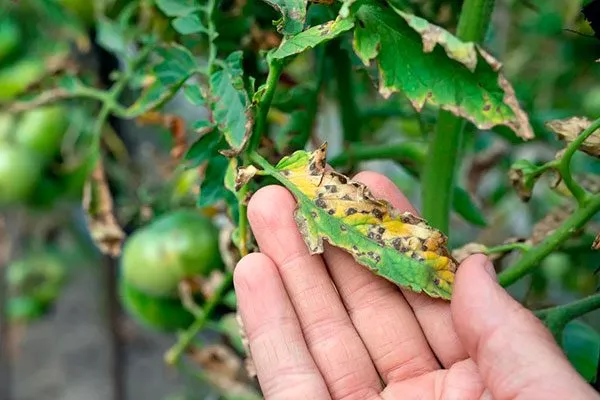
Prevention includes proper care, ventilation, crop rotation and soil mulching.
Pros and cons
The Polish Plum tomato by Aunt Svarlo has a number of advantages that make it attractive for cultivation.
Main advantages:
This variety does have some drawbacks. Due to the large tomatoes, they require secure support, otherwise the stems may break under their weight. In colder climates, it's best to grow this crop in a greenhouse, as it's sensitive to sudden temperature changes.
Reviews
The Polish plum, Auntie Svarlo, combines productivity, low maintenance, and excellent flavor. Its large, fleshy tomatoes are versatile, and its disease resistance makes it easy to grow. This variety is prized for its early ripening, minimal care requirements, and fruiting even in adverse weather conditions.