
The Skorospelka tomato is a determinate variety intended for outdoor cultivation, although it yields equally well in greenhouses. While not a high-yielding plant, it is easy to grow and produces red, flat-round fruits weighing up to 150 g 87-95 days after germination.
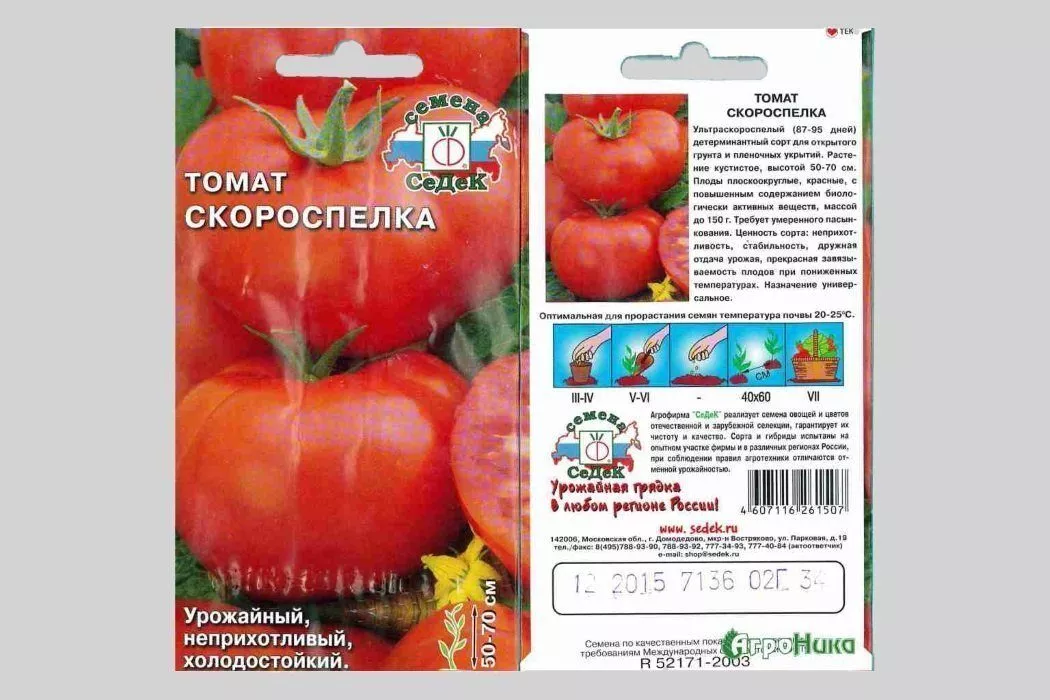
Tomato seeds "Early Ripening"
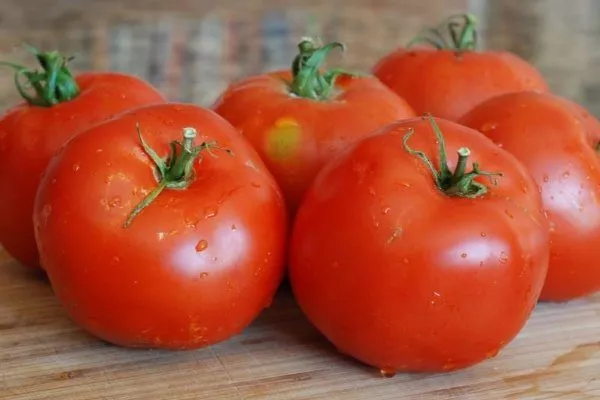
Tomatoes of the "Skorospelka" variety
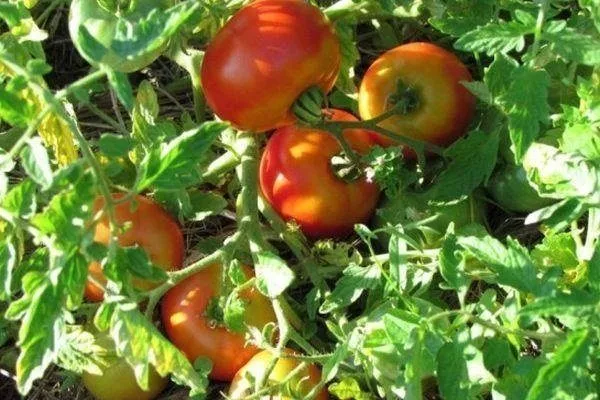
When the fruit is ripening, the area near the stem is orange.
Description of the variety
Skorospelka is a low-growing plant, classified as an ultra-early variety, hence its name. We'll explore the main characteristics of the bushes and fruits below.
| Name | Ripening period | Fruit shape | Fruit color | Fruit weight |
|---|---|---|---|---|
| Early ripening | 87-95 days | Flat-round | Bright red | Up to 150 g |
Bushes
They are spreading and reach a height of about 50-70 cm, but when grown in greenhouses they can grow up to 1 m, so they need to be tied to a strong support and additional side shoots (removal or shortening of second-order shoots - side shoots).
Tall, branched stems bear abundant, ash-green, fleshy foliage. The plant's inflorescences are simple, with small bell-shaped flowers, bright white with a distinctive yellow base. Fruit production averages 6-7 fruits per branch.
Fruit
They ripen 87-95 days after germination and are medium-sized and flattened-round (slightly flattened at the ends). They weigh an average of 150 g. When ripe, one side of the tomato has an orange tint, while the rest of the fruit is bright red.
For an ultra-early variety, the fruits are moderately tart and fleshy, with a high content of biologically active substances. They are versatile, so they can be used fresh for early salads. Later ripening fruits are better suited for canning. Tomatoes of this variety are resistant to high temperatures, so they do not burst during processing. Therefore, they can be used to make excellent tomato juice.
The fruits are characterized by good shelf life and transportability, due to their high density and fleshiness. For this reason, gardeners often grow this variety commercially.
Table of characteristics
The main characteristics of Skorospelka can be found in the table:
| Parameter | Description |
| General qualities | An ultra-early, low-growing variety that can grow and bear fruit in open ground and plastic greenhouses. When grown in Siberia and the Far North, it is best planted in hotbeds or well-heated greenhouse complexes. |
| Ripening period | 87-95 days after emergence |
| Form | Flat-round |
| Color | Bright red |
| Weight | Reach up to 150 g |
| Application | Suitable for fresh consumption, as well as for processing and canning. |
| Productivity | One square meter of planting area yields approximately 5-7 kg of fruit. On average, up to 7 tomatoes are produced per bush. The yield is low due to the early maturity of the variety. |
| Features of cultivation | Requires pinching and tying to a strong support. |
| Disease resistance | Resistant to major diseases. Due to its early maturity, the tomato ripens before the onset of late blight. |
| Variety values | It produces a stable harvest and is distinguished by good fruit set even at low temperatures. |
The characteristics of the dwarf variety are also discussed in the video:
Agricultural technology
To successfully grow tomatoes, you must meet a number of requirements:
- Prepare seedlings 55-60 days before they are expected to be planted in the ground. This typically occurs at the end of March.
- Sandy and loamy soils with a pH of 5-6 are optimal for Skorospelka. Its best predecessors are cucumbers, cabbage, and all types of beans.
- Maintain ample light, as tomatoes thrive on light. The brighter and more intense the light, the faster the fruit will ripen. Insufficient light will cause the plants to stretch and weaken, delaying flowering and fruiting.
- To encourage seed germination, maintain the temperature between 14°C and 16°C, although ideal temperatures are 20°C and 25°C. If the temperature drops to 10°C, plant development and growth will slow significantly and may stop altogether if the temperature drops further. If it reaches -1°C, the plant will die.
- For positive plant development, maintain air humidity at around 45-60% and soil humidity at 65-75%.
- Maintain soil fertility during plant growth, as it affects fruit formation, which derives most of its nutrients from the soil. Phosphorus fertilizers should be applied during the root system development stage, and complex fertilizers containing phosphorus and potassium should be applied during the fruiting stage. Nitrogen fertilizers should be applied with particular care for two reasons:
- A lack of nitrogen will lead to slower plant growth, discoloration or even leaf fall, and the appearance of small, defective fruits;
- Excess nitrogen will cause excessive growth of foliage and stems, which will affect the yield of the variety and slow down the process of fruit formation.
- ✓ Optimum soil temperature for planting seedlings: +14…+16°C, for active growth: +20…+25°C.
- ✓ The soil pH level should be between 5-6, which is critical for the absorption of nutrients.
In addition to fertilizing with complex mineral fertilizers, to obtain a good harvest, the plant also needs to be watered on time, side-shoots removed, and preventative measures taken to protect it from pests and diseases.
How to buy seedlings?
Growing seedlings from seeds This is one of the most important stages of tomato cultivation and is time-consuming. If time is short, you can purchase seedlings, considering the following factors:
- The seedlings should be no more than 60 days old. Young seedlings at least 45 days old are best. It's important that all seedlings purchased are the same age, otherwise they will grow unevenly in the garden bed and won't provide natural protection from the scorching sun for neighboring plants.
- The optimal height of seedlings is up to 30 cm, and the number of leaves is from 6 to 8.
- The stem should be elastic and thick, resembling a pencil in its parameters.
- There should be no visible mechanical damage on the leaves, stems, or roots. Furthermore, the trunk and leaves should be free of pest egg-laying sites. For small insect eggs, especially carefully inspect the undersides of leaves and the attachment points of branches to the trunks.
- The seedlings should be symmetrical with a well-developed and compactly formed root system.
- All seedlings should be in boxes with soil, not in bags, as this method of packaging can damage the root system, which will disrupt normal and rapid rooting in the garden bed.
- ✓ The stem is as thick as a pencil and up to 30 cm high.
- ✓ The presence of 6-8 leaves without signs of damage or pests.
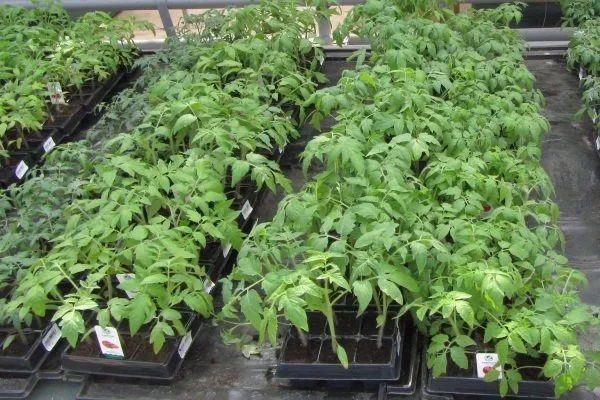
Unscrupulous sellers accelerate seedling growth by adding excessive amounts of nitrogen fertilizer. Such seedlings will be distinguished by their intense green color and leaves with inward-curling tips.
Preparing seedlings yourself and planting them in open ground
Many gardeners prefer to grow their own seedlings starting in late March. This process consists of several stages:
- Pre-treatmentAfter purchase the seeds need to be germinatedFirst, cover them with water and let them sit for a while. Any seeds that float to the surface should be removed and destroyed, and the seeds at the bottom should be disinfected by soaking them in a weak solution of potassium permanganate (1 g per 1 liter of water), which should have a slight pink tint. Other solutions can also be used to disinfect the seeds, including an ash solution (2 tablespoons of ash per 1 liter of boiling water, soak for 2 days) or Fitosporin-M, which improves germination and boosts the tomato plant's immunity.
- Soil preparationMix soil, peat, and sand in a 1:1:1 ratio, then place the mixture in small boxes or plastic containers and add manure. Disinfect the substrate by heating it in the oven.
- Planting seedsPlant them at a depth of 15 mm, then water with warm water and cover with plastic wrap. Keep in a warm place until seedlings appear, then move them to a bright spot and remove the plastic wrap. The first seedlings will appear in 3-5 days, after which the seedling container should be moved to a bright location.
- Top dressingSprouts will appear 6-7 days after sowing. The seedlings need to be fertilized. Read more about this. Here.
- Picking. On the 15-21 day or after 2 adult leaves appear on the seedlings, carry out diveTo help the plant grow stronger and more established. When planting, plant the tomatoes deep down to the cotyledons. Keep them out of direct sunlight for 3-4 days to allow the seedlings to adapt to the transplant.
- Maintaining an optimal microclimateDuring the day, the temperature should be maintained between 20 and 25°C, and at night, no lower than 18°C. If the spring is cloudy, it's necessary to extend the natural daylight hours with fluorescent lamps. When growing tomatoes in a greenhouse, it's also important to monitor humidity and regularly ventilate the room.
- WateringWhen the soil has dried out, the seedlings should be watered moderately, keeping in mind that overwatering will lead to the development of blackleg. Also, avoid overwatering the soil when applying various fertilizers.
Seedlings receive all the necessary microelements from the soil, so if they look healthy and strong, and the leaves have a characteristic dark green hue, then they do not need any fertilizers.
Criteria for optimal microclimate for seedlings- ✓ Daytime temperature: +20…+25°C, nighttime temperature: not lower than +18°C.
- ✓ Air humidity: 45-60%, soil: 65-75%.
- HardeningThis is done 12 days before planting the seedlings outdoors. To harden them off, take them outside for a few hours each day, either on a covered balcony or outside.
You can learn more about when and how to plant tomato seedlings correctly in in our other article.
When the seedlings are 55-60 days old, they can be transplanted into open ground. To promote rapid tomato growth, in the fall, closer to October, it's a good idea to plant green manure, such as peas, in the garden bed. In the spring, 10-15 days before planting the seedlings, the green manure should be mown, chopped, and dug into the soil to enrich it with all the necessary organic matter.
Transplanting seedlings to their permanent location should be done using a 0.3 x 0.5 m spacing scheme, with a ratio of 5-6 plants per square meter. Before transplanting, the soil in the area should be loosened, disinfected with potassium permanganate, and fertilized with manure and nitrogen fertilizer.
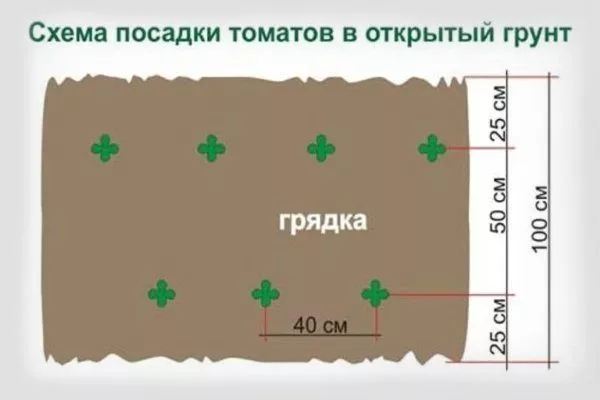
Read about growing tomatoes in open ground. here.
Maintenance and care
To obtain a good harvest, seedlings must be properly cared for and all agricultural practices must be followed promptly. Let's look at these practices below.
Watering
Water the soil once a week during dry weather and less frequently during rainy weather. The best time to water the soil is morning or evening. Use warm water that has been left to stand in the sun.
Tomatoes should be watered using drip irrigation to maintain a constant, low-level of moisture underneath. This will ensure a bountiful harvest, and the fruits will grow plump and firm.
After moistening the soil, you need to wait until the top layer forms a crust, and then loosen the soil around the bushes; otherwise, a "stone" crust will form, which can harm the stems and roots, as it will interfere with the soil's nutrition.
Be careful not to overwater, as too much moisture will cause cracks in the fruit. These cracks can be dangerous because they can harbor infectious agents that can cause tomato rot.
Loosening and hilling
The soil should be loosened 3-4 times a week and hilled 2-3 times per season. Regular weeding and weeding are also important, otherwise parasites will remain on the plant roots, which can cause fungal or bacterial diseases.
Top dressing
The plant can be fed with any special mixtures that contain more potassium and phosphorus than nitrogen. These should be applied no more than twice a week and at least three times per season. Additionally, tomato plants can be watered with water in which chicken manure has been dissolved.
Among mineral fertilizers, mixtures high in boron and magnesium are particularly useful. For example, the plant can be watered with a boric acid solution (1 g per 1 l).
Tying up
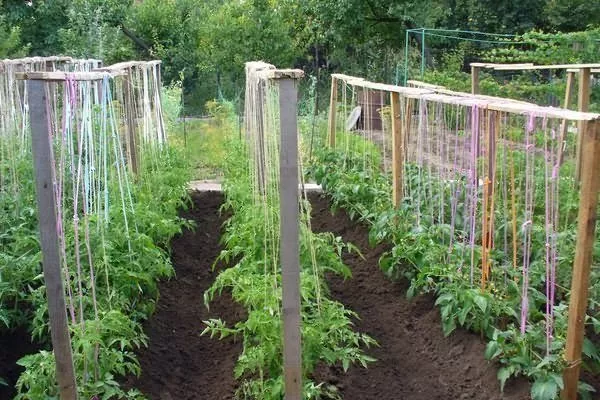
This is an important phase in plant care. It begins when 6-7 leaves appear, almost immediately after planting the seedlings in their permanent location. Staking can be done in one of two ways:
- each bush should be tied to a separate peg, which should be driven in at a distance of 10 cm from the stem, on the north side;
- use a trellis with sparse support posts between which wire is stretched.
The second method is considered optimal, as bushes from two rows can be tied in pairs to a single trellis. This clears the path between them, making harvesting much easier.
Gardeners' experience has shown that when tying bushes to a trellis, the fruits turn out larger than when they are tied individually to a peg.
Pinching out stepsons
This is done 7 days after planting the seedlings. Side shoots should be removed before they reach 3-4 cm in length. Removing longer shoots can lead to undesirable consequences and even death of the plant. Side shoots should be removed weekly, otherwise the bushes will grow too large.
Protection from pests and diseases
If your garden is infested with pests (aphids, Colorado potato beetles, caterpillars), they should be eliminated using specialized chemicals. If these are unavailable, copper sulfate or a soap solution can be used. Spray the solution on the leaves and stems of the plant.
The following pests can also cause particular harm to tomatoes:
- SlugsThey eat foliage and cause rot on fruit. Ash, tobacco dust, and slaked lime can be effective against them. Sprinkle the chosen solution around the stem.
- Spider miteThey entangle the leaves in a web, sucking out the sap, causing them to dry out and potentially killing the plant. Garlic infusion or Malathion will help against mites.
- Mole cricketBy destroying the root system, it leads to the death of the plant. To kill it, you can use an infusion of hot pepper and vinegar or Grom.
- WirewormThe bright yellow larvae, which feed on roots, often burrow deep into the stem. They can be killed with Bazudin.
- CutwormsA dark gray or black caterpillar that destroys foliage and stems. To get rid of it, spray the plant with Strela.
- WhiteflyThe insect appears on the foliage and covers it with secretions, which triggers the growth of fungi. After this, the bush turns black and dies. Confidor can be used against the insects.
As for diseases, the following pose a particular danger:
- StrickIt causes leaves to curl and wilt, flowers and fruits to fall off, and, in severe cases, the plant to die. To prevent the virus, seedlings should be transplanted to a sunny location and away from other nightshade crops.
- Verticillium wiltThe leaves turn yellow underneath, dry out, and fall off, and the plant stops growing but doesn't die. To prevent the disease from progressing, affected plants should be removed.
- Late blightThe entire plant becomes covered with numerous rotten spots, and the underside of the foliage becomes covered with a whitish coating. Proper fertilizing and observing neighborhood rules will help prevent the disease. If the plant has been affected, first spray it with Zaslon, and then a week later with Barrier. A garlic infusion (5 crushed cloves per 1 liter of water) has proven effective among folk remedies.
- FomozLarge, crimson spots up to 3-4 cm in diameter appear on tomatoes. The affected area appears concave, as the rotting process also affects the flesh. The disease develops due to excessive moisture. If the disease has already been detected, the affected fruits should be removed, and the bushes should be sprayed with Bordeaux mixture, Hom, or Oxyhom.
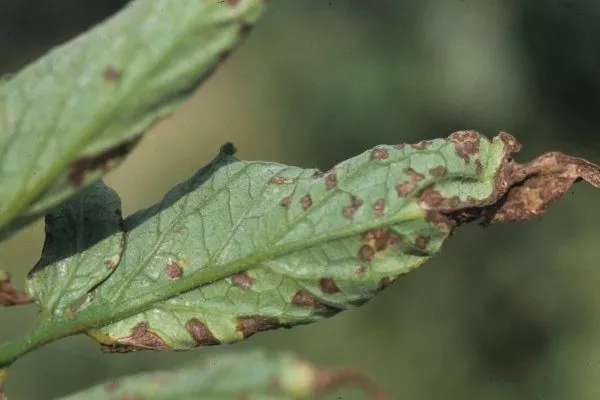
- Bacterial spotSmall brown spots appear on the foliage, and large sunken spots with a light border appear on the fruit. This can lead to the complete death of the plant. To prevent the disease, apply copper- and nitrogen-containing fertilizers promptly. If spotting occurs, treat the plant with Bordeaux mixture or copper sulfate. Wilted bushes should be removed.
- BlacklegIt primarily affects seedlings and young saplings. The infection manifests itself as black spots on the stem and wilting of the plant. To prevent the disease, the plant should be watered moderately, and sometimes with a potassium permanganate solution (1-1.5 g per 10 liters of water).
How to harvest and store?
Harvesting can begin as early as June. If the tomatoes are to be eaten fresh, canned, or used to make tomato juice or paste, they are best picked when they are fully ripe and red. This occurs 80-90 days after sowing. If Skorospelka is to be pickled or stored, the fruits can be picked earlier, when they are still green, milky, or pink.
Before storing, sort the tomatoes, identifying and removing any with mechanical or other damage. The firmest and firmest tomatoes should be placed in plastic or wooden boxes, each weighing no more than 12 kg. They should be kept in a cool, dark place, such as a basement or pantry. However, the storage area should not be damp, as this will encourage fungal and rotten growths. To prevent spoilage, regularly ventilate the room, for example by opening the doors for a few hours.
Skorospelka is a fleshy and firm variety, so the tomatoes retain their original shape for a long time. However, don't forget about them for too long to prevent them from spoiling. They should be used as intended within the first few weeks after harvest.
Selected tomatoes can be transported in boxes to prevent them from smashing or leaking juice.
Pros and cons
The advantages of the variety are as follows:
- bears fruit even with temperature fluctuations, which often occur in April and May;
- has good immunity and is resistant to many diseases;
- does not encounter late blight due to its early maturity;
- It is distinguished by its friendly harvest and unpretentiousness.
As for the disadvantages, the following should be noted:
- requires pinching out the shoots;
- the bushes need to be tied to a support;
- the yield is relatively low.
Skorospelka is an early tomato variety recommended for outdoor cultivation, but also produces well in greenhouses. The plant is easy to grow, and basic care consists of regular watering and fertilizing. To ensure a good harvest, remember to pinch out the side shoots and tie them to a support.