
The Skazka Skazok tomato is a new variety that was announced as a hit a couple of years ago. This cocktail variety truly deserves its popularity; it's tasty and productive, and its small fruits are truly versatile and suitable for a wide variety of purposes.
Who and when bred the tomato 'Skazka Skazok'?
The Skazka Skazok variety was introduced to the market by the private nursery "Pomidom." Owned by the Gusev family, it cultivates rare vegetables and other plants. The variety hit the market in 2023. It is intended for greenhouse cultivation.
Description of the plant and fruits
The Skazka Skazok variety grows tall, indeterminate bushes with unlimited growth. The fruits are small and cocktail-like.
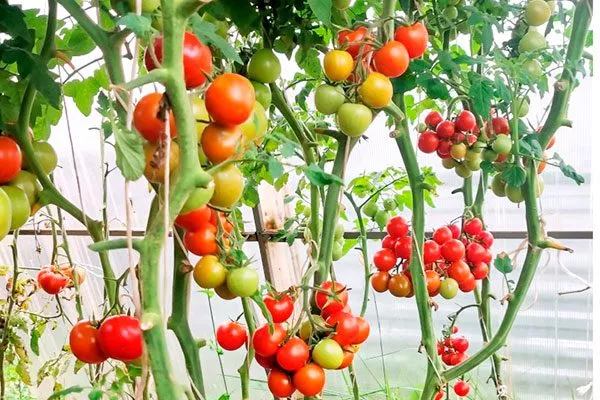
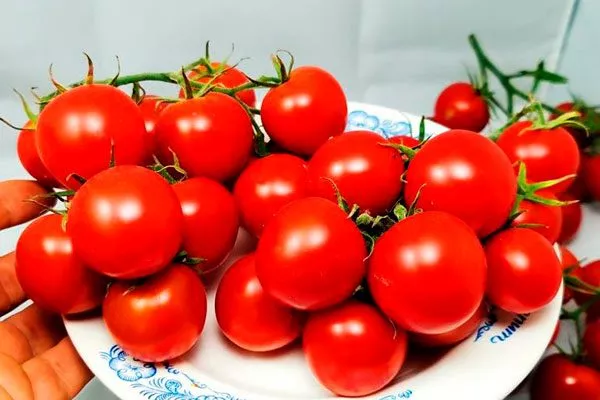
Brief description of fruits:
- Color: red.
- Form: rounded.
- Weight: 40-60 g.
The taste of fruits and their purpose
The Skazka Skazok tomato has a near-perfect flavor. It's rich, slightly sweet, and slightly tart. The flesh is juicy and meaty, with a pleasant, rich aroma. The skin is thin.
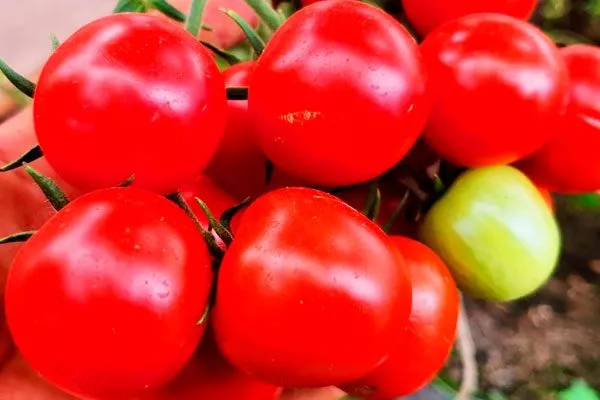
The fruits have a universal purpose: they are eaten fresh, preserved whole, and used to make ketchups, sauces, and tomato paste.
Characteristics
The Skazka Skazok tomato is an early-ripening variety. It takes 70-80 days from germination to the first tomatoes ripening. This variety is high-yielding and heat-resistant, resistant to late blight, cladosporiosis, and fungal diseases in general.
Pros and cons
There's not much information about the new product from their private nursery, but some advantages and disadvantages of the Skazka Skazok variety have already been identified by gardeners and experts:
Among the disadvantages, one can note the risk of blossom-end rot.
Landing features
The Skazka Skazok tomato is a tall variety intended for greenhouse cultivation. It is grown using seedlings.
Planting container
A wide variety of containers can be used as planting containers for growing tomato seedlings: cassettes, plastic cups, wooden boxes, basins, plastic trays with high sides, peat or peat-humus pots, etc.
Planting containers are thoroughly washed and disinfected with diluted potassium permanganate or hydrogen peroxide. If there are no drainage holes, they must be made, otherwise water will stagnate in the soil.
Selecting a soil mixture
Empty planting containers are filled with ready-made or homemade soil mixtures. Seedling growing substrates, such as "Terra Vita," made from peat, vermicompost, sand, and perlite, are available at any agricultural store. Other examples of ready-made mixtures include "Compo sana," "Fasco Malyshok," and "Chudo-Gryadka."
The soil for tomato seedlings should be nutritious, loose, permeable to moisture and air, with a neutral pH of 6.0–7.0. A soil mixture can be prepared, for example, from peat, turf soil, and river sand (2:1:1). Turf soil can be used over leaf mold.
Seed preparation
Don't rely on high-quality seeds. To avoid wasting time (if the seeds you sow don't germinate), you should check the planting material for germination. It's also important to pay attention to the expiration date. If you're using store-bought seeds, read the date on the packaging.
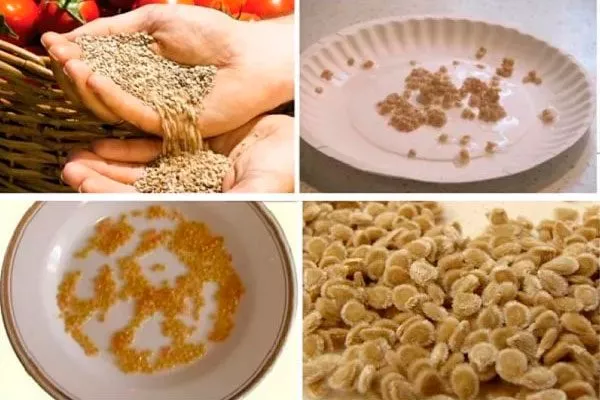
To test seeds for germination, soak them in a salt solution for 10-15 minutes. Healthy seeds will sink to the bottom, while hollow or non-viable ones will float to the top. To prevent disease, treat the seeds with a 1% potassium permanganate solution for 15 minutes and rinse thoroughly with running water.
The final step in preparing seeds for planting is germination. The seeds are wrapped in cheesecloth soaked in warm water and placed on a plate in a warm place. If the seeds are from last year or have an unknown expiration date, a growth stimulant is added to the water.
- ✓ Optimum temperature for seed germination: +25..+28 °C.
- ✓ Required air humidity for seedlings: 60-70%.
Growing seedlings
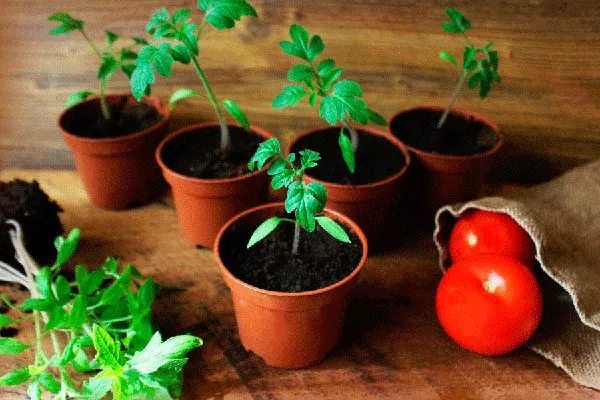
The seeds are sown approximately 50-55 days before transplanting the seedlings into the greenhouse. Sowing occurs as soon as the seeds begin to sprout. To ensure this happens, unwrap the gauze containing the seeds daily and check their condition.
Features of growing seedlings:
- The soil is leveled and moistened. The seeds are planted at a depth of 1-2 cm, no more. Space adjacent seeds at 2 cm intervals, and rows at 3 cm. Several seeds—2-3—are planted at once in individual containers.
- The crops are placed in a warm room with diffused light, covered with plastic film. The film is lifted every day to allow air to flow and, if necessary, to water.
Tomato seedlings are grown in heated rooms or greenhouses. If the seedlings are grown indoors, they are placed closer to the light, on windowsills.
Seedling care:
- The film is removed as soon as the first loops of seedlings appear. To prevent the seedlings from stretching, the room temperature is lowered to 14–16°C. After a week, the seedlings are returned to a warmer environment, and the temperature is raised to 20–23°C.
- The seeds are moistened with a spray bottle once a week. This watering regimen is maintained until transplanting. Overwatering is extremely harmful to tomato seedlings, as they can develop blackleg or other fungal diseases.
- If tomato seedlings are grown in special soil, fertilizing is not necessary. If you use poor-quality, nutrient-poor soil, you'll likely need to fertilize them—the plants will signal this by their appearance.
- When growing seedlings, apply no more than four fertilizer applications after transplanting. Fertilize at intervals of 10-14 days. Apply the final fertilizer a week before planting in the greenhouse. Water-soluble fertilizers such as Fertika Lux, Agricola, Kemira Lux, etc. can be used for seedling nutrition.
Site selection and soil preparation
The variety is grown in greenhouses and plastic structures, which are placed in areas with maximum sunlight. It's important that they are not shaded. Ideally, the site should have a south or southeast slope, and be 10-15 meters from the nearest building or trees.
When growing tomatoes in plastic structures, the soil is dug up in the fall, fertilizing it in the same way as in open ground - compost and humus are added, sand is added to clay soils, slaked lime is added to acidic soils, and rotted sawdust is also added for loosening.
Transplanting
Seedlings are planted when the seedlings have developed 6 to 9 leaves. The timing of planting depends on the regional climate and the type of greenhouse. For example, in temperate climates, tomatoes are planted in the second half of April in heated greenhouses, in early May in polycarbonate greenhouses, and in the second half of May in plastic greenhouses.

Features of planting the Skazka Skazok tomato in a greenhouse:
- Dig holes large enough to accommodate the seedling roots and soil. The approximate depth of the holes is 15 cm. Water the seedlings the day before planting.
- Space the holes approximately 40 cm apart, and the rows 50 cm apart. Water each hole generously with warm, settled water. If fertilizer wasn't added during digging, you can add it directly to the holes. Add a couple of handfuls of compost or humus, a handful of wood ash, and 1 teaspoon of superphosphate to the bottom. Sprinkle a thin layer of soil over the fertilizer.
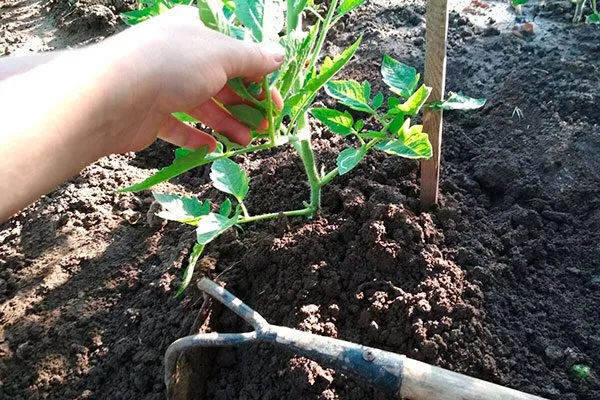
The seedlings are carefully removed from the containers and transferred to the holes, deepening them to the first true leaves. The holes are filled with soil and gently compacted. If the seedlings have outgrown their original size, they are placed horizontally, making the holes long, like small trenches. After planting, the plants are watered with water containing Fitosporin.
- ✓ Lighting: at least 12 hours a day.
- ✓ Daytime air temperature: +22..+25 °C, nighttime: +16..+18 °C.
Care Features
The yield of the Skazka Skazok tomato directly depends on the quality of care, regular watering, fertilizer, and preventative treatments. To ensure a bountiful and high-quality harvest, it's important to carry out all agricultural procedures on time.
Watering
Water the bushes as needed, taking into account the weather and soil conditions. Don't overwater the beds, but don't let the soil dry out either. Use warm, settled water, pouring it directly under the roots.
Loosening
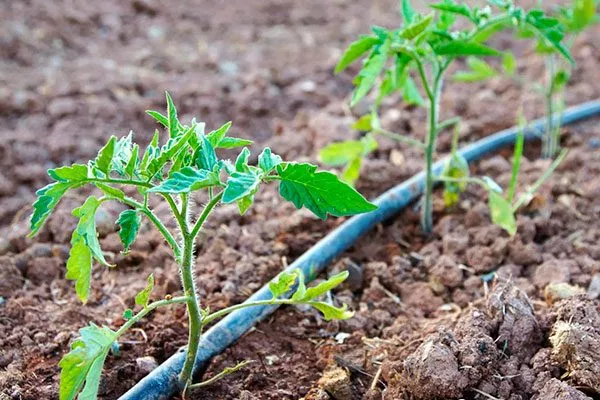
Loosen the soil in the beds the day after watering and heavy rainfall. At a minimum, loosen and weed the soil once every two weeks to ensure the root system receives enough oxygen, which tomatoes need for growth and development. Initially, loosen the soil to a depth of 8-10 cm, then reduce it to 5-7 cm.
Top dressing
After planting the seedlings in the soil, wait two weeks before applying fertilizer. At this stage, plants require more nitrogen to grow green foliage, as well as phosphorus. A second feeding is carried out during flowering and fruit formation; the complex fertilizer should contain more potassium and phosphorus.
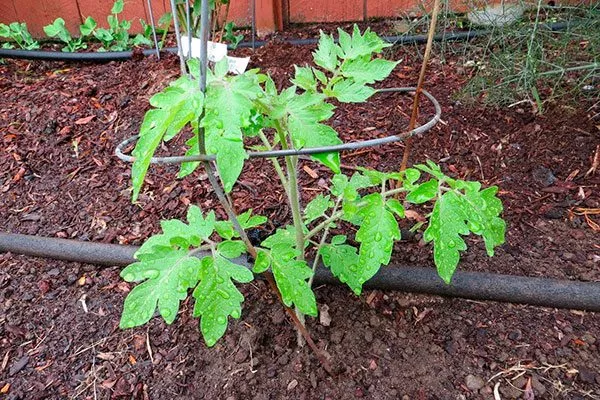
During the third feeding, nitrogen is not applied to tomatoes; the best fertilizer during this period is monopotassium phosphate. It accelerates ripening, improves flavor, and protects against certain diseases.
Shaping and garter
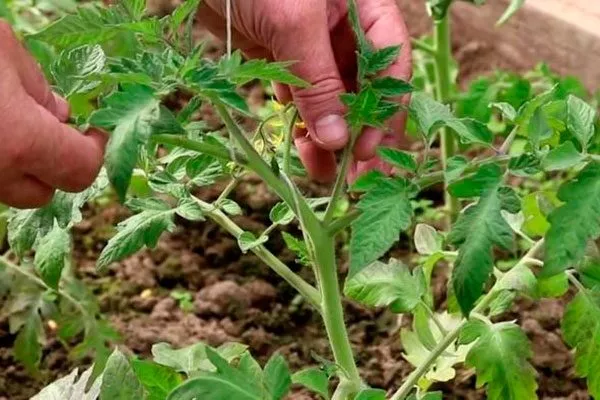
To ensure a good harvest, Skazka Skazok tomato bushes are trained with 2-3 stems. No side shoots are required, as these tomato plants grow extremely slowly. However, staking is essential for this variety.
Diseases and pests
The Skazka Skazok tomato is resistant to most diseases and pests. It rarely suffers from fusarium wilt, tobacco mosaic virus, late blight, and early blight. If cultivation practices are improper, the risk of these and other infections increases. For prevention, it is recommended to spray the bushes with Bacterra, Bronex, or the biological product Trichoderma Veride.
Harvesting and storage
The Skazka Skazok variety is an ultra-early variety, so the first fruits are harvested as early as mid-June. The tomatoes ripen evenly, and can be picked whole bunches. Active fruiting continues for a full month.
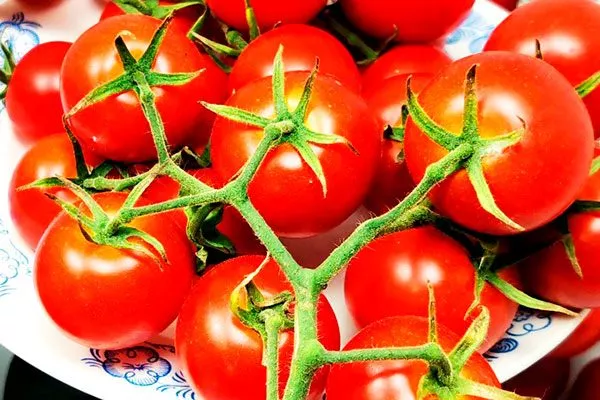
The fruits of the Skazka Skazok variety are stored in the refrigerator or a cool room, but they do not keep well.
Reviews
The Skazka Skazok tomato is the perfect choice for lovers of cocktail varieties. This amazing variety with a double name will impress any gardener; its perfectly shaped fruits are not only beautiful but also delicious in any form, fresh or processed.