
The "Skatert-samobranka" tomato is a versatile determinate variety suitable for both open and closed ground cultivation. Its compact bushes require no staking or pinching, simplifying care. The round-cylindrical fruits, with firm flesh and smooth skin, boast a rich flavor and a bright red color. They are ideal for salads and preserves.
Description of the bush and fruits
The plants are short, reaching no more than 40-50 cm. Their compact size means they don't take up much space in the garden. They grow successfully in plastic greenhouses and in closed ground, and the bushes also perform well when grown in beds.
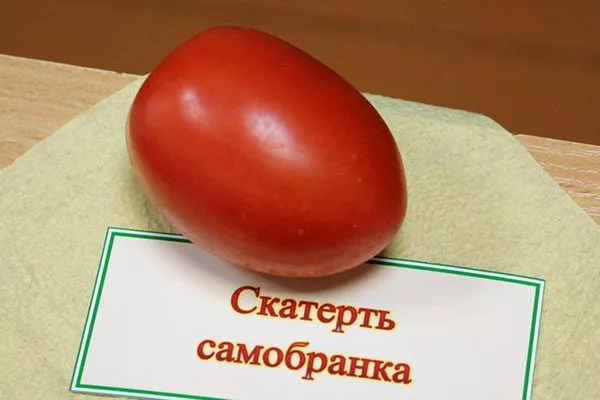
Distinctive features of tomatoes:
- form - round cylindrical;
- weight - varies from 100 to 150 g;
- skin – smooth;
- color - when fully ripe they are bright red in colour, which gives them an attractive and appetising appearance;
- taste - nice;
- pulp – dense.
Main characteristics
This is a mid-early variety. The first fruits ripen 90-100 days after germination, allowing for a fresh harvest in early or mid-summer, depending on sowing time.
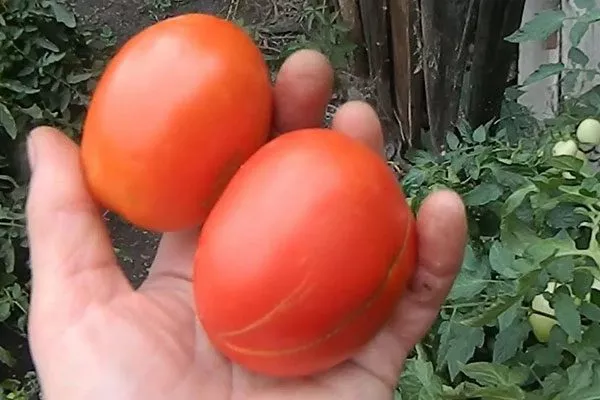
One of the variety's key advantages is its high resistance to fungal, bacterial, and viral diseases. This significantly reduces the risk of plant damage and promotes stable yields—up to 6 kg per square meter.
Growing and care
Magic tablecloth can be grown both from seedlings and by direct sowing. However, for an early harvest, it is recommended to obtain strong, high-quality seedlings first. Sow seeds 55-60 days before planting. First, prepare the planting material to improve germination and disease resistance.
Follow these steps:
- Calibration. Select large and dense grains, remove damaged and too small specimens.
- Disinfection. Soak the seeds in a weak solution of potassium permanganate (1 g per 100 ml of water) for 20 minutes, then rinse thoroughly. You can also use hydrogen peroxide (3%) or Fitosporin.
- Germination. Wrap the seeds in damp gauze or cloth for 12-24 hours, add a growth stimulator - Epin or Zircon.
- Hardening. To increase resistance to temperature changes, keep the seed material in the refrigerator for 2 days at +2…+4°C, then place it in a warm place.
Various containers are suitable for sowing: containers, boxes, cassettes, peat or plastic cups. The soil should be loose, fertile, and neutral in pH.
You can buy ready-made soil or prepare your own mixture by mixing the following components in equal parts:
- garden soil;
- humus;
- peat;
- sand.
Plant the seeds 1-1.5 cm deep, moisten with warm water, and cover with plastic wrap or glass to create a greenhouse effect. Maintain a temperature of 22 to 25°C until sprouts appear. Once sprouts appear, remove the plastic wrap and reduce the temperature to 18 to 20°C.
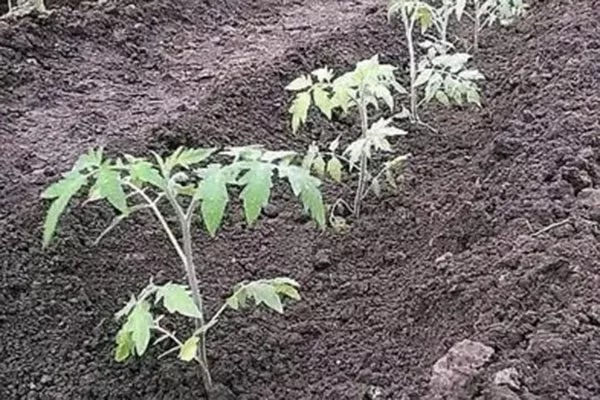
Provide the seedlings with suitable conditions:
- lighting – 12-14 hours a day, if there is insufficient light, install phytolamps;
- watering – moderate, with settled water at room temperature, without stagnant moisture;
- picking – when 2-3 true leaves appear, move the seedlings into separate containers with a capacity of 300-500 ml;
- top dressing – 10-14 days after transplanting, apply a weak solution of complex fertilizer;
- hardening – 7-10 days before transplanting to the garden beds, begin taking the seedlings outside into the fresh air, gradually increasing the time spent outside.
Plant when the soil warms to 14…16°C and the risk of frost has passed. Follow these recommendations:
- Dig over the bed and add humus, compost, or wood ash. The optimal soil pH is 6-6.5.
- The planting pattern is 40x50 cm, the hole depth is 15-20 cm. Add a handful of ash or compost to each hole.
- Plant the seedlings deep enough to reach the first leaves, water with warm water, and mulch the soil.
Basics of care
With proper care, tomatoes quickly establish roots and produce a stable harvest. This compact variety doesn't require mandatory pinching, but moderate pruning helps improve productivity.
Follow standard agricultural practices:
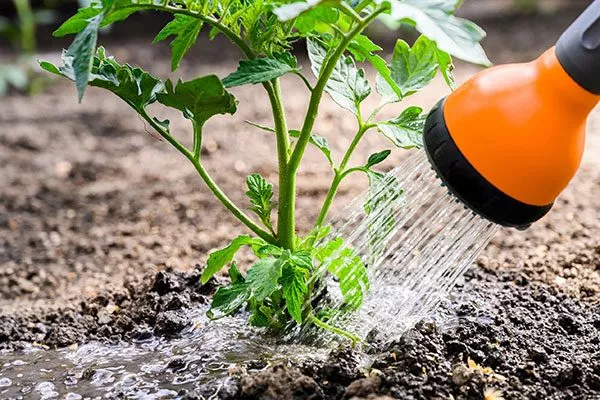
- Watering. Water regularly, but not excessively. Pour water under the roots. Spray with warm, settled liquid.

- Top dressing. Fertilize the crop 3-4 times per season. Follow the following schedule:
- 10-14 days after planting – nitrogenous substances (mullein, herbal infusion, urea);
- during the flowering period – phosphorus-potassium solutions (superphosphate, ash);
- at the fruiting stage – complex mineral compositions.
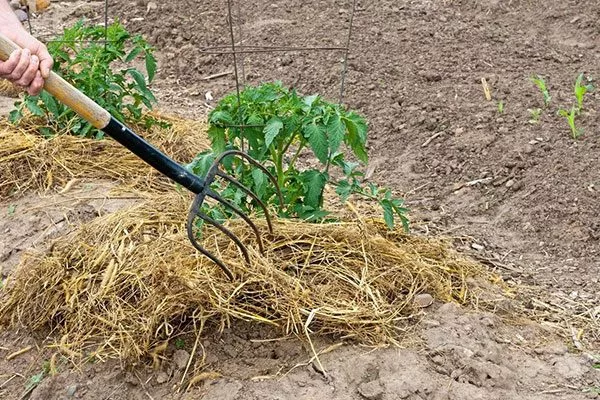
- Loosening and mulching. These measures help to retain moisture and prevent weed growth.
- Garter. Usually not required, but if the harvest is abundant, it would be a good idea to install low supports.
Although the variety has strong immunity, it can be susceptible to certain difficulties under unfavorable conditions. Below is a table of common problems:
| Disease/Pest | Signs | Methods of control |
| Late blight | Dark brown spots on leaves, white coating on the underside, damage to fruits. | Treatment with Fitosporin, Bordeaux mixture (1%), removal of damaged parts, ventilation of the greenhouse. |
| Gray mold | Watery, grey marks on stems, leaves and tomatoes, softening of tissue. | Spraying with Fundazol or copper sulfate, reducing humidity. |
| Mosaic | The leaves become covered with yellow-green formations, become deformed, and the vegetables grow small. | Removal of diseased plants, use of Farmayod, disinfection of tools and greenhouse. |
| Aphid | Small green or black insects on the underside of leaves - they curl up and a sticky coating appears. | An infusion of garlic, laundry soap or insecticides such as Aktara and Fitoverm is effective. |
| Whitefly | Pests attack the foliage, plants turn yellow and wither, leaving sticky marks. | Setting traps, using soap solution or insecticides – Confidor and Iskra. |
| Colorado beetle | Orange larvae and adult striped beetles eat leaves and stems. | Manual collection, dusting with ash, treatment with Bitoxybacillin or Regent. |
Reviews
The "Magic Tablecloth" variety is an easy-to-grow variety with uniform ripening. It is disease-resistant, and the tomatoes are well-suited for both fresh consumption and canning. The compact bushes are easy to grow even in small plots, and the yield remains stable in a variety of climates.