
The Siberian Tiger Pink tomato is one of the most beautiful and delicious varieties with anthocyanin coloring. This American tomato boasts a unique coloring and unusual flavor, while also being hardy, productive, and disease-resistant.
Who bred the Siberian Tiger Pink tomato?
The Siberian Tiger Pink tomato was developed in the USA by Mark McCaslin. The variety was created by crossing the "King of Beauty" and "Blue" tomatoes. It was approved for commercial use in 2013.
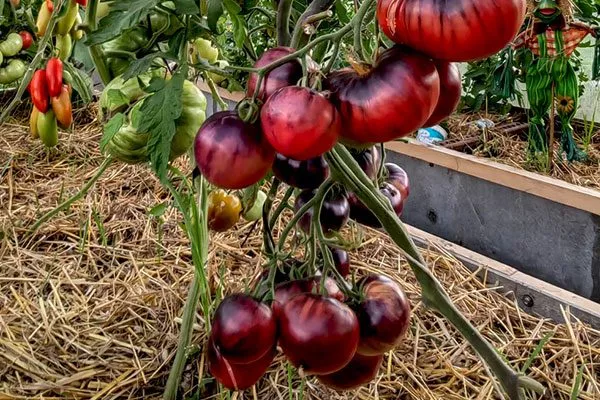
Description of the variety
The Siberian Tiger variety grows tall, indeterminate bushes. In a greenhouse, they reach a height of 1.6-1.8 m. In the open ground, the bushes are slightly shorter. The leaves are rich green, and the flower stalks are robust, bearing numerous ovaries. Six to seven fruit clusters form on a single stem.
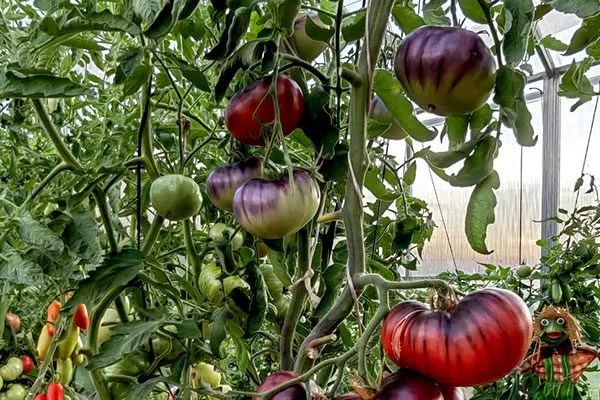
Brief description of fruits:
- Unripe fruit color: light green, with barely visible stripes.
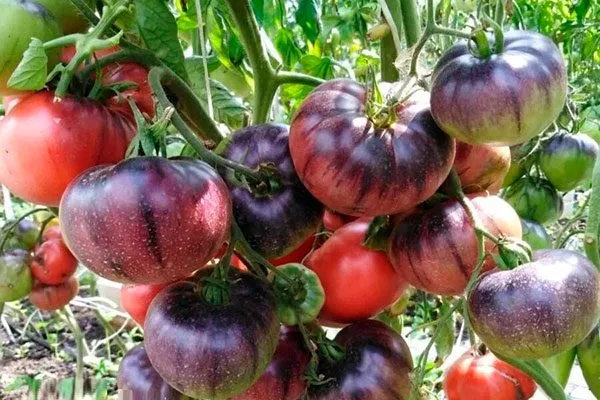
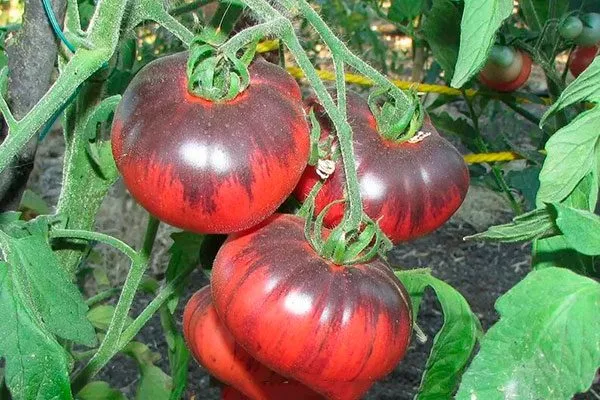
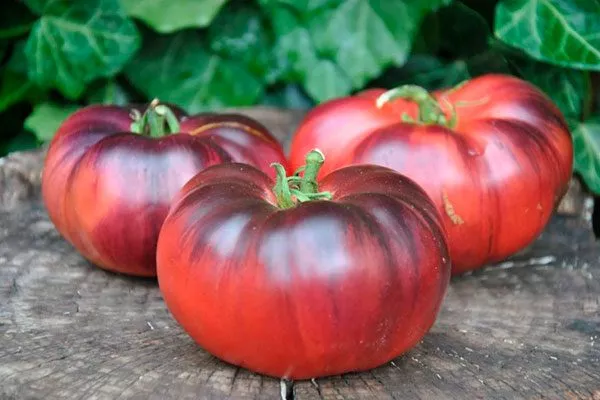
- Color of ripe fruit: crimson with dark purple strokes.
- Form: flat-round.
- Weight: 150-200 g
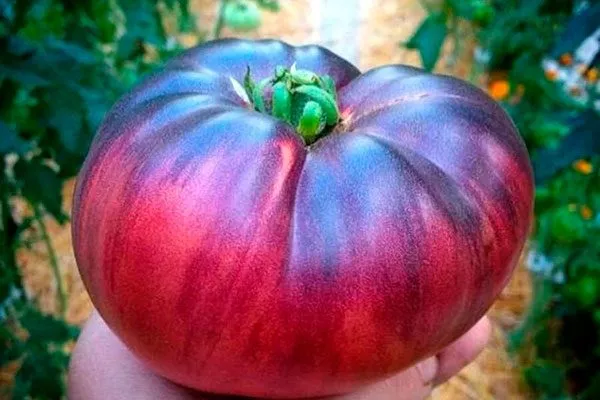
The fruits are multi-chambered, and the brightness of their color depends on the amount and intensity of direct sunlight. The tomatoes have red flesh and small, numerous seeds.
The taste of fruits and their purpose
The fruit has a pleasant, delicate, sweet flavor with virtually no acidity, combining rich tomato and fruity notes. The flesh is buttery and juicy. The fruit is versatile and can be eaten fresh, slicing, or used in salads.
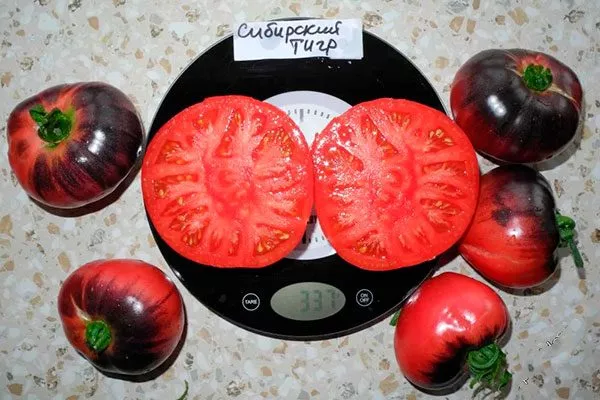
Ripe tomatoes are used to make pastes and lecho, purees and sauces, and tomato juice. The fruits are ideal for stewing, baking, making ragouts, and other dishes. They retain their beneficial properties even after cooking.
Characteristics
Before planting the American Siberian Tiger tomato in your garden, it's important to familiarize yourself with all its characteristics. If you're interested in this unusual variety, consider its key agronomic characteristics.
Ripening time
The Siberian Tiger Pink tomato is a mid-season variety. It takes 110–120 days from germination to ripening of the first fruits.
Productivity
The average yield of this tomato is 12 kg per square meter. When grown in greenhouse conditions, approximately 10 kg of tomatoes are harvested from a single bush.
Immunity to diseases
The Siberian Tiger variety has a fairly high resistance to common nightshade diseases. However, under unfavorable conditions, there is a risk of fungal and bacterial infections.
Pros and cons
Before planting any new tomato seedlings or purchasing ready-made saplings, it is recommended to familiarize yourself with all the advantages and disadvantages of the variety you are purchasing.
Landing features
The Siberian Tiger Pink variety is grown from seedlings. The finished seedlings are transplanted into open ground or a greenhouse. Sowing in open ground is not practiced when growing this variety.
Planting container
If you plan to grow seedlings without transplanting, you can sow them directly into individual containers—peat pots or plastic cups with a capacity of 350-500 ml. If you plan to transplant seedlings by transplanting them into individual containers, pinching out the central root. Tomatoes can be sown in trays or larger containers.
Containers for sowing and growing seedlings should have drainage holes in the bottom to allow excess moisture to escape. Otherwise, the risk of blackleg, a very dangerous fungal disease for seedlings, increases.
Fill the empty container with any universal substrate designed for growing seedlings. You can also use a mixture of humus, sand, and peat, mixed in equal parts. Another option for preparing a potting mix is to mix Terra Vita substrate, garden soil, agrovermiculite (for loosening), and sifted wood ash.
How to prepare seeds for sowing?
Seeds purchased from the manufacturer are usually completely ready for sowing - pelleted or encrusted, they do not even require soaking.
If self-collected seed is used for sowing, it must be processed according to all agricultural practices:
- Check for germination in a saline solution. Dissolve 1 teaspoon in 200 ml of water. Soak the seeds for 20 minutes. Any non-germinating seeds will float to the surface and be discarded.
- The seeds are disinfected in a 1% potassium permanganate solution or 3% hydrogen peroxide for 10 minutes. After treatment, the seeds are washed and dried.
- To speed up germination and increase plant yields, seeds are treated with growth stimulants, such as Epin. Alternatively, you can use folk remedies such as aloe vera juice, honey, or wood ash infusion.
- Germinate the seeds in a damp cloth. Moisten the cloth with warm water (20…25°C). Sprouted seeds germinate twice as fast as dry ones.
Growing seedlings
Tomato seeds for seedlings are sown 60-65 days before the expected planting date. The prepared soil is watered with a spray bottle, after which the dry (coated) or sprouted seeds are planted.
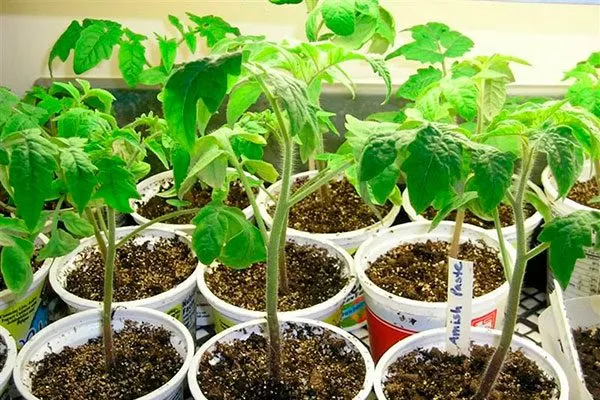
Features of sowing Siberian Tiger tomato seedlings:
- If sowing seeds in large containers, make furrows in the leveled and moistened soil. Space adjacent furrows 3-4 cm apart. Space seeds 2.5-3 cm apart.
- The seeds are buried 1 cm deep in the substrate and covered with a thin layer of soil. The crops are sprayed with warm, settled water.
- If sowing is done in separate containers, then 3-4 pieces are planted in each to ensure 100% germination and to select the strongest sprout.
Cover the seeds with a transparent material—polyethylene film or glass. Place them in a bright, warm room. Keep away from windows; the light should be moderate. Until the seedlings emerge, ventilate the "mini-greenhouse" daily.
Until the seedlings emerge, maintain the temperature indoors (or in a greenhouse) at 25°C to 28°C. As soon as the sprouts begin to emerge from the soil, remove the covering immediately to prevent overheating. The temperature is significantly reduced to 14°C to 16°C during the day and 10°C to 12°C at night. This prevents the seedlings from stretching.
Features of seedling care:
- Before picking, seedlings are watered rarely - once a week.
- A week after the emergence of seedlings, the temperature is raised again to +22…+25 °C.
- During the first week, seedlings require 24-hour light. Therefore, artificial light should be provided. Over time, daylight hours are reduced to 11-12 hours.
- Seedlings are pricked out at two weeks of age. After pricking out, watering becomes more frequent—2-3 times a week. Use only warm, settled water.
- The optimal air humidity for growing seedlings is 60-70%.
- After transplanting, the seedlings are fed with complex mineral fertilizers. Fertilizer application frequency is once every two weeks.
- Hardening off the seedlings begins two weeks before transplanting them into the ground or greenhouse. The containers with tomatoes are placed outside, briefly at first, and gradually increasing their exposure time to 8-10 hours.
How to choose a site?
The Siberian Tiger Pink tomato is grown in an open, warm, well-lit location, free from drafts and gusty winds. When planting tomatoes, follow crop rotation rules—they should not be planted after potatoes, peppers, eggplants, or other nightshade crops.
The best predecessors for tomatoes are cucumbers, cabbage, onions, greens, pumpkins, and garlic. The site should be level; tomatoes can also be planted on slopes. They should avoid lowlands where water stagnates.
The Siberian Tiger Pink tomato should not be grown in high groundwater conditions, as this significantly increases the risk of late blight.
Preparing the beds
The soil for growing tomatoes should be loose, fertile, permeable to water and air, and neutral or slightly acidic. If the soil lacks nutrients, add organic matter such as compost or humus to the soil before digging.
In open ground or greenhouses, add 20 liters of rotted manure, 10 liters of river sand, and 5 liters of wood ash per square meter. In acidic soils, add deoxidizing agents, such as slaked lime.
Tomato beds are formed in beds 1-1.2 m wide and 0.4-0.6 m high. In open ground, the length of the beds is determined by the number of seedlings being planted; in a greenhouse, it is determined by their size.
Transplanting
Tomato seedlings are planted outdoors between approximately May 15 and June 5, and under plastic, in greenhouses, and hotbeds a couple of weeks earlier. They are planted outdoors only after the weather has become consistently warm and the threat of frost has passed.

Features of planting Siberian Tiger seedlings:
- For seedlings, dig holes about 15 cm deep. The recommended planting pattern is 40 x 50 cm.
- Add a small amount of organic fertilizer, superphosphate, and wood ash to the bottom of the holes and water. After half an hour or an hour, plant the seedlings.
- The seedlings are planted into the holes using the transshipment method. The seedlings are planted in peat pots along with biodegradable containers.
- Planted tomatoes are watered; when the water is absorbed, the soil is mulched.
If there is a risk of a critical drop in temperature at night, it is recommended to cover seedlings planted in open ground with film at night.
Care Features
This American tomato with its unusual fruits requires very basic care. Because the bushes are tall, watering and fertilizing require several other important steps, including staking, shaping, and removing lower leaves.
Watering
Don't water the planted seedlings for about 10 days, unless there's extreme heat. Thereafter, water the tomatoes about once a week. The recommended amount is 10 liters of water. Apply water at the roots, avoiding splashes on the leaves and stems.

Water requirements increase sharply during fruit set. Once fruiting begins, watering frequency is reduced. If water is insufficient, leaves darken and droop. If these signs appear, the tomato plants need watering.
Loosening
After each watering or rain, tomato beds are loosened and weeded. After loosening, the soil can be mulched with organic matter such as hay, straw, compost, etc.
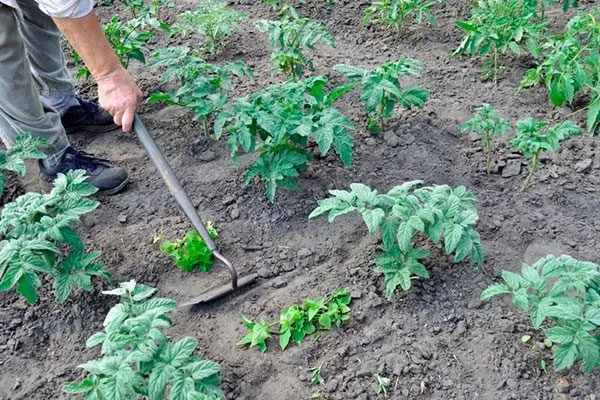
Two to three weeks after planting, the tomatoes are hilled. This procedure is then repeated a couple more times—when the lower part of the stem turns blue and when aerial roots appear.
Fertilizing
The Siberian Tiger tomato is fed alternately with organic and mineral fertilizers. At the beginning of the growing season, organic fertilizers and nitrogen-rich compounds are applied, as nitrogen promotes the growth of green mass.
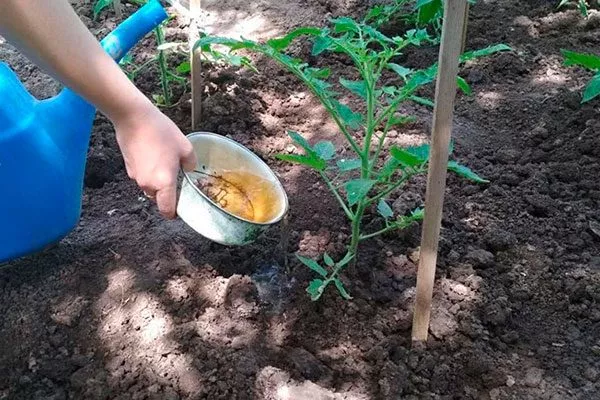
Once the ovaries appear, begin applying fertilizers high in potassium and phosphorus. The bushes can also be fed with vermicompost – dilute 5 ml per 1 liter of water.
Shaping and garter
The Siberian Tiger tomato is trained with one or two stems. When grown outdoors, two or three shoots are left. The bushes require staking and pinching. Side shoots should be removed promptly—they shouldn't grow longer than 5 cm.
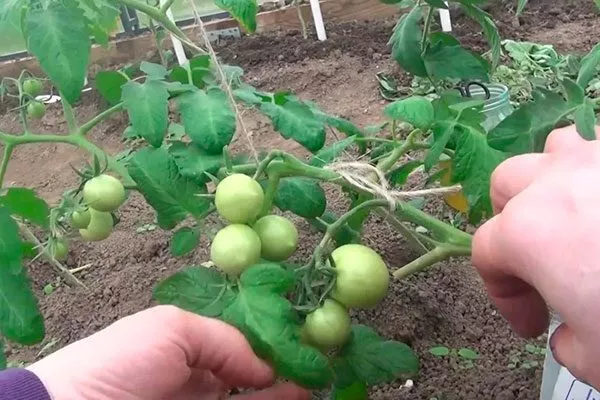
Side-shooting is done in the morning, on a sunny day. Remove side-shoots with pruning shears or garden shears. It's also important to remove the lower leaves promptly—when the fruit on the second cluster begins to ripen.
Diseases and pests
The Siberian Tiger tomato has high immunity to diseases, including viruses. However, poor agricultural practices combined with unfavorable weather conditions increase the risk of powdery mildew.
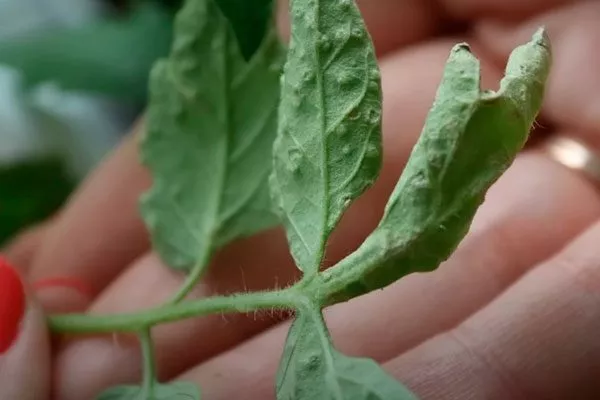
To combat fungal diseases, fungicidal preparations such as Skor, Topaz, Hom, and Quadris are used. Biological preparations such as Fitosporin-M, Gamair, and Baktofit are also effective in combating infections. Folk remedies such as whey, soda solution, and ash solution are also effective.
The most dangerous pests for the Siberian Tiger tomato are aphids, whiteflies, and spider mites. Nematodes, mole crickets, and thrips are also dangerous. To control insects, it is recommended to use specialized products, such as Confidor.
Harvesting
The harvest is in July and August. The fruits are picked for consumption at biological maturity. Unripe tomatoes are used for storage, but keep in mind that they have a short shelf life. For storage and transportation, tomatoes are stacked in low boxes, in a single row.
Reviews
The Siberian Tiger Pink tomato is a variety sure to appeal to seasoned gardeners and lovers of unusual tomatoes. If you love pink tomatoes and prefer varieties with uniquely colored fruits, then the Siberian Tiger is perfect for you.