
The Siberian Pirouette tomato is a widespread variety created by Russian breeders. This vegetable can be grown outdoors, under plastic, or in greenhouses. It is a compact plant with limited growth, classified as a mid-early variety.
Description of the bush and fruits
The Siberian Pirouette tomato is a low-growing, determinate plant reaching a height of 50 to 60 cm. These bushes are characterized by compact growth, moderate leaf density, a straight central shoot, a moderate number of branches, developed roots, and simple inflorescences.
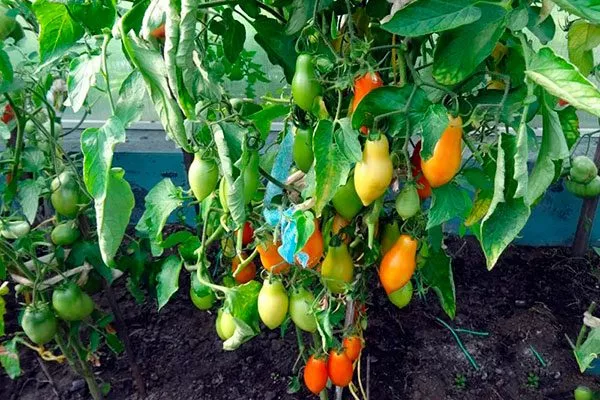
Biological characteristics of tomatoes:
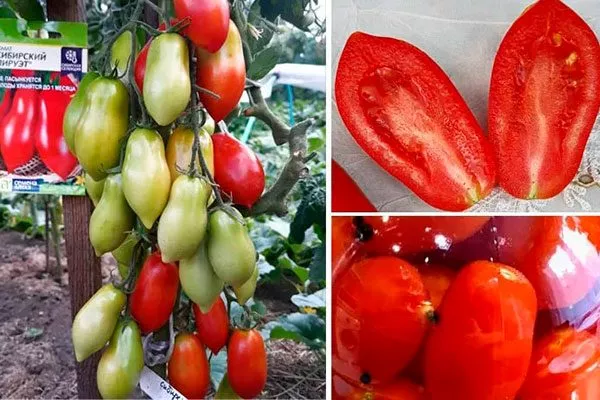
- This tomato belongs to the category of medium-sized nightshade tomatoes. The average fruit weight ranges from 65 to 70 g. The fruit is cylindrical with a noticeable beak on one side and a narrowing at the base.
- When ripe, the tomato is uniformly red in color, and when ripe, it has a light green tone without dark spots.
- The vegetable's skin is firm, smooth, and shiny. Beneath it lies elastic, firm, and juicy flesh with a small number of seeds arranged in 2-3 locules.
Main characteristics and history
When growing tomato plants, it's important to train them correctly and tie them to supports promptly, even given their relatively short stature. Pinching out side shoots is not necessary in this case, as new shoots develop very slowly, making the plant easier to care for.
Selection, regionality
A group of renowned Russian breeders, including Kudryavtseva, Kotelnikov, Fotev, and Kondakov, worked to create a unique tomato variety capable of producing a harvest even in conditions of insufficient heat and moisture, typical of regions with a moderately cold climate and a short growing season.

This variety, named Siberian Pirouette, was introduced in 2007 and was subsequently registered in the State Register of Breeding Achievements of Russia and approved for seed production in 2008.
The tomato is especially suitable for cultivation in various climatic zones of Russia, including the Far East, Central Black Earth, Northern, Volga-Vyatka, North Caucasian, Lower Volga, Ural and Central regions.
Storage and transportability of fruits
The Siberian Pirouette tomato is resistant to cracking, easy to transport, and has a long shelf life in cold storage—fresh fruits can be stored in the refrigerator for up to three to four weeks. If stored at room temperature, the shelf life can be extended to two months.
For long-term storage, it is important to follow certain conditions:
- the fruits should be placed in several layers in a small container;
- lay paper on top;
- Check periodically for spoilage.
Transportation is also easy, thanks to their strong skin and limited water content, which allows them to be shipped over long distances without losing quality or appearance.
Ripening and fruiting, productivity
Siberian Pirouette is a mid-season crop. It takes 104-108 days from seed germination to the time the tomatoes ripen in the fruit clusters. The tomatoes ripen in unison, allowing them to be harvested as whole clusters.
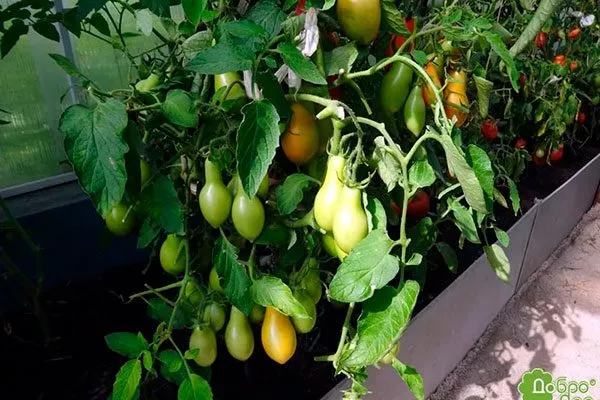
The flavor can be appreciated by midsummer, with the peak season lasting from July 20 to September 10. The variety is considered highly productive – with proper care, a yield of 6-6.5 kg can be harvested from 1 square meter of planting. In greenhouse conditions, the yield can be even higher.
Some tips:
- When cultivating, it is recommended to form bushes from one or two shoots if the tomato is grown in a garden bed, or from three to four vines if a film greenhouse is used.
- Despite its low growth, it is necessary to provide support to the stems and branches by installing special supports or trellises.
Resistance of Siberian Pirouette to diseases and pests
This tomato variety inherits its parent's high resistance to various diseases and insects. It is particularly resistant to fungal diseases, including late blight, early blight, verticillium wilt, and septoria wilt.
This is enhanced by the variety's rapid ripening, allowing it to produce a harvest before the September cold snap and increased humidity that favor the spread of infections. A small canopy of leaves and good ventilation also prevent the spread of fungal diseases.
This variety is rarely affected by pests; it is completely resistant to the Colorado potato beetle and its larvae, and rarely suffers from attacks by greenhouse whiteflies and aphids.
However, one should not completely trust natural resistance:
- In conditions of high humidity, it is important to carry out preventative spraying with fungicides to maintain plant health;
- In case of a mass appearance of pests in the area, treatment with insecticides may also be required.
Use of the harvest
These vegetables are deservedly popular among gardeners and farmers – the tomato pulp is dense and rich, and there is no excess of seeds or white pulp inside the fruit.
The classic sweet and sour taste of the tomato is harmoniously combined with the characteristic tomato aroma inherent in many varieties of nightshade.
The Siberian Pirouette tomato is distinguished by its universal use:
- it can be eaten fresh;
- can whole;
- processed into sauces, pastes, adjika, etc., except for tomato juice.
Growing the Siberian Pirouette tomato variety
Siberian Pirouette tomatoes can be grown using seedlings or directly from seeds, depending on the climate of the region. The plant's small size makes it easy to provide protection from the elements, even if grown outdoors.
Sowing seeds and growing seedlings
Seeds are sown for seedlings in March, 60-65 days before transplanting into the garden, taking into account the specific climatic conditions of the growing region. Most Siberian Pirouette seeds available in retail do not undergo any additional processing before packaging.
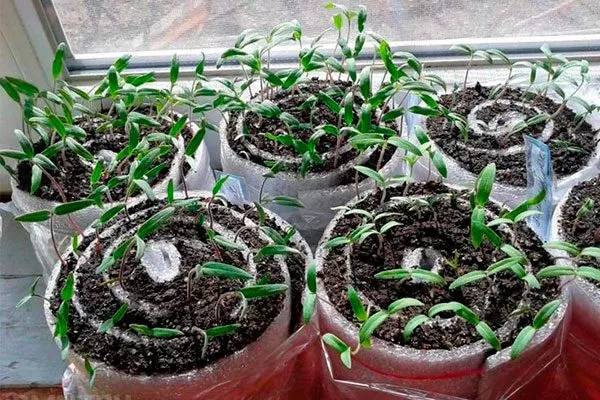
This allows you to save on the purchase, but requires additional work to improve the germination of seeds at home:
- the planting material is placed in a weak solution of manganese for 20 minutes for disinfection;
- then the seeds are soaked in a special solution to stimulate growth, such as Epin or Fitosporin, to enhance their growth and strengthen them;
- To stimulate germination, the grains are placed in a damp cloth and placed in a warm place for several days.
Experienced gardeners strongly recommend not skipping this step, even if the manufacturer claims dry sowing is possible. According to their observations, sprouted seeds have a higher germination rate.
Using prepared soil is the preferred option, as it contains the ideal amount of all the necessary components. However, those who prefer can create their own soil mix by weighing equal parts garden soil, compost, sand, and peat.
The process is as follows:
- the container is filled halfway with soil mixture;
- seeds are sprinkled on the surface;
- sprinkle with a thin layer of substrate with a thickness of 1-2 cm;
- all of this is carefully sprayed from a spray bottle and covered with plastic film;
- the mini-greenhouse is placed in a warm place until the tomatoes sprout;
- after all the seedlings have hatched and become a little stronger, the cover is removed;
- the plant is transferred to a cooler, but brighter place;
- During the first week, experts recommend maintaining the temperature within the range of +15…+17°C, and then raising it to +22°C.
The picking procedure is carried out when 1-2 true leaves appear on the young plants.
Planting in the ground
Before transplanting tomatoes to their permanent location, especially if it's outdoors, they need to acclimate. A week before transplanting, begin acclimating the seedlings to the new conditions by placing them outside, on a balcony, or on a veranda. Initially, limit the time spent outdoors to one hour, but then you can leave the tomatoes outside all day.
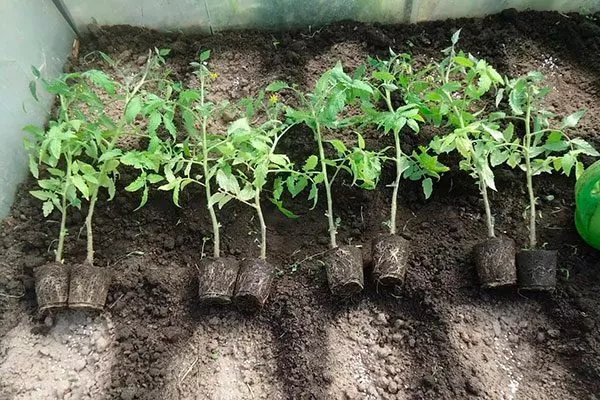
The soil should be warmed to 15 degrees Celsius, otherwise the tomatoes may freeze, which will lead to their death or significantly slow down their adaptation to the new location and growth. The planting pattern can be quite dense: it is recommended to leave a distance of 30-40 cm between plants.
Transplantation instructions:
- Dig holes about 25-30 cm deep, but the width should be sufficient to allow the root and soil from the cup to fit freely.
- Add ash, onion peels, and other fertilizers to the holes. They should be carefully watered and covered with soil to avoid burning the roots. If the soil was well fertilized in the fall, there's no need to add any fertilizer when planting tomatoes.
- Remove the seedlings from the pots and carefully transfer them to the holes.
- Place each seedling and cover with soil.
- To retain moisture in the soil and slow down the germination of weeds, cover the surface of the bed with mulch.
Care, watering and fertilizing
The Siberian Pirouette tomato is easy to care for and thrives with minimal attention. Although these plants are short, they should still be secured to supporting structures to ensure good ventilation and even light. Furthermore, caring for staked tomatoes is easier and more convenient.
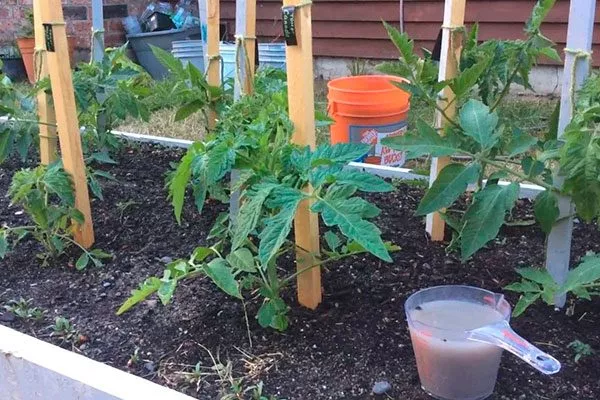
Other important events:
- The plant develops into 1-2 main stems, depending on cultivation methods: in southern regions, where it is grown in open ground, more shoots can be allowed, but the yield will be somewhat smaller.
- Irrigation requires special attention. Insufficient water can lead to increased acidity in the fruit. Therefore, it is recommended to use a drip irrigation system to evenly distribute water throughout the soil.
If such a system is not available, water with settled water. At the start of the growing season, 5-6 liters of water per square meter will be needed, with intervals of 5-6 days. During the flowering period, the volume of water increases to 15 liters, and the frequency increases to twice a week. - Fertilizers should be applied to the soil no earlier than 10 days after transplanting tomatoes. Many gardeners prefer biofertilizers such as weed meal, ash, or mullein. For those who prefer ready-made mixtures, stores offer a wide range of products, such as Signor Tomato.
During the growing season, tomatoes are typically fertilized 3-4 times at each stage of their development. Fertilizer should be applied after rain or watering. - Another important aspect of care is weeding, which also involves loosening the soil. This improves air flow to the roots and reduces the risk of diseases and pests caused by weeds.
Pros and cons
Cylindrical tomatoes, gathered in neat clusters on the bush, immediately attract attention with their appearance. This variety possesses a number of unique characteristics that make it very popular among gardeners.
The main advantages include:
Like any variety, it has some drawbacks. In this case, it's susceptible to drafts and requires proper bush training.
Reviews
The Siberian Pirouette variety has many advantages: it's cold-hardy, making it ideal for northern climates, and it's disease-resistant. Therefore, it's an excellent choice for those looking to grow tomatoes in harsh conditions, especially if they plan to preserve the harvest. However, those looking for sweet and juicy tomatoes for fresh consumption should consider more flavorful hybrids.