
The Siberian Dwarf tomato is highly productive and is considered one of the best tomato varieties. Developed for the cold Siberian region, it adapts to sudden temperature changes and produces a good harvest even with limited sunshine. It is also characterized by low susceptibility to disease.
Description of the bush and fruits
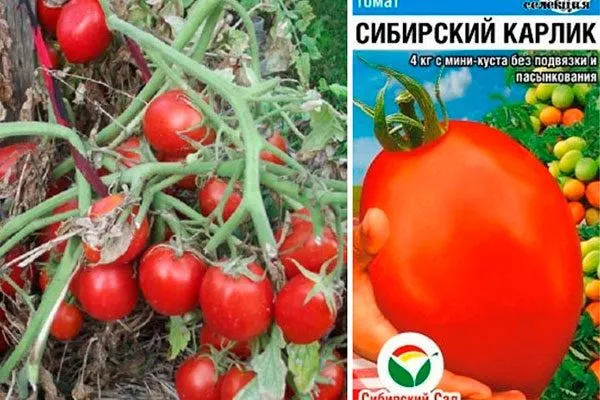
The plants are compact and low-growing, reaching 25 to 35 cm in height. This factor inspired the breeders to give the variety its name.
Other varietal characteristics:
- The bush is standard, characterized by a strong stem resembling a thin trunk. The main shoot ceases growing when it reaches a certain height, which is one of the hallmarks of determinacy.
- The leaves are small in size and have a typical tomato shape, with dense foliage.
- The taste of the fruit is harmonious: sweet notes are combined with a slight sourness, while the sugar content is high.
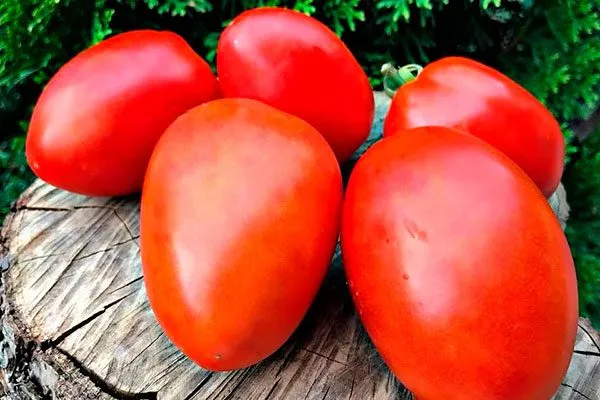
- The tomatoes are relatively large compared to the bushes. The average weight of Siberian Dwarf tomatoes is 150-180 g, with some reaching 200-210 g.
- The skin is quite strong, with a traditional tomato-red tone and shine.
- The flesh is firm and fleshy, with a grainy texture when cut. The seed chambers inside are small—no more than four in number—and the seeds inside are small and barely noticeable when eaten.
Main characteristics and history
In 2018, the Siberian Dwarf tomato variety, developed by Novosibirsk-based agrofirm Siberian Garden, which is known for its own crops adapted to local climate conditions, entered the market.
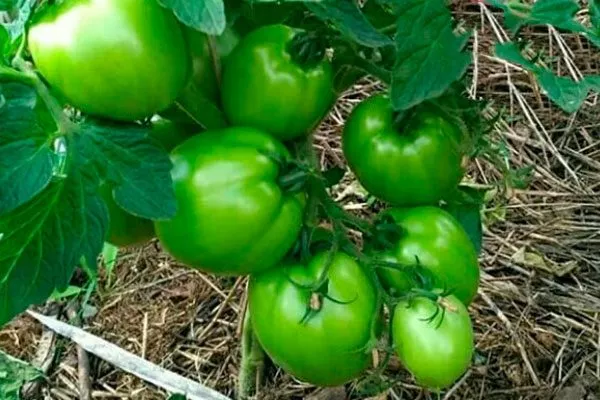
The Siberian Dwarf variety can easily withstand changes in weather conditions without losing productivity. However, the variety is not yet registered in the Russian State Register, and there is no information on whether its creator has submitted the necessary documents.
The main characteristics of the Siberian Dwarf are typical for varieties with standard trees:
- Fruitfulness. The yield reaches 4 kg per bush, which equates to approximately 8-9 kg of tomatoes per square meter of garden bed. Fruiting occurs in clusters, which form on each stem at intervals of one or two leaves, confirming the high productivity of this variety despite its small size.
- Protection from pathogens and pests. The manufacturer doesn't provide information on the Siberian Dwarf tomato variety's resistance to various diseases or whether it possesses an innate immune mechanism. However, growing experience shows that it has good resistance to fungi and viruses:
- Tomatoes are rarely susceptible to diseases, even when weather conditions are favorable for the proliferation of pathogens;
- Thanks to the relatively rapid ripening of the crop, the risk of infection with the most dangerous late blight is reduced to a minimum.
- Application. Vegetables are excellent for eating raw—in salads and sliced. They're also used in soups, main courses, sauces, homemade ketchup, and tomato paste.
Homemade preserves are especially delicious. These tomatoes fit easily into jars whole, and when pickled or marinated, the skins don't crack, retaining their vibrant color, and the flesh doesn't lose its consistency. - Ripening time. The ripening period is average, allowing you to enjoy the first harvest within 100-105 days after the sprouts emerge in pots. In southern regions, this period can be reduced to 90-95 days. The mass harvest of Siberian Dwarf begins on July 10 and continues until September 10-15.
Features of growing the Siberian Dwarf tomato variety
Siberian Dwarf is an ideal tomato variety for intensive planting, requiring no support or training. You can grow it using traditional seedlings or by sowing seeds directly into the soil. Sowing time varies by region. Typically, seedlings take 50 to 65 days to germinate and develop.
Sowing seeds and growing
You can collect seeds yourself, but Siberian Dwarf tomato seeds are small and often underdeveloped. Therefore, it's recommended to purchase them from specialized suppliers.
Industrial seeds usually undergo special treatment, including disinfection and growth stimulation, which eliminates the need for additional measures for their preparation.
Sowing work
For growing tomato seedlings, it's best to use prepared soil that meets their needs. However, many gardeners prefer to prepare their own substrate by mixing equal parts of garden soil, sand, peat, and humus. This soil should be treated to kill pathogens by baking it in the oven or soaking it in potassium permanganate.
Sowing process:
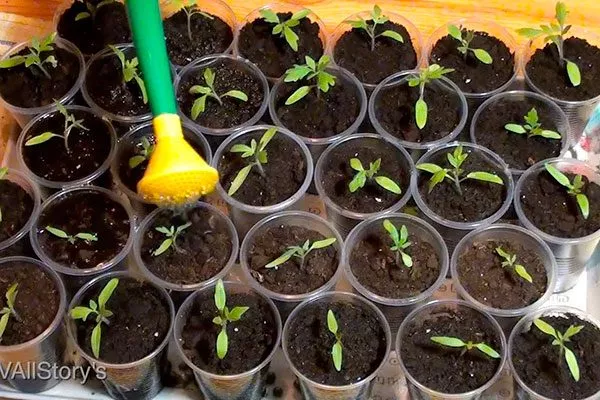
- Fill the selected planting container halfway with potting soil. To maintain optimal moisture levels and reduce the risk of overwatering or drought, it is recommended to add vermiculite to the soil (approximately 15% of the total volume).
- Create furrows about 15 mm deep and place the pre-sprouted seeds into them. Some gardeners use dry planting material, but to improve germination, it's best to pre-sprout it. This is a simple procedure that takes only 2-3 days. Place the seeds in a damp cloth and keep it in a warm place. The cloth should be moistened periodically to prevent it from drying out completely.
- After planting, moisten the surface with a spray bottle, cover with glass or plastic, and move to a bright, warm location. To prevent condensation, remove the cover regularly.
Moisturizing
Caring for tomato seedlings includes watering. To ensure healthy plants, water them moderately, depending on how dry the soil is (on average, once a week when the plant has 3-4 leaves, and twice a week when it has 5-6 leaves).
Recommendations:
- For watering, use settled water at room temperature. Meltwater or rainwater is best, as it is less hard than tap water.
- To avoid burning the plant leaves, apply water at the roots using a small watering can. You can also use a syringe without a needle, directing the stream near the main root to avoid damaging the delicate shoots.
- Young seedlings have roots in the topsoil, so over-drying the surface can negatively impact their development. On the other hand, excess moisture can cause stems to turn yellow and root rot.
Temperature conditions
To prevent shoots from elongating, immediately after they emerge, the room temperature should be reduced to 15-17 degrees Celsius during the day and 11-13 degrees Celsius at night. This regimen continues for a week, after which the thermometer reading rises to 23-25 degrees Celsius during the day and 15-17 degrees Celsius at night.
The microclimate is controlled through a window, and curtains can be used to provide protection from direct sunlight. Drafts can kill seedlings, but small temperature fluctuations can strengthen the plants, promoting stronger, healthier growth.
Lighting
For optimal growth, provide adequate light. It's best to place seedlings on windowsills with south-facing sunlight.
Please note the following rules:
- To enhance lighting, phytolamps are used, and in exceptional cases, fluorescent lamps;
- During the first three days, lighting is maintained around the clock, then for 10-11 days, lighting is provided in the morning and evening;
- It is necessary to periodically rotate the seedlings so that all the plants are evenly illuminated and do not lean to one side.
Fertilizing and picking tomatoes
Regular fertilizing is essential for healthy seedlings. The first feeding is done 11-13 days after transplanting to allow the plants to recover from stress. Subsequent feedings are done every two weeks.
When the first two or three leaves appear on the seedlings, it's time to transplant. This process is accomplished in two ways:
- First This involves transferring seedlings from a common container into individual cups with a capacity of approximately 500 ml. These are filled with substrate to a depth of two-thirds. The day before transplanting, the seedlings should be well moistened so that they can be transferred with a small lump of soil.
You should carefully trim the roots from below and on the sides, and deepen the seedlings to the level of the cotyledon leaves, and water them lightly. - Second - This is a method of transplanting seedlings, where they are placed in trays. In this case, the entire clump containing the seedling is removed from its container and placed in a new container without trimming the root shoots. No special watering is required before planting.
To reduce stress levels after picking, it is recommended to feed them with special fertilizers - Epinon-extra or Zircon.
Hardening
Before the seedlings are planted in open ground, they need to be helped to adapt to the new conditions:
- two weeks before the expected planting, begin to open the window, gradually increasing the time the plants are exposed to fresh air;
- The seedlings are taken out onto the veranda or glazed balcony, first for just a few minutes, and then throughout the day.
- Gradually acclimate the seedlings to the outdoor climate, leaving them outside successively for 2, 4, 6 hours a day, while protecting them from direct sunlight.
Three days before planting, the seedlings are no longer brought in overnight and are no longer protected from the sun, while their condition is closely monitored.
Planting in the ground
Before planting, monitor the soil temperature: at a depth of 20 cm, it should be at least +12°C. Otherwise, the tomatoes will be stunted and lose vigor until warmer weather arrives.
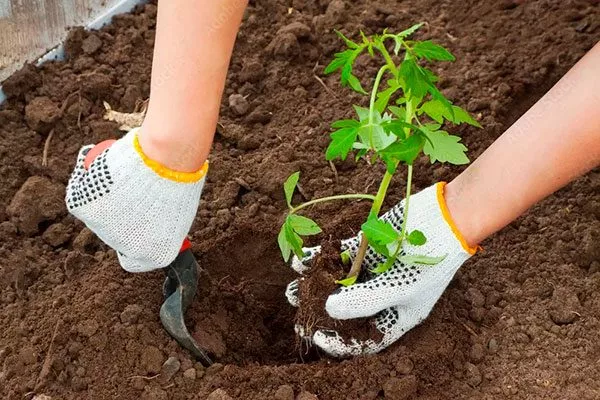
Preparing the garden bed for planting begins in the fall, with the garden being dug over and fertilizer added. This process is repeated in the spring, after which holes are dug about 25-30 cm deep.
The Siberian dwarf has a compact size, so you can reduce the distance between holes to 30-40 cm, but you need to leave at least 60-65 cm between rows for ease of care and harvesting.
The transplant process is as follows:
- A week before planting, fertilize the bushes using a growth stimulant, for example, Epinon-extra (1 ml per 5 liters of water), or any liquid vermicompost mixture.
- An hour and a half before planting, spray the seedlings with water to make them easier to remove from the container.
- Form the holes in a checkerboard pattern.
- Protective arcs are installed.
- Add 2 teaspoons of superphosphate or wood ash with a small amount of compost to each hole and mix with the soil.
- Cover with soil to avoid burning the roots.
- Moisten the holes with water.
- Place the seedlings up to the level of the cotyledon leaves.
- Firm the soil around the stems, carefully cover with soil, and mulch. To protect the bed surface from overheating and retain moisture, use sawdust or any other suitable mulch.
The subtleties of the seedless method
The optimal soil temperature for planting seeds directly into the garden is 12 degrees Celsius, although temperatures as low as 8-10 degrees Celsius are also acceptable. The temperature is measured at a depth equal to the bottom of the planting hole, which is usually about 20 cm.
At lower temperatures, tomatoes do not have time to take root and may simply lie dormant, remaining in the soil and exposed to the risk of disease.
Advantages of direct sowing of tomatoes in open ground:
- tomatoes grow more intensively;
- the bushes are formed more powerful, with a well-developed root system;
- plants are more resilient to temperature fluctuations and get sick less often;
- the fruits turn out larger;
- saves time that is usually spent on caring for seedlings.
The seedless method also has its drawbacks: it is not suitable for all regions, tomatoes ripen later, and yields decrease.
Care, watering and fertilizing
For full plant development, irrigation is required, similar to that required for other standard plants with shallow roots. The optimal amount of water for one plant is approximately 3-5 liters. However, it is important to ensure that the soil does not dry out more than 3 cm deep. During periods of insufficient rainfall, irrigation should be carried out every 3-5 days.
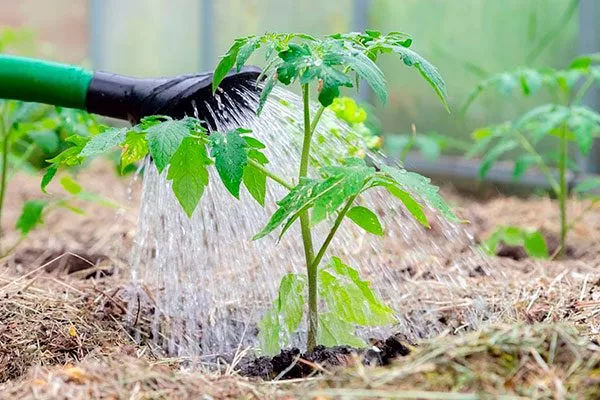
Mulching is an effective procedure that reduces the time and effort spent on loosening and weeding, which reduces the risk of root damage.
During the process of forming the bush, removing lateral shoots and tying, no additional measures are required, since standard procedures are carried out.
Fertilizing for this variety occurs in the following order:
- 1.5 weeks after germination;
- then after 14 days;
- after the first harvest.
The best fertilizers for this variety are ready-made fertilizers available in stores, which provide plants with all the necessary nutrients.
Resistance of the variety to diseases and pests
The crop has good resistance to fungal and viral infections, as well as pest attacks. The rapid ripening of the fruit significantly reduces the risk of late blight. However, if the garden or surrounding areas are affected, it is best to take protective measures.
In addition to preventative measures, it's important to treat seeds with a fungicide before planting. It's helpful to apply copper-containing preparations to plants and soil in the beds every 10-14 days, especially when variable weather conditions favor disease development.
Harvesting
The optimal time and correct approach to harvesting tomatoes directly depend on their ripeness. There are three main stages of vegetable ripeness:
- Biological – At this point, the plant stops developing, the seeds are fully formed and surrounded by a film, and the tomato's green color becomes lighter.
- Technical – This occurs approximately a week after the previous one, at a temperature of +25 degrees Celsius. The tomatoes acquire a color corresponding to their variety, and the inside turns pink.
- Consumer – The fruits reach full ripeness, accumulating the maximum amount of vitamins, sugars, and acids. Such tomatoes can be stored for only a few days.
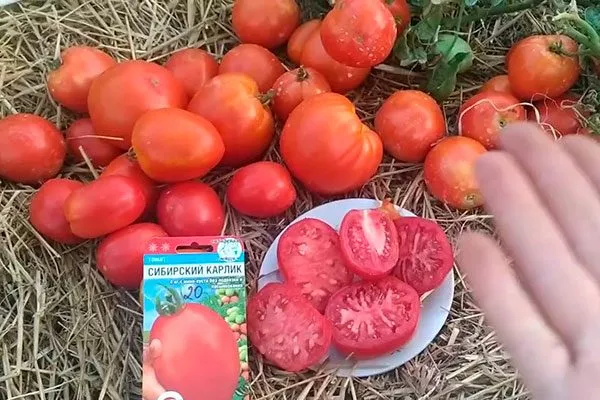
The timing for harvesting Siberian Dwarf depends on your future harvest goals:
- tomatoes intended for immediate consumption are harvested at the consumer stage;
- For transportation or preservation, vegetables in a technical grade that will ripen on their own within 5-7 days after harvesting are ideal;
- For the longest storage, tomatoes should be harvested at biological ripeness.
In central Russia, the first harvest is in July, and the last one is before the first frost. During the active fruiting period, the bushes are inspected daily, and every other day during the rest of the year. Damaged or diseased fruit must be removed to prevent widespread infestation.
Subtleties of preservation:
- To store tomatoes for up to three months, they are placed in wooden boxes with sawdust and left in a dark place at a temperature of 8 to 10 degrees;
- at a temperature of about 25 degrees and humidity of 80-85% in a ventilated room, biological stage vegetables fully ripen in 7-10 days;
- When the temperature drops, the process slows down.
Optimal storage and proper temperature control allow you to keep tomatoes fresh for a long time.
Pros and cons
The Siberian Dwarf tomato quickly gained popularity among gardeners after its market launch. This is due to its many advantages, including:
Standard tomatoes are often known for their mediocre flavor, but the Siberian Dwarf is a pleasant exception. No obvious flaws have been identified so far. However, some gardeners note that:
Reviews
The Siberian Dwarf variety was developed specifically for Russian regions with climate conditions less favorable for farming. This variety has only recently become available, but has already earned the recognition of many gardeners due to its compact size, high yield, stress resistance, strong immunity, and ease of cultivation.