
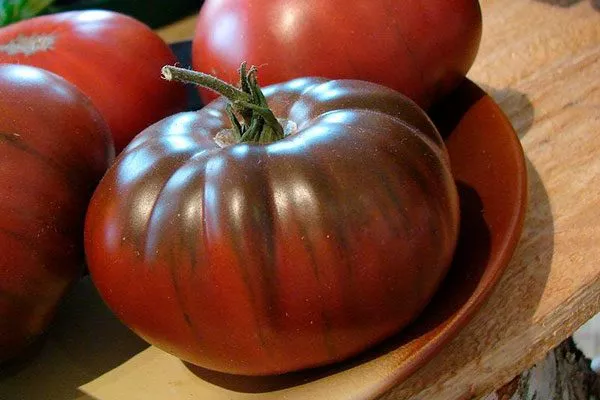
Chocolate Zebra is a popular tomato variety that attracts attention not only with its unique appearance but also with its excellent taste. These tomatoes are flat-round, chocolate-colored, and have distinctive stripes. They are ideal for fresh salads and are often added to culinary dishes.
Features of the variety, description of the bush and fruits
This medium-sized plant has a strong stem and moderate foliage. It reaches a height of 100-120 cm. Distinguishing qualities:
- leaves - standard shape, slightly elongated, light green in color;
- inflorescence – simple, 4 to 6 tomatoes are formed on one brush, and in total there can be up to 6 such clusters on the bush;
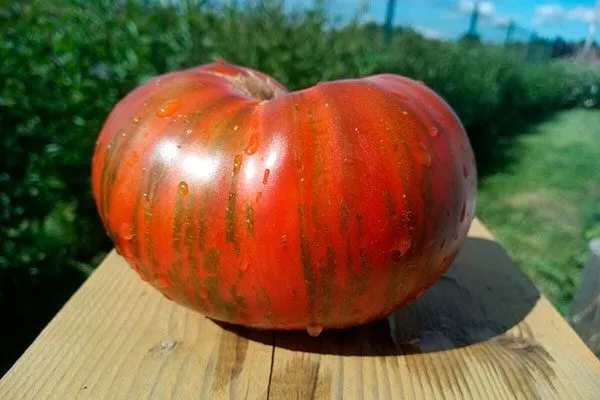
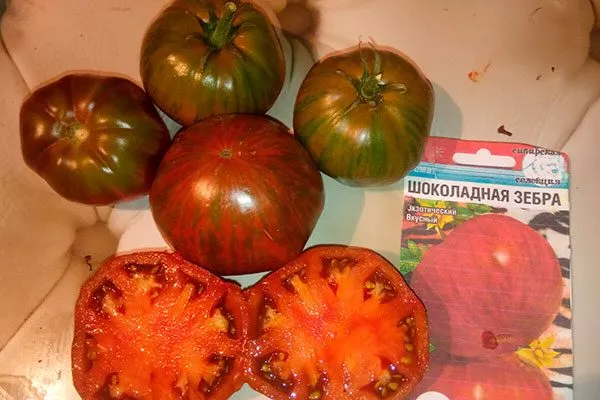
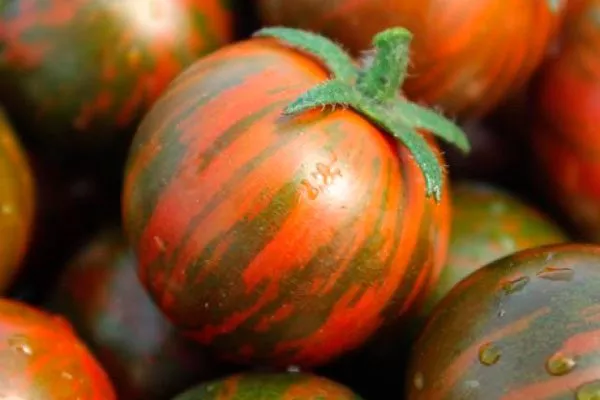
- coloring – original: a rich chocolate-brown background is crossed by thin stripes, they are quite large;
- weight - varies from 200 to 400 g;
- configuration – flat-round, slightly elongated;
- pulp – dense, grainy, fleshy, but juicy;
- skin – smooth and even.
The tomatoes taste sweet, without any pronounced sourness.
Main characteristics and history
The crop was developed by breeders at the Siberian Garden agricultural firm, known for its various varieties with high disease and cold resistance. Following testing, the variety was officially approved for cultivation in 2019.
Features of the culture:
- Ripening and fruiting, productivity. This mid-season variety has a growing season of 115-120 days. The yield per bush reaches 3 kg.
- Scope of application. Tomatoes are primarily used fresh. They're great in salads and other dishes, and retain their flavor well when frozen. They produce a rich paste and flavorful juice.
- Climate requirements. This variety is characterized by its high adaptability to challenging climatic conditions. The bushes produce flowers and fruit sets well, even in low sunlight and cloudy weather. They are frost-hardy and resistant to recurrent frosts.
- ✓ Resistance to low solar activity and cloudy weather.
- ✓ Frost resistance, ability to form flowers and ovaries during recurrent frosts.
Tomatoes thrive throughout our country, including Siberia. In most regions of Russia, they are successfully grown without cover.
Planting and care features
Chocolate zebra is grown from seedlings. It's best to plant in a well-lit, shade-free location.
- ✓ Optimum soil temperature for transplanting seedlings: +16°C.
- ✓ Distance between bushes when planting: not less than 50-60 cm.
Sowing seeds for seedlings
Sow seedlings 55-60 days before transplanting to a permanent location. To protect against diseases, pre-treat the seeds: soak them in a potassium permanganate solution for 20-30 minutes. Use individual cups or shared containers to obtain seedlings.
Follow these recommendations:
- Fill the containers with nutritious soil, moisten the soil and, after the water has been absorbed, plant the seeds deep.
- Sow two seeds per individual pot and space them 4cm apart in furrows in the containers.
- Cover the containers with transparent film until the seedlings appear.
After about two weeks, when sprouts appear, transplant the plants into larger containers.
Transplanting seedlings into the ground
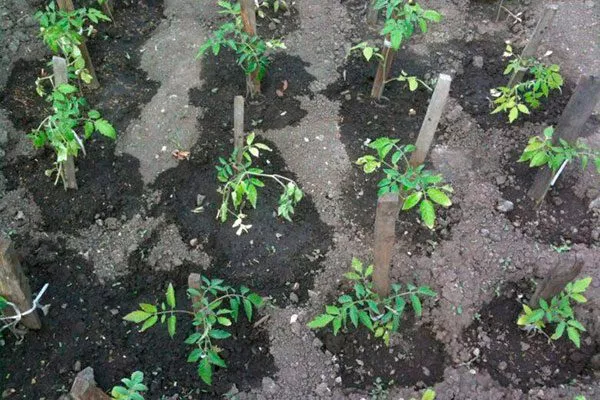
Transplant the seedlings after the danger of morning frost has passed and the soil has warmed to 16°C. In southern regions, this occurs in the first half of May, while in the northern part of the country, it occurs towards the end of the month or in June. Ideally, wait until the seedlings reach 30 cm in height and have 6-7 true leaves.
Rules for watering and shaping tomatoes
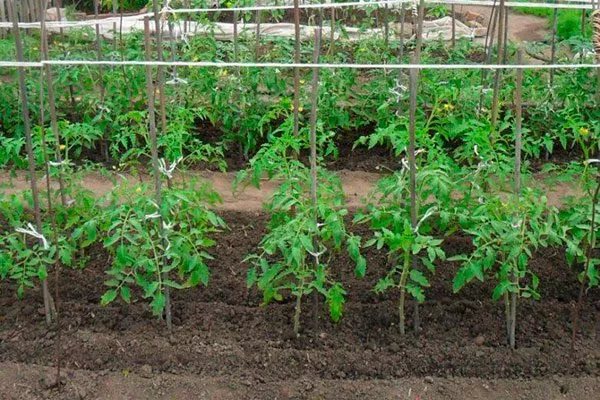
Moisten the bushes with settled, sun-warmed water to avoid thermal shock. Pour the water directly at the roots, as moisture on the leaves can cause late blight.
Follow certain rules:
- Before fruiting begins, water the tomatoes once a week, using 5 liters of water per bush.
- After watering, mulch the beds with sawdust or straw—this helps retain moisture in the soil. Light-colored mulch also reflects sunlight.
- The more lateral shoots, the smaller the fruits, so form the bushes into one or two stems.
Remove side shoots, preventing them from growing longer than 5 cm. Leave a small stump about 1 cm high to avoid damaging the plant.
Loosening, weeding, hilling
The soil under the bushes should remain loose, so loosen it after each rain or watering to prevent a crust from forming. Do this at least once every two weeks, preferably in conjunction with weeding.
Once the plants have grown, hill them up. Perform this process twice per season: once when root buds appear at the base of the stem, and again when a bluish tint appears at the base of the stem.
Fertilizing tomatoes
Fertilize the crop 3-4 times per season. For the most generous harvest, follow these recommendations:
- Chtwo weeks after planting the seedlings. At this stage, the plants should adapt to the new conditions and begin to grow actively. Apply phosphorus and nitrogen fertilizers. Repeat the process after two weeks, using the same fertilizers.
- IN the height of flowering or at the beginning of fruit growth. Phosphorus and potassium mixtures are the best choice at this time.
- IN fruiting period. Feed plants with potassium and phosphorus fertilizers.
Alternate mineral and organic formulations for best results.
Pest and disease control
To protect Chocolate Zebra tomato plantings from pests and diseases, it is important to adhere to certain requirements.
Additionally, take the following measures:
- compliance with crop rotation;
- pre-sowing soil treatment;
- timely application of fertilizers;
- correct and regular watering;
- preventing the transmission of diseases through seeds.
Bacterial infections can be treated with chemicals such as Fitolavin and Ordan. To control pests, spray the bushes with a soapy solution made from green soap or laundry soap.
Collection, storage
Tomatoes are considered ready for harvesting when they acquire a characteristic chocolate-brown color with stripes. To preserve the taste and quality of tomatoes, it is important to harvest and store them properly.
Helpful tips:
- Harvest vegetables when they're fully ripe, but you can pick unripe fruit if cold nights or rain are expected. This will protect them from rotting. Ripen them indoors at 20°C (68°F).
- Perform this procedure carefully to avoid damaging the tomatoes and bushes. It's best to cut them off with the stems attached to reduce the risk of damaging the skin.
- Store the harvest at 12-18°C in a dry, well-ventilated place. Avoid excess moisture, as this can lead to rotting.
- Place vegetables in a single layer, preventing them from touching. Wooden or plastic containers with ventilation holes are suitable for this purpose.
- Check your crop regularly for damaged tomatoes – remove them immediately to protect the remaining tomatoes.
- If you've picked green vegetables, keep them warm but out of direct sunlight. Turn them every few days to ensure even ripening.
A properly organized event is the key to preserving the appearance and taste of your vegetables. By following these recommendations, you'll be able to enjoy them for a long time, even after the season ends.
Pros and cons
The Chocolate Zebra variety attracts attention with its unique appearance and ease of cultivation. It has several advantages and some disadvantages.
Key benefits:
Some gardeners cite the need for preventative treatments and pinching as disadvantages, as well as the fact that the vegetables are not suitable for whole canning.
Similar varieties
| Name | Ripening period | Disease resistance | Adaptability to climate |
|---|---|---|---|
| Chocolate zebra | 115-120 days | High | High |
| Black pineapple | Late-ripening | Average | Average |
| Large striped boar | Mid-season | High | High |
| A treat | Mid-season | Average | Average |
This variety has several analogues that are similar to the Chocolate Zebra in characteristics. The main ones are:
- Black pineapple. A late-ripening variety with brown tomatoes accented with green stripes. The tomatoes are large, weighing no more than 700 g. Yields up to 8 kg per bush, making it an attractive choice among large-fruited varieties.
- Large striped boar. It features bright green fruits with orange stripes. The tomatoes are large (up to 400 g), and the bushes can grow up to 2 m in height. Productivity is good – up to 18 kg per square meter.
- A treat. A mid-season variety with yellow-green fruits that often have green streaks. The fruits are small, weighing between 120 and 150 g.
All of these varieties are excellent alternatives to Chocolate Zebra. They share similar characteristics, but each has its own unique characteristics. Growing several tomatoes at once will increase productivity.
Reviews
The Chocolate Zebra tomato lives up to its popularity thanks to its high productivity, disease resistance, and low maintenance. Its vibrant flavor, and the plants withstand temperature fluctuations, make it a successful choice for both open ground and greenhouse cultivation. This variety is ideal for beginning vegetable growers.