
The Chef tomato is the ideal choice for lovers of large, tasty vegetables. It is disease-resistant and produces fruit until the first frosts. Developed by renowned breeder A.V. Kudryashov at the Vashe Khozyaystvo company, it was approved for cultivation in 2018.
Description of the bush and fruits
Chef is an indeterminate variety, meaning the plant continues to grow and produce flowers after the lower fruits have ripened. The plant is quite tall, so it requires regular staking and shaping.
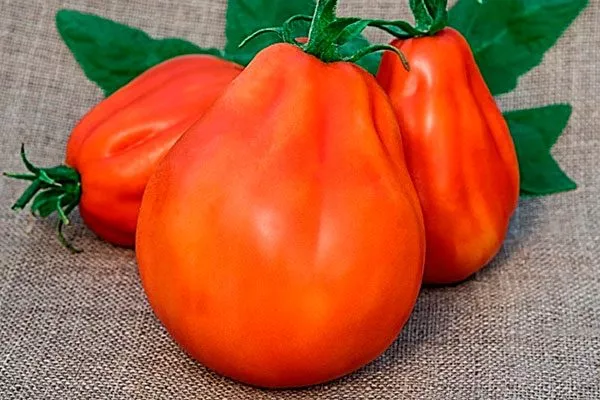
Please note the following characteristics of the variety:
- The first flower cluster forms above the ninth leaf, and subsequent clusters are spaced five times apart. To increase yield, it's recommended to construct the plant into a double-stemmed structure.
- The flower clusters are well-filled, each containing five to six tomatoes. The base of the cluster is strong and doesn't break under the weight of the fruit, so additional support isn't required (a basic staking is sufficient).
- The plant can reach a height of 180 cm. The leaves are elongated and rich green. The inflorescence is complex, without joints.
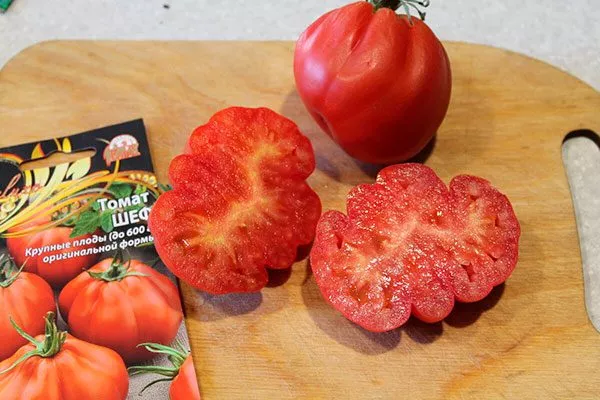
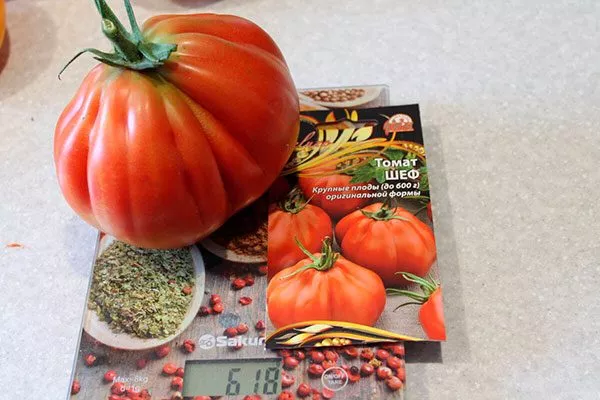
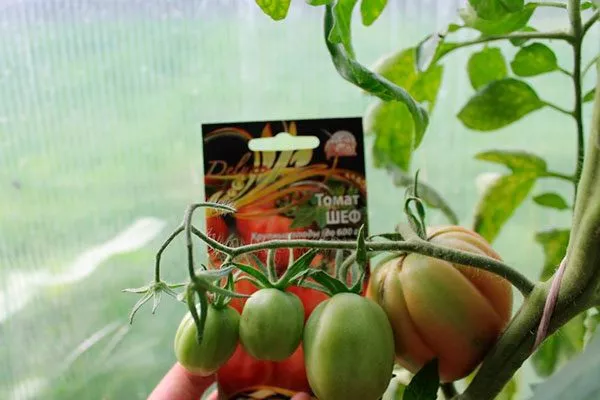
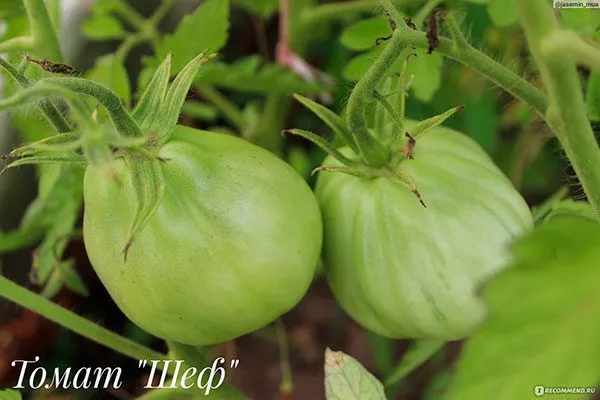
- The fruits are pear-shaped and can weigh between 200 and 600 grams. They contain four to six chambers and ripen to a bright red color. Unripe vegetables are typically greenish.
- The flesh is medium-firm, yet meaty, with no voids. It has a pleasant flavor and tomato aroma, making it ideal for eating raw.
Main characteristics
Shef is a mid-season variety. It takes 114-118 days from the emergence of shoots to full maturity. This variety continues to bear fruit until frost, allowing for a long harvest.
Other features:
- When harvesting fruit, it's recommended to use sharp knives or scissors to avoid damaging the plant and fruit. Harvesting is best done in the morning or evening, when the vegetables are less susceptible to mechanical damage.
- Tomatoes can be harvested starting in July, when they reach their peak ripeness and turn a rich red color.
- The Chef tomato can be planted both in open ground and in a greenhouse, but for its successful cultivation it is important to adhere to certain conditions.
- During cultivation, it is necessary to tie and shape the bush, leaving 1-2 main stems. It is also important to remove side shoots and fertilize the soil regularly (4-5 times during the growing season).
- This variety has good resistance to fungal, bacterial, and viral infections, which minimizes the risk of disease and guarantees a stable harvest.
Criteria for growing a variety:
Agricultural technology
The Shef tomato variety requires special attention: it requires generous feeding and regular care, including pruning and staking. To ensure it grows freely, it needs ample space.
Sowing and planting times
To plant 45-day-old seedlings in the garden in late April or early May, start sowing in mid-March. If you want to see the first ripe tomatoes by the end of June, you can take a risk and start sowing as early as February. However, this requires preparation for a number of challenges:
- The seedlings will need additional lighting, as there is not enough natural light in February, and the windowsills are too cold.
- During the growing process, the seedlings will need to be repotted several times into larger pots. If this isn't done, the roots will fill the entire root ball, hit the sides and bottom of the seedling cup, and stop growing. Eventually, the seedlings will begin to age.
Such seedlings quickly move into the generative phase, and after planting, with their last strength, they form a single fruit cluster. - For February seedlings to be worthwhile, you need to be prepared for the fact that in March tomatoes will need pots with a capacity of 1-2 liters, and in April - 4-5 liters.
Growing seedlings
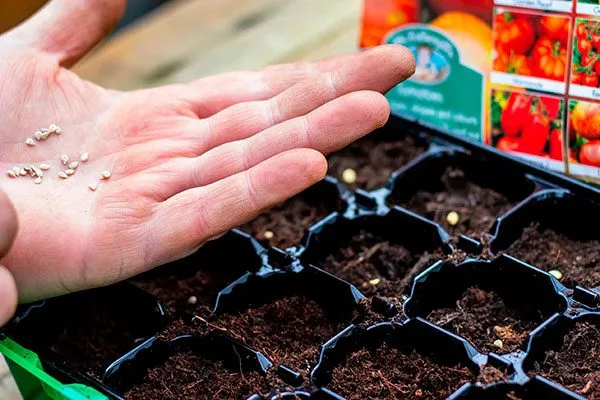
Tomato seeds germinate quickly – if conditions are favorable, the first green shoots appear on the third day after sowing, and all seeds germinate within five to six days.
Seed disinfection is a critical step that cannot be ignored, as pathogenic microflora is always present on their surface, which begins to actively develop at elevated temperatures and humidity.
Of all the possible disinfection methods, chlorhexidine is preferred. This product effectively kills fungi and bacteria. It's available in pharmacies and is inexpensive. Soak the planting material for 20-25 minutes and then sow immediately, without rinsing.
Subtleties of sowing and growing:
- Plant in 400 ml containers. They should have drainage holes. You can use store-bought potting soil; the process is simple: fill the container with potting soil and plant the seeds 1-2 cm deep.
- To prevent the soil from drying out before germination, cover the seeds with plastic wrap. Place the containers in a dark place until the sprouts form.
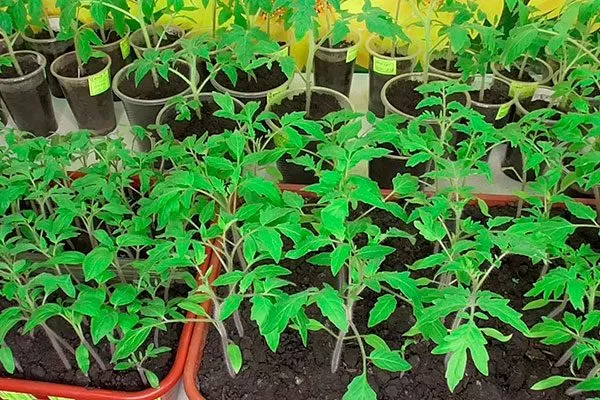
- For successful seedling growth, it's crucial to not miss the moment the first loops appear. As soon as they appear, the seedling trays should be placed under bright light. For 3-5 days after germination, 24-hour supplemental lighting is recommended, then it can be reduced to 18-20 hours, and by the fourth or fifth week, to 11-12 hours.
- During the first three weeks, watering should be done 1-2 times per week, then increase to 3-4 times per week until planting. Additionally, sprinkling with a regular sprayer 2-3 times per week is recommended.
- If seedlings are grown without supplemental lighting, for example, on a windowsill, the container should be turned toward the light 2-3 times a week to prevent them from stretching on one side. This period is the most critical for seedling development.
- Throughout the growing period, fertilize the seedlings several times using a complex mineral fertilizer, such as Zdraven Turbo for seedlings or a similar product. Minerals are quickly absorbed by plants because the nutrients are in an accessible form.
Transplanting
Before planting tomatoes in a greenhouse, ensure that the soil, not only on the surface but also at a depth of 20-30 cm where the plant roots will be, has warmed up completely. Otherwise, transplanting into cold soil will stress the plants, which will, in turn, stunt their growth and slow their development.
Follow the rules:
- Good predecessors for tomatoes include radishes, zucchini, cabbage, carrots, radishes, cucumbers, turnips, pumpkins, and mustard. Poor predecessors include tomatoes, eggplants, potatoes, corn, and peppers.
- When planting tomatoes, you need to maintain a certain distance between the bushes and between the rows: 50-60 cm and 60-70 cm, respectively, in the garden, and 40-50 cm and 50-60 cm for the greenhouse.
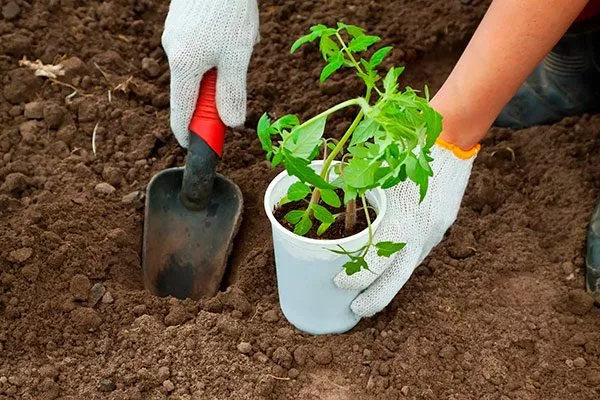
Before planting, dig a hole in the bed and thoroughly moisten it with 4 liters of water. Then let the soil settle slightly, which takes about an hour. After this, carefully remove the seedling from the cup, being careful not to damage the roots. Before doing this, fill the cup with water so that the soil is saturated.
Then proceed as follows:
- Place the seedling in the hole.
- Gently compact the soil around it, creating a small depression around the trunk, which will help in future watering at the root, and not past the bed.
- Moisten the tomatoes again, then refrain from watering for at least 10 days, except in cases of excessive heat.
Care
Large-fruited tomatoes require special care. To support the growth of numerous large vegetables, they require abundant nutrition. Therefore, root development is a key task at the beginning of the growing season:
- Using exclusively organic fertilizers, such as compost, cow manure, or chicken manure infusion, can be beneficial early in the growing season because they contain high amounts of nitrogen. However, using too much of these fertilizers can lead to excessive fattening.
- Regular use of the complex mineral fertilizer Zdraven Turbo for fertilizing tomatoes and peppers is also beneficial. This ensures the precise amount of necessary elements and tangible results.
This fertilizer contains the ideal ratio of nitrogen, phosphorus, and potassium, which promotes plant growth, the formation of large fruits, root development, and flowering, as well as strengthens plant immunity and promotes the accumulation of sugars in the fruits.
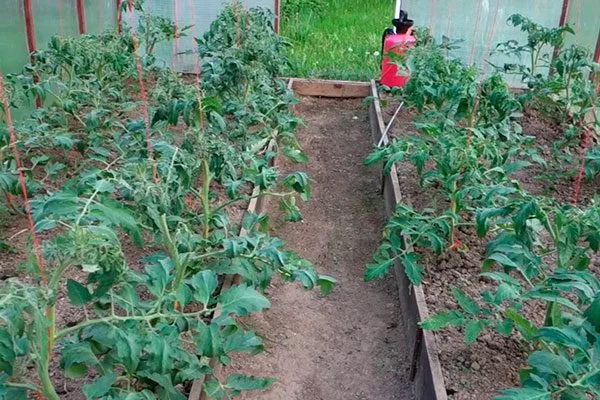
When watering, avoid getting water on the tomato leaves and stems. It's recommended to water infrequently but generously—usually 1-2 times a week, or 2-3 times in hot climates.
For tall, large-fruited varieties, a single-trunk bush formation system is optimal, and for sparse planting, 2-3 trunks can be used (with mandatory pinching and leaf removal).
Reviews
A distinctive appearance, excellent taste, and high yield—all these are characteristic of the large-fruited Shef variety. It's a contender for the title of leader because it's easy to care for, disease-resistant, and produces fruit almost until the first frost. Even a beginner can easily grow it.