
The Red Dragon Heart tomato boasts endless growth and is an ideal choice for canning, whether commercially or at home. This variety is adapted for both outdoor and greenhouse cultivation. It stands out for its versatility and ability to produce fruit even under adverse conditions.
Description of fruits and plants
The Red Dragon Heart variety has not yet been entered into the State Register: its testing is not yet complete, but the Siberian Garden company is already distributing seeds of this species.
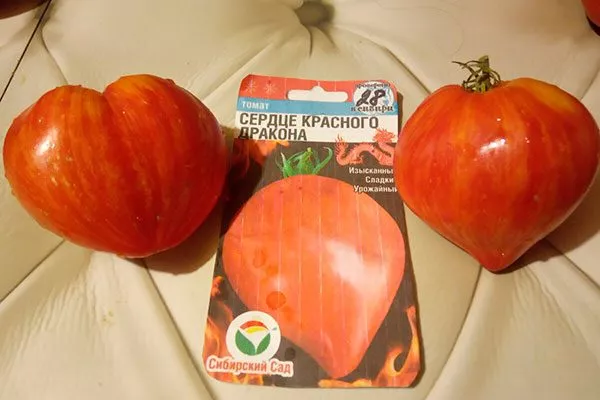
Varietal characteristics:
- Mature plants can reach 180 cm in height. The bushes are compact, with branches arranged so as not to interfere with each other or create shade. They take up minimal space while providing all the conditions for full growth and abundant fruit reaching the expected size.
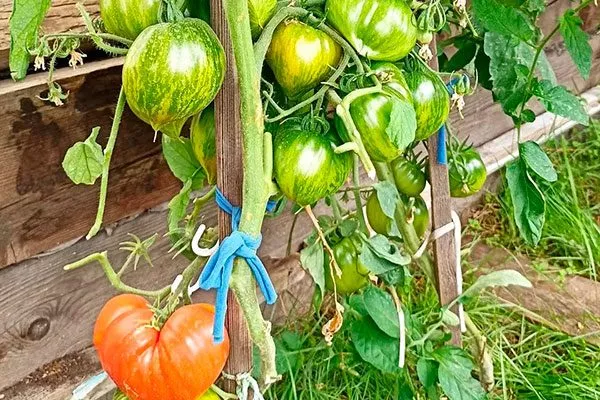
- Fully ripened vegetables are colored in a brilliant crimson tone with golden and fiery strokes that have no systematic arrangement.
- The large fruits weigh about 300 g each and are heart-shaped with an elongation at one end, opposite the stalk.
- Tomatoes impress with a sweet aroma and flavor that lacks acidity, although a slightly sour note can sometimes be detected when underripe. When tomatoes become slightly overripe, their sugar content peaks.
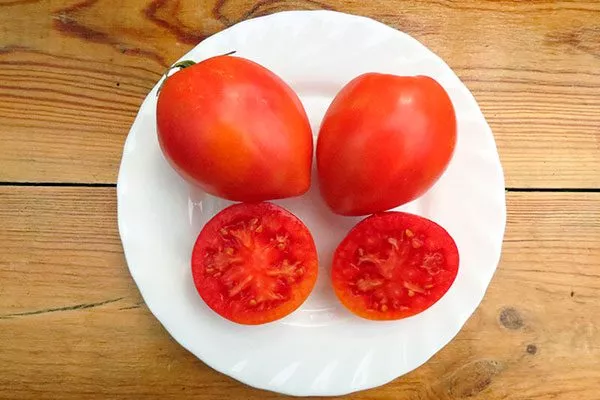
- The pulp is dense and contains only a small number of seeds.
- Tomato skins are not only thin, but also strong enough to resist cracking under pressure during transportation.
- The shape resembles a heart, and at the top there is a long and graceful spout.
- ✓ Resistance to sudden temperature changes: withstands fluctuations from +5°C to +35°C.
- ✓ Fruiting feature: continues to bear fruit even with insufficient sunlight.
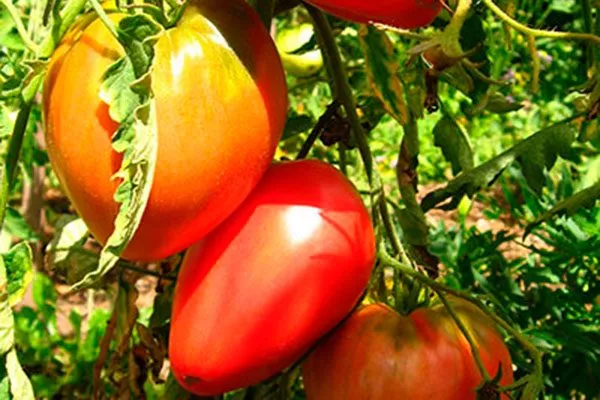
Characteristics
This variety is classified as mid-season. The official description doesn't provide specific ripening dates. However, additional sources mention that the Red Dragon Heart variety begins to produce its first fruits 115-125 days after the emergence of new shoots. Fruit development is noted to be slow but abundant.
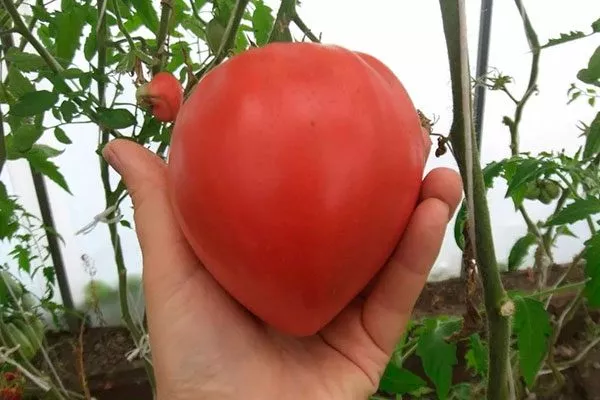
Other characteristic features:
- There's no official description of yield, either. However, vegetable growers say that 1 square meter can yield up to 5-7 kg of produce. This figure can vary depending on soil quality, weather conditions, and the level of care provided by the growers.
- In terms of disease and pest resistance, this variety has a low risk of damage. Standard tomato protection methods are used to prevent problems.
- This variety boasts competitive resistance to adverse weather conditions. However, in areas with variable and unpredictable weather, plant protection measures are still recommended.
Landing
In early spring, usually in March or April, depending on local weather conditions, the seedling growing process begins. The time between sowing the seeds and the subsequent transplanting of mature seedlings to their permanent location in the open ground or greenhouse is at least 60 days.
- ✓ Optimum soil temperature for sowing seeds: 22-25°C.
- ✓ Seed sowing depth: 1-1.5 cm.

For sowing, it is recommended to use a ready-made substrate, already enriched with minerals, or use a standard soil mixture with a high peat content, to which minerals are added after the first shoots appear.
Further cultivation
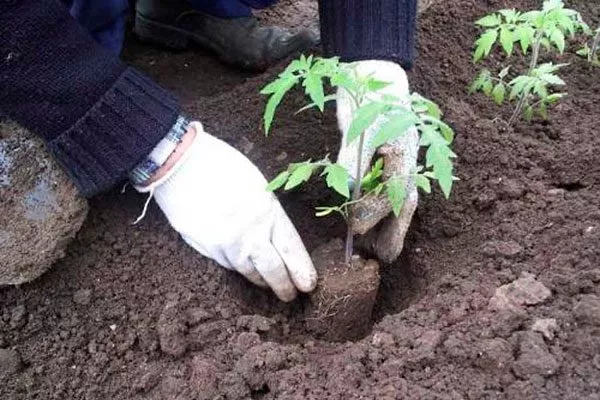
While sowing instructions are standard, transplanting Red Dragon Heart tomato seedlings requires special attention: they must be moved with the root ball intact, avoiding damage to the root shoots. However, transplanting will not negatively impact the final harvest.
Nuances:
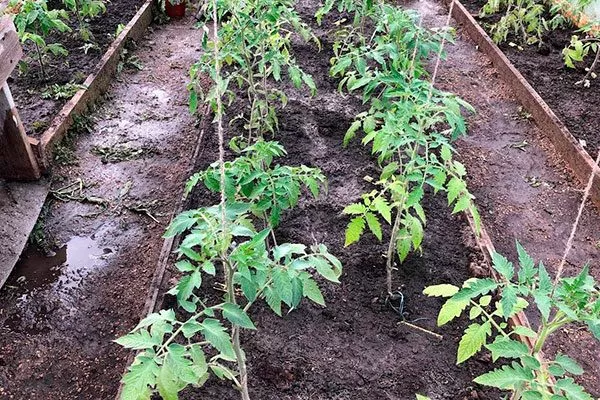
- An effective option is to plant seedlings at intervals of 500x600 mm, although this method is not mentioned in official sources and is known only from additional materials.
- On the day after transplanting, be sure to secure the seedlings so that the stems do not break under the influence of the wind.
- After the seedlings take root and begin to grow, nitrogen fertilizers, such as urea, are added, which promotes intensive leaf growth.
- When the bushes begin to develop and prepare for budding, use potassium-phosphorus mixtures. Alternatively, you can buy superphosphate.
- In southern Russia, where summers are particularly hot, it's recommended to select sites in partial shade when growing this variety. This will prevent the topsoil from drying out under the sun, which can lead to crust formation.
- For optimal absorption of nutrients by the root system of plants, regular loosening of the soil is necessary.
- It's important to ensure that watering doesn't over-water the area around the tomatoes, which can negatively impact their growth and lead to root rot. It's recommended to use settled and warm water for watering.
Pros and cons
This tomato variety is characterized by its resistance to various adverse conditions, such as significant temperature changes during the day and rapid transitions from hot to rainy weather.
Analogues
| Name | Plant height | Fruit color | Fruit shape |
|---|---|---|---|
| Heart of the Red Dragon | 180 cm | crimson with golden and fiery strokes | cordate with elongation |
| Dad | not specified | not specified | not specified |
| Bull's heart | tall | not specified | heart-shaped |
| King of Kings | not specified | not specified | large size |
The Red Dragon Heart tomato variety is a firm favorite among consumers. However, if the situation calls for it, other options are worth considering:
- Dad - It boasts enormous fruits and excellent flavor. It's easy to care for and can be grown both outdoors and indoors.
- Bull's heart - Produces large, heart-shaped fruits suitable for a variety of uses. Their flavor is sweet with a slight tartness, and they produce minimal seeds. Plants of this variety grow tall and require regular support.
- King of Kings – A common choice for gardeners in their summer cottages, its fruits are large and sweet. The plant is easy to care for and is rarely susceptible to pests.
Reviews
The indeterminate variety "Red Dragon's Heart" is easy to care for and highly productive. The bushes are particularly vigorous and tall, requiring timely support. They can be grown both outdoors and indoors. Direct seedlings are not the best option.