
Sarra F1 is an interesting tomato hybrid that attracts gardeners with its large, heart-shaped fruits. It is loved for its hardiness and ease of care, high productivity, and excellent shelf life and transportability. It is suitable for growing in open garden plots and under cover.
Origin of the variety
This vegetable variety is a new product of foreign breeding. It was developed thanks to the efforts of French scientists representing the Clause company. In 2017, it was added to the Russian state register.
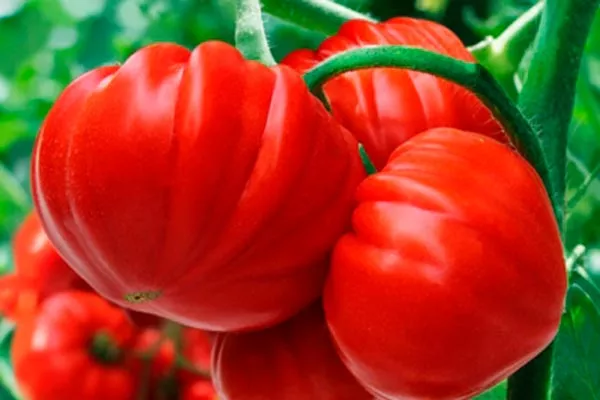
Botanical description
Sarra is the name of an all-season, tall-growing hybrid belonging to the Bull's Heart variety category. Its bushes are quite flexible, with a balanced fruit load.
They are characterized by a generative type of development, in which all their energy is directed towards flowering and fruiting, and not towards the growth of foliage.
Distinctive features of the bushes
Sarah's plants are characterized by vigorous growth and a robust structure. They possess the following external characteristics:
- height - 1.5-3 m (when grown in a greenhouse, the “growth” of the bushes is on average 2 m, in an open bed this figure is half as much);
- strong shoots;
- shortened internodes;
- medium-sized leaves, green in color.
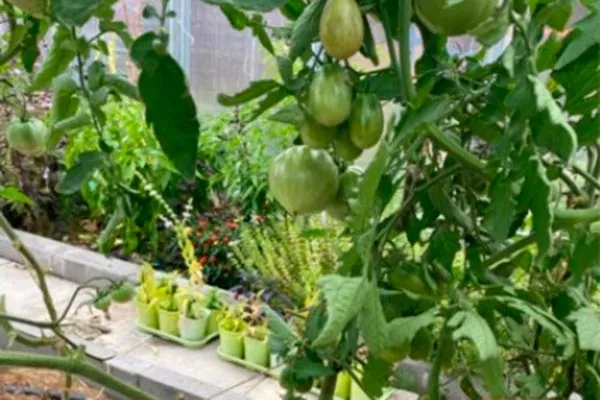
Hybrid tomato bushes produce fruits that ripen in clusters of 3-4 pieces.
Fruit characteristics
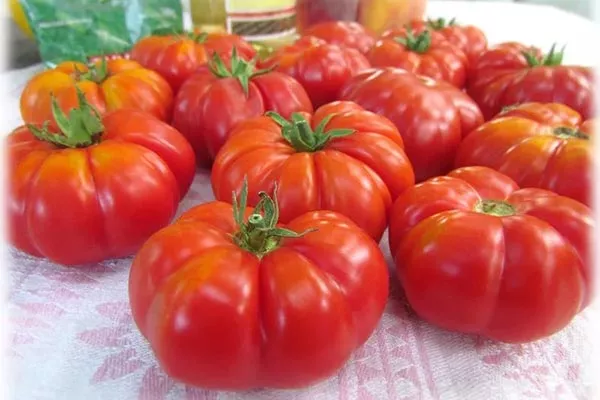
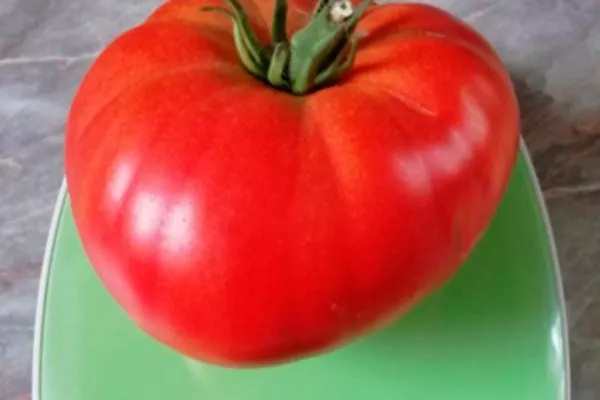
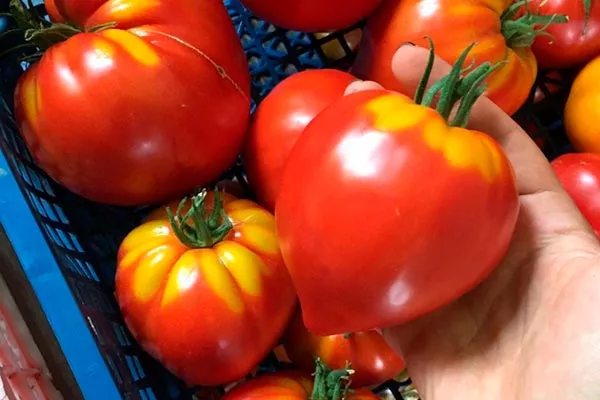
The distinctive appearance of these tomatoes and their excellent consumer qualities are Sarah's calling card. They are large and beautiful, distinguished by a rounded-heart shape with a "nose" and pronounced ribbing. Their characteristics are as follows:
- weight - 320-350 g (with enhanced agricultural technology it can reach 600 g);
- rich red color of the skin and internal contents;
- fleshy, medium-dense pulp, juicy and aromatic.
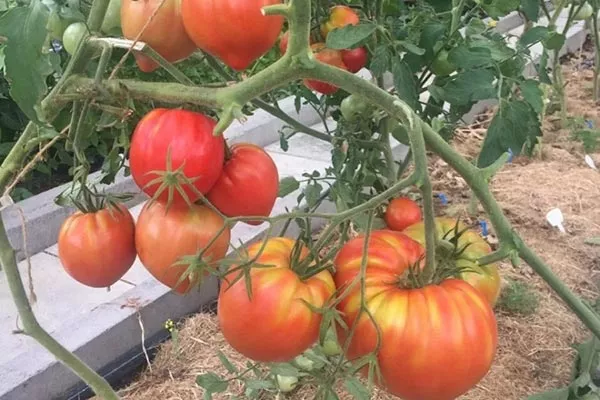
- ✓ The hybrid exhibits increased resistance to temperature fluctuations, which is not typical for many other tomato varieties.
- ✓ The fruits have a unique heart-shaped form with pronounced ribbing, which distinguishes them from other hybrids.
Taste qualities of fruits
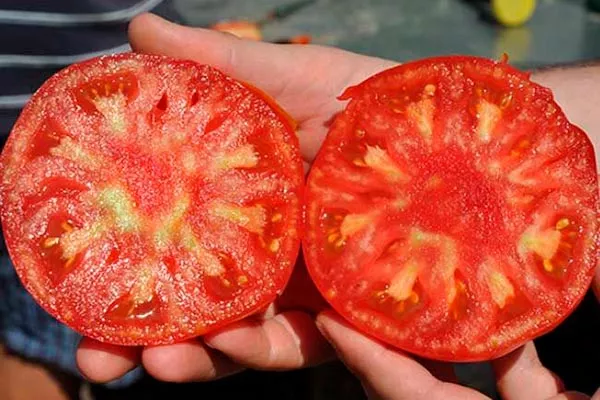
The hybrid tomato harvest is renowned for its unrivaled, rich flavor, dominated by sweetness. It delights the eater with its classic tomato flavor. The nutritional qualities of fruits ripened in the open garden are equal to those grown in greenhouses. They are equally good.
Characteristics of the tomato variety Sarra F1
Before you start growing a French hybrid tomato in your garden, familiarize yourself with its technical characteristics.
Ripening time
Sarra is a representative of the early vegetable varieties and hybrids. Its harvest ripens within the following timeframes:
- 60-65 days - after transferring seedlings to the garden bed;
- 105-110 days - after sprouting.
The hybrid can be cultivated throughout the season. It delights gardeners with its long-lasting fruiting.
Tomato yield Sarra
This tomato variety is renowned for its excellent yield. Gardeners harvest up to 23 kg of high-quality fruit per square meter of planting.
Resistance to adverse factors
The brainchild of French breeders, this variety boasts hardiness and undemanding qualities. Its plants demonstrate resistance to many adverse factors:
- temperature changes;
- cold, recurrent spring frosts;
- heat;
- droughts;
- other stressful growing conditions (for example, they adapt well to poor soils).
Where is it grown?
The Sarra hybrid is grown by Russian gardeners everywhere. The Russian State Register has approved it for cultivation in the following regions of the country:
- Northern;
- North-West;
- Central;
- Volga-Vyatka;
- Central Black Earth Region;
- North Caucasian;
- Middle Volga;
- Lower Volga;
- Ural;
- West Siberian;
- East Siberian;
- Far Eastern.
This variety of vegetable crop is intended for cultivation in open garden areas, heated and unheated greenhouses, tunnels, and temporary film shelters.
In greenhouses, it is grown in short rotations almost year-round. It requires mandatory support.
Methods of application
Sarah's harvest is primarily intended for fresh consumption. Housewives add the large, sweet tomatoes to summer salads and use them to make fresh juice.
They are also suitable for processing into juice and tomato paste, as well as for canning (lecho, adjika, vegetable snacks).
Landing
This hybrid tomato variety is not easy to grow. Success depends on carefully selected soil, fertile soil, and favorable conditions, particularly temperature. Proper planting is also essential if you want a bountiful harvest of Sarra tomatoes.
Growing seedlings
Grow this new selection using seedlings. Follow these timelines:
- the second half of March, the first days of April - sowing seeds to obtain seedlings;
- May — transplanting seedlings to the garden bed (by the transplant date, the plants should be 45 days old).
Sow the hybrid seeds in suitable containers (boxes, cups, or peat pots) filled with nutrient-rich soil. Disinfect the containers first. Use store-bought soil for growing the seedlings. A general-purpose potting mix from a flower shop will work well. Cover the seeds with plastic wrap.
Maintain a favorable temperature indoors to obtain strong seedlings:
- +24-26°С — immediately after sowing, maintain it until sprouts appear;
- +18-20°С — after the cotyledons of the sprouts have opened, maintain the temperature regime for 7-10 days;
- +20-22°C — increase the temperature again and move the seedlings to a well-lit windowsill (at night the temperature should not drop below +17°C).
Provide the plants with plenty of light. Water them moderately with warm water and feed them with liquid fertilizer. At 20 days old, transplant them into individual pots if you sowed the seeds in a common container.
Planting in the ground
Plant Sarah seedlings in soil warmed to 18°C (64°F). By this time, the seedlings should be 45 days old and have several true leaves. If you're transplanting them outdoors, choose a location in your garden that meets the following requirements:
- sunny;
- windless;
- protected from drafts;
- without close groundwater table.
Avoid planting tomatoes in the same area several years in a row. Other nightshade crops (potatoes, peppers, eggplants) are also poor predecessors. Choose a spot where you grew beets, cabbage, garlic, basil, radishes, and pumpkins last season.
Although the hybrid can grow even in poor soils, it shows maximum yield when planted in soil with the following characteristics:
- loose;
- air and water permeable;
- moderately humid;
- well heated;
- fertile;
- neutral or slightly acidic;
- loamy or chernozem.
- ✓ Soil pH should be between 6.0-6.8 for optimal nutrient absorption.
- ✓ The soil organic matter content should be at least 3% to ensure good structure and water holding capacity.
Prepare the soil for vegetable growing in advance. In the fall, dig it over and clear away weeds and plant debris. If the soil is dense, add river sand; if it's acidic, add wood ash, chalk, or dolomite flour.
In the fall, improve the fertility of the soil where you plan to grow your hybrid tomato. Add organic matter during tillage. Cow manure is preferred. Apply 4-5 kg per square meter. It's also a good idea to add a mineral fertilizer, such as superphosphate.
In the spring, continue preparing the plot for planting the Sarra tomato seedlings. Loosen the soil. Apply mineral fertilizers:
- potassium compounds, for example, monopotassium phosphate (the consumption rate for industrial cultivation of the hybrid is 20 kg per 1 ha);
- ammonium nitrate (consumption - 300 kg per 1 ha).
To increase soil fertility in the greenhouse and ensure a yield of 20-23 kg per 1 sq. m, apply fertilizers:
- manure - 40,000-60,000 kg per 1 hectare (4-6 kg per 1 sq. m);
- ammonium nitrate - 80 kg per 1 ha (8 g per 1 sq. m);
- Superphosphate - 300-500 kg per 1 ha (30-50 g per 1 sq. m);
- potassium magnesium sulfate - 100 kg per 1 ha (10 g per 1 sq. m).
At the end of April or in May (5-7 days before transplanting the seedlings), loosen the soil again, remove weeds, and level the surface. Two days before, water the soil with copper sulfate or potassium permanganate dissolved in water. This will remove any pathogens that may be present.
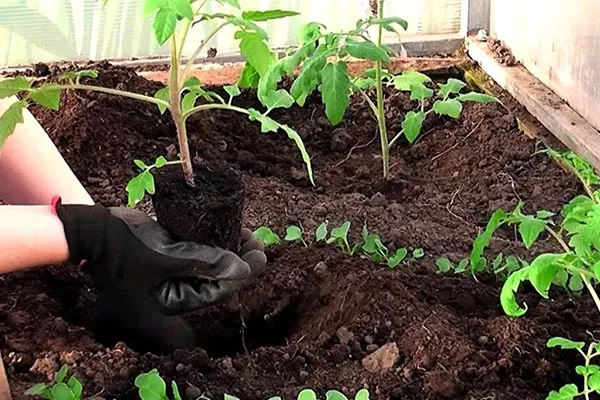
Plant Sarah seedlings in a garden bed, observing the following guidelines:
- hole depth - up to 30 cm;
- planting pattern - 70x80 cm;
- density - 2-2.5 plants per 1 sq. m.
Water and mulch the planted seedlings. Avoid watering the tomato plants for the next 7-10 days to prevent excessive moisture from damaging the seedling roots. Overwatering can cause root rot.
How to care for Sarra tomatoes?
The Sarra tomato hybrid is quite demanding in terms of care. Follow proper cultivation practices to ensure good plant growth and development, strong immunity, and high productivity.
Watering
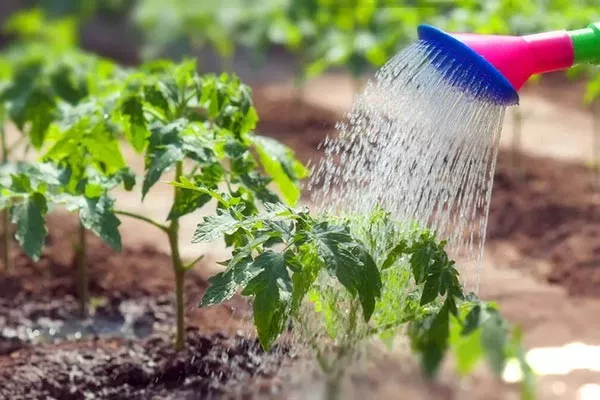
Water the tomato bed as the topsoil dries out. Follow these guidelines:
- moisten the soil under the plants 1-2 times a week;
- in dry weather, increase the frequency of watering;
- use water heated in the sun and allowed to settle;
- use 0.5 liters of liquid per bush per session;
- in hot and sunny weather, increase the consumption rate to 1.5 l, and during the fruiting period - up to 2 l/bush;
- When growing the Sarra tomato in closed ground, provide it with drip irrigation.
After each watering of the vegetable bed, loosen the soil. This prevents the formation of a dense, air-impermeable soil crust. Don't forget to weed. Weeds rob tomatoes of nutrients, shade the plants, and become breeding grounds for pathogens and insects.
What and when to feed?
Hybrid plants respond well to fertilizing. Apply fertilizer according to the following schedule:
- When planting seedlings in the garden, use mixtures rich in phosphorus and potassium. Phosphate-based fertilizers can be applied to tomato plants monthly until the end of the fruiting season. They stimulate bud and fruit formation and improve the quality of tomatoes (color, flavor, aroma).
- Fourteen days after transplanting the seedlings into the garden, repeat the potassium fertilization. This accelerates the plants' metabolism, promoting better fruit set and ripening.
Then apply a potassium-rich solution monthly, starting during the flowering stage and continuing until the end of the crop's fruiting period. - Apply nitrogen fertilizers before budding begins. Tomatoes respond especially well to urea, which increases their yield and resistance to insect pests and diseases.
Should I dive?
When growing tall hybrid seedlings, this procedure is essential if you're sowing seeds in a common container. Transplanting into individual containers has a beneficial effect on the seedlings' root development.
How to form?
Experienced gardeners train Sarah plants into a single trunk. This ensures high yields. Regular and timely removal of side shoots is also necessary. They rob the plant of nutrients, which hinders flowering. Excess lateral shoots that reach 2 cm in length should be removed.
Because the hybrid's bushes are tall, they require tying to a support or trellis. Neglecting this will lead to complications:
- the stem will bend towards the ground;
- will break under the weight of the ripening fruits.
Treatment and prevention of diseases and pests
The French hybrid is highly resistant to many vegetable diseases:
- tomato mosaic;
- fusarium;
- verticillium wilt.
Under unfavorable weather conditions, Sarah's tomato plants are susceptible to late blight, a fungal infection that manifests itself as brown spots with moldy edges on the foliage and fruit. It's triggered not only by high humidity but also by sudden temperature changes.
To treat and prevent late blight, use Fitosporin-M. Three treatments with Bordeaux mixture or copper-containing products are also recommended for tomato plants during the growing season, starting with the flowering stage. To increase resistance to fungi, spray them with a Gumi solution.
Folk remedies can also be used to combat fungal infections:
- garlic infusion (100 g of shoots or 50 g of cloves per 10 liters of water);
- iodine solution (25 drops of the preparation per 10 liters of water, combining them with 1 liter of cow's milk).
The plant is fairly resistant to nematodes. Among the insects most dangerous to it, the following enemies of garden crops are:
- whiteflies;
- wireworms;
- mole crickets;
- scoops.
Control pests using both folk remedies and chemicals. Remember that commercial insecticides should not be used during the ripening period.
Harvesting and storage
Hybrid tomato plants produce fruit over a long period of time. The fruits ripen gradually. Harvest them as they ripen. It's also possible to pick green tomatoes and ripen them at home.
Advantages and disadvantages of the variety
Domestic gardeners and farmers have appreciated this new French variety for its many excellent characteristics:
Sarah also has a small drawback, common to all hybrid crops: the inability to collect seeds for further sowing.
Reviews from gardeners
Sarra is a popular French hybrid of large, heart-shaped tomatoes. It is beloved by domestic gardeners for its high-quality yields, robust plant immunity, stress resistance, and suitability for both open-air and indoor cultivation. Its fruits are often eaten fresh, but are also used for processing and canning.