
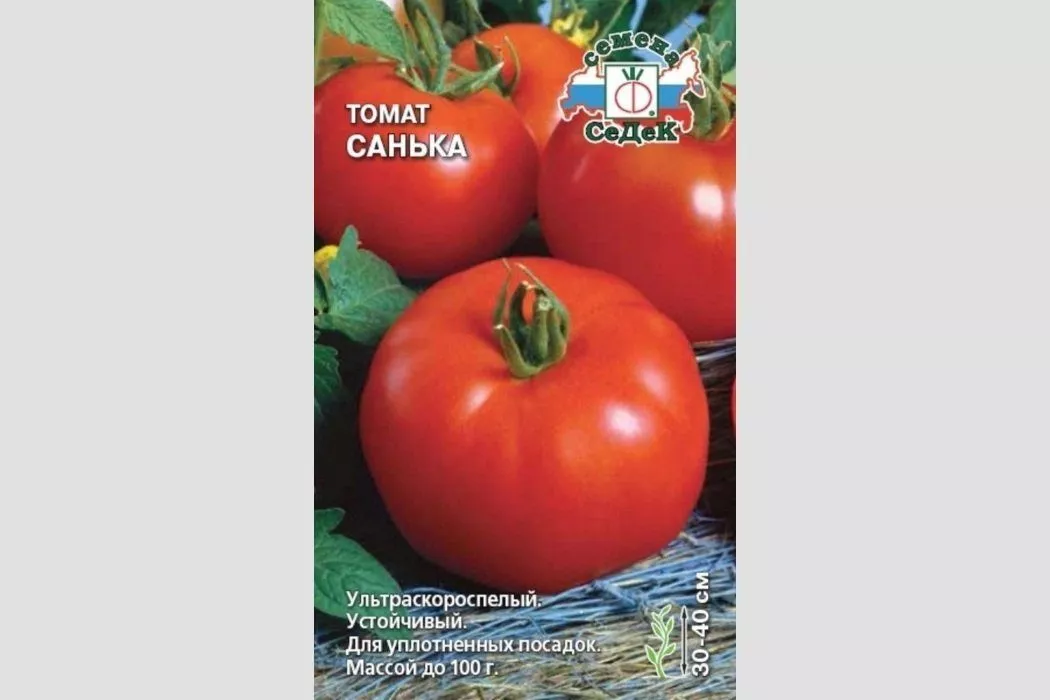
To grow the ultra-early Sanka tomato in your garden, you need to consider some of its characteristics. The variety's characteristics, description, seedling and planting techniques, care, and reviews are below.
How did the variety appear?
The Sanka tomato variety is the brainchild of breeder Yuri Ivanovich Panchev. It was included in the Russian Federation State Register in 2003. Experts recommend growing it in the Central Black Earth Region. It produces excellent fruit in the Voronezh, Tambov, Lipetsk, Oryol, Kursk, and Belgorod regions.
However, gardeners in other regions also grow it in their plots, including in greenhouses and hotbeds, and reap excellent harvests. In warmer climates, the harvest is harvested twice a season.
Botanical description
This tomato is a determinate variety, meaning it's a low-growing variety. The height of the bush varies from 40 to 60 cm.
The stem is sturdy, so the plant doesn't require additional support. The medium-sized leaves are green. The first inflorescence appears above the 7th leaf, with subsequent inflorescences appearing 1-2 leaves apart. This intermediate arrangement of inflorescences eliminates the need for pinching, but it's also not a good idea to let the plant develop on its own. Sometimes, however, it may be necessary to remove excess shoots. The raceme is simple.
Fruits form early, but ripening time is affected by climate conditions and growing region. The first harvest is typically 80 days old.
The tomatoes are round and slightly ribbed. Their weight varies depending on the growing location. Indoors, a single tomato can weigh up to 100 g, while in the open ground, they weigh much less, averaging no more than 80 g. Ripe tomatoes are a rich red color, while unripe tomatoes are green. The flesh is firm and dense.
Characteristics
The table below shows the main characteristics of the tomato:
| Characteristic | Variety indicators |
| Type of bush | determinate, standard |
| Ripening period | ultra-early, 75-85 days |
| Productivity | 12-14 kg/sq.m, from one bush - 2-3 kg of fruit |
| Number of fruits per bunch | 4-5 fruits |
| Fruit weight | 90-100 g |
| Form | rounded, slightly ribbed |
| Fruit color | red |
| Skin | not prone to cracking |
| Transportability, shelf life | tall, can withstand long transportation without losing their marketable appearance |
| Purpose | the fruits are suitable for fresh consumption and whole-fruit canning |
| Disease resistance | high immunity to diseases, fruits ripen before the appearance of late blight |
Advantages and disadvantages of the variety
What makes this variety so appealing to gardeners? Vegetable growers who grow Sanka cite the following as advantages:
- its early maturity;
- cold resistance;
- undemanding to light - fruits ripen with a small amount of light;
- It can be grown both in open and closed ground;
- high immunity to diseases and pests;
- good fruit set under unfavorable weather conditions;
- friendly formation of the crop;
- You can collect seed material yourself.
However, it also has its downside - average yield.
See the review of the Sanka tomato below:
Growing seedlings
When to sow seeds for seedlings depends on where the tomato plants will grow in their permanent location. For example, in the Central Black Earth Region, seedlings are planted in open ground in early April, and they are transplanted into greenhouses earlier—in mid- to late March. The optimal age for transplanting to a permanent location is 60 days.
Therefore, seeds are sown in containers in late January or February. In areas with cooler climates, the sowing time is shifted by several weeks.
Home-collected seeds must be prepared before planting. First, they are soaked in a light pink solution of potassium permanganate to disinfect them. Any seeds that float to the surface are discarded, as they will not germinate. Then, they are rinsed under running water and soaked by filling halfway with warm water. The water is changed three times a day. Once germinated, the seeds are sown in soil.
If you use store-bought seeds, they are sown dry, since the manufacturer usually processes all the seed material before packaging.
The soil for growing seedlings can be purchased ready-made or prepared independently from the following components, taken in equal parts:
- turf;
- sand;
- peat.
- ✓ Soil pH should be between 6.0-6.5 for optimal nutrient absorption.
- ✓ The soil temperature when sowing seeds should not be below +18°C to ensure rapid germination.
The seeds are laid out in rows, spaced 1 cm apart. They are planted in the soil to a maximum depth of 2 cm. For germination, a temperature of 25°C must be maintained, and the box should be covered tightly with plastic film to maintain high humidity. As soon as the first shoots appear, the film is removed.
Caring for seedlings is no different from other crops. Plants require light (at least 8 hours) and watering—the soil shouldn't dry out, but excess water is also contraindicated. At the two-true-leaf stage, they dive into separate containers. The seedlings are planted in a permanent location when the bush has 6-7 leaves and at least one flower cluster.
Planting in the ground
Tomatoes are planted in open ground when the frost period has passed, and the daytime temperature does not fall below 14-15°C, and the soil has warmed up to 10-12°C.
Selection and preparation of soil
Tomato beds are prepared in advance. The soil is tilled with rotted manure or humus, and fertilizer is added. However, it's important to remember that the potassium requirement should be 2-2.5 times greater than the nitrogen requirement.
High doses of nitrogen fertilizers cause vigorous plant growth—it becomes elongated and produces numerous side shoots. Although this promotes more abundant flowering, fruit formation is poor.
Step-by-step landing
The seedlings are placed on a flat surface, planted in 2-3 rows at a distance of 50-70 cm, and in open ground, planting patterns of 30x40; 40x40 or 50x30 cm are used.
The following sequence of actions is followed:
- The plant is placed on loosened beds;
- The roots are covered with soil up to the cotyledon leaves;
- Strongly elongated seedlings are planted at an angle and the stem is covered with soil up to 1/4 of its height;
- After planting, the soil around the roots is well compacted, but a mound is not left near the stem;
- The plant is watered and mulched with peat or sand.
You will find more information about growing tomatoes in open ground here.
Peculiarities of caring for "Sanka"
To get a good harvest, tomatoes need the necessary care:
- Watering. Water the plant with warm water until the soil is evenly moist. Avoid allowing water to fall on the leaves and fruit. The soil should never dry out, but excess moisture is also harmful to the plant.
- Loosening and weeding. After watering, the soil must be loosened and mulchThis not only helps slow moisture evaporation but also provides oxygen to the root system. Weeds are removed promptly.
- Pinching out side shoots and shaping the bushSanka tomatoes don't require pinching. Staking may be necessary only in greenhouses, where plants grow up to 110 cm tall. Or when the shoots are heavy with fruit, and the weight of the fruit causes them to fall to the ground.
- Pest and disease control. With a strong immune system, these tomatoes rarely get sick, and early ripening helps them avoid late blight. However, unfavorable weather conditions coupled with agricultural errors can trigger the development of fungal diseases. Therefore, preventative measures should not be ignored.
Treating plants with Bordeaux mixture or potassium permanganate reduces the risk of rot. If the plant is affected, use suitable fungicides. Follow the manufacturer's recommendations for use.
- Treat the plants with a solution of Bordeaux mixture (1%) 2 weeks after planting in the ground.
- Repeat the treatment after 10-14 days to consolidate the effect.
- Use biopreparations to prevent fungal diseases every 3 weeks.
Harvesting and using tomatoes
The harvest ripens evenly. If for some reason the fruits do not ripen fully on the vine, the green tomatoes are cut off, leaving a small stalk, and laid out in a warm, bright place until they ripen.
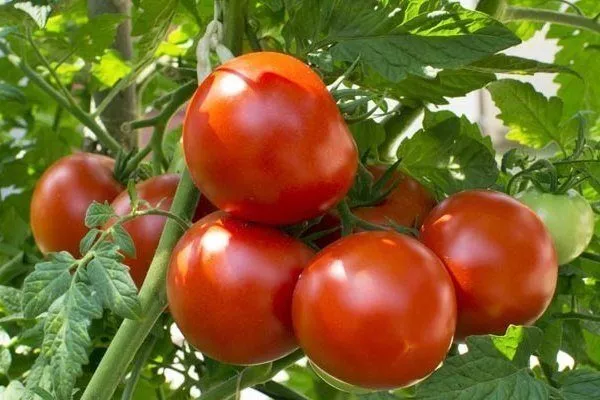
Tomatoes are delicious both fresh and in culinary delights. They are used in salads, pizza, soups, tomato paste and juice, and are perfect for pickles and savory appetizers.
Gardeners' reviews
Reviews of this variety are mostly positive, with gardeners praising its early maturity and ease of use.
The Sanka variety is a favorite among vegetable growers who crave fresh fruit and can't wait to enjoy it. The first red fruits are harvested from the bushes 75-89 days after the first leaves appear. With proper care, it produces a good harvest.